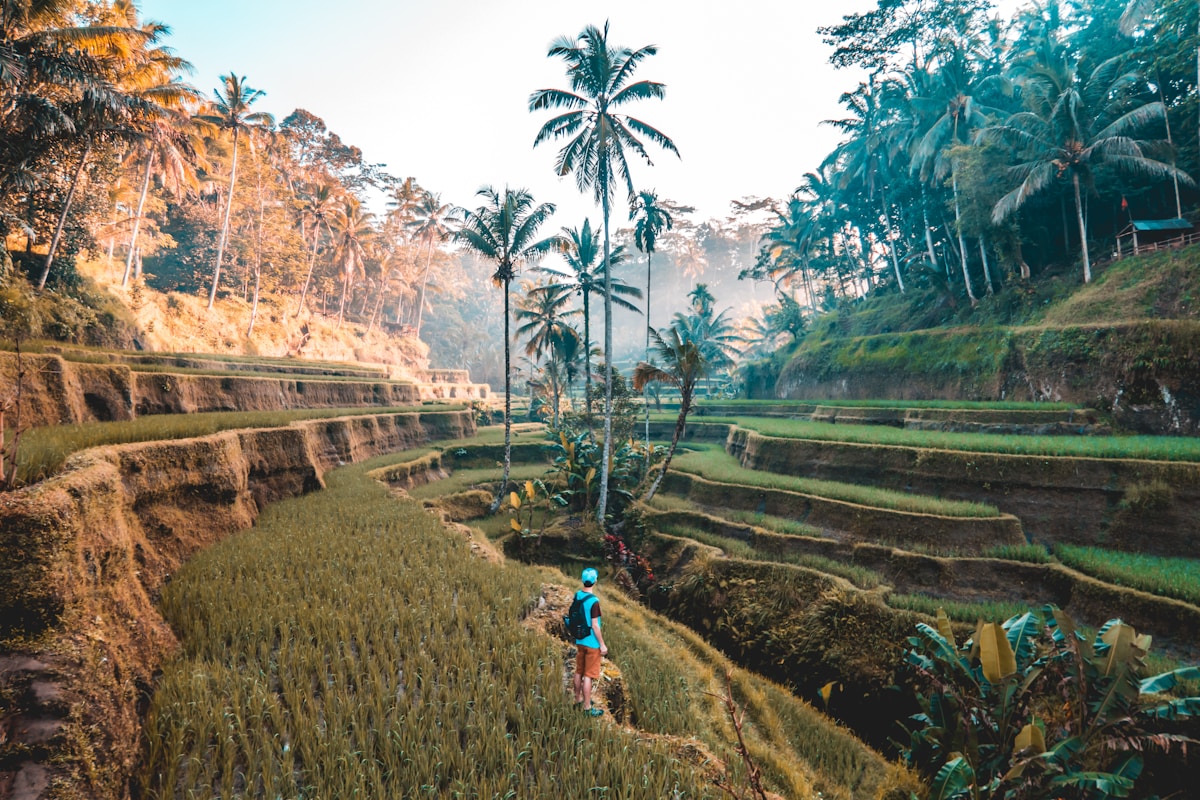
Indonesia is the world’s largest archipelago - 17,000+ islands, six major religions, 300+ spoken languages, and a landscape that runs from surf beaches to active volcanoes to rainforest the size of Western Europe. First-time visitors often feel overwhelmed before they arrive. This guide gives you a practical framework for making sense of it.
Where to Start: Bali or Jakarta?
Most first-timers land in Bali (Ngurah Rai airport, DPS). The infrastructure is excellent, English is widely spoken in tourist areas, and the island packs beaches, culture, food, and hiking into a manageable space. Seminyak and Canggu suit first-time arrivals who want to orient themselves at their own pace. Ubud is better for those who want culture and cooler temperatures from the start.
Jakarta (CGK) makes more sense if you’re flying into Indonesia on a transit hub, or if you want to understand urban Indonesian life. It’s a proper megacity - chaotic, fascinating, and not packaged for tourists. Give it two to three days before heading east.
A common first trip: fly into Bali, spend a week, then use it as a base to hop to Lombok, Komodo, or the Gili Islands.
Island-Hopping Overview
Indonesia rewards those who go beyond Bali. A realistic three-week first trip might cover:
- Bali (5–7 days): temples, rice terraces, surf
- Lombok (3–4 days): Rinjani volcano, quieter beaches than Bali
- Gili Islands (2–3 days): no motorised vehicles, excellent snorkelling
- Komodo / Flores (3–4 days): dragons, pink beach, some of Asia’s best diving
- Java (3–4 days): Yogyakarta, Borobudur, Bromo volcano - doable as a side trip from Bali
Getting Between Islands
Budget domestic flights are the fastest option for longer hops. Lion Air and Batik Air dominate budget routes; Garuda and Citilink offer slightly more reliability. Fares start from approximately IDR 200,000 for short routes, IDR 400,000–500,000 for Bali–Lombok, more for Bali–Labuan Bajo (Komodo gateway). Book at least a week ahead - last-minute fares spike significantly.
Fast boats connect Bali to Lombok (approximately 2 hours, IDR 250,000–450,000) and Bali to Nusa Penida (approximately 45 minutes, IDR 150,000 one-way). Conditions vary - rough seas are common outside dry season (May–September).
PELNI ferries serve remote island chains on subsidised state schedules. Slow, sometimes two to four days, but the only practical option for islands without airports.
Currency and Cash
Indonesia runs on the Indonesian Rupiah (IDR). The notes go up to IDR 100,000 - which sounds a lot but is roughly USD 6. Keep this in mind when handling large amounts at markets.
Carry cash. While Bali’s tourist zones accept cards, warungs (small local restaurants), markets, and rural areas are cash-only. BCA and Mandiri ATMs are the most reliable for international cards. Most charge a flat withdrawal fee of approximately IDR 30,000–50,000 per transaction.
Bargaining is normal at markets and for transport not using a meter or app. Uber-style apps (Grab and Gojek) eliminate the negotiation entirely - use them wherever possible.
Cultural Basics
Temples and religious sites: Cover your shoulders and legs. Sarongs and sashes are available (sometimes rented, sometimes free) at major temple entrances. Remove shoes before entering any place of worship or a local home.
The left hand: In Indonesian culture, the left hand is considered unclean. Use your right hand to give or receive money, food, and gifts. Using the left is not an immediate catastrophe, but the right hand is the respectful default.
Photography: Ask before photographing people, especially in rural areas or at ceremonies. A smile and a gesture usually gets a yes.
Religion: Indonesia is the world’s largest Muslim-majority country, though Bali is predominantly Hindu. Dress and behaviour expectations vary significantly by island. Outside Bali, modest dress - covered shoulders and knees - is appropriate in most non-beach settings.
SIM Cards
Buy a local SIM on arrival. Telkomsel (under the Simpati/Loop brand) has the best nationwide coverage, including in rural areas and on smaller islands. XL Axiata is strong in Bali and Java. Both are available at airport arrival halls and at Indomaret and Alfamart convenience stores nationwide.
You’ll need your passport to register. A starter pack with 10–20GB data costs approximately IDR 50,000–100,000. Top-up credit (pulsa) is available everywhere.
Common Scams to Know
Taxi touts at airports: Use Grab or Gojek, or prearrange a pickup. Official metered taxis (Blue Bird in Jakarta, Ngurah Rai official taxis in Bali) are the safe ground-level alternative.
Money changers: Use authorised changers (Bali Moneychanger or bank branches) and count your notes before leaving the counter. Street-side changers sometimes use sleight of hand or short-count.
Motorbike “damage” scam: Some rental shops claim pre-existing damage when you return a bike. Photograph every existing scratch before leaving the lot.
Fake police: Rare but reported. Actual police do not typically stop tourists on the street to demand ID checks. If uncertain, ask to go to the nearest police station.
Safety Basics
Indonesia is generally safe for tourists. The main risks are traffic (always wear a helmet on motorbikes - it is legally required and genuinely important), petty theft in crowded tourist areas, and stomach issues in the first week as your digestive system adjusts. If you’re planning to travel solo, our Indonesia solo travel guide covers the safest bases, what to expect as a solo female traveller, and how to meet people on the road.
Drink only bottled or filtered water. Bottled water (Aqua brand is ubiquitous) costs from approximately IDR 5,000. Do not drink tap water anywhere in Indonesia.
Travel insurance is not optional. Medical evacuation from a remote island can cost tens of thousands of dollars. Include medical and evacuation cover at a minimum.
Travel insurance for Indonesia is essential - cover for medical evacuation, trip cancellation, and adventure activities is strongly recommended before any multi-island trip. Picking up an Indonesia eSIM before you fly means you land connected - no queuing at airport SIM kiosks on arrival.
Essential Practical Guides
- Indonesia visa guide - visa on arrival, tourist visa, and how to extend your stay
- Indonesia travel costs - daily costs, what things actually cost, and how to spend less
- Indonesia packing list - what to bring for the islands, volcanoes, and temples
- Indonesia health and vaccinations - which jabs you need and what to watch out for
- Indonesia travel insurance - what to look for and why evacuation cover matters
- Indonesia internet and SIM cards - which networks to use and where to buy
- Indonesia currency and money - using ATMs, exchanging cash, and avoiding scams
- Getting around Indonesia - flights, ferries, trains, and how to connect the islands
- Indonesia safety guide - which areas are safe, scams to know, and practical risk advice
- Basic Indonesian phrases - the words and sentences that actually help on the road
- Best time to visit Indonesia - dry season, wet season, and when to go by island
- Indonesia rainy season guide - what the wet season is like in practice and how to plan around it
- Bali or more of Indonesia? - should you stay in Bali for your whole trip, or explore further?
- Indonesia family travel guide - the best islands, activities, and practical tips for families
- Raja Ampat travel guide - flights, permits, costs, and logistics for West Papua’s remote island paradise
Search hotels in Indonesia on Booking.com
Ready to Plan Your Trip?
See our itineraries for inspiration:
- One Week in Indonesia - Bali, Nusa Penida, Gili Islands and Lombok
- 10 Days in Indonesia - Bali, Java and Komodo combined
- 2 Weeks in Indonesia - the island-hopping route from Bali east
- 1 Week in Bali - day-by-day first-timer’s guide with costs
Plan Your Trip
✈️ Book your flights to Indonesia 🛡️ Get travel insurance 📱 Stay connected with an eSIM 🚗 Rent a car