Search hotels in Indonesia on Booking.com
The phrase “rainy season” puts some travellers off Indonesia from November through March. In practice, the wet season across most of the archipelago means heavy afternoon showers, not week-long downpours. Mornings are frequently clear, humidity is high regardless of season, and certain regions are actually drier during the months that Bali is wettest.
Understanding what the wet season actually means - by region, by activity, and by price - is what separates a well-planned trip from a frustrated one.
When the Wet Season Falls by Region
Indonesia’s wet season is not uniform. The country straddles the equator, and the monsoon systems that drive rainfall reach different islands at different times.
| Region | Wet Season | Dry Season | Notes |
|---|---|---|---|
| Bali | November–March | May–October | Wettest month: January |
| Lombok and Gili Islands | November–February | May–October | January–February can bring boat cancellations |
| Java (Jakarta, Yogyakarta) | October–April | May–September | Heaviest rains November–February |
| Flores and Komodo | November–March | April–October | Seas can be rough for boat crossings |
| Sulawesi (Makassar, Toraja) | November–April | May–October | Toraja funeral season peaks May–September |
| Sumatra (Bukit Lawang, Lake Toba) | September–November, March–May | June–August | Two wet periods, both manageable |
| Raja Ampat (West Papua) | May–September | October–April | Inverted - opposite to Bali |
| Maluku (Banda Islands) | May–September | October–April | Also inverted |
The critical point: Bali’s dry season is Raja Ampat’s wet season. If you are planning a liveaboard or dive trip to West Papua or the eastern islands, plan for October–April rather than the May–October window that works for Bali.
What “Rainy Season” Actually Means on the Ground
In Bali and most of Java, wet season rain follows a fairly predictable pattern:
- Mornings are typically clear, with temperatures of 28–32°C
- Clouds build through the afternoon
- Heavy rain arrives between approximately 2pm and 6pm
- Rain usually clears by evening, leaving fresh air and lower temperatures
- Some days are entirely dry; others see rain arrive earlier (from 11am) or later
This pattern means that morning activities - temple visits, rice terrace walks, volcano treks, cooking classes - are largely unaffected. The afternoons are the risk window. Most experienced travellers to Bali in the wet season structure their days accordingly: start early, be back at your accommodation or under cover by early afternoon, then go out again in the evening.
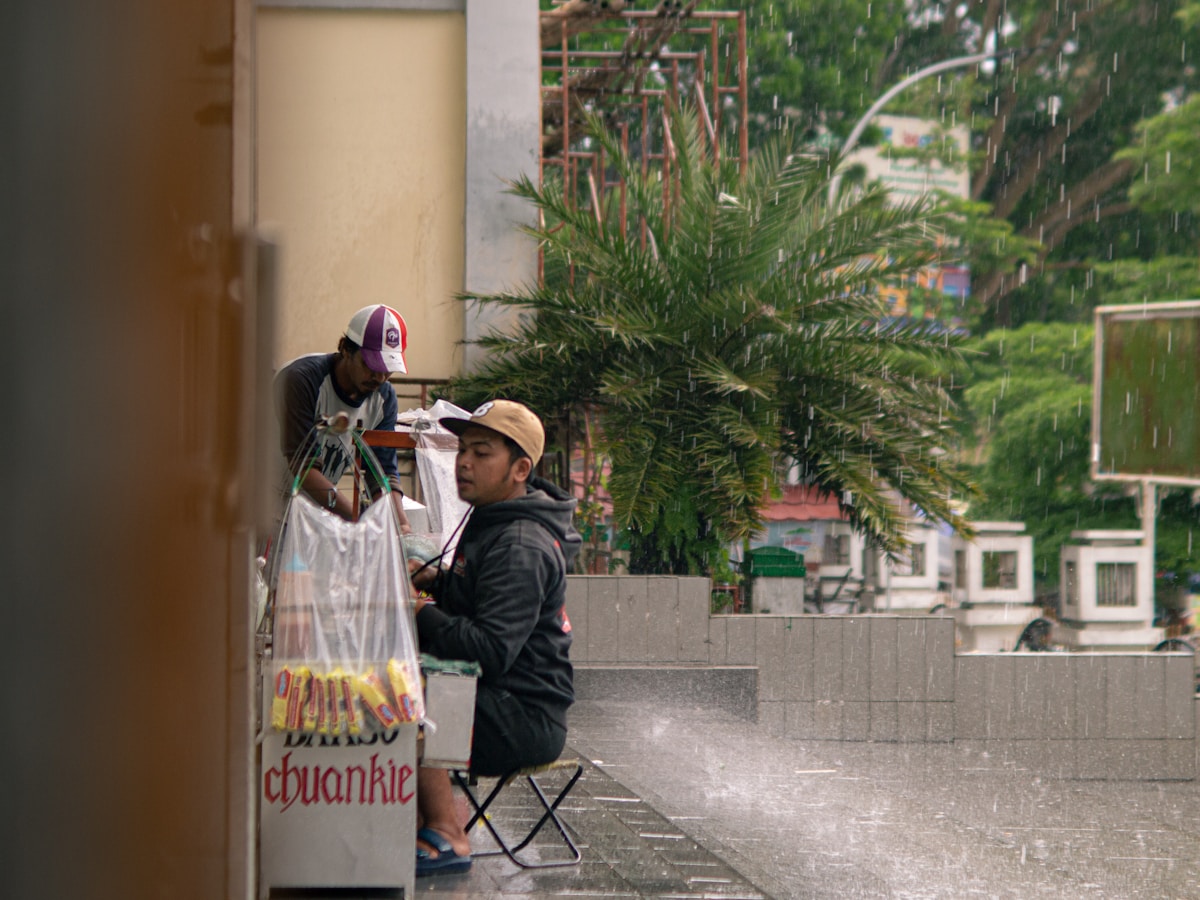
“All-day grey drizzle” - the image many Europeans have of a wet season - is not typical of equatorial Indonesia. When it rains here, it rains hard and then stops. The sky usually clears within 1–2 hours.
Activities Unaffected by Rain
The following activities are either completely unaffected by wet season rain or can be easily scheduled around the afternoon shower pattern:
Temple visits: Tanah Lot, Uluwatu, Besakih, Tirta Empul - stone temples look dramatic in overcast light and are perfectly manageable in light rain. Heavy rain can make cliff-edge access slippery; check conditions before visiting exposed sites like Uluwatu’s cliff paths.
Cooking classes: all indoor or covered. Morning sessions (typically 9am–1pm) run entirely in the dry window. Among the most popular wet-season activities in Ubud.
Museums and galleries: Ubud’s ARMA (Agung Rai Museum of Art), Neka Art Museum, and Blanco Renaissance Museum are ideal afternoon wet-season refuges. Entry IDR 80,000–100,000 as of 2026.
Spa days: Bali has no shortage of world-class spa facilities. A full-day spa programme at COMO Shambhala Estate or Maya Ubud is a natural wet-season activity and something many visitors do regardless of season. Half-day treatments from IDR 500,000 per person.
Borobudur and Prambanan (Java): both sites are covered stone platforms - rain does not stop visits. Bring waterproof sandals or shoes with grip; stone surfaces are slippery when wet.
Markets: Ubud’s Pasar Badung, Sukawati Art Market, and Sanur night market all operate rain or shine. Morning markets are usually dry.
Activities Affected by Rain
Trekking and volcano hikes: Rinjani’s crater trail is officially closed January–March. Mount Bromo is accessible year-round but cloud cover can obliterate the sunrise view from November to February - some visitors travel the full distance and see only white mist. Mount Ijen is technically accessible in the wet season but pre-dawn treks (for blue fire) involve wet, slippery paths in darkness. Bali’s Munduk waterfall trails are passable with decent footwear but trail conditions vary.
Diving visibility: Bali’s main dive sites (Tulamben USS Liberty wreck, Amed, Menjangan Island) see reduced visibility during peak wet season. Visibility of 10–20 metres replaces the 25–40 metres common in dry season. Diving is not impossible - experienced divers still find it rewarding - but conditions are noticeably different. Komodo has rough crossing seas November–March.
Fast boat services: Crossings between Bali, Nusa Penida, Lombok, and the Gili Islands can be cancelled or delayed in rough weather during January and February. Check conditions and operator cancellation policies before booking. The open-water crossing to Gili Trawangan and beyond is most exposed to Indian Ocean swells.
Outdoor ceremonies and dance performances: some open-air Kecak fire dance performances at Uluwatu are cancelled in heavy rain. The covered theatre at Ubud Palace (Puri Saren) runs performances most evenings year-round regardless of weather.
How Prices and Crowds Drop in the Wet Season
Bali’s wet season is its low season. The practical impact on pricing is significant:
- Accommodation: Seminyak and Ubud hotels and villas typically drop 25–40% between November and late January compared to July–August peak pricing. A villa that costs USD 300 per night in August may be USD 180–200 in January.
- Activities: tour operators are less busy and more willing to negotiate on group tour prices. Private drivers quote lower daily rates.
- Beaches: south Bali beaches are substantially less crowded. Kuta, Legian, and Seminyak lose much of their dense tourist concentration. Sanur and Amed are pleasantly quiet.
- Restaurants: no queues at popular restaurants that need pre-booking in peak season. Locavore in Ubud, which books out weeks ahead in July, may have same-week availability in December.
The exception is December 22 – January 5: this period sees a spike in Australian and European visitors over Christmas and New Year, pushing prices back up to or above peak-season levels. If visiting over this window, book accommodation 2–3 months in advance.
Practical Tips for the Wet Season
Waterproof daypack: a 20L dry bag or waterproof-lined daypack protects your camera, passport, and electronics during afternoon showers. More useful than an umbrella for active travellers.
Schedule outdoor activities before noon: temples, rice terraces, and market visits between 7am and 12pm are reliably dry on most days. Reserve spa bookings, cooking classes, and museum visits for the wet afternoon window.
Book outdoor activities for the morning slot: when booking a rice terrace walk, a volcano sunrise, or a snorkelling trip, always request the earliest available time. Afternoon departures carry a meaningful chance of being disrupted.
Footwear: wet stone temple steps and rice paddy paths are genuinely slippery. Closed-toe sandals with grip (Teva, Keen, or similar) are more practical than flip-flops for any outdoor walking.
Wet season and the harvest cycle: Bali’s wet season corresponds with the planting of wet rice. The terraces around Tegallalang, Jatiluwih, and the Sidemen Valley are at their most photogenic - a deep, saturated green that the dry season cannot match. If rice terrace photography is a priority, the wet season is actually the better time.
The wet season is a legitimate time to visit Indonesia. With sensible scheduling and realistic expectations about afternoon rain, most of what makes Indonesia worth visiting - temples, food, culture, diving, trekking - remains fully accessible.
Travel insurance for Indonesia is essential - cover for medical evacuation, trip cancellation, and adventure activities is strongly recommended before any multi-island trip. Picking up an Indonesia eSIM before you fly means you land connected - no queuing at airport SIM kiosks on arrival.
Monthly Guides for Wet Season Travel
- Visiting Indonesia in November - shoulder month with lower prices and starting rains
- Visiting Indonesia in December - peak Christmas season in Bali, wet in most of Java
- Visiting Indonesia in January - the wettest month in most of Bali and Java
- Visiting Indonesia in February - still wet but prices low and crowds minimal
- Visiting Indonesia in March - rains easing; Nyepi falls this month in most years
Ready to Plan Your Trip?
See our itineraries for inspiration:
- One Week in Indonesia - Bali, Nusa Penida, Gili Islands and Lombok
- 2 Weeks in Indonesia - the island-hopping route from Bali east
- 10 Days in Indonesia - Bali, Java and Komodo combined
- 1 Week in Bali - day-by-day first-timer’s guide with costs
Plan Your Trip
✈️ Book your flights to Indonesia 🛡️ Get travel insurance 📱 Stay connected with an eSIM 🚗 Rent a car