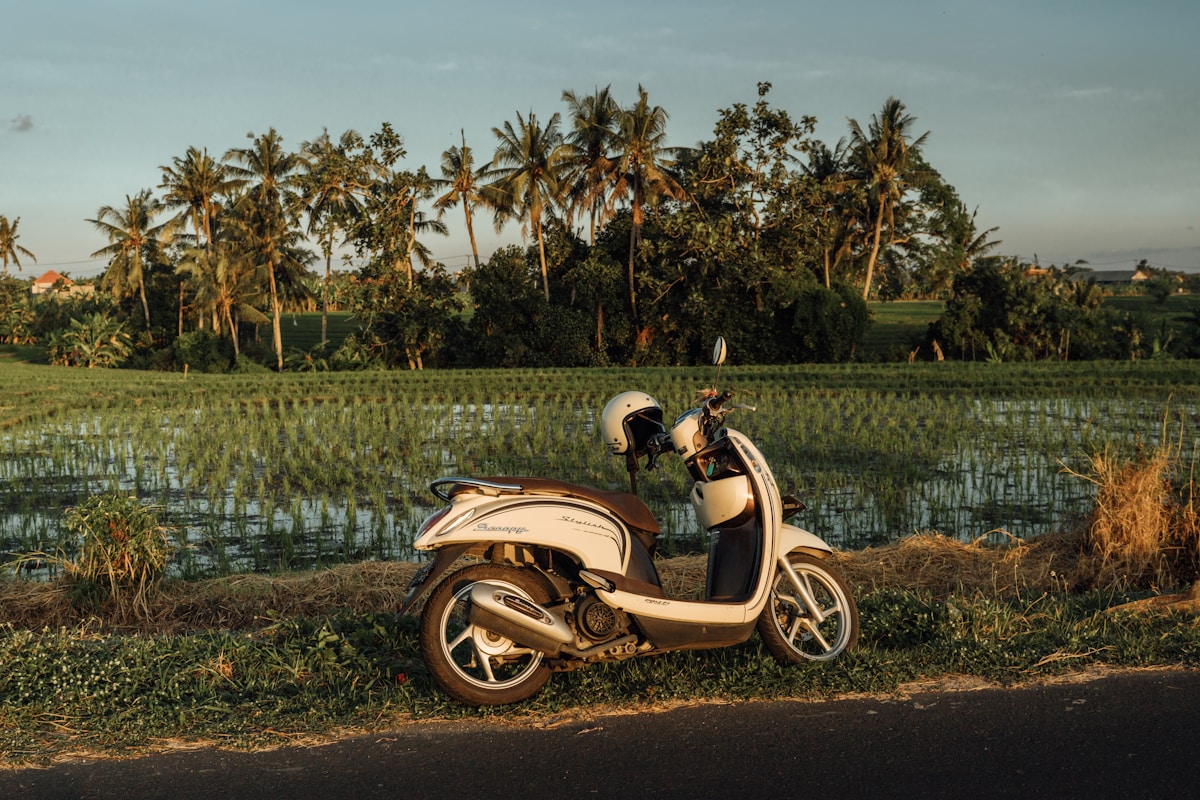
Renting a scooter is one of the most popular ways to explore Bali independently. It gives you the flexibility to leave early for sunrise viewpoints, duck down side roads past rice terraces, and reach restaurants and beaches that no shuttle bus services. It also comes with real risks - Bali’s roads are among the most accident-prone in Southeast Asia for foreign visitors. This guide covers everything you need to ride legally and safely.
Licence Requirements
This matters more than rental shops will suggest. Indonesian law requires:
- A valid motorcycle licence from your home country - a standard car licence is not sufficient
- An International Driving Permit (IDP) with a motorcycle category endorsement, or an Indonesian SIM C
The IDP must specifically include the motorcycle category. A general IDP covering only Category B (cars) does not legalise scooter riding. When applying for your IDP before departure, confirm that the motorcycle category is included - the process varies by country.
In practice: Many rental shops hand over a scooter without asking for any licence. Do not interpret this as permission to ride without one. Police razia (roadblocks) in tourist areas are common, particularly in Canggu, Seminyak, Ubud, and on the road to Uluwatu. Officers check licences and IDP documents. Fines for riding without proper documentation run IDR 250,000–500,000 as of 2026 - and that’s the least of your problems if you’re involved in an accident.
Travel insurance implication: virtually every travel insurance policy excludes motorcycle incidents if you were not licenced to ride. An unlicensed scooter accident in Bali means any hospital bill - potentially substantial - falls entirely on you. Before you rent, make sure your travel insurance specifically covers motorcycle riding with an IDP.
How Much Does Scooter Rental Cost?
Prices are highly negotiable, especially for multi-day or weekly rentals. As a guide (2026 rates):
| Duration | Standard 110–125cc | 150cc (Vario, NMAX) |
|---|---|---|
| 1 day | IDR 70,000–100,000 | IDR 100,000–150,000 |
| 1 week | IDR 380,000–550,000 | IDR 600,000–850,000 |
| 1 month | IDR 900,000–1,200,000 | IDR 1,300,000–1,800,000 |
Fuel (Pertalite, the standard grade) costs approximately IDR 10,000/litre as of 2026; Pertamax (95 octane) runs IDR 13,900/litre. A full 3.5-litre tank costs IDR 35,000–50,000 and covers roughly 150–200 kilometres of mixed riding.
Prices are typically slightly higher in Canggu, Seminyak, and Kuta - the most competitive tourist markets - and marginally lower in Ubud and smaller towns.
Where to Rent a Scooter in Bali
Local rental shops
The most common and cheapest option. Every major tourist area has clusters of rental operations - look for small shops with scooters lined up outside on Jalan Dewi Sri in Kuta/Legian, along Jalan Raya Canggu in Canggu, Jalan Monkey Forest in Ubud, and the main drag in Seminyak.
When choosing a local shop:
- Inspect the scooter thoroughly before accepting - check tyres (inflation and tread depth), brakes (front and rear), horn, indicators, lights, and mirrors. Test the engine cold. Photograph all existing damage.
- Ask to see the STNK (Surat Tanda Nomor Kendaraan) - the vehicle registration document. This stays with the bike. You’ll need it if stopped by police.
- Confirm what happens if the scooter breaks down - many local shops will replace it, but get clarity upfront.
- Avoid leaving your passport as a deposit - a copy is acceptable. Some shops ask for IDR 200,000–500,000 cash deposit instead; this is fine.
Search hotels in Bali on Booking.com
Hotel and guesthouse rentals
Many mid-range hotels and homestays (especially in Ubud and Canggu) have scooters available to guests, sometimes included in the room rate or at slight premium above street prices. The advantage: a trusted party to contact if something goes wrong.
Online pre-booking
Several operators offer online booking with doorstep delivery in Bali: Bikesbooking.com and Motorent Bali are frequently recommended on traveller forums. Pre-booking locks in a price and allows you to review the rental agreement before arrival - useful for longer stays.
Insurance
Rental shop insurance in Bali is minimal. Standard agreements typically cover:
- Basic third-party liability (legally required)
They typically do not cover:
- Damage to the rental scooter
- Theft
- Your medical expenses
Your travel insurance policy is the critical layer here. Check your policy specifically for:
- Motorcycle riding (some policies exclude it entirely)
- Whether your home country licence plus IDP satisfies the “appropriate licence” clause
- Medical evacuation coverage - private hospitals in Bali are good but expensive
BPJS (Indonesian public insurance) does not cover foreign tourists. BIMC Kuta and Siloam Hospitals Bali are the main private facilities used by foreign visitors; treatment costs for serious injuries start in the millions of rupiah.
Safety Tips
Bali’s accident rate for foreign visitors is genuinely high. The risks are real and worth taking seriously:
Wear a helmet at all times. Rental shops provide one - it’s usually a basic open-face model. Consider bringing or buying a better-fitting full-face helmet if you’re riding for more than a few days. Helmets are sold new at Ramayana supermarkets and motor accessory shops for IDR 150,000–400,000.
Ride defensively. Dogs, potholes, pedestrians, and trucks turning without warning are all constant factors. Assume other road users have not seen you.
Avoid riding at night in unfamiliar areas. Many roads in rural Bali are unlit, and potholes and road edges are invisible in the dark. Plan your rides to end before dark when exploring new routes.
Watch the road surface. Loose gravel, wet paint, wet leaves, and sudden patches of sand are common. Slow down before corners on mountain roads - you cannot see what’s on the other side.
Go slow in traffic. Kuta, Seminyak, and Denpasar traffic is dense and chaotic. Lane splitting is normal here but requires patience and spatial awareness. Don’t rush.
Fuel up before heading to remote areas. Northern Bali, the road to Amed, and interior mountain routes have long gaps between petrol stations. Fill up whenever you see one.
Best Areas for Riding in Bali
Ubud and central Bali
The most rewarding riding terrain. Roads through the rice terraces north of Ubud (toward Tegallalang and Jatiluwih), the winding route to Kintamani via Penglipuran village, and the descent from Bedugul to Singaraja through pine forest are genuinely spectacular. Traffic is lighter than south Bali, and distances are manageable.
Route suggestion: Ubud → Tirta Empul → Kintamani viewpoint → Penelokan → return via Payangan. Approximately 80 kilometres and 3–4 hours at a relaxed pace.
Uluwatu Peninsula
Bali’s southern cliffs are one of the best scooter destinations on the island. The roads between Uluwatu Temple, Padang Padang beach, Bingin, and Balangan are quiet, well-surfaced, and pass through dramatic clifftop terrain. Distances are short - you can cover the entire peninsula in a half-day.
Note: the final descent to most Uluwatu beaches involves steep, narrow concrete paths. Assess your skill level before committing; walking the scooter down is sometimes the right call.
North Bali coast
The road from Lovina west toward Pemuteran, and east toward Amed via Tulamben, is one of Bali’s quieter coastal routes. Traffic is light, the landscape is dramatically different from south Bali, and the route passes volcanic black sand beaches. Plan overnight stays - these routes are too long for a comfortable day return from the south.
Canggu and the west coast
Good for short local rides between Canggu, Pererenan, Seseh, and Echo Beach. Road quality is reasonable and the surfing beach strip is easy to navigate. Not the most scenic riding but a useful base for day trips north toward Tanah Lot.
Routes to avoid on a scooter
- Denpasar city centre: traffic is severe and navigation is confusing - skip it.
- Kuta to Nusa Dua along the bypass: fast dual-carriageway with aggressive truck traffic. Not pleasant on a scooter.
- The main Kuta–Seminyak–Canggu strip in peak hours: crawling traffic that adds no enjoyment. Better covered by walking or a short Grab ride.
Practical Checklist Before You Ride
- IDP with motorcycle category ✓
- Home country motorcycle licence ✓
- Travel insurance that covers motorcycle riding ✓
- STNK (registration document) stays with the bike ✓
- Scooter inspected and damage photographed ✓
- Helmet fitted properly ✓
- Offline Google Maps for the area downloaded ✓
- Petrol tank full ✓
- Emergency contact saved (your guesthouse, rental shop WhatsApp) ✓
If you’d prefer to skip the scooter entirely, a private car hire for the day costs a comparable amount and removes all the above concerns. Both are valid approaches - choose what matches your experience level honestly.
Plan Your Trip
✈️ Book your flights to Indonesia 🛡️ Get travel insurance 📱 Stay connected with an eSIM 🚗 Rent a car
Ready to Plan Your Trip?
See our itineraries for inspiration:
- 3 Days in Bali - the perfect short trip covering the essentials
- 1 Week in Bali - day-by-day first-timer’s guide with costs
- 2 Weeks in Bali & Lombok - Ubud, Nusa Penida, Amed, and the Gili Islands