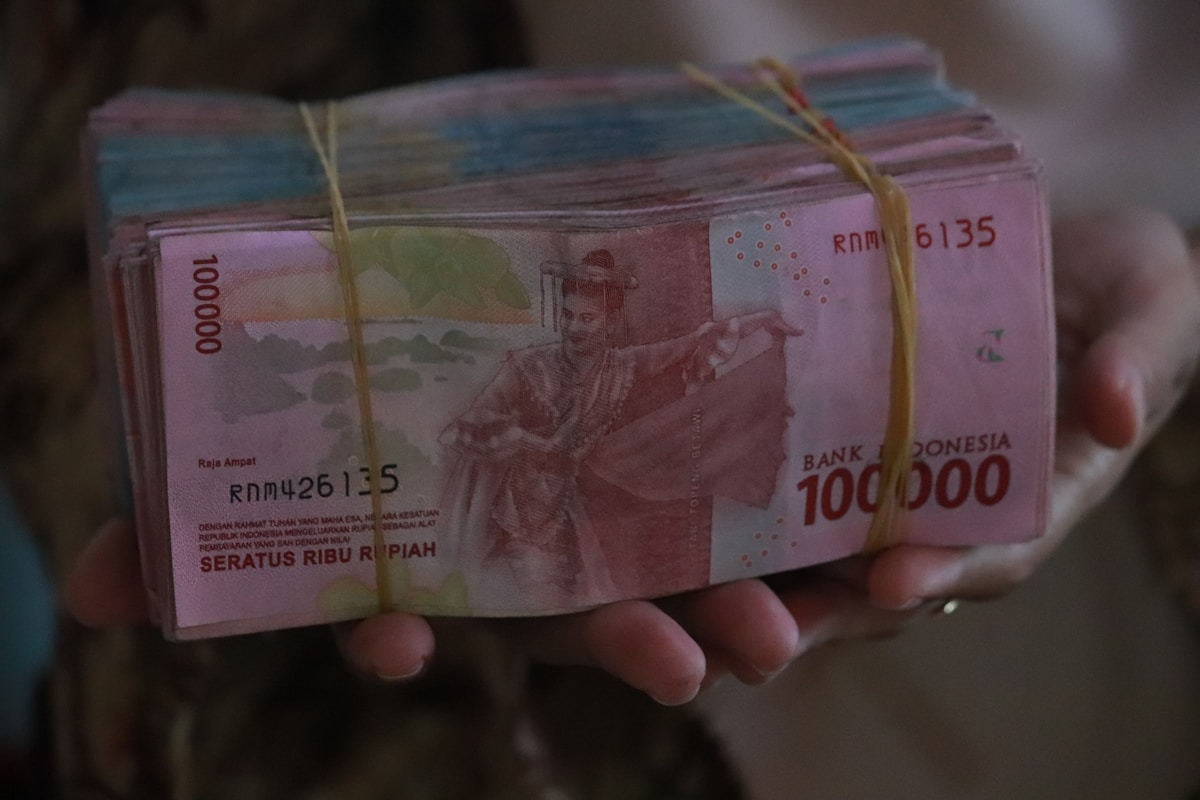
Indonesia uses the Indonesian Rupiah (IDR). The denominations go high - you’ll regularly handle 50,000 and 100,000 notes - which can disorient first-time visitors into thinking they’re carrying more than they are. This guide covers everything you need to know about managing money in Indonesia.
The Indonesian Rupiah (IDR)
The Rupiah comes in notes of IDR 1,000, 2,000, 5,000, 10,000, 20,000, 50,000, and 100,000. Coins (IDR 100, 200, 500, 1,000) exist but are rarely encountered in daily transactions.
Approximate exchange rates as of 2026:
- USD 1 ≈ IDR 15,000–16,000
- EUR 1 ≈ IDR 16,500–17,500
- AUD 1 ≈ IDR 9,500–10,500
- GBP 1 ≈ IDR 19,000–20,000
These rates fluctuate - check xe.com or your bank’s live rate before you travel. The rates above are approximate guides only.
A useful shorthand: drop four zeros. IDR 100,000 ≈ USD 6–7. IDR 500,000 ≈ USD 30–35.
ATMs
ATMs are widely available in cities, tourist areas, and most town centres across Bali, Java, Lombok, and Sumatra. They become less reliable on smaller or more remote islands - always carry adequate cash when heading off the main tourist circuit.
Recommended ATM networks:
- BCA (Bank Central Asia): most reliable for international Visa and Mastercard. Withdrawal limit typically IDR 2,500,000–3,000,000 per transaction
- Mandiri: also reliable, similar limits
- BRI and BNI: work fine for most cards but occasional connection issues
Fees: Most Indonesian ATMs charge a flat fee of approximately IDR 30,000–50,000 per withdrawal. Your home bank may add its own international fee on top. Minimise fees by withdrawing larger amounts less frequently.
ATM safety: Use ATMs inside bank branches or shopping malls rather than standalone street units. Shield your PIN, and check for skimming devices (loose card slot, unusual plastic fixtures around the slot) before inserting your card.
Exchanging Cash
For tourists arriving with USD, EUR, or AUD cash, licensed money changers in Bali often offer better rates than ATMs. Reputable options include PT Central Kuta (Central Money Changer) branches in Bali - look for the government-registered changers rather than street-side operations.
Golden rule: Count your notes before leaving the counter. Some unofficial changers use sleight-of-hand to short-count - a common and well-documented scam. Always count in full view before walking away.
Avoid airport money changers if possible - rates at Bali airport are significantly below market.
Cashless Payments
Tourist-oriented cafes, restaurants, and shops in Bali, Jakarta, and Yogyakarta increasingly accept Visa and Mastercard contactless. However, Indonesia largely runs on cash - warungs, markets, local transport, and smaller businesses will not accept cards.
Indonesian payment apps - GoPay, OVO, and DANA - are widely used by locals and increasingly accepted everywhere. These require an Indonesian phone number and bank account to top up, but some cafes and restaurants in Bali will process payments via their QR codes if you’re staying long-term and have set up a local account.
If you’re in Indonesia for an extended stay, setting up GoPay via the Gojek app is worth the effort - it unlocks local pricing at many merchants.
Daily Budget Ranges
These figures are approximate guides for solo travellers as of 2026 and will vary significantly by island and travel style.
Budget (USD 30–50/day):
- Guesthouse or budget villa: USD 15–25
- Three meals at warungs: USD 5–10
- Local transport (scooter rental or Gojek): USD 5–8
- Entry fees and activities: USD 5–10
Mid-range (USD 80–150/day):
- Boutique hotel or comfortable villa: USD 50–80
- Mix of local restaurants and cafes: USD 20–30
- Private driver or Grab: USD 10–20
- Tours and activities: USD 20–30
Comfort (USD 200+/day):
- Villa with pool or upscale hotel: USD 120–200+
- Restaurant dining and cocktail bars: USD 40–60+
- Private transfers and guides: USD 30–50
Bali is generally more expensive than other Indonesian islands for equivalent accommodation. Lombok, Java (outside major hotels), and eastern Indonesia offer noticeably better value.
Tipping
Tipping is not mandatory in Indonesia, but it is appreciated and increasingly expected in tourist areas.
Rough guide:
- Restaurants with service charge already included: no additional tip required (check the bill - “service charge 10%” is common at tourist restaurants)
- Local warungs: a tip is not expected but rounding up is generous
- Private drivers: approximately IDR 50,000–100,000 for a full day is appreciated
- Guides and spa staff: approximately IDR 50,000–150,000 depending on service quality and duration
- Hotel porters: IDR 10,000–20,000 per bag
Common Money Scams
Dynamic Currency Conversion (DCC) at ATMs. When an ATM asks “Would you like to proceed in USD?” or your home currency - always decline and choose IDR. The conversion rate applied by the ATM’s bank is typically 5–10% worse than your home bank’s rate. This applies to card payments at merchants as well.
Short-change. When paying with large notes (IDR 100,000) at markets or small stalls, count your change carefully. Mistakes - accidental or otherwise - happen.
Fake authorised money changers. Imitation signage is used by some unofficial changers in tourist areas. Use branches you can verify (look for a government registration number displayed in the window) or use bank ATMs instead.
Pre-booking tours in Bali is often cheaper than booking through hotel desks - street vendors and guesthouse touts typically charge 30–50% more than online rates. Bookaway is one of the cheapest ways to book inter-island ferries and buses - tickets are competitively priced and confirmed instantly.
See Also
- Indonesia travel costs - daily budget breakdowns by tier across Bali, Java, and other islands
- Indonesia on a budget - strategies for keeping costs manageable
- Indonesia safety guide - avoiding scams, including money changer fraud
- First time in Indonesia - the complete practical guide for first-time visitors
- Bali tourist levy - the IDR 150,000 entry fee and how to pay it at arrival
Ready to Plan Your Trip?
See our itineraries for inspiration:
- One Week in Indonesia - Bali, Nusa Penida, Gili Islands and Lombok
- 2 Weeks in Indonesia - the island-hopping route from Bali east
- 3 Weeks in Indonesia - Java, Bali and the eastern islands
Plan Your Trip
✈️ Book your flights to Indonesia 🛡️ Get travel insurance 📱 Stay connected with an eSIM 🚗 Rent a car