Search hotels in Indonesia on Booking.com
Indonesia is one of the most affordable long-haul destinations in Southeast Asia - if you know where to go and what to avoid. A backpacker can live comfortably on USD 25–30 per day. A couple wanting air-conditioned rooms and sit-down restaurants can do it on USD 60 each. Here is how to make every rupiah go further.
Daily Budget Tiers
| Budget Level | Daily Spend (per person) | What You Get |
|---|---|---|
| Backpacker | USD 20–30 | Dorm bed, warung meals, local transport, free beaches |
| Mid-range | USD 50–70 | Private room, restaurant meals, occasional activity |
| Comfortable | USD 120–180 | Boutique hotel or villa, guided tours, domestic flights |
| Luxury | USD 250+ | Resort villas, private drivers, fine dining |
These figures are realistic averages as of 2026. Bali inflates the mid-range and luxury tiers; Java and Lombok are consistently cheaper.
Bali vs Java: Where Your Money Goes Further
Bali has the most tourist infrastructure - and the most tourist pricing. Seminyak and Canggu restaurants charge Bali prices (IDR 80,000–200,000 per dish), scooter rentals run IDR 80,000–120,000 per day, and popular surf breaks now charge entry fees. You can still travel Bali cheaply, but you need to actively step away from the tourist strip.
Java is roughly 30–40% cheaper across the board. Yogyakarta offers excellent budget accommodation from IDR 150,000 per night, local buses for IDR 5,000–15,000, and warungs serving generous nasi pecel for IDR 15,000–25,000. The Ijen Crater trek, one of Indonesia’s most dramatic experiences, costs IDR 100,000 entry (as of 2026) plus a local guide at around IDR 200,000.
Lombok sits between the two. South Lombok beaches are still relatively uncrowded; accommodation in Kuta Lombok runs IDR 200,000–350,000 for a clean private room. Gili Trawangan is more expensive - expect Bali-level prices at beach restaurants.
Budget Accommodation
Hostels and guesthouses are the backbone of budget travel in Indonesia. Dorm beds in Yogyakarta, Ubud, and Labuan Bajo run IDR 80,000–150,000 per night (approximately USD 5–9 as of 2026). A private room with air-con and en suite bathroom typically costs IDR 200,000–400,000.
Warung homestays in rural areas and small villages are often cheaper still - IDR 100,000–200,000 for a simple room including breakfast. They are common on Nusa Lembongan, Gili Air, and parts of Lombok and Flores. Book these through Booking.com or by walking in directly - they rarely appear on major OTA listings at the lowest prices.
Avoid booking hotels through taxi drivers or airport touts. You pay inflated commissions. Use Booking.com to compare, then confirm directly with the property.
Cheap Transport
Night buses are the most cost-effective way to cover long distances on Java and Sumatra. The Yogyakarta–Surabaya executive class bus (IDR 120,000–180,000) takes around 5 hours overnight, saving a night’s accommodation. Operators like PO Rosalia Indah and PO Haryanto run punctual services with reclining seats and air-con.
Commuter Line trains (KRL) in Greater Jakarta cost IDR 3,000–5,000 per trip - under USD 0.35. They connect the city centre to the airport (Soekarno-Hatta via Sudirman and Manggarai stations with a free shuttle) and to satellite towns like Bogor. For longer intercity trips, the Indonesian rail network (KAI) is excellent: the Gajayana Express from Jakarta to Yogyakarta costs IDR 350,000–600,000 in economy class as of 2026.
Budget airlines - Lion Air, Batik Air, Citilink - make domestic island-hopping viable. Bali to Labuan Bajo (for Komodo) costs IDR 400,000–900,000 one-way booked 2–3 weeks ahead. Jakarta to Medan, Makassar, or Manado runs IDR 500,000–1,200,000. Always check baggage fees: Lion Air charges extra for hold luggage.
Grab (ride-hailing) is consistently cheaper than metered taxis in cities. A Grab GoCar from central Denpasar to Kuta costs IDR 30,000–50,000. Set your pickup point away from hotel entrances to avoid surge pricing.
Scooter rental on Bali, Lombok, and Flores is IDR 70,000–120,000 per day. Bring an international driving licence (motorcycle category) - police checkpoints are common in Bali, and fines for unlicensed riders run IDR 250,000–500,000. For longer trips covering multiple sites, hiring a car with driver is often better value than repeated Grab rides.
Eating Cheaply
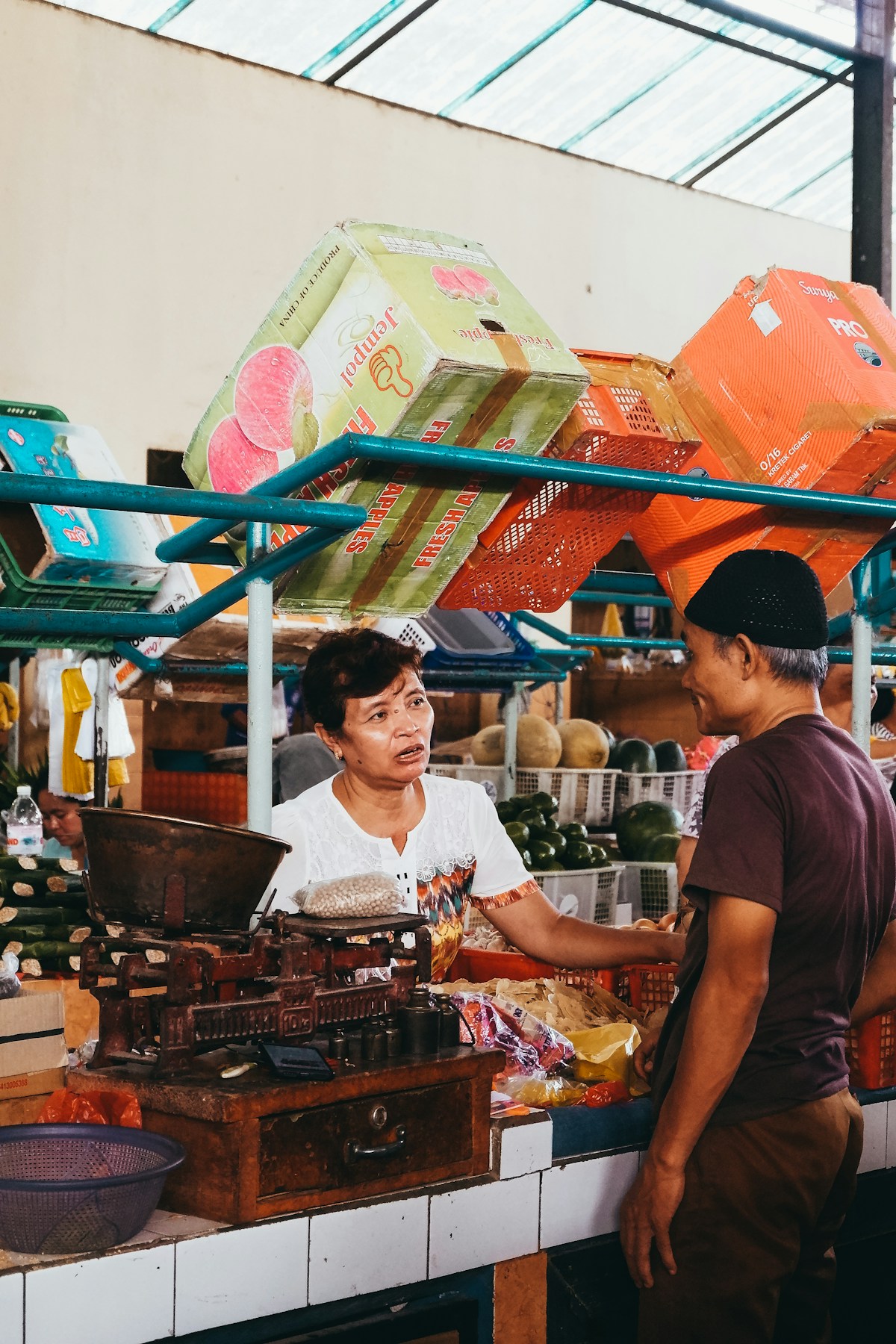
Warungs are the cornerstone of cheap eating. These family-run stalls and small restaurants serve rice-based dishes - nasi goreng, nasi campur, mie goreng, gado-gado - for IDR 15,000–35,000. Look for warungs where locals outnumber tourists; the food will be fresher and the price will be right.
Nasi Padang restaurants operate on a distinctive system: dishes are displayed at the front, you point at what you want, and you pay only for what you eat. A filling nasi Padang meal with rice, a protein, two vegetable dishes, and a fried cracker costs IDR 25,000–50,000.
Night markets (pasar malam) are excellent for cheap eating in the evening. Yogyakarta’s Malioboro strip, Kuta’s Poppies Lane, and Denpasar’s Pasar Badung all have dense clusters of food stalls open from dusk. Budget IDR 20,000–50,000 for a full evening meal.
Avoid ordering imported drinks. A can of Bintang beer at a beach bar in Seminyak costs IDR 50,000–80,000. The same beer from a minimarket (Indomaret, Alfamart) costs IDR 20,000–25,000.
Free and Low-Cost Attractions
Indonesia has more free attractions than most travellers realise:
- Beaches: most of Indonesia’s beaches charge nothing. Exceptions include Tanah Lot (IDR 25,000), some south Bali surf beaches (IDR 5,000–10,000 for parking), and organised beach clubs.
- Temples: many Balinese temples charge IDR 15,000–50,000 for entry plus a mandatory sarong rental (IDR 15,000–20,000 if you didn’t bring one). The Tanah Lot temple complex is IDR 60,000 as of 2026.
- Waterfalls: Gitgit (IDR 20,000), Sekumpul (IDR 20,000 + guide IDR 250,000), Tukad Cepung (IDR 20,000) - all in north/central Bali.
- Yogyakarta: the Keraton (Sultan’s Palace) costs IDR 15,000 for residents of Indonesia and IDR 25,000 for foreign tourists. Walking Malioboro is free.
Tourist Traps to Avoid
Overpriced day tours from hotels: hotel-arranged tours to Borobudur, Bromo, or the Gili Islands routinely cost 2–3x the rate you can negotiate directly with local guides. Use Viator or GetYourGuide to compare prices first, then book direct with operators you find at the site.
Airport money exchange: rates at Ngurah Rai International Airport (Bali) and Soekarno-Hatta (Jakarta) are 8–12% worse than city centre exchange counters. Use ATMs from BCA or BNI banks, or exchange at authorised money changers in central Denpasar or Sanur (not the unlicensed counters on Kuta beach strip, which weigh the notes).
Fake “tours” to popular spots: touts near Tanah Lot, Kuta beach, and Borobudur sell tickets or tours at inflated prices. Buy temple tickets at the official booth; do not accept offers from people who approach you outside the entrance.
Budget Summary: Two Weeks in Bali and Java
A two-week itinerary combining Bali (7 nights), Yogyakarta (4 nights), and East Java / Bromo (3 nights) on a mid-range budget costs approximately:
| Category | Estimated Cost |
|---|---|
| Accommodation (14 nights avg IDR 300,000) | IDR 4,200,000 (~USD 260) |
| Food (IDR 100,000/day x 14) | IDR 1,400,000 (~USD 87) |
| Transport (flights + buses + Grab) | IDR 1,500,000 (~USD 93) |
| Activities (Borobudur, Bromo, temples) | IDR 800,000 (~USD 50) |
| Miscellaneous (SIM, water, snacks) | IDR 400,000 (~USD 25) |
| Total | ~IDR 8,300,000 (~USD 515) |
All figures approximate as of 2026. Budget travellers can do the same trip for under USD 350; those wanting private rooms, AC, and occasional tours can plan on USD 700–900.
The key to budget Indonesia travel is not deprivation - it is eating where locals eat, moving on local transport, and booking activities direct rather than through resort desks.
Pre-booking tours in Bali is often cheaper than booking through hotel desks - street vendors and guesthouse touts typically charge 30–50% more than online rates. Bookaway is one of the cheapest ways to book inter-island ferries and buses - tickets are competitively priced and confirmed instantly.
Budget Transport: Quickfire Comparison
| Mode | Route | Cost (IDR) | Notes |
|---|---|---|---|
| KRL commuter train | Within Greater Jakarta | 3,000–5,000 | Cheapest city transport in Indonesia |
| Night bus | Yogyakarta–Surabaya | 120,000–180,000 | Saves a night’s accommodation |
| Budget flight | Bali–Labuan Bajo | 400,000–900,000 | Book 2–3 weeks ahead |
| Budget flight | Jakarta–Medan/Makassar | 500,000–1,200,000 | Lion Air, Batik Air, Citilink |
| Intercity train (economy) | Jakarta–Yogyakarta | 350,000–600,000 | KAI Gajayana or Taksaka |
| Grab GoCar | Denpasar–Kuta | 30,000–50,000 | Set pickup away from hotel to avoid surge |
| Scooter hire | Bali daily | 70,000–120,000 | Need international driving licence |
| Perama shuttle | Ubud–Candidasa | 75,000–150,000 | Fixed-route tourist shuttle |
| Public ferry | Bali–Lombok | 55,000 | Padang Bai departure, ~4.5 hours |
| Fast boat | Padang Bai–Gili Islands | 250,000–400,000 | ~90 minutes |
All prices as of 2026.
Related Guides
- Indonesia travel costs - a detailed breakdown of what things actually cost in 2026
- Indonesia packing list - travel light, save on baggage fees, and carry only what you need
- Indonesia internet and SIM cards - the cheapest ways to stay connected across the islands
- Warung guide Indonesia - eating well at local warungs and paying local prices
Ready to Plan Your Trip?
See our itineraries for inspiration:
- One Week in Indonesia - Bali, Nusa Penida, Gili Islands and Lombok
- 2 Weeks in Indonesia - the island-hopping route from Bali east
- 3 Weeks in Indonesia - Java, Bali and the eastern islands
Plan Your Trip
✈️ Book your flights to Indonesia 🛡️ Get travel insurance 📱 Stay connected with an eSIM 🚗 Rent a car