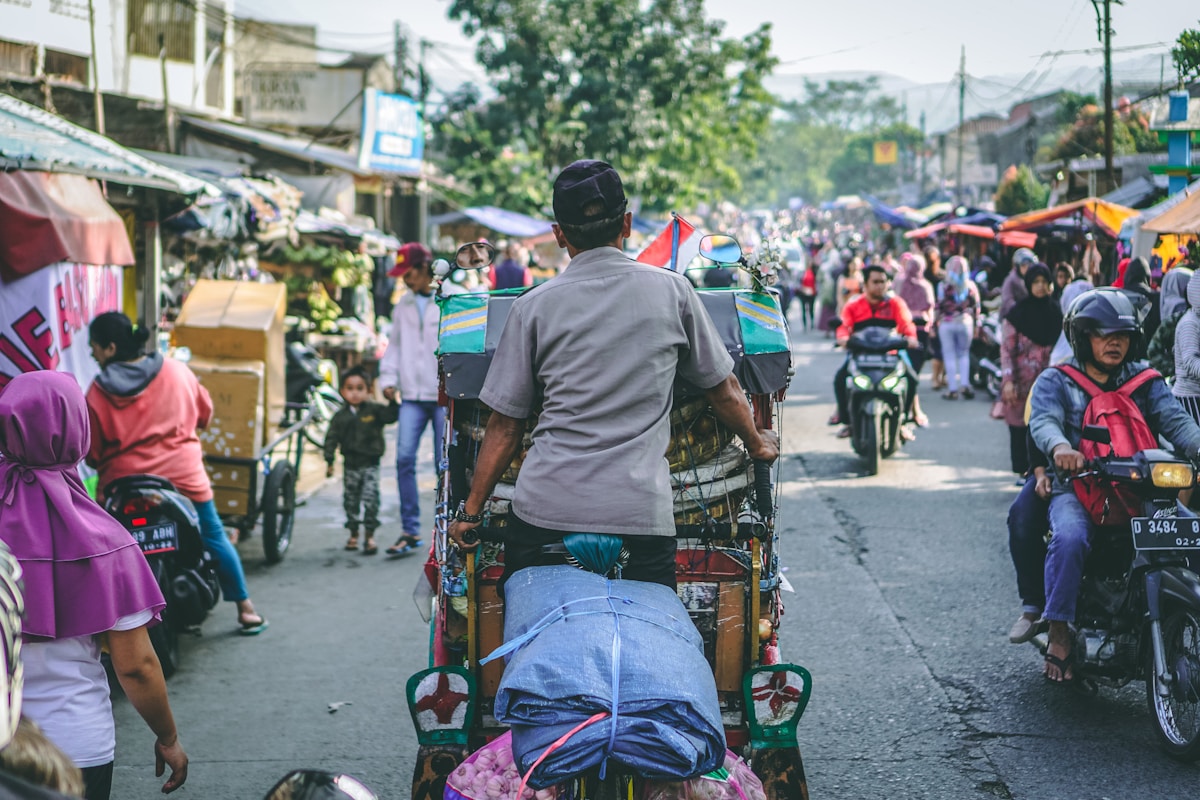
Travel insurance is not optional for Indonesia. The country’s combination of remote geography, high motorbike accident rates, active volcanoes, and world-class diving creates risks that domestic health cover rarely addresses - and that can generate bills running to tens of thousands of dollars without warning.
Before you travel - quick checklist:
- Travel insurance: EKTA - covers medical emergencies, trip cancellation, and travel delays
- Check your policy covers motorbike riding (requires a valid licence in your home country)
- Confirm diving cover if you plan to dive (or add DAN membership)
- Save your insurer’s emergency line offline before departure
Why Indonesia Specifically Requires Good Cover
Motorbike Accidents
Motorbike accidents are the leading cause of serious injury to travellers in Bali and across Indonesia. Rental bikes are often poorly maintained, road conditions are unpredictable, and traffic in tourist areas can be chaotic. A straightforward fracture treated at BIMC Hospital in Kuta can cost USD 2,000–5,000 as of 2026, including X-ray, orthopaedic assessment, and any required surgery. Skin grafts and more complex injuries run considerably higher.
The critical insurance point: most standard travel policies exclude motorbike accidents unless you hold a valid licence covering the bike class you’re riding. Riding a 125cc scooter on an International Driving Permit with a car endorsement - or on no permit at all - typically voids your motorbike cover. Get this right before you ride, not after you’ve fallen.
Medical Evacuation from Remote Islands
Indonesia has more than 17,000 islands. Many of the most compelling - Raja Ampat, the Banda Islands, Derawan, Alor - have minimal medical infrastructure. A serious injury or illness on a remote island requires evacuation to Bali, Jakarta, or Singapore by chartered aircraft or helicopter.
Medical evacuation costs from Raja Ampat to Singapore, including aircraft charter and coordination fees, can reach USD 30,000–50,000 as of 2026. From less extreme locations, Bali to Singapore by air ambulance typically runs USD 15,000–25,000. These figures are not hypothetical - they represent real-world incidents documented by evacuation providers operating in the region.
Without insurance that specifically covers emergency evacuation, this cost falls entirely on you or your family.
Dive Injuries
Decompression sickness (DCS) requires treatment in a hyperbaric chamber. Indonesia has very few operational chambers - Bali has one, as does Manado - but access can be delayed, and more serious cases require evacuation to Singapore, which has multiple well-equipped facilities. Hyperbaric treatment alone costs approximately USD 1,500–3,000 per session as of 2026, and multiple sessions are often required.
Standard travel insurance policies explicitly exclude diving injuries unless a dive-specific add-on is purchased or the policy is designed for active travellers. This matters regardless of your certification level - even a correctly conducted dive can result in DCS.
What to Look For in a Policy
Minimum medical coverage: USD 100,000. This sounds high but is the realistic minimum for a serious injury requiring surgery and hospital admission at an internationally accredited Indonesian hospital. For evacuation cover, USD 100,000 medical combined with a separate unlimited evacuation benefit is preferable.
Emergency evacuation cover: explicitly listed, no sub-limit below USD 100,000. Some policies bury evacuation within the medical limit. Read the policy schedule carefully - evacuation and medical repatriation should be separately and clearly covered.
Trip cancellation and interruption. Less urgent than the above but useful - covers non-refundable flights, accommodation, and tour bookings if you have to cut a trip short due to illness, family emergency, or natural disaster (relevant given Indonesia’s volcanic activity and periodic natural disasters).
Diving cover. If you plan to dive, the policy must explicitly include recreational diving. Ideally it should specify coverage to the depth you intend to dive (standard recreational diving to 40m; technical diving requires specialist cover). DAN (Divers Alert Network) membership includes dedicated dive accident insurance and is widely recommended by dive operators across Indonesia.
Motorbike cover. Look for policies that include motorbike and moped cover, and check the licence requirement. Most require either a valid home-country motorcycle licence or an International Driving Permit with motorcycle endorsement. If you intend to rent a bike in Bali - which most visitors do - confirm this in writing with your insurer before travel.
Pre-existing conditions. Declare everything. A claim related to an undisclosed pre-existing condition will be denied regardless of other policy terms.
Recommended Providers for Indonesia
World Nomads
The most widely used policy among backpackers and independent travellers in Southeast Asia. World Nomads explicitly covers motorbike riding (if licensed), trekking, and recreational diving as standard - making it well-suited to an Indonesia itinerary. It also covers most adventure activities that other policies exclude. Pricing varies by nationality; as a rough guide, a 30-day single-trip policy for a US citizen typically costs USD 80–150 as of 2026 depending on the coverage tier selected.
Emergency line available 24/7. Claims process is entirely online. The Explorer tier is worth the premium if you intend to do more than beach-and-temples.
SafetyWing
A subscription-based model that charges approximately USD 45 per 4-week period as of 2026, with automatic renewal. Well-suited to long-term travellers and digital nomads who don’t have a fixed return date. Coverage includes emergency medical, evacuation, and trip interruption but not trip cancellation (it’s not tied to a specific booking, so cancellation cover doesn’t apply in the traditional sense).
Coverage for adventure activities including diving and motorbike riding is available as an add-on. Review the current policy terms at SafetyWing - add-on availability varies by traveller origin.
AXA / Allianz
Full-service insurers with comprehensive policies and established claims infrastructure in Asia. Generally more expensive than World Nomads or SafetyWing for equivalent cover but may be preferred by travellers who want a policy from a large, familiar institution with extensive local partnerships.
Both have agents and claim support in Indonesia. AXA Assistance Indonesia has direct relationships with BIMC and Siloam Hospitals, which can simplify direct billing (avoiding out-of-pocket payment and reimbursement delays).
DAN (Divers Alert Network)
Not a travel insurer but an essential add-on for anyone diving. DAN membership includes dive accident insurance covering decompression sickness, arterial gas embolism, and evacuation from dive incidents. Annual membership from approximately USD 35–80 as of 2026 depending on coverage tier. If you are doing any serious diving - Raja Ampat, Komodo, Wakatobi, Derawan - DAN membership alongside a standard travel policy is the standard recommendation of dive operators across Indonesia.
Getting an International Driving Permit
If you plan to ride a motorbike, an International Driving Permit (IDP) is required alongside your home licence. IDP applications are made through authorised motoring organisations in your home country - the AA in the UK, AAA in the US, equivalent bodies elsewhere - and typically cost the equivalent of USD 20–25 as of 2026 with same-day or next-day issue in many cases. The IDP must be carried alongside your original licence; it is not a standalone document.
Riding without an IDP and a valid motorcycle licence endorsement voids your motorbike cover under virtually every policy. It also exposes you to police fines at the increasingly common tourist checkpoints in South Bali.
Hospitals Worth Knowing
BIMC Hospital - Kuta (Jl. Bypass Ngurah Rai 100X) and Nusa Dua (BTDC Complex). The primary hospital for tourists in Bali, with English-speaking staff and direct billing arrangements with most international insurers. Emergency line: +62 361 761263.
Siloam Hospitals - Present in Bali (Denpasar), Jakarta, Surabaya, Makassar, and other major cities. Part of the Lippo Group’s hospital network, with international accreditation. A reliable choice outside of Bali.
SOS Medika Klinik - International SOS operates an outpatient clinic in Bali (Jl. Bypass Ngurah Rai 505X, Kuta). Better suited to non-emergency consultations than BIMC’s emergency department for routine illness. International SOS also coordinates evacuations across the archipelago.
Practical Steps
Before you travel: confirm your policy covers every activity you plan to do. Print or download the emergency assistance number - this is different from the claims number and is the one you call from the roadside or from a hospital at 2am. Screenshot your policy number and insurer’s emergency line and store it offline. Leave a copy with someone at home.
On arrival: save your insurer’s emergency number in your phone contacts. Note the address of the nearest appropriate hospital at each destination you’re visiting.
We recommend sorting travel insurance before you fly - EKTA - Indonesia including medical evacuation, which can cost tens of thousands of dollars without cover in remote areas like Raja Ampat or Flores. Book guided tours in Indonesia - a half-day group tour is usually the most efficient way to see key sites without renting transport. For inter-island travel, Bookaway lets you search and book ferry, bus, and train connections across the archipelago in one place.
See Also
- Indonesia health and vaccinations - what health preparation to do before departure
- Indonesia safety guide - natural hazards, traffic risks, and what travel insurance needs to cover
- Learn to dive in Bali - dive insurance considerations and what to check before your PADI course
- Rinjani trek guide - trekking activities that must be covered by your policy
- First time in Indonesia - the full practical guide for new visitors including insurance tips
Ready to Plan Your Trip?
See our itineraries for inspiration:
- One Week in Indonesia - Bali, Nusa Penida, Gili Islands and Lombok
- 2 Weeks in Indonesia - the island-hopping route from Bali east
- 3 Weeks in Indonesia - Java, Bali and the eastern islands
Plan Your Trip
✈️ Book your flights to Indonesia 🛡️ Get travel insurance 📱 Stay connected with an eSIM 🚗 Rent a car