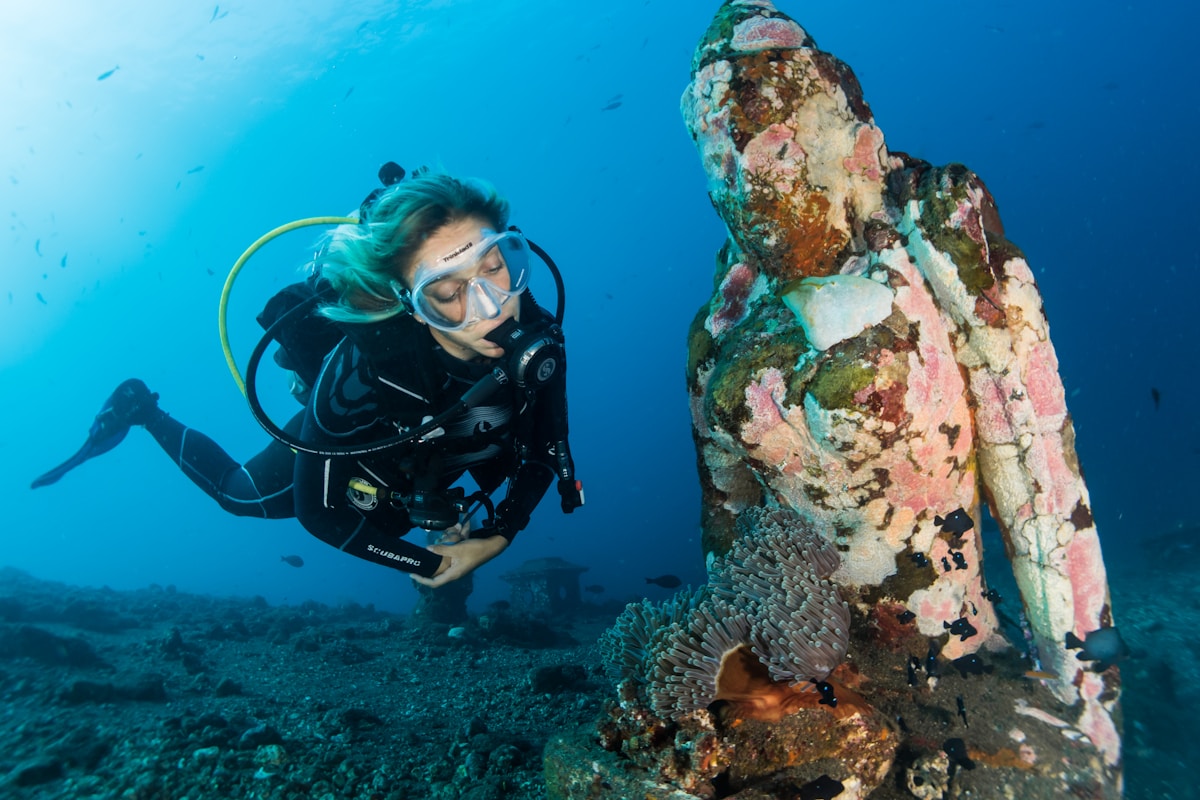
Bali is one of the most popular places in the world to complete a PADI Open Water certification, and the reasons are practical rather than sentimental. The island combines warm, clear water, a range of beginner-friendly dive sites within 45 minutes of the main training centres, and course costs that are significantly lower than equivalent programmes in Europe, Australia, or North America. For anyone planning to dive elsewhere during a broader Indonesia trip, completing the certification in Bali first is a logical use of two or three days.
How Much Does PADI Open Water Cost in Bali?
A full PADI Open Water Diver course in Bali costs approximately IDR 3,500,000–5,000,000 per person (roughly USD 200–300) as of 2026. The price variation reflects the training area, equipment quality, instructor reputation, and whether the course includes digital materials or a printed PADI manual.
For comparison, the same PADI certification in the United Kingdom typically runs GBP 350–500 (approximately USD 440–630 as of 2026). In Australia, AUD 500–700 (approximately USD 330–465). The Bali cost advantage is real and significant.
What is included at most Bali dive schools: PADI eLearning access or physical materials, pool session, all four open-water training dives, equipment rental (BCD, regulator, wetsuit, mask, fins), PADI certification card processing, and a dive guide during open-water sessions.
What is typically not included: transfer to the dive site (some schools provide this, some charge extra), optional dives after certification, dive insurance.
Training Areas: Where in Bali to Learn
Four areas concentrate the majority of dive training operations in Bali:
Amed (East Bali) Amed is a string of fishing villages on the northeast coast, roughly two hours from Seminyak. The water here is calm, clear, and sheltered - conditions that make learning to equalise and manage buoyancy significantly easier than choppy conditions elsewhere. The Japanese Shipwreck off Jemeluk beach provides an accessible shallow dive site suitable for Open Water training dives. Visibility regularly exceeds 15 metres.
Well-regarded operators in Amed include Euro Dive and Apneista. Both maintain PADI 5-star centre status and have experienced English-speaking instructors. Course costs at Amed centres tend to sit at the mid-range of the Bali price band.
Sanur (South Bali) Sanur is the closest main training area to the tourist centres of Seminyak and Ubud, accessible in 20–45 minutes depending on traffic. The beach provides sheltered pool-like conditions for confined water sessions, and the sites offshore are suitable for beginner training dives. Crystal Divers and Bali Diving Academy are established operators with strong training records.
The convenience of Sanur relative to the south Bali accommodation areas makes it practical for travellers who do not want to base themselves in the north or east.
Padang Bai (East Bali) Padang Bai is a small port town best known as the ferry hub for Lombok and the Gili Islands. The dive sites around the bay - Blue Lagoon, Bias Tugal - are shallow and clear, and the town has a cluster of smaller dive operators offering Open Water courses at the lower end of the price range. Visibility and conditions are generally good, though the bay can become busy on weekends.
Search hotels in Bali on Booking.com
Nusa Dua and Tanjung Benoa (South Bali) The resort peninsula south of Denpasar hosts several dive operators primarily serving resort hotel guests. Courses here are often priced at the upper end, reflecting the resort overhead rather than superior teaching quality. Unless you are already staying in a Nusa Dua resort, the other training areas offer better value.
What the PADI Open Water Course Involves
The PADI Open Water Diver certification is the global standard entry-level scuba qualification. It certifies you to dive independently (with a buddy) to a maximum depth of 18 metres worldwide. The course has three components:
Knowledge development: PADI provides this via eLearning - an online course of five sections covering dive physics, equipment, procedures, and safety. Most Bali schools ask you to complete this before arriving, either on the PADI website (cost included in course fee) or via a printed manual. This typically takes 8–10 hours at your own pace.
Confined water dives: Five skill sessions in a pool or calm, shallow water. These cover mask clearing, regulator recovery, buoyancy control, emergency ascents, and other core skills. This section takes approximately five to six hours, usually over one or two days.
Open water dives: Four open water dives at a certified site, supervised by your instructor. These apply the skills from the confined water session in real dive conditions. The dives are completed over one or two days. You must demonstrate all required skills to your instructor’s satisfaction to receive certification.
Total time commitment: two to three days, depending on your pace with the eLearning component and how quickly confined water skills develop.
What to Look for in a Bali Dive School
A few specific checks before booking:
PADI 5-Star status: PADI rates centres on training standards, equipment maintenance, and instructor credentials. A 5-star status is not a guarantee of excellence, but it indicates the school has passed external audits. Confirm status at the PADI website (padi.com/find-a-dive-shop).
Instructor-to-student ratio: PADI permits a maximum of eight students per instructor for Open Water courses, but ratios of four-to-one or lower are better for learning and safety. Ask directly before booking - reputable schools will answer without hesitation.
Equipment condition: Inspect the BCD and regulator offered before the first session. Equipment should be clean, free of obvious damage, and - for regulators - recently serviced (service stickers should be present). Worn or poorly maintained gear is a red flag regardless of price.
Instructor language: If English is not your first language, ask whether instructors are available in your preferred language. German, Dutch, French, and Russian-speaking instructors are available at the larger Amed and Sanur centres.
After Certification: Where to Dive First
Completing your Open Water in Bali puts you within easy reach of several exceptional sites that are manageable for newly certified divers:
Tulamben Liberty Wreck (East Bali): A 120-metre WWII cargo ship sitting in 5–30 metres of water, reachable by shore entry. One of the most accessible wreck dives in the world and a legitimate world-class dive site. The shallow sections of the wreck are suited to Open Water depth limits. Amed-based dive centres include this as a standard post-certification dive.
Amed reef dives: The house reefs around Jemeluk and Lipah in Amed are straightforward, shallow, and productive. Good for consolidating skills and building confidence after the course.
Nusa Penida (advance booking required): Manta Ray Point and Crystal Bay on Nusa Penida are significantly more advanced - strong currents and depth. These are suitable after a period of post-certification experience, not immediately after the course. Most reputable operators will advise an Advanced Open Water certification and some experience before these sites.
Diving in Bali after certification typically costs IDR 350,000–600,000 per dive including equipment rental as of 2026, or IDR 200,000–300,000 if you have your own equipment. Most Amed operators offer two-dive packages for newly certified divers that include guide, equipment, and site fees.
Browse guided dive trips and liveaboards in Bali - tours include full equipment, guides, and boat transport to the best sites. Dive accident insurance is essential in Indonesia - nearest recompression chambers can be hours away. EKTA policies include dive accident cover when added at checkout.
See Also
- Bali diving guide - where to go once certified: Tulamben, Amed, and Nusa Penida
- Amed travel guide - the best base for post-certification diving on Bali’s east coast
- Indonesia diving guide - the broader Indonesia dive picture for newly certified divers
- Snorkelling in Indonesia - sites to explore before certification or to combine with early dives