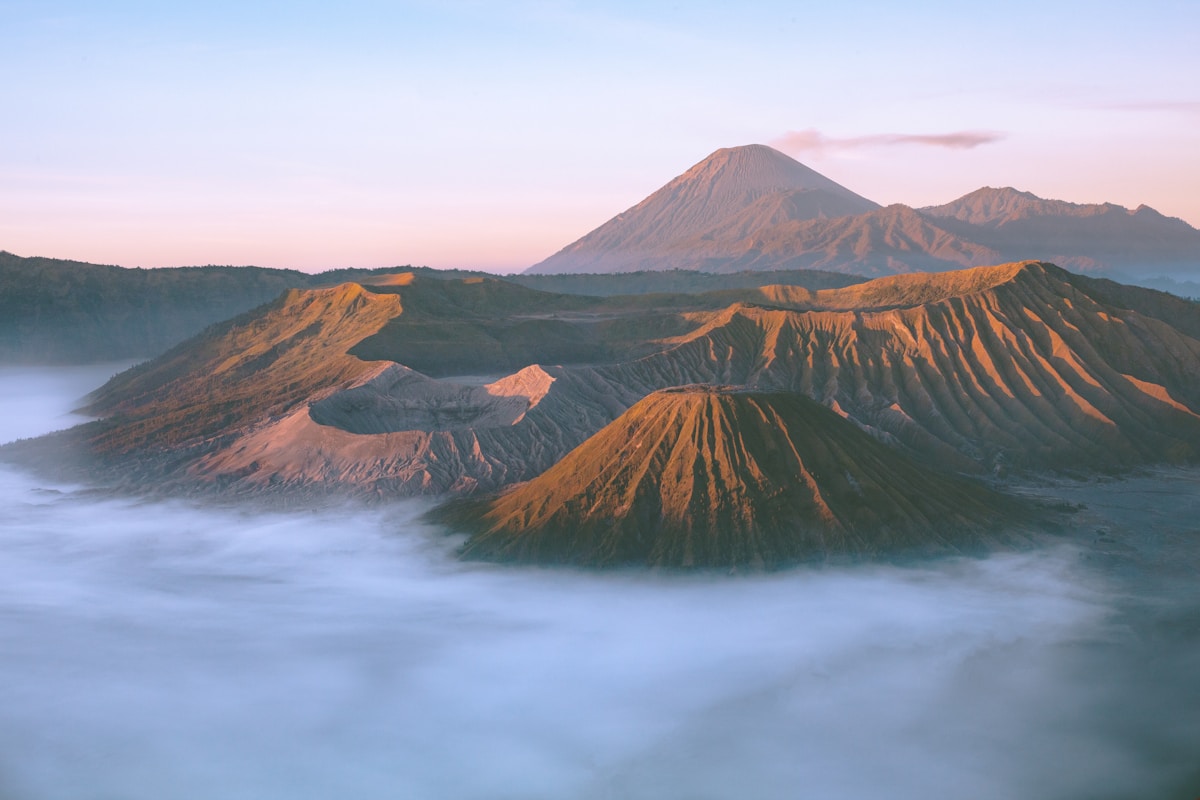
Mount Rinjani is Lombok’s defining landmark - an active stratovolcano rising to 3,726m that dominates the northern third of the island. Indonesia’s second-highest volcano after Mount Kerinci in Sumatra, Rinjani draws tens of thousands of trekkers annually to its challenging slopes and the crater lake, Segara Anak (“child of the sea”), that fills its caldera at 2,000m. The summit offers, on clear mornings, views across Lombok to Bali and Sumbawa, with the active cone of Gunung Baru smoking in the caldera below.
This is not a casual hike. Rinjani demands physical preparation, proper gear and respect for altitude and unpredictable volcanic activity.
The Routes
Senaru (North) - 3 Days / 2 Nights
The most popular route and the standard approach for first-time Rinjani trekkers. The trailhead starts at Senaru village at approximately 600m. Day one climbs through montane forest to the crater rim at around 2,640m (5–7 hours). Night one camps on the rim with views into the caldera and Segara Anak below. Day two descends to the crater lake for a soak in the geothermal hot springs at its edge (the springs are at the lake shore - natural, mineral-rich and excellent for recovering legs), before the long ascent back to the rim. Day three is the descent to Senaru.
The optional summit push - reaching the 3,726m peak - is typically done on night two from the rim camp, departing at 2am to arrive at the top for sunrise. The final section is loose volcanic scree requiring fixed ropes in parts. Expect 3–4 hours up from the camp to the summit.
Sembalun (East) - 3–4 Days
The Sembalun route approaches from the drier, more open east side through savannah-like terrain before entering forest. The summit is attempted from the Sembalun side and is arguably more dramatic - the approach ridge is exposed with views both east to Sumbawa and west into the caldera. Many trekkers combine both routes, entering at Senaru and exiting at Sembalun (or vice versa) for a through-trek.
Torean (West) - 3 Days
The least-used route, following river valleys through dense forest. Significantly less crowded than Senaru or Sembalun. The approach passes waterfalls and offers a more remote experience. The crater lake can be reached on this route; the summit is less commonly attempted from Torean. A good choice for trekkers who want solitude and are comfortable with a less-defined trail.
Difficulty
Rinjani is rated strenuous. The summit day involves 3–4 hours of steep ascent on loose volcanic gravel, with sections of hands-and-knees scrambling near the top. Altitude sickness is a real consideration above 3,000m. The trail down from the summit is notorious - descending steep sandy scree is hard on knees and lower back.
You do not need to be an experienced mountaineer, but you should be fit: comfortable with 7–10 hour days on rough terrain, accustomed to carrying a day pack, and aware that turning back is the right decision if your body signals altitude problems.
Guides and Porters
Guides are compulsory by Indonesian law on Rinjani. Hiring through the Rinjani Trek Ecotourism Programme - a community-based system linking certified guides with trekkers - is the standard approach and ensures your fee reaches local families. Guides are hired through registered trekking agencies in Senaru, Sembalun or Mataram.
Guide fees: from approximately IDR 800,000–1,000,000 per guide per day (as of 2026). A standard 3-day trek requires one guide minimum; most groups add one or two for safety and navigation.
Porters are not required but strongly recommended. They carry food, cooking equipment, tents and camping gear, allowing you to hike with only a day pack. Porter fees: from approximately IDR 350,000–500,000 per porter per day (as of 2026). Porters carry a maximum of 25kg. Tipping is expected and appropriate - approximately IDR 100,000–200,000 per porter per day beyond the base fee is standard practice.
All-inclusive trek packages from agencies in Senaru and Sembalun cover guide, porters, meals, camping equipment, transport to the trailhead and national park fees. Expect to pay approximately IDR 2,500,000–4,500,000 per person for a 3-day all-inclusive package depending on group size and season. You can also browse and pre-book Rinjani trekking tours through vetted operators before arrival.
Permits
A national park permit is required and typically organised by your guide or agency. The current fee is approximately IDR 150,000 per person per day (as of 2026). Verify the current rate when booking - fees are periodically revised by the Rinjani national park authority.
Gear
The summit reaches 3,726m where temperatures drop to 0–5°C before sunrise. This surprises many trekkers who arrive in Lombok expecting tropical warmth throughout.
Essential items:
- Warm base layers and a down jacket or fleece jacket
- Wind and rain jacket - afternoon cloud and rain are common even in dry season
- Trekking poles - strongly recommended for the scree descent
- Headlamp with spare batteries - the summit push begins at 2am
- Trekking boots with ankle support - trail sections are rocky; trainers are inadequate
- Sleeping bag rated to 5°C minimum
Rental gear is available in Senaru from approximately IDR 50,000–150,000 per item per day. Sleeping bags and trekking poles are the most useful rentals for those packing light.
Best Season
May through October (dry season) is the optimal trekking window. Trails are dry, views from the summit are clearest in June–August, and camping on the crater rim is manageable.
December through February brings heavy rainfall, with trails becoming dangerous and slippery; the national park authority formally closes Rinjani to trekkers during the peak wet months. Check current trail conditions with your agency before booking wet season travel - closures can extend into March.
Getting There
Fly to Lombok International Airport (LOP) from Bali (approximately 30 minutes, from IDR 300,000) or from Jakarta and Surabaya. From the airport, hire a taxi or private car to the trailhead villages:
- Senaru: approximately 2.5 hours from the airport; taxi approximately IDR 250,000–350,000
- Sembalun: approximately 2.5 hours from the airport; taxi approximately IDR 300,000–400,000
Many trekkers based in the Gili Islands reach Senaru via Bangsal harbour (approximately 2 hours by taxi).
Segara Anak: The Crater Lake Option
For trekkers who want the caldera experience without the summit push, Segara Anak crater lake is the alternative goal. The lake sits at approximately 2,000m within the caldera, turquoise-blue and fed by geothermal activity. Hot springs on its western shore provide natural hot pools - an extraordinary place to soak after the descent from the rim. The lake can be reached in 2 days / 1 night from Senaru or Sembalun, making it the more accessible option for those less focused on the summit.
See Also
- Lombok island guide - the full Lombok overview: Rinjani, Gili Islands, and the south coast beaches
- Senggigi travel guide - accommodation and transport base near Senaru, the main Rinjani trailhead
Search hotels in Rinjani on Booking.com
- Gili Islands guide - the natural post-trek recovery stop: relaxed beaches and snorkelling
- Bali vs Lombok - why trekkers choose Lombok alongside or instead of Bali