Search hotels in Gili on Booking.com
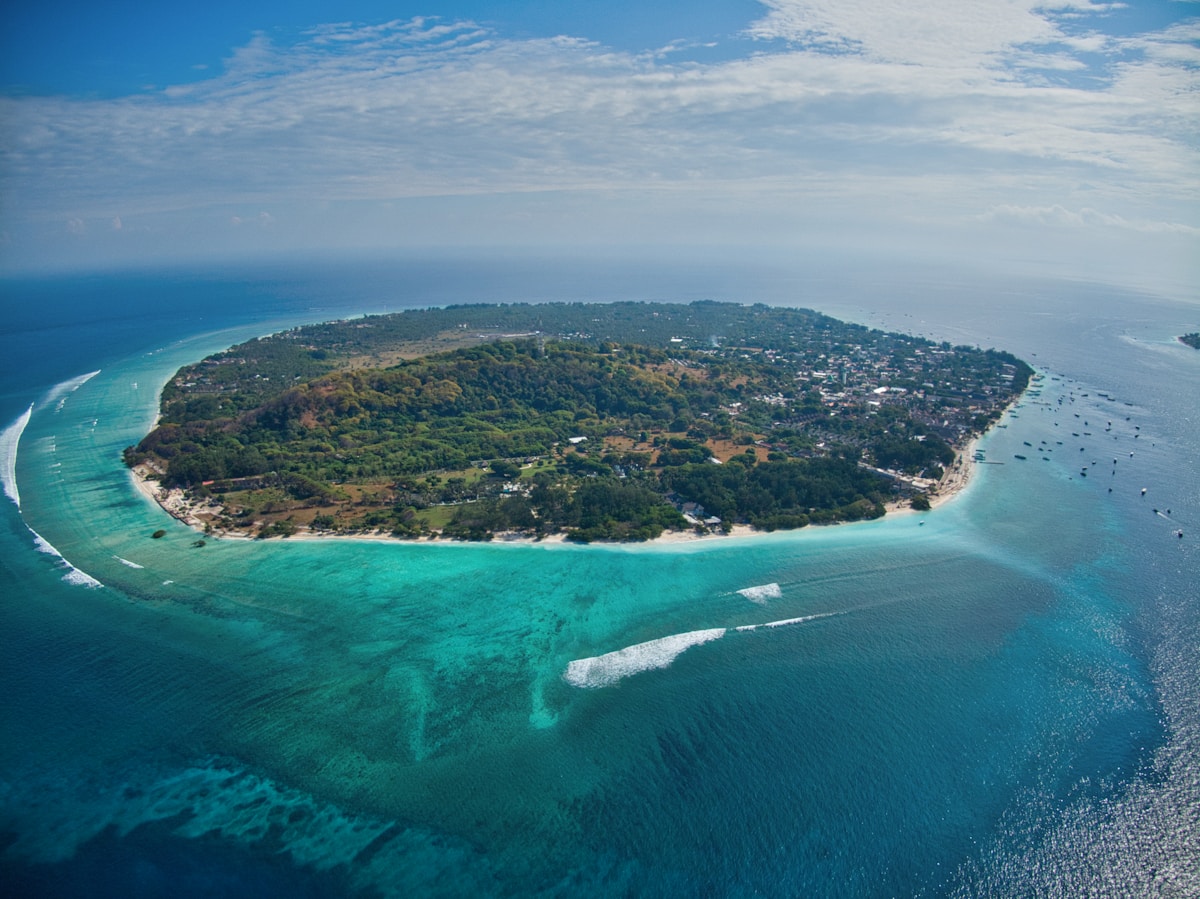
Three small islands sit off the northwest coast of Lombok, each one a few kilometres from the next. No motorised vehicles on any of them. The pace of life is dictated by the tide. Between them, the Gili Islands cover almost every type of traveller: one island for diving courses and late bars, one for honeymooners and near-silence, one for everyone in between.
Choosing between Gili Trawangan, Gili Meno, and Gili Air is a genuine decision that affects your entire trip - read the comparison below before booking.
Gili Trawangan (“Gili T”)
Gili Trawangan is the largest of the three islands and the most developed. The permanent population is approximately 1,500, but tourist numbers during peak season make it feel considerably more populated. The east coast is a strip of dive schools, bars, restaurants, and accommodation ranging from bamboo bungalows to boutique villas.
Who it suits: Divers doing their PADI Open Water or Advanced courses, travellers who want a social scene, solo travellers who want to meet people, and anyone who prioritises restaurant and café choice.
Diving: More dive operators per square kilometre than anywhere else in the Gilis. PADI Open Water courses from approximately IDR 3,500,000–5,000,000 (3–4 days). Sea turtles on almost every dive. Reef sharks at Shark Point. See the Gili Trawangan diving guide for full site details.
Nightlife: The main strip has bars running until 2am or later. The weekly parties that made Gili T famous in the 2010s have reduced but not disappeared. If night noise is a concern, stay on the west or north coast, further from the strip.
Accommodation: Budget bungalows from approximately USD 20 per night; mid-range villas with pools from approximately USD 80 per night; upmarket resorts from approximately USD 150 per night. Book ahead in July and August - accommodation sells out.
Cash: ATMs exist on Gili T (near the main strip), but they run out of money and charge high fees. Bring IDR from Bali or Lombok as backup.
Transport from Bali: Fast boat operators (Scoot, Eka Jaya, Bluewater) depart from Padang Bai or Serangan in south Bali directly to Gili T. Journey time approximately 2.5–3.5 hours, cost approximately IDR 500,000–700,000 per person one-way. No need to transit Lombok.
Transport from Lombok: Public boat from Bangsal harbour approximately IDR 25,000 (scheduled departures, slow); speedboat from Teluk Nare approximately IDR 150,000 (20–30 minutes).
Gili Meno
Gili Meno is the smallest of the three and the quietest by a significant margin. There are no loud bars, no regular late-night events. The appeal is simplicity: beaches, snorkelling, and not much else.
Who it suits: Couples (it has a genuine reputation as a honeymoon island), travellers wanting complete rest, anyone who finds Gili T overwhelming.
Snorkelling: Turtle Point, off the north coast, delivers sea turtle encounters with near-certainty - turtles are reliably present and appear comfortable around snorkellers. Mask and snorkel hire approximately IDR 50,000 per day.
Birdlife: A small bird sanctuary on the island holds tropical species including cockatoos and parrots, though the conditions of this attraction vary - check current reviews before visiting.
Accommodation: More expensive than Gili T on average, because the island lacks budget options at the lower end. Expect to pay approximately USD 50–100 per night for a standard bungalow; nicer resorts from approximately USD 150–200 per night. Very limited choice overall - book well ahead.
Cash: No ATMs on Gili Meno. Bring enough IDR for your entire stay. Card acceptance is minimal.
Getting there: Fast boat from Bali, or island hop from Gili T (public boat approximately IDR 50,000–100,000). Public boats between the three islands run several times daily on an informal schedule.
Gili Air
Gili Air sits between the other two in both geography and character. It has some cafés, a yoga scene, and a handful of bars, but closes down earlier than Gili T and is quieter overall. The north coast snorkelling is good; the west and south coasts have calmer beaches.
Who it suits: Travellers who want a social island without the full party atmosphere of Gili T; yoga and wellness-oriented visitors; those who want easy access to Lombok (Gili Air is the closest island to the Lombok mainland).
Snorkelling: The north coast has healthy coral and regular turtle sightings. Conditions are slightly more exposed than Turtle Point on Gili Meno but still consistently good.
Accommodation: Budget bungalows from approximately USD 20–30 per night; mid-range from approximately USD 60–100 per night. Better value than Gili Meno, slightly less choice than Gili T.
Cash: No reliable ATM on Gili Air. Bring IDR. Some guesthouses accept card payments at a surcharge.
Getting there: Fast boat from Bali, or island hop from Gili T. Gili Air is also the usual first stop for boats coming from Bangsal on Lombok.
Where to Stay in the Gili Islands
The right island for your budget depends as much on which Gili you choose as on what you are willing to spend. Gili Trawangan has the widest range from backpacker dorm to boutique villa. Gili Meno skips the budget tier almost entirely. Gili Air sits between the two on both price and availability.
Budget (from approximately USD 15–25/night as of 2026)
Black Sand Homestay on Gili Trawangan offers basic private rooms from approximately USD 20/night with air conditioning and a short walk to the main strip. It is a practical base for divers doing their PADI courses without paying resort prices. Sunset Gecko Homestay, also on Gili T, provides bungalow-style rooms from approximately USD 25/night with a small garden and direct access to the quieter west coast. For Gili Air, Good Heart Bungalows (from approximately USD 25/night) is a well-reviewed family-run property in the island’s quieter interior section, suited to snorkellers and couples who want a slower pace without the full isolation of Gili Meno.
There are effectively no budget options on Gili Meno. Travellers on a tight budget should base themselves on Gili T or Gili Air and take the island-hopper boat to Meno for day snorkelling.
Mid-Range (from approximately USD 80–100/night as of 2026)
Katamaran Resort on Gili Trawangan (from approximately USD 80/night) sits on the east coast with direct beach access and a pool. It is one of the better-maintained mid-range properties on the island with consistent reviews for cleanliness and service. Avia Villa Resort, also on Gili T (from approximately USD 100/night), offers bungalow-style accommodation with a pool set slightly back from the beach. For Gili Meno, Gili Meno Eco Villas (from approximately USD 90/night) provides a genuinely quiet setting with natural materials, a small beach area, and snorkelling gear included. The eco-villa format here means limited air conditioning and simpler furnishings, but the beach access and silence are worth the trade-off for the right traveller.
At this price point, book at least 6–8 weeks ahead for July and August across all three islands.
Luxury (from approximately USD 180–250/night as of 2026)
Villa Ombak on Gili Trawangan (from approximately USD 200/night) is the island’s most established resort property, with private pool villas, a beachfront setting, and a dive centre on site. It combines the social convenience of Gili T’s east coast strip with a level of privacy that budget guesthouses cannot offer. Desa Dunia Beda on Gili Air (from approximately USD 180/night) sits at the quieter end of the luxury bracket: a small boutique property with bungalow-style villas, a freshwater pool, and strong reviews for staff attentiveness. For Gili Trawangan’s most photogenic sunset side, Pearl of Trawangan (from approximately USD 250/night) offers villas with west-facing sea views and a beachfront restaurant.
All three Gili Islands have no motorised vehicles. Even the highest-end resorts rely on horse carts or walking for transfers from the boat pier. Factor luggage weight accordingly.
Search hotels in the Gili Islands on Booking.com
For hotel recommendations across all budgets, see our where to stay in the Gili Islands guide.
Transport Between Islands
All three islands are connected by a public island-hopper boat (sometimes called the cidomo boat). Boats run several times a day, departing from the main pier on each island. Cost approximately IDR 50,000–100,000 between any two islands. No advance booking needed - buy a ticket at the pier. Schedules are informal and can shift; check locally.
On-Island Transport
All three islands ban motorised vehicles. Options are:
- Walking: All three islands are small enough to walk around completely in under 2 hours
- Bicycle: Hire from approximately IDR 50,000 per day; available on all three islands
- Cidomo horse cart: Traditional pony cart used for luggage and short journeys; approximately IDR 50,000 per journey on Gili T
Diving on All Three Islands
Sea turtles appear on dive sites across all three Gilis. White-tip and black-tip reef sharks are found at Shark Point and Halik Reef around Gili T. PADI dive courses are available on Gili T and Gili Air; Gili Meno has fewer operators.
Best visibility is generally January to March and August to October. Visibility can drop to 10–15 metres during the monsoon months (November to January) but diving remains possible.
PADI Open Water on any island: approximately IDR 3,500,000–5,000,000 for the full course including certification.
Best Time to Visit
May to September offers the driest, calmest conditions. July and August are peak season - crowded and more expensive. April and October are good shoulder months. The December–March wet season brings occasional rain and slightly rougher sea crossings from Bali, but is not a reason to avoid the islands entirely.
Bookaway covers the main ferry routes between the islands - book in advance during peak season when boats fill quickly.
Gili Islands Guides
- Gili Trawangan diving guide - the best dive sites around Gili T, operators, and what to expect
- Lombok Gili Islands guide - how to combine the Gili Islands with Lombok’s south coast
- Lombok island guide - the full Lombok overview: Rinjani, Kuta Lombok, and the west coast beaches
- Senggigi travel guide - Lombok’s main beach town: accommodation, restaurants, and boats to the Gilis
- Kuta Lombok travel guide - the surf town on Lombok’s south coast: a different base for Gili access
- Rinjani trek guide - the volcano visible from the Gilis: a 3-day summit trek
- Snorkelling in Indonesia - the Gili Islands as part of Indonesia’s best snorkel destinations
- 2 weeks Bali and Lombok itinerary - how to fit the Gili Islands into a two-week Bali-Lombok trip