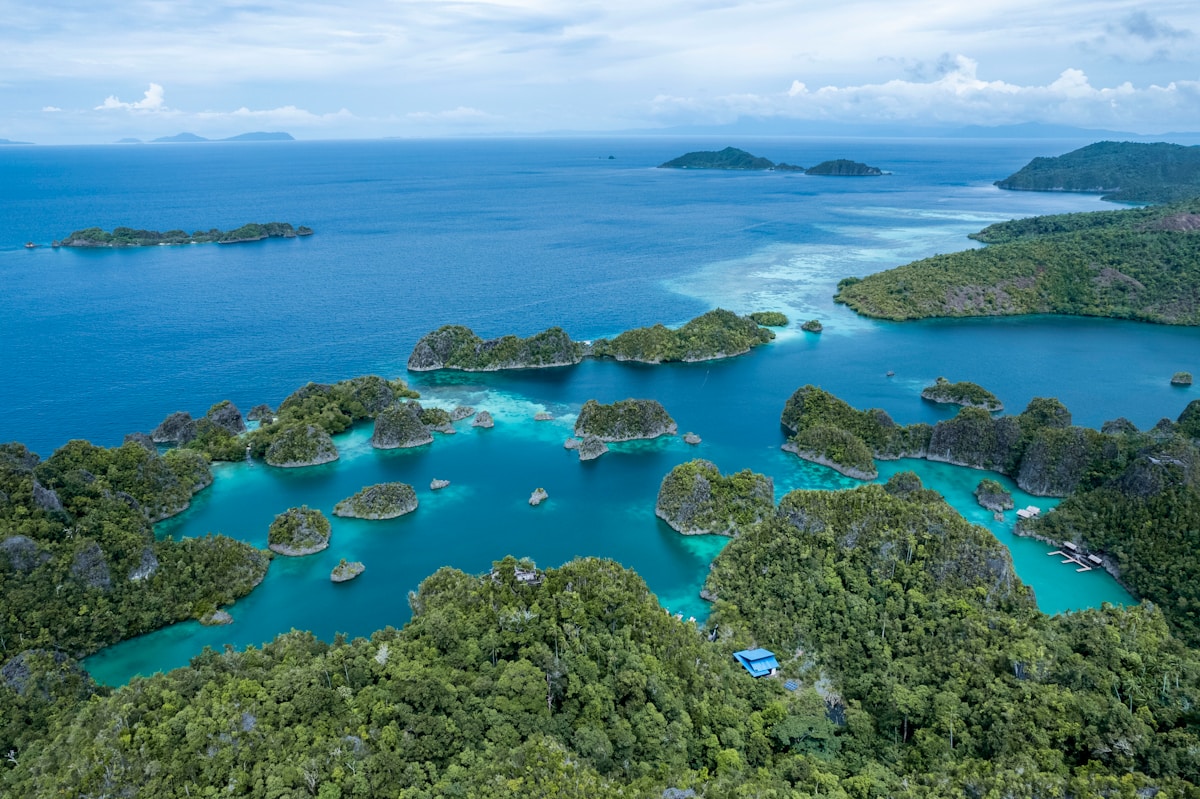
Flores is the island most visitors only see the edge of. They fly into Labuan Bajo, board a boat for Komodo, and leave without travelling further east. The interior of this 360-kilometre-long island - its volcanic crater lakes, traditional highland villages, and animist culture - remains largely undiscovered by comparison. That is changing slowly, but slowly enough that Flores still rewards the visitor willing to go past its most famous gateway.
The island stretches from Labuan Bajo in the west to Maumere in the east. The Trans-Flores Highway runs the full length, threading through mountains, rice terraces, and traditional villages. It is a rough road in places and takes several days to drive end to end, but the drive itself is the journey.
Labuan Bajo (West Flores)
Labuan Bajo is Flores’s main air hub and the base for Komodo National Park. The town has grown rapidly since Komodo became internationally famous - it now has a waterfront strip of hotels, dive operators, boat charter offices, and restaurants. Infrastructure is improving, though power cuts and water issues persist in cheaper accommodation.
From Labuan Bajo you can arrange everything for Komodo: one-day boat tours from approximately IDR 600,000–1,000,000 per person (around USD 38–63), two-day overnight tours for approximately IDR 1,200,000–2,500,000 (around USD 75–158), and private boat charters from approximately IDR 4,000,000–8,000,000 per day (around USD 250–500). See our Komodo island guide for full details.
Where to Stay in Labuan Bajo
Budget guesthouses fill the hillside lanes above the waterfront - basic rooms start from approximately IDR 200,000–350,000 (around USD 13–22) per night. Mid-range options worth booking in advance: La Prima Hotel (approximately IDR 400,000–700,000 / around USD 25–44 per night) sits within easy walking distance of the boat jetties and has consistent air conditioning; Bintang Flores Hotel (approximately IDR 700,000–1,100,000 / around USD 44–70) has a pool and an in-house dive and snorkel operator - useful for back-to-back Komodo days. For the best views over the bay and the offshore islands, Sudamala Komodo Resort (approximately IDR 1,500,000–2,800,000 / around USD 95–175 per night) occupies a hillside above town with panoramic water views and a shuttle service to the harbour below.
Search hotels in Flores on Booking.com
Labuan Bajo is served by Komodo Airport (LBJ) with daily flights from Bali (approximately 1 hour 40 minutes) and connections from Lombok and Makassar.
Ruteng (Central-West Highlands)
Ruteng sits at 1,200 metres in a cool highland 3 hours east of Labuan Bajo. It is the base for exploring the Lingko spider-web rice fields - circular terraced paddies that reflect the Manggarai people’s traditional communal land-sharing system - and for day hikes to Ranamese crater lake.
Bajawa and the Ngada Villages (Central Flores)
Bajawa is the gateway to the traditional Ngada villages scattered across the surrounding hills - communities where megalithic stone tombs, ancestral shrine pillars, and animist ceremony remain actively in use. The most visited villages are Bena and Gurusina, both within 20 kilometres of town.
Ende and Kelimutu (Central-East Flores)
Ende is a coastal transit town with the main air connection for central Flores (code ENE, with flights via Kupang or Labuan Bajo). The destination 55 kilometres east is Kelimutu.
Kelimutu is a volcanic massif with three summit crater lakes. Each lake is a different colour, and those colours shift over years as volcanic chemistry changes. At different points in time the lakes have been vivid green, milky teal, dark brown, and near-black. Tiwu Ata Polo (Bewitched Lake) is currently the most dramatically coloured - verify current conditions in recent travel reports before visiting, as the colours change unpredictably.
Foreign visitor entry fee: approximately IDR 150,000 per person as of 2026.
The standard approach is a 4:30am departure from Moni village (12 kilometres below the summit) for a sunrise arrival. Moni has basic guesthouses from approximately IDR 100,000–250,000 per night. The road to the summit is sealed and accessible by ojek (motorcycle taxi, approximately IDR 50,000 return) or by rental motorbike.
Wae Rebo - The Most Remote Traditional Village
Wae Rebo is a Manggarai village set at 1,100 metres in the mountains northwest of Ruteng, accessible only by a 4-hour jungle trek. The village consists of seven traditional drum houses (mbaru niang) with towering conical roofs - a design found only here. The village has no road access; the isolation has preserved it entirely.
The trek starts at Denge village. A guide is mandatory and costs approximately IDR 250,000–350,000. The village charges a donation of approximately IDR 150,000–200,000 per person for entry and includes a basic meal. Overnight stays are possible and encouraged - sleeping in a drum house on the floor is the full experience.
Wae Rebo is best combined with Ruteng (3 hours’ drive to Denge) or as a detour off the Trans-Flores Highway. Go in the dry season (May–October) - the trail becomes difficult in wet conditions.
Maumere (East Flores)
Maumere is the eastern end of the Trans-Flores route. The town has an airport (MOF) with connections to Bali and Kupang. The main draw is the diving - the reefs around Maumere Bay were damaged by a 1992 earthquake and tsunami but have partially recovered, and sites like Babi Island and Wuring village offer accessible reef diving and snorkelling.
Combining Flores with Raja Ampat
Flores and Raja Ampat are east Indonesia’s two standout destinations and are often combined on a two-to-three-week itinerary. Raja Ampat - in West Papua - is not a day trip from Flores: the route goes Labuan Bajo → Makassar (approximately 1 hour 30 minutes) → Sorong (approximately 1 hour 40 minutes), with fares from approximately IDR 800,000–1,500,000 (around USD 50–95) one way including the Makassar connection. Flying via Bali adds a full day of travel.
The practical approach is to treat them as sequential legs: spend 4–5 days in Flores (Labuan Bajo, Komodo, with a possible detour to Kelimutu), then fly to Sorong and join a Raja Ampat liveaboard or base yourself in Waisai for island-hopping. From Sorong, return flights to Bali or Jakarta are straightforward. See our Raja Ampat island guide for liveaboard options, the Four Kings dive sites, and getting there from Sorong.
Getting Around Flores
Public buses run the Trans-Flores Highway but are slow and infrequent - allow a full day between major towns. More practical options:
- Rental motorbike: approximately IDR 80,000–100,000 per day; effective for short day trips around each town
- Hire a driver: approximately IDR 500,000–700,000 per day to hire a car with driver - the most comfortable way to do the full Trans-Flores route
- Shared shuttle vans: operate between Labuan Bajo, Ruteng, and Bajawa; affordable but slower than a private car
Fuel up whenever you see a petrol station - they thin out considerably in the central highlands.
Best Time to Visit
May to October for the highlands and traditional villages - dry roads, clear mornings. Kelimutu sunrises are most often cloud-free in June and July. The wet season (November to April) turns highland roads muddy and the Wae Rebo trek difficult, but Labuan Bajo and the coast remain accessible.
Where to Stay in Flores
The majority of visitors base in Labuan Bajo for the duration of their Flores stay. For travellers covering the Trans-Flores Highway east to Ende and Maumere, accommodation options become progressively more basic, with small family guesthouses and simple lodge-style rooms replacing resort infrastructure.
Budget (from approximately USD 15–35/night as of 2026)
Bajo Paradise Hostel in Labuan Bajo offers dormitory beds from approximately USD 15/night and private rooms from approximately USD 25/night, located on the hillside lanes above the waterfront. It is a functional base for early boat departures to Komodo and close to the main strip of dive operators. La Boheme Bajo (from approximately USD 25/night) is a consistently reviewed guesthouse with clean rooms, air conditioning, and a sociable atmosphere suited to solo travellers comparing Komodo tour options with other guests. Gardena Hotel (from approximately USD 35/night) provides a step up in comfort within the budget bracket, with a small pool and rooms that hold up well in the Labuan Bajo heat.
Along the Trans-Flores Highway, budget travellers should expect basic guesthouses (losmen) in Ruteng, Bajawa, and Ende from approximately IDR 100,000–200,000 per night with fan rooms and shared bathrooms.
Mid-Range (from approximately USD 80–110/night as of 2026)
Bayview Gardens Hotel (from approximately USD 80/night) offers one of the better value mid-range stays in Labuan Bajo: well-maintained rooms, a pool, and a central location close to the harbour. Bintang Flores Hotel (from approximately USD 90/night) includes an in-house dive and snorkel operator on site, which is practically useful for back-to-back Komodo days without arranging separate boat and operator transfers. The Jayakarta Suites Flores-Komodo (from approximately USD 110/night) provides an international hotel standard with a pool and sea-view rooms at the upper end of the mid-range bracket. All three are within a short walk of the boat jetties for Komodo departures.
Luxury (from approximately USD 200–350/night as of 2026)
Sudamala Suites & Villas in Labuan Bajo (from approximately USD 200/night) sits on the hillside above town with panoramic views across the bay and the Komodo island chain. Private villas with plunge pools and a shuttle service to the harbour make it one of the most complete luxury options available without leaving the mainland. Plataran Komodo (from approximately USD 280/night) occupies a hillside site with unobstructed views over the water - the combination of a strong visual location, small number of rooms, and attentive service puts it consistently at the top of independent traveller rankings for the area. Ayana Komodo Waecicu Beach (from approximately USD 350/night) near Labuan Bajo adds a private beach setting and a larger pool complex, drawing the international resort-grade market that has arrived with Flores’s growing profile as a premium destination.
Search hotels in Flores on Booking.com
Flores Town Guides
- Bajawa travel guide - the highland base for Ngada traditional villages and the Inerie volcano
- Ruteng travel guide - the gateway to spider-web rice fields and Manggarai culture
Book tours and day trips in Flores - most include transport from your guesthouse and a local guide familiar with the island’s best spots. Bookaway covers the main ferry routes between the islands - book in advance during peak season when boats fill quickly.
Flores Itineraries and Activities
- 10-day Komodo and Flores itinerary - Labuan Bajo, Komodo, Kelimutu, and the Trans-Flores Highway
- Bali to Komodo itinerary - connecting Bali with Flores for a classic east Indonesia trip
- Kelimutu crater lakes guide - what to expect and how to see the coloured volcanic lakes
- Wae Rebo trek guide - reaching the remote traditional Manggarai village in the cloud forest
- Where to stay in Flores - accommodation in Labuan Bajo, Bajawa, and along the Trans-Flores Highway