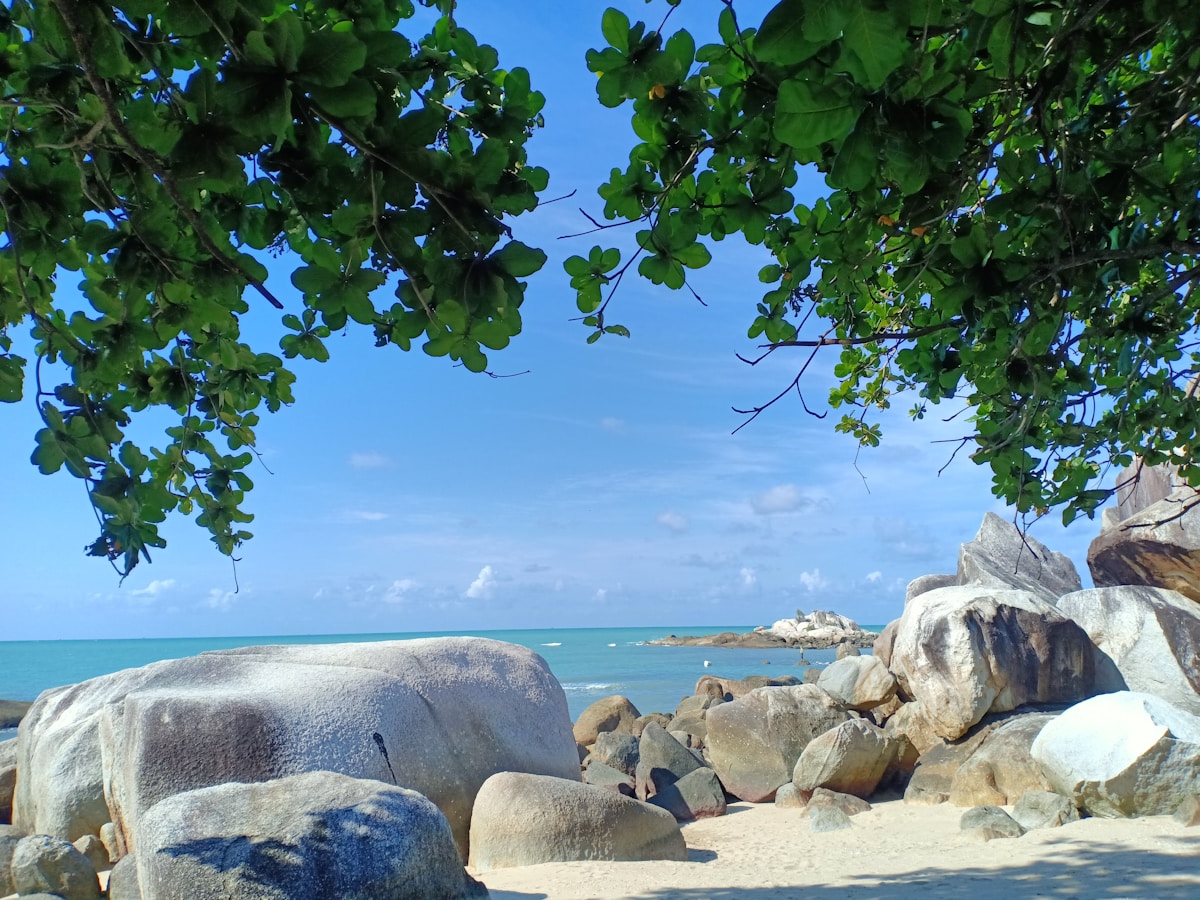
Bangka and Belitung are sister islands that share a provincial government but differ substantially in character. Belitung trades on its photogenic granite boulder beaches and lighthouse. Bangka is more developed, more densely populated, and carries a history that is both harder-edged and more culturally layered. The island was central to the global tin trade for three centuries, and the social fabric that tin extraction created - a substantial Chinese-Indonesian population brought in as labour during the colonial period, overlaid on the indigenous Malay community - shapes Bangka’s character in ways that distinguish it from most Indonesian destinations.
Pangkalpinang, the provincial capital and the island’s main city, is a functional gateway with good flight connections, not a destination in itself. The worthwhile experiences are distributed across the island: beach time on the west and south coasts, cultural immersion in the Peranakan Chinese heritage of the old quarters, and the food, which reflects both the Chinese and Malay culinary traditions that have merged over generations.
Key Sites and Experiences
Pantai Parai Tenggiri
Bangka’s most celebrated beach is on the west coast, approximately 40 km north of Pangkalpinang. The beach has granite boulders similar to those on Belitung - smaller in scale but set against calm, clear water that makes for good swimming and snorkelling. It has been developed with a resort complex (Hotel Parai Beach Resort) that includes private beach access, watersports equipment hire, and food service. Day visitors can access the public beach sections without staying at the resort. The drive from Pangkalpinang takes approximately 1 hour by car.
Pantai Tikus
A quieter beach on the northeast coast, less developed than Parai Tenggiri, with flat sand and gentle waves suited to families. The name - “Mouse Beach” - is local in origin, not a description of conditions. Accessible from Sungailiat, Bangka’s second-largest town.
Chinese New Year in Bangka
Bangka’s Chinese-Indonesian community observes Chinese New Year with a scale and distinctiveness that has become a regional draw. The Tatung ritual - a procession in which participants enter trance states while skewers and blades are passed through their skin - takes place on the fifth day of the lunar new year in Mentok and several other towns. It has pre-Buddhist roots and is specific to the Hakka Chinese community that settled Bangka during the colonial mining era. The ritual is confrontational to observe and genuine in its cultural significance; it is not a performance for tourists, though visitors are present. Check the lunar calendar for specific dates - Chinese New Year falls between late January and late February in any given year.
Tin Mining Heritage
Bangka’s interior still bears the marks of an extractive economy that operated on industrial scale from the 18th century through the late 20th. The Dutch colonial government brought in tens of thousands of Chinese contract workers - primarily Hakka from Guangdong province - to work the tin deposits. At its peak in the 19th century, Bangka was among the world’s largest tin producers.
The Tin Museum (Museum Timah) in Pangkalpinang traces this history with mining equipment, archival photographs, and documentation of the labour conditions that built the industry. Entry is free. The colonial-era architecture in Pangkalpinang’s old commercial district - shophouses, a Chinese temple, the former Dutch administrative buildings - are a visible legacy of this period.
Tailings ponds from exhausted mine workings are scattered across the island interior. Some have developed unexpected ecological value as wetland habitats; others are contaminated. They are not recommended as swimming spots.
Vihara Dewi Kwan Im
A significant Chinese Buddhist temple in Sungailiat, active and well-maintained, with a history tied to the Chinese mining communities who settled the north coast. The main temple dates from the 19th century and has been extended over several subsequent restorations. The atmosphere is most vivid during Chinese New Year and the Hungry Ghost Festival (seventh lunar month, typically August). Entry is free; appropriate dress applies.
Getting There
Jakarta (CGK/HLP) to Pangkalpinang (PGK): The most common access route. Garuda Indonesia, Citilink, and Lion Air all fly this route, with flight time approximately 55 minutes–1 hour. Return fares from approximately IDR 400,000–1,000,000 as of 2026. Multiple daily departures exist from both Soekarno-Hatta and Halim.
Batam to Pangkalpinang: Wings Air connects the Riau Islands to Bangka, useful for travellers entering Indonesia through Batam.
Ferry from Palembang: A fast boat service operates from Palembang, South Sumatra, across the Bangka Strait to Pangkal Balam port in Pangkalpinang. Journey time is approximately 2.5–3 hours and fares are approximately IDR 130,000–200,000 as of 2026. This is the practical route for combining Bangka with a Sumatra itinerary.
Between Bangka and Belitung: The ferry between Tanjung Pandan (Belitung) and Pangkalpinang (Bangka) runs approximately 4–5 hours. Tickets cost approximately IDR 80,000–150,000 as of 2026. Alternatively, Wings Air connects the two islands by air in under 30 minutes.
Where to Stay in Bangka
Most accommodation concentrates in Pangkalpinang, the provincial capital, which is the natural base for exploring the island. Beach-adjacent options are available on the west coast near Pantai Parai Tenggiri, approximately 40 km north of Pangkalpinang.
Budget (from approximately USD 15–35/night as of 2026)
Guesthouses in Pangkalpinang are plentiful in the city centre and around the market district. Family-run operations typically offer air-conditioned rooms with attached bathrooms; cleanliness is variable but competition keeps standards reasonable. From approximately USD 15/night as of 2026.
Hotel Grand Mutiara is a straightforward city hotel in Pangkalpinang with clean rooms, reliable air conditioning, and proximity to the main commercial streets. A practical base for travellers who want easy access to Mie Bangka stalls and the old Chinese quarter. From approximately USD 30/night as of 2026.
Guesthouses in Sungailiat on the north coast offer a quieter alternative to the capital, with easier access to Pantai Tikus and the Vihara Dewi Kwan Im temple. Basic rooms with fan from approximately IDR 200,000, air-conditioned options from IDR 300,000 per night as of 2026.
Mid-Range (from approximately USD 40–80/night as of 2026)
Horison Ultima Bangka is a well-maintained mid-range hotel in central Pangkalpinang, consistently reviewed for clean rooms, reliable service, and good breakfast. The central location works well for those using the city as a base before heading to beaches. From approximately USD 40/night as of 2026.
Loma Beach Hotel sits on the west coast and offers the closest mid-range option to Bangka’s better beaches without committing to full resort pricing. Comfortable rooms, reasonable food, and access to the coast without the premium of the larger resort properties. From approximately USD 70/night as of 2026.
Hotel Parai Beach Resort on Pantai Parai Tenggiri is the main beach resort on the island, with on-site watersports, direct beach access, and the kind of facilities that make it worth the premium over city-centre alternatives. From approximately USD 70/night for standard rooms as of 2026.
Luxury (from approximately USD 60–120/night as of 2026)
Novotel Bangka in Pangkalpinang is the most reliable international-brand hotel on the island, with full facilities, consistent service standards, and a central location. It is the natural choice for those who prioritise hotel quality over beach proximity. From approximately USD 60/night including breakfast as of 2026.
Kayu Batu Beach Hotel near the north coast offers the most polished beach-adjacent experience Bangka provides, with well-appointed rooms, a pool, and proximity to Bangka’s cleaner coastal strips. Options at this end of the market top out at approximately USD 120–150/night as of 2026; Bangka does not have five-star resort infrastructure of the kind found in Bali or the Gili Islands.
Search hotels in Bangka on Booking.com
Food
Bangka’s food is one of the strongest reasons to visit. The Chinese-Malay fusion cuisine that evolved here over three centuries is distinct from both Padang and Javanese cooking, and largely unknown outside the island.
Mie Bangka - Flat wheat noodles served in a rich fish-based broth with sliced fish cake, bean sprouts, and chilli. Found at street stalls throughout the island from early morning.
Martabak Bangka - A thick, sweet pancake stuffed with butter, sugar, cheese, or chocolate, with a crisp bottom and spongy interior. The Bangka version is considered the original and best iteration of a dish found across Sumatra.
Seafood - The fish market in Pangkalpinang and the seafood restaurants along the coast serve the same fish available to the local fleet. Crab, shrimp, and various reef fish are outstanding. Bangka pepper - grown in the island’s interior - is used in cooking here in a way it rarely is elsewhere; the spice is fresher and more fragrant than exported dried pepper.
When to Visit
April through September is the recommended period. The northwest monsoon, which can make boat travel between the islands rough and reduce beach enjoyment from November through March, is absent during these months. July and August are the peak domestic holiday months; hotels fill during Indonesian school holidays and prices rise modestly.
Chinese New Year (late January–late February depending on the year) is worth planning around if the cultural spectacle is the draw. Book accommodation several weeks ahead; all hotels across the island fill during the extended holiday period.
Practical Notes
Pangkalpinang has multiple ATMs and full retail infrastructure. Outside the capital, cash is the primary payment method. Carry IDR when leaving the city for beach areas.
Bangka and Belitung are natural pairing destinations. A 4–5 day combined itinerary with one or two nights on each island is feasible on Wings Air or the ferry connection. Most visitors who come to Bangka-Belitung Province see both rather than one in isolation.
Medical facilities in Pangkalpinang are adequate for most situations. Serious medical emergencies would require evacuation to Palembang or Jakarta.
The island has no strong English-language tourist infrastructure outside the main hotels. Basic Bahasa Indonesia phrases are useful and appreciated.
Book tours and day trips in Bangka - most include transport from your guesthouse and a local guide familiar with the island’s best spots. Bookaway covers the main ferry routes between the islands - book in advance during peak season when boats fill quickly.
More Bangka-Belitung Guides
- Belitung island guide - the sister island: the best granite boulder beaches and island-hopping in the Java Sea
- Belitung beaches guide - Tanjung Tinggi, Tanjung Kelayang, and the best coastal spots on Belitung
- Indonesia diving guide - where Bangka’s dive sites fit within Indonesia’s wider underwater network
- Getting around Indonesia - domestic flight and ferry options for reaching Bangka from Java or Sumatra