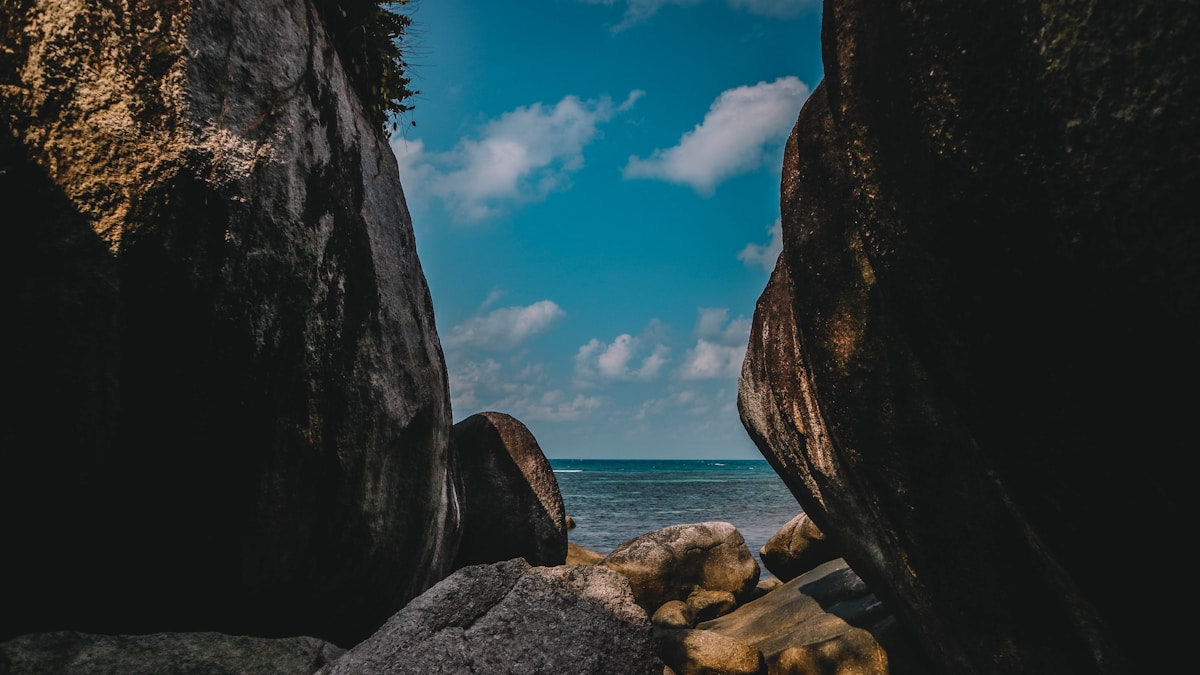
Belitung is a tin-mining island off the east coast of Sumatra, better known inside Indonesia than out, and one of the more visually distinctive coastlines in a country not short of scenic coastlines. The defining feature is the geology: enormous smooth granite boulders, some the size of houses, tumbled along the beaches and rising from the shallow sea, surrounded by water that runs from pale green inshore to deep turquoise offshore. The combination is almost unrealistically photogenic.
The island gained domestic fame through the 2008 film Laskar Pelangi (Rainbow Troops), based on Andrea Hirata’s best-selling novel, much of which was filmed at Tanjung Tinggi Beach. International tourism remains limited compared to Bali, which means beaches that would be crowded elsewhere are often quiet.
The Main Beaches
Tanjung Tinggi Beach
The island’s signature beach and the most photographed, approximately 30km north of Tanjung Pandan, the main town. The beach faces northwest, with calm, clear, shallow water ideal for swimming. The granite formations here are among the largest on the island - some boulders rise six or seven metres above the waterline and can be scrambled over at the beach edges. Entry to the beach is free.
Tanjung Tinggi has a small collection of basic warungs selling cold drinks, fried rice, and grilled fish. Sunbeds are available for rent at nominal cost. The beach is busiest on Indonesian public holidays and weekends; weekday mornings are significantly quieter.
Snorkelling directly off the beach is limited - the real underwater interest is around the submerged base of the granite boulders, where fish shelter in the rock crevices. Snorkelling gear is available for hire at the beach for approximately IDR 25,000–50,000 per session as of 2026.
Tanjung Kelayang Beach
The departure point for island hopping, located approximately 27km north of Tanjung Pandan. The beach itself is pleasant - more fine-grained sand than Tanjung Tinggi, calmer water - but its main function is as the harbour for the wooden boats that take visitors to the offshore islands. Boat charter operators line the beach and approach new arrivals reliably.
Charter rates for a half-day island hopping trip covering four or five islands run approximately IDR 400,000–600,000 per boat as of 2026, regardless of the number of passengers (typically up to 6–8 people per boat). Negotiate the route and number of stops before departing. Morning departures avoid the midday heat and tend to have calmer sea conditions.
Lengkuas Island
The most visited island in the Belitung archipelago, about 45 minutes by boat from Tanjung Kelayang. The attraction is a Dutch colonial lighthouse built in 1882 that still operates as a navigation aid. The lighthouse is open to visitors and costs approximately IDR 5,000 per person as of 2026 to climb - the view from the top across the scattered granite islands is the reward.
The snorkelling around Lengkuas is the best in the accessible island group. The granite boulders that break the surface extend underwater, forming a complex rocky habitat colonised by hard corals and populated by reef fish. Clarity is usually good in the dry season. Snorkelling gear is available for hire from your boat operator or at the island landing point.
There is a small shelter and toilet facility on the island. Swimming off the white sand beach on the lee side of the lighthouse is safe and pleasant.
Batu Berlayar
A small granite island named for its silhouette - batu berlayar translates as “sailing stone”, and the island’s main rock formation does resemble a sail from certain angles. There is no beach to speak of, but it is a standard stop on island hopping itineraries for the photograph. The surrounding water is clear and suitable for snorkelling around the base of the rock.
Pulau Pasir (Sand Island)
A sandbar island that appears and disappears with the tide. At low tide, a crescent of white sand emerges from the water, surrounded by shallow turquoise sea, with no other land visible nearby. At high tide, it is completely submerged. Your boat operator will know the tide schedule and will time the visit accordingly - arriving at low tide to find nothing but open water is a common complaint on poorly timed trips.
Ask your operator the night before about the tide times and whether Pulau Pasir will be visible on your intended departure time. A low tide between approximately 09:00 and 11:00 is ideal for visiting.
Pulau Burung (Bird Island)
A rocky islet set apart from the main cluster. The name comes from the large bird population that roosts on the granite. Less commonly included in standard island hopping circuits but worth requesting if you have time. The water around the island has good snorkelling.
Island Hopping Logistics
All island hopping departs from Tanjung Kelayang Beach. Boats are the traditional wooden craft used throughout eastern Sumatra and the islands - open-sided, with a roof for shade, and a small outboard engine. No advance booking is required; boats are available every morning from approximately 07:00.
Negotiate the full itinerary and price before boarding. A standard circuit covers Lengkuas, Batu Berlayar, Pulau Pasir, and one or two additional islands in approximately 4 hours. Longer trips to islands further from shore (Pulau Kepayang has accommodation and is occasionally included in longer routes) cost more and take proportionally longer.
Snorkelling equipment is sometimes provided by the boat operator; clarify this before agreeing a price. If not included, rental is available at the beach for approximately IDR 30,000–50,000 per set as of 2026.
Search hotels in Belitung on Booking.com
Wear reef-safe sunscreen - the standard chemical sunscreens are harmful to the coral you are snorkelling over, and operators on Lengkuas in particular are aware of this. Bring a dry bag for phones and cameras on the boat.
Best Time to Visit
The dry season from May to September provides the most reliable conditions: calm seas, good water clarity, and no risk of the northwest monsoon that brings rough weather from approximately October to March. July and August are peak domestic tourist season - Indonesian school holidays bring larger crowds to the beaches at weekends.
For international visitors willing to be flexible, May, June, and September offer dry-season conditions with fewer domestic tourists than July and August.
The wet season does not make Belitung inaccessible, but sea conditions can make island hopping uncomfortable or occasionally impossible, and visibility for snorkelling is lower.
Getting to Belitung
Tanjung Pandan Airport (TJQ) on Belitung receives direct flights from Jakarta (approximately 1 hour) and Batam. Connections from Bali require either a Garuda Indonesia flight via Jakarta or alternative routing via Palembang or Batam. Flight prices vary but budget approximately IDR 500,000–1,200,000 one-way from Jakarta as of 2026 depending on advance booking and carrier.
Most visitors base themselves in or near Tanjung Pandan, the island’s main town, which has accommodation ranging from budget guesthouses at approximately IDR 200,000 per night to mid-range hotels at IDR 600,000–1,200,000 as of 2026. Car rental or a private driver - from approximately IDR 400,000–600,000 per day as of 2026 - is the practical way to reach the northern beaches from town, as public transport options are limited.
Book tours and day trips in Belitung - most include transport from your guesthouse and a local guide familiar with the island’s best spots. Bookaway covers the main ferry routes between the islands - book in advance during peak season when boats fill quickly.
See Also
- Belitung island guide - the full island overview including accommodation, food, and practical tips
- Snorkelling in Indonesia - Belitung’s granite-boulder reefs alongside Raja Ampat and the Gili Islands
- Indonesia diving guide - the broader context for diving and snorkelling across the archipelago
- Getting around Indonesia - domestic flight connections from Jakarta and Bali to Belitung
- Indonesia on a budget - keeping costs manageable on a Belitung island-hopping trip