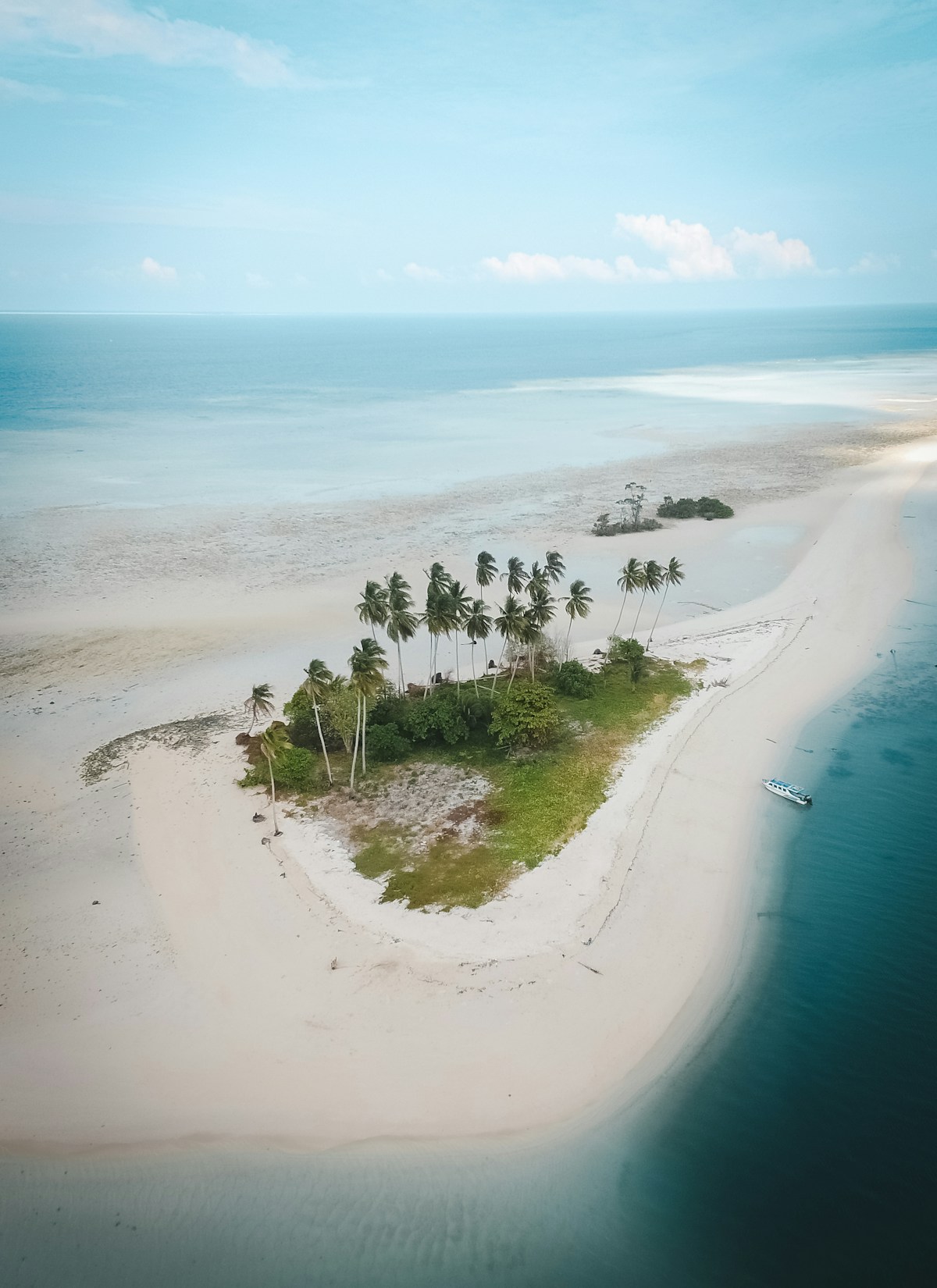
The Derawan Islands form an archipelago of 31 islands off the northeast coast of Kalimantan, the Indonesian part of Borneo. They are rarely mentioned in the same breath as Komodo or Raja Ampat among casual visitors, yet among dive professionals and marine biologists the concentration of megafauna here is considered extraordinary - manta rays, loggerhead turtles, whale sharks, and a landlocked jellyfish lake that has no equivalent anywhere in this region. Getting here takes effort, and that effort is part of why it remains in better condition than more accessible destinations.
The Islands
Derawan Island
Derawan is the main base camp and where most visitors stay. It is a small, flat island with a fishing village, a handful of dive operators, and accommodation ranging from basic homestays to mid-range bungalows over the water. The jetty is the most reliable place in Indonesia to see loggerhead turtles at close range - several individuals come to feed near the stilts every night. This costs nothing and requires no boat. The turtles are accustomed to human presence but should not be touched.
Kakaban Island
Kakaban is the scientific highlight of the archipelago. A marine lake trapped inside the island has been sealed from the open ocean for tens of thousands of years, long enough for the jellyfish population to lose their sting. Four species of stingless jellyfish inhabit the lake - thousands of them, in densities that make swimming through them surreal. Entry to the lake costs approximately IDR 50,000 as of 2026, payable at the ranger post on the jetty. The swim from the jetty to the lake entrance takes about five minutes. Fins are not recommended inside the lake itself as they damage the jellyfish.
The outer reef at Kakaban is separate from the lake and considered some of the best diving in the entire archipelago - walls with strong currents, schools of barracuda, and regular manta sightings.
Sangalaki Island
Sangalaki is a protected turtle nesting beach and one of Indonesia’s most significant sites for green and hawksbill turtles. The surrounding waters are a manta ray feeding ground. Mantas gather here throughout the year in concentrations that consistently number in the dozens, with surface feeding sessions observable from snorkel without diving equipment. There is no public accommodation on Sangalaki itself; the island is accessed as a day trip from Derawan or on a package through Sangalaki Dive Lodge.
Maratua Island
Maratua is the largest island in the group and shaped in a long curved arc enclosing a shallow lagoon. The outer walls drop steeply into deep water and attract whale sharks, most reliably between June and August when they surface near fish farming platforms at the northern end of the island. Sightings are not guaranteed, but regular enough through those months that operators on Derawan include Maratua in packages specifically as a whale shark destination. Maratua also has some of the most consistent coral coverage in the archipelago on its eastern wall.
Getting There
The access route requires multiple legs. From most international origins, the relevant routing is:
Jakarta → Berau (BEJ): Garuda Indonesia and Lion Air both operate this route, typically with a transit in Balikpapan or Makassar. The total journey from Jakarta to Berau is approximately 3–4 hours flying time including connections. Fares from approximately IDR 800,000–1,800,000 one way as of 2026 depending on airline and advance booking.
Berau → Tanjung Batu: From Berau’s Kalimarau Airport, take a taxi or ojek to the town of Tanjung Batu (approximately 2 hours, IDR 150,000–200,000 by shared car). There are also speedboat charter options from Berau town directly.
Tanjung Batu → Derawan Island: Speedboats run from Tanjung Batu pier to Derawan Island in approximately 45 minutes, costing IDR 50,000–80,000 per person on public boats, or IDR 400,000–600,000 to charter. Services are not on a fixed timetable; boats depart when full or when arranged.
Some dive packages include all transfers from Berau, which removes the coordination burden considerably.
Where to Stay in Derawan Islands
Derawan Island is the main base for most visitors, with the widest range of accommodation and the easiest access to boat trips. Sangalaki and Maratua have more limited options that cater primarily to diving guests. There are no ATMs in the archipelago; bring all cash from Berau before you travel.
Budget (from approximately USD 20–40/night as of 2026)
Budget homestays on Derawan Island are the realistic option for independent travellers who spend most of their time underwater and need only a functional bed and meals. Simple rooms with fan and shared bathroom are common; air-conditioned rooms with attached bathrooms are available at slightly higher rates. Many homestays include basic meals of fresh fish and rice, removing the need to hunt for warungs. From approximately IDR 200,000 (around USD 20) per night as of 2026.
Losmen and guesthouses in Derawan village cluster near the main jetty and the turtle-watching jetty at the north end of the island. These family-run operations vary in quality; the turtle viewing from the jetty at night is free regardless of where you stay. Dive gear rental is available through most operators for approximately IDR 100,000–200,000/day. From approximately USD 25/night as of 2026.
Homestays on Derawan with dive gear rental are increasingly common as more families convert spare rooms to guesthouse use. These suit budget divers who can negotiate dive operator access independently. Rates from approximately USD 30–40/night including meals as of 2026.
Mid-Range (from approximately USD 80–150/night as of 2026)
Derawan Dive Lodge sits on the northwest corner of Derawan Island with water bungalows set on stilts over the sea. The location gives direct water access and a house reef viewable from the rooms. Dive packages are quoted separately from accommodation. From approximately IDR 600,000–900,000 (around USD 40–60) per night including breakfast as of 2026, with dive packages added on top.
Nabucco Island Resort on Nabucco Island operates as an all-inclusive dive resort with accommodation, three meals, and guided boat dives covered in the daily rate. The resort is specifically designed for diving guests and provides a more structured experience than the village homestays on Derawan. From approximately USD 150/night all-inclusive as of 2026.
Maratua Paradise Resort on Maratua Island occupies one of the archipelago’s more remote locations, with its own dive operation and speedboat transfers to the main dive sites including the whale shark sites at Maratua’s northern end. From approximately USD 100/night as of 2026.
Luxury (from approximately USD 200/night as of 2026)
Derawan Dive Lodge premium rooms at the higher end of the lodge’s offerings provide more private water bungalow accommodation and better facilities than the standard rooms, at the upper reach of what the archipelago offers in standalone bungalow format. From approximately USD 100–150/night including meals and diving as of 2026.
Liveaboard packages represent the effective luxury option for the Derawan archipelago, covering all four main islands (Derawan, Kakaban, Sangalaki, Maratua) in a single itinerary with private cabins, full board, and multiple dives per day. Liveaboard rates for Derawan routes typically start from approximately USD 200/night per person. Operators in Berau and Balikpapan offer these packages for multi-day visits.
Search hotels in Derawan on Booking.com
Diving and Snorkelling
The Derawan archipelago sits within the Coral Triangle and records some of the highest marine biodiversity in the Indo-Pacific. The concentration of manta rays around Sangalaki and Kakaban is one of the densest documented in Indonesia. Dive sites worth specific attention include:
- Kakaban outer wall: Steep drop-offs, regular manta cleaning stations, hammerhead sightings at depth
- Sangalaki reef flat: Manta feeding, green turtle encounters, garden eels
- Maratua east wall: Large pelagics, whale sharks June–August, current diving
- Derawan house reef: Accessible from the beach, turtles, reef fish, entry-level diving
Dive operators on Derawan Island charge approximately IDR 400,000–600,000 per dive for two-tank boat dives, excluding equipment rental. Full equipment hire adds approximately IDR 100,000–200,000.
When to Visit
April through October is the dry season and the recommended window. Sea conditions are calmer, visibility is at its best (typically 20–40 m), and water temperatures average 28–30°C. Whale shark sightings at Maratua are most consistent in June, July, and August.
November through March brings the northwest monsoon to Kalimantan, with rough seas that can make inter-island boat trips uncomfortable or impossible for several days at a time. Some operators close or reduce schedules during this period.
The jellyfish lake at Kakaban is accessible year-round when conditions permit.
Practical Notes
There are no ATMs in the Derawan archipelago. Bring sufficient cash from Berau - IDR in small and mid-denominations. Card payments are not accepted at most homestays or dive operators.
Mobile signal exists on Derawan Island (Telkomsel works best) but is patchy on the outer islands. Download offline maps before leaving Berau.
The area is a protected marine reserve under the East Kalimantan provincial government. Fishing from boats in certain zones is restricted; anchoring on coral is prohibited. Dive operators are generally responsible about these regulations, but it is worth confirming their practices before booking.
Bring reef-safe sunscreen - chemical sunscreens are prohibited near the jellyfish lake and discouraged throughout the marine park.
Book tours and day trips in Derawan Islands - most include transport from your guesthouse and a local guide familiar with the island’s best spots. Bookaway covers the main ferry routes between the islands - book in advance during peak season when boats fill quickly.
More Kalimantan Diving and Wildlife Guides
- Derawan Islands diving guide - the best dive sites in the archipelago: mantas, whale sharks, and jellyfish lake
- Indonesia diving guide - the Derawan archipelago in context with Komodo, Raja Ampat, and Bunaken
- Indonesia liveaboard diving - liveaboard routes covering the Derawan Islands and Bird’s Head Seascape
- Tanjung Puting orangutan guide - the Kalimantan wildlife alternative to the Derawan dive focus
- Getting around Indonesia - flights to Berau and the access chain into the Derawan archipelago