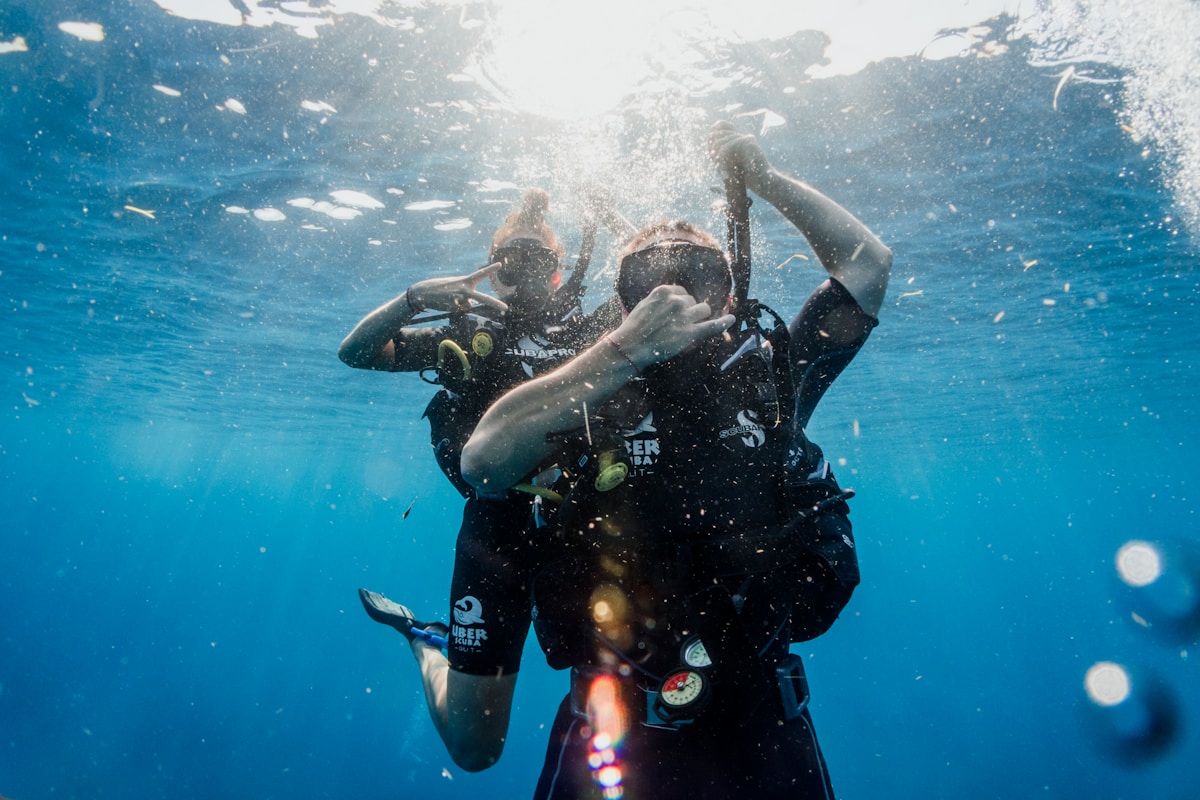
The Derawan Islands sit off the northeast coast of East Kalimantan (Borneo), separated from the interior by the long Berau River delta. The archipelago consists of around 30 islands and forms part of the Berau marine protected area, one of the most biodiverse marine environments in Indonesia. The combination of sites available - a landlocked jellyfish lake, a permanent manta ray cleaning station, seasonal whale shark aggregations, and turtle habitat - is unusual even by Indonesian standards.
Getting here takes commitment: Balikpapan or Tarakan, then a second flight or overland road to Berau, then a boat. But the archipelago sees a fraction of the diver traffic of Komodo or the Gilis, and the sites reflect that.
The Key Sites
Kakaban Island - Jellyfish Lake
Kakaban is a raised reef island with a landlocked brackish lake at its centre, formed when geological uplift isolated a lagoon from the sea thousands of years ago. The lake contains an estimated millions of jellyfish belonging to species that evolved, cut off from predators, to lose most of their stinging capability. The result: you can swim through clouds of golden jellyfish (Mastigias papua etpisonii) and moon jellyfish without risk of stings.
Entry to the lake costs approximately IDR 50,000 per person as of 2026. Boat transfer from Derawan Island runs approximately IDR 150,000 per person return as of 2026, though most divers visit as part of an arranged island-hopping or dive itinerary where transport costs are bundled differently.
Swimming in the lake requires a mask and snorkel - no fins (fins damage the lake floor) and no sunscreen (chemical sunscreen kills the jellyfish). The water is warm, visibility reasonable, and the density of jellyfish can be extraordinary. Entering the lake with thousands of softball-sized jellyfish drifting around you is a qualitatively different experience from any diving or snorkelling.
Sangalaki Island - Manta Ray Cleaning Station
Sangalaki has one of the most reliable manta ray populations in Indonesia. The island’s reef includes a cleaning station where reef manta rays return year-round to have parasites removed by cleaner wrasse. Resident mantas (individual rays identified by their unique spot patterns) have been documented at Sangalaki for years, and the site’s predictability makes it unlike the more seasonal manta encounters elsewhere.
Diving the cleaning station requires remaining still and at depth - approximately 15–25 metres - and allowing mantas to complete their cleaning circuits. Mantas circle in from open water, descend to the station, and return. Encounters of 20–40 minutes with multiple individuals simultaneously are not uncommon when the station is active. Boat traffic and diver behaviour matter here: experienced operators understand the approach protocols; inexperienced boat drivers who rev engines over the cleaning station scatter the mantas.
Sangalaki Dive Lodge operates from the island and has established protocols for the manta cleaning station. Visiting with their guides produces better manta encounters than a random local boat.
Snorkelling the manta station is possible but produces less reliable encounters - mantas tend to be deeper and move away from surface noise faster. A shallow dive at 15–18 metres gives the best balance of access and encounter quality.
Search hotels in Derawan on Booking.com
Maratua Atoll - Whale Sharks and Pelagics
Maratua is the largest island in the Derawan group and is surrounded by a significant atoll reef system. The passage at Nabucco Island on the southern end of Maratua produces whale shark sightings from approximately June through August each year, when seasonal conditions bring whale sharks to the area to feed. Sightings are not guaranteed but the season is well-established among local operators who track the animals’ movements.
The deeper passages of Maratua Atoll also hold hammerhead sharks in small schools - most reliably at dawn before boat traffic begins. Pelagic species including big-eye trevally, dogtooth tuna, and occasional thresher sharks use the atoll passes as feeding corridors. Diving these passages involves current - strong on the ebb, occasionally diveable as a drift on the flood - and advanced certification is effectively required for the deeper passage dives.
The atoll’s protected inner reef is also worth diving: flat coral gardens with good biodiversity and calm conditions, suited to macro photography and less experienced divers.
Derawan Island - House Reef and Turtle Jetty
Derawan Island is the main inhabited island and the logistical hub. The house reef is accessible from the beach or the main jetty and is diveable without a boat. Green sea turtles are present at the jetty every evening - they rest on the sandy bottom and coral near the jetty pylons and are habituated enough to humans to allow close approach. This is not a managed “turtle experience” but simply where the turtles choose to be.
The house reef itself has reasonable coral and is used for check-out dives, night diving, and macro work. It does not match Sangalaki or the Maratua passes for dramatic encounters but is convenient and reliably produces turtles, nudibranchs, and various reef species.
Night diving from Derawan Island is productive - Spanish dancer nudibranchs, hunting octopus, sleeping turtles, and various crabs and shrimps become active after dark.
Visibility, Temperature, and Conditions
Visibility at Derawan ranges from 10 to 30 metres depending on site, depth, and time of year. The jellyfish lake has lower visibility than open reef sites - typically 5–10 metres in the lake interior. The manta cleaning station at Sangalaki and the Maratua passes typically have the clearest water in the archipelago.
Water temperature runs from 27–30°C across the year. A 3mm shorty wetsuit is comfortable for multiple dives per day; many divers use a lycra suit only.
Best season: April to October. The northeast monsoon from approximately November to March brings rougher seas and reduced visibility. Whale sharks at Maratua are most reliably encountered June to August.
Dive Operators
Sangalaki Dive Lodge - Resort-based on Sangalaki Island, with established protocols for the manta cleaning station and access to all major sites. Professional operation with maintained equipment. Accommodation packages include diving; contact directly for current pricing.
Local dive guides on Derawan Island - Several local guides operate from the main island, offering single dives for approximately IDR 350,000–500,000 per dive as of 2026 including guide fee, equipment hire, and boat. Quality varies. Ask recent visitors for current recommendations - the operator landscape on small islands changes seasonally.
Liveaboards - The most comprehensive way to cover the full archipelago. Liveaboards depart from Balikpapan and run 5–7 day itineraries covering Derawan, Kakaban, Sangalaki, and Maratua, sometimes combined with the Maratua whale shark season. Pricing from approximately USD 200–350 per day as of 2026 depending on vessel and season. Booking a liveaboard for the whale shark season (June–August) requires advance reservation.
Getting to Derawan
The standard routing: fly to Balikpapan (BPN), then a 45-minute flight to Berau (BEJ) with Wings Air or Citilink. From Berau, take a road transfer (approximately 1.5–2 hours) to Tanjung Batu port, then a speedboat to Derawan Island (approximately 30 minutes, IDR 50,000–100,000 per person as of 2026) or direct to Sangalaki if pre-arranged with the lodge.
Total travel from Bali: typically a full day including connections. From Jakarta, similar - Balikpapan is a major Kalimantan hub with multiple daily connections from both cities.
Accommodation on Derawan Island ranges from basic homestays at approximately IDR 150,000–300,000 per night to better-equipped guesthouses at IDR 400,000–700,000 as of 2026. Sangalaki Dive Lodge on Sangalaki Island charges resort rates with diving included. There is no luxury infrastructure on the islands - bring what you need and adjust expectations accordingly.
Browse guided dive trips and liveaboards at the Derawan Islands - tours include full equipment, guides, and boat transport to the best sites. Dive accident insurance is essential in Indonesia - nearest recompression chambers can be hours away. EKTA policies include dive accident cover when added at checkout. Bookaway covers the main ferry routes between the islands - book in advance during peak season when boats fill quickly.
See Also
- Derawan Islands guide - the full island overview: manta rays, sea turtles, and how to plan a trip
- Indonesia liveaboard diving - multi-day liveaboard routes covering Derawan, Raja Ampat, and Komodo
- Indonesia diving guide - how Derawan’s dive sites compare across the archipelago
- Tanjung Puting orangutan guide - combining Derawan with Kalimantan’s orangutan sanctuary on a longer trip
- Getting around Indonesia - flights from Balikpapan to Berau and the full Kalimantan routing