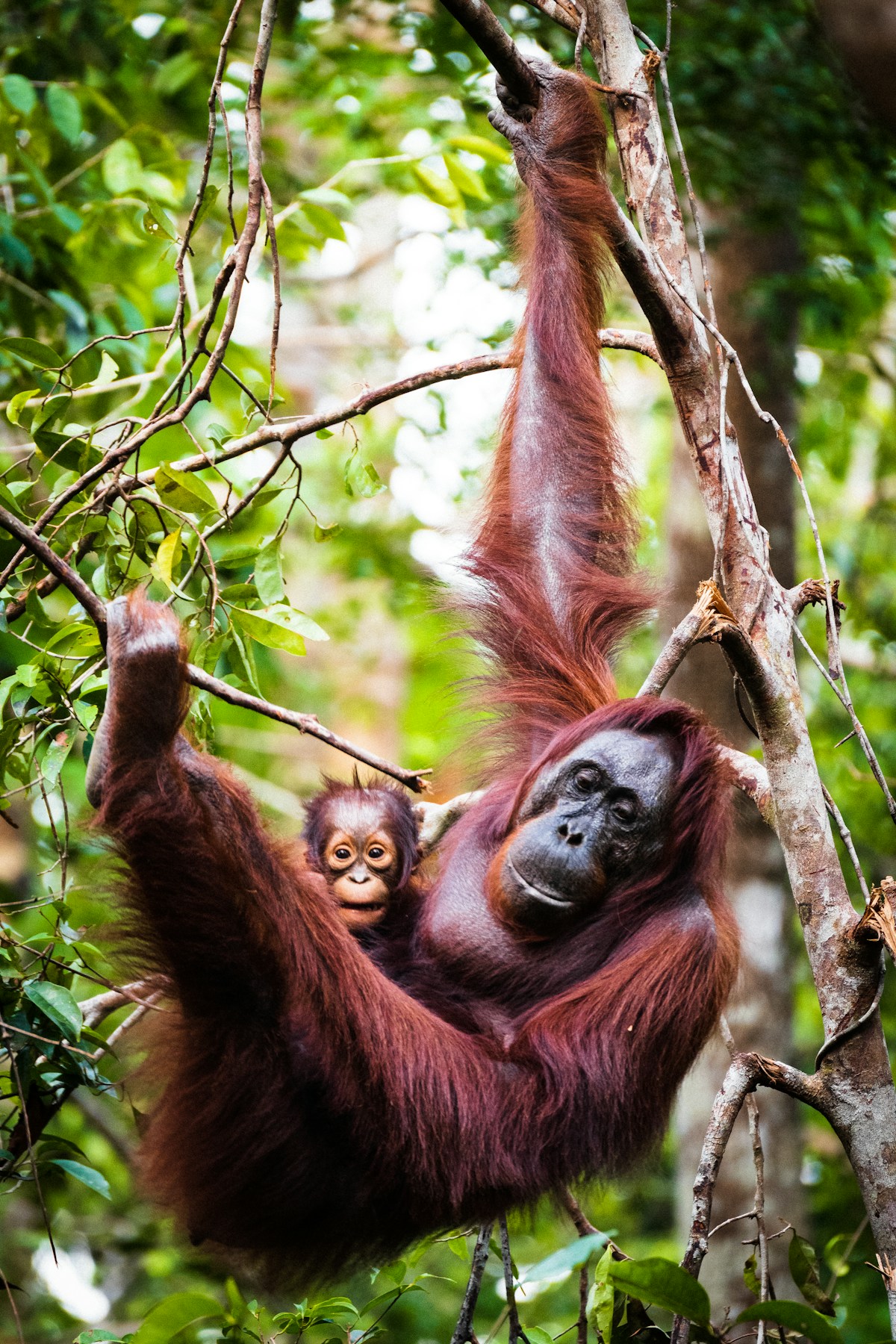
Bukit Lawang sits on the eastern boundary of Gunung Leuser National Park in North Sumatra, roughly three hours by road from Medan. The village is the main access point for guided jungle treks into one of Southeast Asia’s most biodiverse rainforests - and the place where you have the highest chance of seeing Sumatran orangutans on a guided day trip.
The orangutans here are semi-wild rehabilitated animals and their offspring, originally released from captivity decades ago. They now live freely within the park and are not fed or managed, but they have retained some tolerance of human presence. Sightings are not guaranteed, but the success rate on guided treks is high - experienced local guides know the orangutans’ movements and favourite fruit trees.
Getting to Bukit Lawang
From Medan, the standard route is a shared minivan from Pinang Baris bus terminal (around IDR 25,000–30,000 as of 2026) or a private charter. The journey takes three to four hours depending on traffic on the single mountain road. From Medan’s Kualanamu International Airport, a private transfer costs approximately IDR 400,000–600,000.
There is no train or direct bus from central Medan - most budget travellers take the minivan from Pinang Baris and accept a longer journey time.
Guiding Rules: Compulsory at All Times
Independent trekking inside Gunung Leuser National Park is not permitted. All visitors must hire a registered guide, and these must be engaged at the ranger station in Bukit Lawang village. Guides carry permits issued by the park authority; anyone approached on the street or at a guesthouse offering unofficial treks should be turned down - this is both illegal and unsafe in dense primary forest.
The ranger station is easy to find on the main path through the village. Staff there will match trekkers with certified guides based on trip length, group size, and language preference (English-speaking guides are readily available).
Trek Options and Costs
One-day trek: Approximately IDR 300,000 per person as of 2026, covering four to six hours of forest walking. This is enough time to have a genuine chance of orangutan sightings and to see other wildlife. One-day treks do not go deep into the park interior.
Two-day trek with overnight camping: Approximately IDR 600,000 per person as of 2026. This takes you further into primary forest, away from the areas visited by day-trip groups. Camping equipment and meals are included; guides carry the kit. The additional depth of the second day significantly increases the range of species you can encounter.
Three-day trek: Available on request, typically IDR 900,000–1,100,000 per person as of 2026. Recommended for anyone with a serious interest in wildlife photography or who wants to push further from the village boundary.
All prices are per person and assume groups of two to four. Solo trekkers may pay a premium.
Wildlife You Are Likely to See
Orangutans are the primary draw, but the forest around Bukit Lawang hosts a wide range of species visible to attentive trekkers:
Thomas’s leaf monkeys - black and white, highly acrobatic, frequently seen in groups of ten or more moving through the canopy. These are among the most entertaining animals to watch and are often more visible than orangutans.
White-handed gibbons - heard before they are seen. Their calls carry far through the forest at dawn. Sightings are common on two-day treks when you are in the forest at first light.
Great hornbills - large birds with an unmistakable casque above the bill. They move noisily through the canopy and are hard to miss once you have heard the wing beats.
Macaques - pig-tailed and long-tailed macaques are extremely common and sometimes bold around the camp perimeter. Keep food secured.
Sun bears - rare but present in the park. Sightings are uncommon on short treks but not unheard of on two- and three-day routes.
Sumatran tigers and rhinos exist within Gunung Leuser but are extremely rarely encountered given the vastness of the park (8,627 km²) and the animals’ avoidance of human presence. Do not expect and do not seek them out.
Orangutan Behaviour Rules
The park authority and responsible guides enforce strict protocols around orangutan contact:
- Maintain a minimum distance of 7 metres at all times
- Do not touch orangutans under any circumstances
- Do not offer food, including fruit
- Do not make sudden movements or loud noises when orangutans are close
- If an orangutan approaches you, stand still and let your guide manage the encounter
These rules exist to protect both wildlife and visitors. Orangutans are significantly stronger than humans and can cause serious injury if they feel threatened or associate people with food. The “no touch, no food” rule is not negotiable.
The Tubing Return
One of Bukit Lawang’s most enjoyable practical details: after a day trek, you can tube back down the Bohorok River to the village rather than walking the same trail in reverse. Rubber inner tubes are hired near the ranger station for approximately IDR 30,000 as of 2026. The float takes around 45 minutes depending on water level, passing through forest with monkeys in the trees above. The river is gentle outside flood season - avoid tubing after very heavy rainfall when currents run fast.
Where to Stay
Bukit Lawang is a small village and accommodation options are concentrated along both banks of the Bohorok River. Most are simple guesthouses reachable only on foot once you cross the suspension bridge.
Budget guesthouses: Rooms on the riverbank from approximately IDR 150,000 per night as of 2026, typically including a basic breakfast. Rooms are fan-cooled; hot water is uncommon at this price.
Eco Lodge: The Eco Lodge (also called Green Hill or similar names by guesthouse staff) sits a short walk further up the river. Rates from approximately IDR 250,000 per night as of 2026. Rooms are better maintained, and the location gives easier access to the trailhead. Some rooms have balconies directly over the river.
Book ahead during July–August (peak European summer travel) and over the Easter and Christmas periods. Outside these windows, Bukit Lawang is quiet and rooms are easy to find on arrival.
Search hotels in Bukit on Booking.com
Best Season for Trekking
The optimal trekking window is April through October, which corresponds to the dry season in North Sumatra. Trails are firmer, river crossings are lower, and leeches are less abundant. Orangutan sightings can be better during fruiting season (typically May–July) as the animals range more widely in search of ripe fruit.
Trekking is possible year-round. The wet season (November–March) brings heavier rainfall, muddier conditions, and occasional trail closures after flooding. Leeches are a routine feature of wet season treks - guides provide salt and are practised at removal.
Practical Notes
Bring lightweight long-sleeved clothing for leech and insect protection. Waterproof hiking shoes or trail runners are significantly more useful than sandals. A change of clothes for after the tube return is worth the extra bag weight. Drinking water is provided by your guide; bring cash in rupiah as there are no ATMs in the village (the nearest is in Bohorok town, 30 minutes away).
The trek to Bukit Lawang is one of the most accessible wildlife encounters in Southeast Asia for the effort involved. A single day trip from Medan is viable; two nights allows you to experience the forest properly.
Book a guided Bukit Lawang orangutan trek from Medan - packages typically include certified guides, transport from your hotel, and equipment. Going with an organised group is strongly recommended for major volcanoes. Check your travel insurance covers high-altitude trekking before you go - EKTA policies include adventure sports cover as an add-on.
Related Sumatra Guides
- Sumatra adventure itinerary - Lake Toba, Bukit Lawang, Berastagi, and the Sumatra highlands
- Sumatra jungle adventure itinerary - a deeper trek-focused route through Gunung Leuser
- Tanjung Puting orangutan tour - Borneo’s river safari to see wild orangutans in Kalimantan
- Medan travel guide - the gateway city for Bukit Lawang, Lake Toba, and Berastagi