Search hotels in Sumatra on Booking.com
Sumatra is the sixth-largest island on earth and one of the last places where wild orangutans, elephants, tigers, and rhinoceroses theoretically share the same landscape - though the rhinos are now desperately few. The travel infrastructure is thinner than Bali or Java and the distances are significant, but the reward is a Sumatra that has not been smoothed into a resort. This 10-day itinerary covers North Sumatra’s practical triangle: Medan and Bukit Lawang in the east, the Karo highlands around Berastagi in the centre, Lake Toba and Samosir Island in the west, and Padang and the Minangkabau highlands as the southern bookend.
Getting There
The entry point for this itinerary is Kualanamu International Airport (KNO) in Medan, North Sumatra. Direct flights from Bali take approximately 3.5 hours (from approximately IDR 500,000–900,000). Jakarta to Medan is approximately 2.5 hours. Medan is also served by direct flights from Kuala Lumpur and Singapore if you are planning a broader regional trip.
The exit point is Minangkabau International Airport (PDG) in Padang, West Sumatra. Flights back to Bali or Jakarta take 1.5–2 hours (IDR 400,000–700,000).
Day 1–2: Medan
Medan is Sumatra’s largest city - commercial, crowded, and often dismissed as a staging post. It rewards a more attentive visit than most travellers give it.
Maimoon Palace (Istana Maimoon) is the 1888 palace of the Sultan of Deli, built in a confident blend of Malay, Dutch, and Italian Baroque architecture. Entry is approximately IDR 5,000 per person. The interior reception hall is open to visitors; the royal family still occupies part of the building.
Tjong A Fie Mansion is the meticulously preserved home of a 19th-century Hakka Chinese merchant who became one of Medan’s most influential figures. It is now a museum and one of the best examples of colonial-era Chinese merchant architecture in Southeast Asia. Entry is approximately IDR 35,000; guided tours are available.
Durian: Medan is regarded as the best city in Indonesia for durian. The fruit markets in the Kampung Durian area (Jalan Semarang) sell fresh durian by the kilogram and by the fruit from late afternoon until late evening. Expect to pay approximately IDR 30,000–80,000 per fruit depending on variety and season. The local varieties - particularly Monthong and the bitter-sweet local cultivars - are a different experience from the plantation durian sold in Southeast Asian supermarkets.
Stay: Mid-range hotels in Medan around Jalan Imam Bonjol or the Polonia area run approximately IDR 200,000–500,000/night. Budget options on Jalan Palang Merah from approximately IDR 100,000–200,000/night.
Day 3: Bukit Lawang
Bukit Lawang sits approximately 4 hours northwest of Medan on the edge of Gunung Leuser National Park - one of the last habitats of wild Sumatran orangutans. The Bohorok River runs through the village; the jungle begins at the edge of the guesthouses.
The main activity is a guided trek into the national park to observe semi-wild orangutans (habituated individuals from the former rehabilitation centre, now living freely in the forest). Half-day treks run approximately IDR 200,000–350,000 per person with a licensed guide; full-day treks including a river tubing return approximately IDR 350,000–600,000 per person. Both are bookable on arrival through any Bukit Lawang guesthouse.
Wild orangutans are also present in the park - sightings are not guaranteed but are more frequent in the early morning. Guides know the general territory of habituated individuals and the chances of a close encounter on a 3-hour trek are high.
Stay overnight: Simple riverside guesthouses in Bukit Lawang from approximately USD 10–25/night including basic breakfast. Several have platforms overlooking the river with genuine jungle ambience.
Day 4: Berastagi
Return from Bukit Lawang to Medan (3 hours), then continue to Berastagi in the Karo Highlands (approximately 2 hours from Medan). The road climbs through tea and rubber plantations into a cooler highland plateau at around 1,400 metres.
Sibayak Volcano (2,212m) is the centrepiece. An active volcano with a large crater and accessible sulphur vents, it is a 4-hour round trip on foot from the main trailhead. Trail entry is approximately IDR 15,000. A local guide is strongly recommended for navigation on the upper section and costs approximately IDR 150,000–250,000. Depart no later than 7am to avoid afternoon cloud cover that frequently obscures the summit view.
The trail crosses open scrubland, climbs through forest, and reaches the crater rim where sulphurous steam vents create an otherworldly atmosphere. The volcanic lake at the bottom of the crater is one of the more extraordinary natural features in North Sumatra.
Fruit market: Berastagi’s daily market is known for passion fruit, mandarins, and marquisa - the local sour-sweet passion fruit variety used to make Berastagi’s famous syrup drinks (approximately IDR 5,000–10,000 per glass).
Stay: Guesthouses in Berastagi from approximately USD 10–30/night; the town is compact and easily navigated on foot.
Day 5: Lake Toba and Samosir Island
Berastagi to Lake Toba is approximately 3 hours by minibus (regular departures from Berastagi terminal, approximately IDR 30,000–50,000) or hired car.
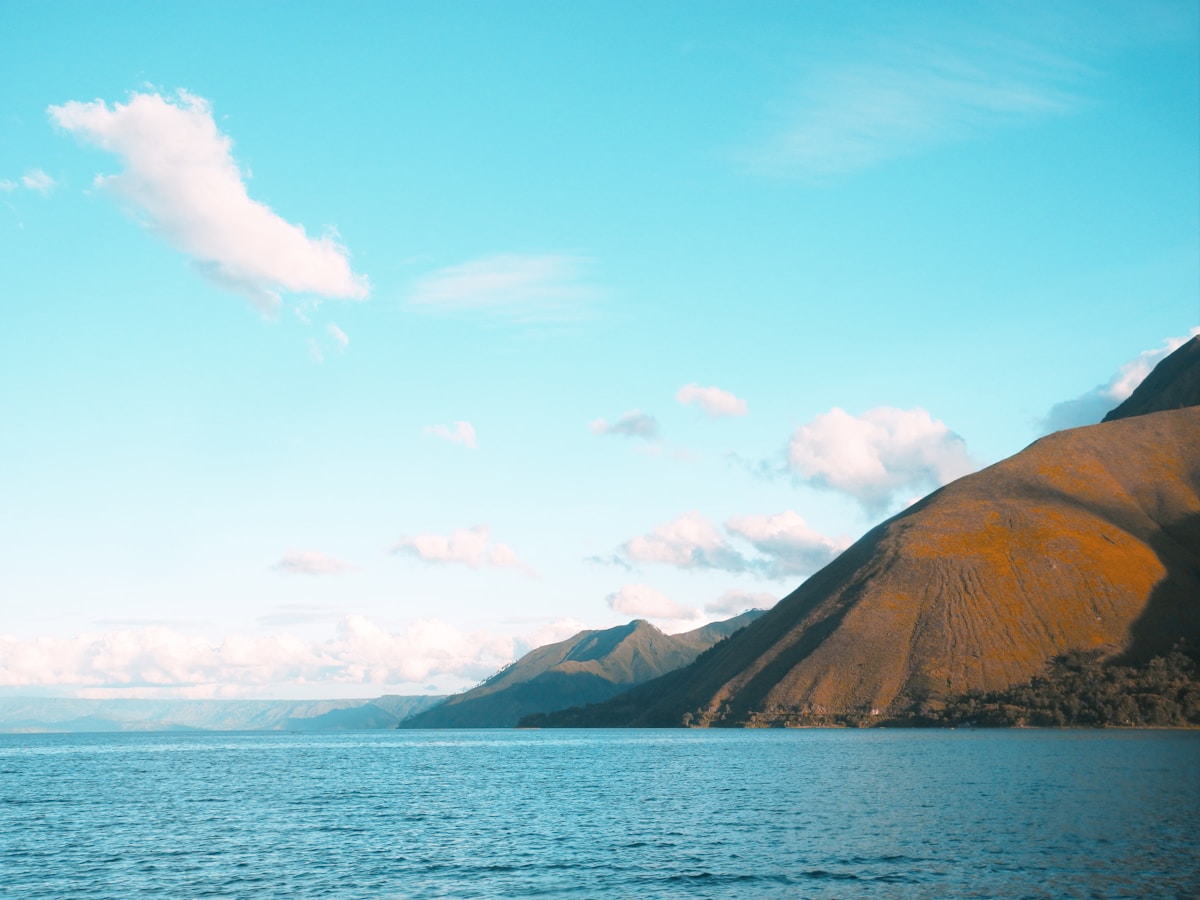
Lake Toba is the world’s largest volcanic lake - 100 kilometres long, 30 kilometres wide, formed by a supervolcanic eruption approximately 75,000 years ago. In the centre of the lake sits Samosir Island, an island-within-a-lake the size of Singapore. The Batak people, one of Sumatra’s most prominent ethnic groups, have lived here for centuries.
The ferry from Parapat on the mainland to Tuk Tuk, the main traveller hub on Samosir, takes approximately 30 minutes and costs approximately IDR 15,000–20,000 per person. Ferries run regularly throughout the day.
Tuk Tuk has the highest concentration of guesthouses, restaurants, and boat rental on Samosir. Budget bungalows from approximately IDR 100,000–200,000/night; mid-range lake-facing rooms from approximately IDR 200,000–400,000/night.
Arrive by early afternoon to allow time for a tom-tom boat sunset tour on the lake (rent a small wooden boat with driver, approximately IDR 150,000–250,000 per hour).
Day 6–7: Samosir Island
Two days on Samosir allows for a proper exploration of Batak culture without rushing.
Batak villages: The villages of Tomok, Ambarita, and Simanindo are the three main cultural sites on Samosir’s east coast, each accessible by motorbike or bicycle from Tuk Tuk.
- Tomok: Ancient stone sarcophagi of Batak kings, dated to several hundred years before Dutch contact. Entry approximately IDR 10,000. The market here sells Batak textiles (ulos cloth) at lower prices than Medan.
- Ambarita: Stone chairs and tables used for village justice and, historically, for ritual meals following executions - a confronting and honest piece of Batak history. Entry approximately IDR 10,000. Guided explanations from local guides at the site.
- Simanindo: A traditional Batak Toba longhouse (rumah adat) complex and cultural show. Entry approximately IDR 30,000; the dance performance runs on scheduled times (check locally for current schedule).
Motorbike circuit: The perimeter road around Samosir Island is approximately 110 kilometres. A full circuit takes 4–5 hours by motorbike (hire approximately IDR 80,000–120,000/day from Tuk Tuk operators) and passes through highland paddy fields, lake-facing villages, and the quieter west coast where tourist infrastructure drops away entirely. The west coast provides views across the lake that the busier east coast cannot match.
Day 8: Lake Toba to Padang
Fly from Silangit Airport (near Lake Toba, 1 hour by road from Parapat) or via Medan - check Garuda, Lion Air, and Citilink routes at time of booking. Approximate flight costs: IDR 400,000–700,000 Medan to Padang.
The overland alternative via Bukittinggi takes approximately 12–14 hours total - doable but tiring. For a 10-day itinerary, flying is the practical choice.
Day 9: Padang
Padang is the capital of West Sumatra and the cultural capital of the Minangkabau - one of the world’s largest matrilineal societies. It is also where nasi Padang originates. This is food-focused time.
Nasi Padang lunch: Padang’s warung system presents 20+ dishes simultaneously on your table; you pay only for what you eat. A full spread at a mid-range Padang restaurant costs approximately IDR 50,000–100,000 per person. The best traditional options are concentrated around Jalan Pondok and the Pasar Raya market area.
Adityawarman Museum documents Minangkabau history and material culture in a building designed as a traditional rumah gadang (big house) - the distinctive curved roof architecture seen across West Sumatra. Entry approximately IDR 5,000. Allow 1 hour.
Pantai Air Manis (Sweet Water Beach) is 7 kilometres south of the city centre - a black-sand beach with the legendary rock formations of Malin Kundang (a folk tale of a son turned to stone for denying his mother). Quiet and photogenic in the afternoon. Ojek (motorcycle taxi) from Padang centre approximately IDR 20,000–30,000.
Day 10: Bukittinggi Day Trip
Bukittinggi sits 90 kilometres north of Padang in the Agam highlands (approximately 1.5 hours by minibus, IDR 25,000–40,000). The city perches above the edge of Sianok Canyon - a 100-metre-deep gorge cutting through the highlands - and was the de facto capital of the West Sumatran revolutionary government during the Indonesian independence struggle.
Sianok Canyon: Walk the rim path above the canyon (free, approximately 45 minutes return) or negotiate a guide for a 2-hour canyon-floor walk (approximately IDR 100,000–200,000). The views across the gorge to the forested far wall are one of West Sumatra’s most striking.
Fort de Kock is a small Dutch-era fort above the city centre, now a park with city views. Entry approximately IDR 10,000.
Jam Gadang (Big Clock) - the Dutch colonial clocktower at the centre of Bukittinggi - is the city’s landmark and a useful orientation point. The market surrounding it sells Minangkabau textiles, silverwork, and spices at prices lower than in Padang.
Return to Padang for an evening departure flight.
Budget Summary
| Day | Key Costs | Budget/person | Mid-range/person |
|---|---|---|---|
| 1–2 | Medan hotels + food | IDR 200,000–350,000/night | IDR 400,000–700,000/night |
| 3 | Bukit Lawang trek | IDR 200,000–350,000 | IDR 350,000–600,000 |
| 4 | Sibayak hike | IDR 150,000–200,000 | IDR 250,000–350,000 |
| 5–7 | Samosir accommodation | IDR 100,000–200,000/night | IDR 200,000–450,000/night |
| 8 | Padang flight | IDR 400,000–500,000 | IDR 500,000–700,000 |
| 9–10 | Padang + Bukittinggi | IDR 150,000–250,000/day | IDR 300,000–500,000/day |
All prices as of 2026. Internal transport, park entry fees, and guide costs are additional to accommodation.
Booking a guided day tour on arrival lets you get oriented quickly before exploring independently - most operators include hotel pickup. Bookaway covers inter-island ferries, buses, and trains - search your route, compare departure times, and get tickets confirmed instantly. Before you travel, sort travel insurance for Indonesia - medical evacuation cover is important given the archipelago’s geography and remoteness of some destinations.
See Also
- Bukit Lawang orangutan trek - the full guide to trekking for orangutans in Sumatra’s jungle
- Lake Toba travel guide - the caldera lake, Samosir Island, and the Batak culture
- Padang travel guide - the food city of West Sumatra and the gateway to Bukittinggi
- Minangkabau Highlands guide - Sianok Canyon, Fort de Kock, Jam Gadang, and the Minangkabau cultural heartland around Bukittinggi
- Padang food guide - rendang, gulai, and the Minang cuisine that defines Indonesian food
- Getting around Indonesia - domestic flights and ferry routes across Sumatra and beyond
Book Your Trip
- Flights - Find the best fares to Indonesia · flights guide
- Travel Insurance - Get covered before you go · insurance guide
- eSIM - Stay connected from landing · eSIM guide
- Airport Transfers - Pre-book your transfer from Bali or Jakarta
- Car Rental - Compare prices across providers · car hire guide
- Tours & Activities - Browse Indonesia tours on GetYourGuide