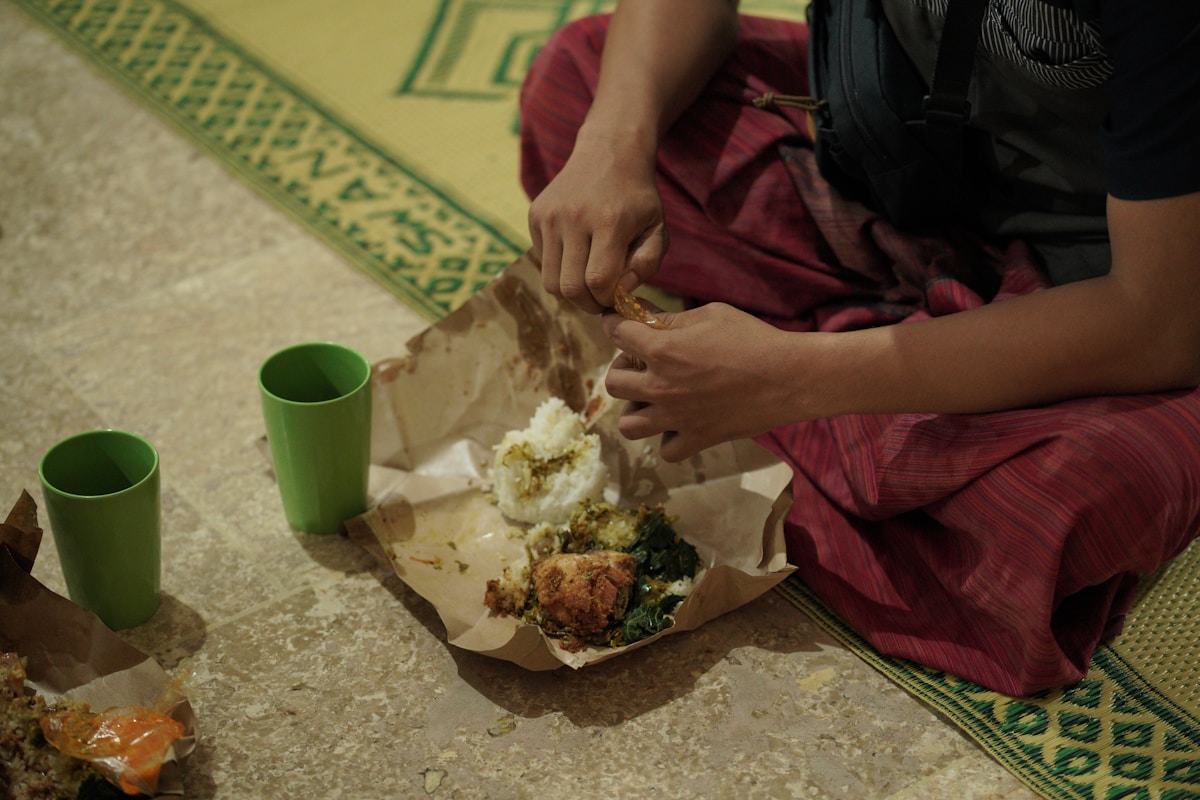
Padang food - properly called Minangkabau cuisine, from the Minangkabau people of West Sumatra - is the most widely distributed regional cuisine in Indonesia. You will find a rumah makan Padang (Padang eating house) in every city, every airport terminal, and most towns across the archipelago. It is what most Indonesians mean when they say they are going out for a meal. Understanding how it works and what to order is one of the most practical food skills you can acquire before travelling through Indonesia.
The Rumah Makan Padang System
Walk into any rumah makan Padang and the same ritual unfolds: within seconds of sitting down, a server carries out a tower of small plates and places them all on your table. Rice is a given. Surrounding it are small dishes of rendang, gulai, sambal, fried fish, boiled cassava leaves, fried lung or intestine, and two or three more options depending on the restaurant.
You do not order from a menu. You simply eat what you want from the plates in front of you and leave the rest untouched. At the end of the meal, the server tallies up only the dishes you actually touched - the untouched plates are returned to the kitchen and served again at the next table. The total for a full meal runs from approximately IDR 40,000–100,000 per person as of 2026, depending on which dishes you eat and how much protein is involved.
This system has a name: hidang. It rewards those who know which dishes to take and ignore the rest.
Rendang - The Flagship Dish
Rendang is the dish that made Padang food internationally known. It was listed on UNESCO’s intangible cultural heritage list as part of Minangkabau culinary traditions. The preparation is long: beef (usually short rib or chuck) is simmered in coconut milk with a complex spice paste - lemongrass, galangal, turmeric, chilli, shallots, kaffir lime - over low heat for a minimum of four hours. As the coconut milk reduces, the beef first braises, then fries in the residual fat as the liquid disappears entirely. The final result is dark, almost dry, deeply fragrant.
Good rendang has a complex bitterness from the kaffir lime and toasted spice alongside sweetness from the coconut. Bad rendang - shortened cooking time, low-quality spice paste - is tough and flat. At a reputable rumah makan, rendang costs approximately IDR 25,000–60,000 per portion as of 2026. At Restoran Garuda (the most widely distributed Padang chain, with locations in Jakarta, Medan, Surabaya, Bali, and elsewhere), a rendang portion runs approximately IDR 55,000–75,000 as of 2026.
Gulai - Coconut Milk Curries
Gulai is the broader category of Padang coconut milk curries. There are several:
- Gulai ikan (fish curry) - the mildest, often using mackerel or carp, flavoured with turmeric and lemongrass
- Gulai kambing (goat curry) - richer, with a deeper red chilli base; the goat can be bone-in
- Gulai kepala ikan (fish head curry) - a substantial dish; the fish head (usually snapper) carries flavour that the fillet does not
- Gulai otak (brain curry) - silky and mild; the most polarising option on any Padang table
The consistency of gulai is looser than rendang - it is a sauce dish, eaten over rice rather than as a dry accompaniment. Approximately IDR 20,000–50,000 per portion as of 2026, depending on the protein.
Sambal Hijau - The Green Chilli Sauce
Padang sambal is different from Balinese or Javanese versions. Sambal hijau (green sambal) is made from large, mild-to-medium green chillies, charred or lightly sautéed with shallots and salt. The result is a thick, slightly smoky condiment with moderate heat and a grassy flavour. It accompanies virtually everything in a rumah makan Padang.
Sambal balado is the red version - bird’s eye chillies or large red chillies, fried and pounded, significantly hotter. It coats dishes like fried egg (telur balado) or fried eggplant.
Ayam Pop - Poached Fried Chicken
Ayam pop is a Padang specialty that looks unassuming: white-to-pale-yellow fried chicken, not the deep brown of other fried chicken preparations. The chicken is first poached in coconut water with lemongrass until almost cooked, then fried briefly at moderate temperature. The result is exceptionally tender with crisp skin and a subtle sweetness from the coconut water. It is served with sambal hijau and boiled cassava leaves.
Expect IDR 25,000–45,000 per piece as of 2026.
Dendeng Balado and Paru Goreng
Dendeng balado is thinly sliced beef, dried or fried until very crisp, then tossed in a sambal balado coating. It is intensely flavoured - salt, heat, a slight sweetness from the frying - and works as a secondary dish alongside rice. Approximately IDR 30,000–55,000 per portion as of 2026.
Paru goreng (fried lung) is one of the offal staples of Padang cuisine. Beef lung is boiled, sliced, spiced, and fried until very crisp - the texture is more like a thick cracker than conventional meat. It is far more widely eaten in Padang restaurants than in other Indonesian cuisines and is a cheap source of protein at IDR 10,000–25,000 per portion as of 2026. It divides visitors sharply.
Daun Singkong - Boiled Cassava Leaves
Daun singkong (cassava leaves) are the green vegetable that anchors every Padang table. They are boiled with coconut milk, garlic, and sometimes chilli until tender - similar in texture to cooked spinach, slightly bitter, earthy. They are almost always included in the hidang spread without extra charge. Eat them as a palate reset between spicier dishes.
The Minangkabau Context
Padang food spread across Indonesia partly because of the Minangkabau tradition of merantau - the cultural expectation that young men leave their home region to seek their fortune elsewhere. Since the Minangkabau are a matrilineal society (property and family names pass through women, not men), men traditionally proved their worth by venturing out and sending money home. Opening a rumah makan Padang in a new city was one of the most common paths. This is why you find the same dishes prepared to the same standard in Aceh, Jakarta, Ambon, and Kupang.
Where to Eat
Restoran Garuda is the most reliable chain for consistent quality in unfamiliar cities - present in most major Indonesian airports and city centres. A full meal runs approximately IDR 60,000–120,000 per person as of 2026.
Sari Bundo and Pagi Sore are two other widespread chains with similar quality and pricing.
In Padang city itself, the food is more authentic, cheaper, and the offal selection is wider. The area around Jalan Pasar Raya in central Padang has dozens of independent rumah makan with full hidang spreads from IDR 35,000–70,000 per person as of 2026. The local versions use fresher coconut milk and more pungent spice pastes than what most chain restaurants replicate.
Spice Level Note
Padang food has a reputation for heat, but the intensity varies widely. Rendang and gulai ikan are mild to medium by Indonesian standards. Sambal balado is genuinely hot. You can always ask staff to point out the hotter dishes - “yang pedas yang mana?” (which ones are spicy?) is understood everywhere.
Book a West Sumatra Food Tour
Padang food in Padang city is a different experience from the chain rumah makan that have spread the cuisine across Indonesia - fresher coconut milk, more assertive spice pastes, and a wider offal selection that the Restoran Garudas of Jakarta don’t replicate. A guided food tour of Padang city’s Pasar Raya district, combined with a day trip to the Minangkabau heartland around Bukittinggi, contextualises the cuisine against the matrilineal Minangkabau culture that produced it. For visitors spending time in West Sumatra, a half-day food tour is the most efficient way to understand why rendang became Indonesia’s most internationally recognised dish.
Browse food tours and cooking experiences in West Sumatra
Plan Your Visit
The best Padang food is in Padang city and the surrounding Minangkabau highlands - Bukittinggi, one hour north by road, gives you the full picture. Staying in Padang city is practical for the Pasar Raya food district; Bukittinggi suits visitors doing the highlands more thoroughly. Browse hotels in Padang to find accommodation in West Sumatra.
See Also
- Padang travel guide - the city where the cuisine was born: where to eat it at the source
- Bukittinggi travel guide - the highland Minangkabau capital: rendang and Padang food in its cultural home
- Indonesian food guide - the national cuisine context: how Padang food became Indonesia’s most exported regional dish
- Sumatra adventure itinerary - building a Sumatra route around Padang food, Lake Toba, and Bukit Lawang