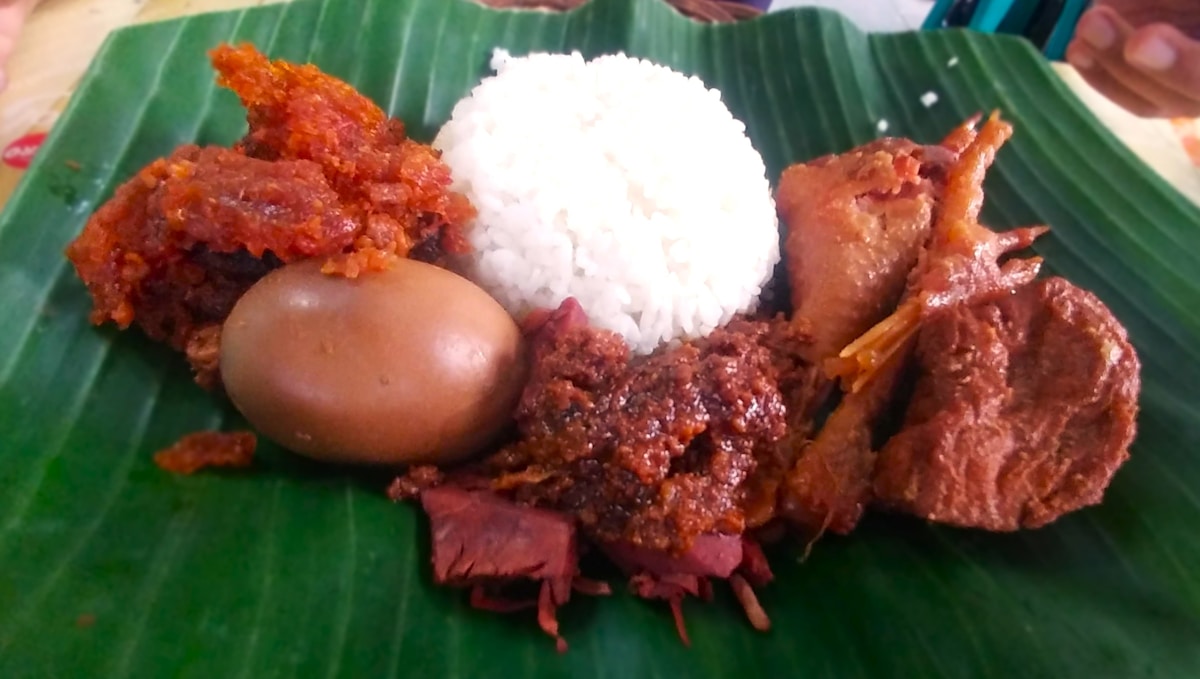
Java is Indonesia’s most densely populated island and the source of several of the country’s most widely eaten dishes. What sets Javanese food apart from Padang or Balinese cuisine is the palate: Central Javanese cooking in particular trends sweeter than anywhere else in the archipelago, with palm sugar added to dishes that other regions would make purely savoury. East Java swings in the opposite direction - darker, more fermented, more intense.
Javanese Dishes at a Glance
| Dish | Origin | Flavour | Price Range (IDR) |
|---|---|---|---|
| Gudeg | Yogyakarta (Central Java) | Sweet, slow-cooked jackfruit | 25,000–60,000 |
| Rawon | Surabaya (East Java) | Dark, earthy beef broth | 30,000–60,000 |
| Nasi liwet | Solo (Central Java) | Coconut-milk rice, savoury | 15,000–30,000 |
| Bakso | East Java (national) | Clear meatball soup | 15,000–30,000 |
| Soto ayam | Regional (varies) | Yellow chicken broth | 20,000–45,000 |
| Gado-gado | Jakarta/Java | Peanut sauce vegetable dish | 20,000–40,000 |
| Tempe goreng | Java (national) | Crispy fried fermented soy | 5,000–15,000 |
| Angkringan nasi kucing | Yogyakarta | Tiny banana-leaf rice parcels | 2,000–3,000 each |
| Bale Raos royal kitchen | Yogyakarta Kraton | Royal Javanese multi-course | 150,000–250,000 |
All prices as of 2026.
The Sweet Palate of Central Java
Central Javanese food uses palm sugar (gula jawa) in ways that can surprise first-time visitors. Gudeg is the clearest example: what looks like a savoury stew of jackfruit is in fact gently sweet, slow-cooked for hours in coconut milk and palm sugar alongside hard-boiled eggs and chicken. Sambal krecek (spiced fried cattle skin) accompanies it, providing salt and texture against the sweetness. This is not a dish for people expecting chilli heat.
Yogyakarta is the capital of gudeg. Gudeg Wijilan - a street in the southeastern part of the city near Kraton - has a dozen gudeg warungs open from early morning until they sell out, typically by early afternoon. Expect to pay IDR 25,000–60,000 for a full plate as of 2026. Bu Tjitro, one of the older names on the strip, is frequently recommended for consistency.
Rawon - The Black Soup of East Java
Rawon is the most distinctive dish of East Java and one of the most unusual soups in the entire archipelago. Its near-black colour comes from keluak, the fermented seed of the pangium edule tree - a flavour that is earthy and slightly bitter in a way that has no simple parallel. The soup itself is a beef broth, slow-cooked with lemongrass, galangal, and shallots, served with rice, bean sprouts, salted egg, and fried shallots.
The most famous address is Rawon Setan (Ghost Rawon) in Surabaya, a night-time warung operation that has operated for decades from a cart near Jalan Embong Malang. A bowl runs approximately IDR 30,000–60,000 as of 2026. The name refers to the late-night hours rather than any ghostly ingredient. If you are transiting through Surabaya, rawon is reason enough to stop for a meal.
Bakso - Meatball Soup
Bakso is ubiquitous across Indonesia but traces its roots to Java. The meatballs are made from finely processed beef (occasionally chicken or mixed protein) with a distinctive bouncy texture achieved through extensive processing. They arrive in a clear broth with glass noodles or egg noodles, fried shallots, and chilli sauce on the side.
Street-cart bakso costs IDR 15,000–30,000 as of 2026. Quality is relatively consistent across the country because the recipe does not vary much. Bakso Malang (from the East Java city of Malang) refers to a version with multiple ball sizes, stuffed varieties, and fried tofu pieces - it has become a recognisable style found across the country. In Malang itself, the Bakso President stall near Pasar Besar is well established.
Nasi Goreng and the Basics
Nasi goreng (fried rice) is available everywhere in Indonesia, but Java is where it reached its current form: leftover rice stir-fried over high heat with sweet soy sauce (kecap manis), shallots, garlic, egg, and whatever protein is available. The sweet soy sauce is the Javanese contribution - kecap manis was developed in Central Java and its presence defines Indonesian fried rice versus its counterparts in China or Thailand.
Price range: IDR 15,000–50,000 as of 2026 depending on venue, from roadside cart to sit-down restaurant. A fried egg on top is the default; request without if preferred.
Tempe and Tofu - The Javanese Staples
Tempe (fermented soybean cake) was developed in Java and remains central to Javanese cooking in a way it is not elsewhere. Tempe goreng (fried tempe) is served as a side at virtually every warung meal - crisp, slightly nutty, paired with sambal. Tahu goreng (fried tofu) accompanies it. Together they cost IDR 5,000–15,000 per portion as of 2026 and constitute a significant part of everyday protein intake.
Tempe bacem (braised tempe in palm sugar and coriander until dark and tender) is a specifically Central Javanese preparation and is worth seeking out at traditional warungs in Yogyakarta or Solo.
Gado-Gado - Peanut Sauce Vegetable Dish
Gado-gado is a composed salad of boiled and raw vegetables - cabbage, bean sprouts, long beans, potato - alongside boiled egg, fried tofu, and tempe, covered in a ground peanut sauce thinned with coconut milk and seasoned with tamarind and palm sugar. It is served with krupuk (prawn crackers).
Krupuk are the ubiquitous side crunch of Java - shrimp-flavoured prawn crackers fried in oil until puffed, eaten alongside almost every meal. They are inexpensive (IDR 2,000–5,000 per serving as of 2026) and add texture to otherwise soft dishes.
Soto Ayam - Regional Chicken Soup
Soto is Indonesia’s most regionally varied dish. Soto ayam is chicken soup, but the base stock, spice profile, and accompaniments differ markedly between Solo, Lamongan, Madura, and Jakarta. Solo’s version uses a light, turmeric-yellow broth with rice or rice vermicelli, boiled egg, and potato fritters. Lamongan’s version (widely replicated across Java under the name Soto Lamongan) is richer, served with crunchy koya (fried prawn cracker powder) on top. Expect IDR 20,000–45,000 as of 2026 depending on location and style.
Where to Eat in Yogyakarta
Jalan Prawirotaman in Yogyakarta’s batik district has a concentrated strip of sit-down restaurants catering to both Indonesians and international visitors. Via Via (IDR 60,000–120,000 per dish) and several unnamed local spots serve Javanese home cooking.
Angkringan carts (small wooden carts with a covered brazier) are the cheapest option and a specifically Yogyakarta institution. Nasi kucing (tiny rice parcels wrapped in banana leaf with spiced anchovy) costs IDR 2,000–3,000 each; grilled sate IDR 1,500–5,000 per skewer as of 2026. They operate from dusk until around midnight, clustered near Malioboro Street and around the train station.
For a formal experience, Bale Raos in the grounds of the Kraton (Yogyakarta Palace) serves dishes from the royal Javanese kitchen: IDR 150,000–250,000 per person as of 2026 for a full meal. Reservations recommended.
Cooking Classes in Yogyakarta
Learning to cook Javanese food is the most direct way to understand its logic: why palm sugar goes into a stew, how grated coconut changes texture over time, and what separates a proper bumbu (spice paste) from a shortcut version.
Paon Bali Cooking School (also operates in Yogyakarta) runs morning market visits to Pasar Giwangan followed by a two-hour cooking session. Classes cover gudeg, soto ayam, and tempeh dishes. Approximately IDR 350,000–450,000 per person as of 2026 including market transport and a sit-down meal of what you cook. Book two days ahead; classes run most mornings.
Desa Cooking Class (Sleman district, north Yogyakarta) uses a wood-fire outdoor kitchen in a working village compound. Focus is on traditional rice preparations, tempeh from scratch, and bumbu grinding by hand. Approximately IDR 300,000–400,000 per person including pickup from central Yogyakarta. Maximum 8 participants.
Warung Baru Cooking School near Malioboro covers the angkringan repertoire: nasi kucing preparation, wedang uwuh spiced ginger drink, and several grilled items. An evening-format class (approximately IDR 250,000 per person, 3 hours) suits travellers who have used mornings for temple visits.
Food Tours in Solo and Surabaya
Solo night market circuit - Pasar Gede and the surrounding streets hold Solo’s street food identity in one compact area. Nasi liwet (rice cooked in coconut milk with chicken and egg in opor sauce) is Solo’s signature: sold from portable carts from around 5pm. The most concentrated cluster is near the Pasar Gede market entrance. Budget IDR 15,000–30,000 per portion. Combine with wedang ronde (sweet ginger broth with stuffed glutinous rice balls) from stalls along the adjacent night market strip.
Surabaya food tours - The Surabaya Kota Lama (old colonial quarter) and Pecinan (Chinatown) area contains the city’s best street food concentration: rawon carts from mid-afternoon, lontong balap stalls near Pasar Wonokromo (compressed rice, fried tempeh, shrimp fritters), and Chinese-Javanese bakpia pastry from Pecinan. Guided food walks in this area run approximately IDR 300,000–400,000 per person including tastings. Book through your hotel concierge or a Surabaya-based tour operator - departures are typically late afternoon to catch the best stall activity.
Practical Notes
- Central Javanese food is notably sweet. If you prefer less sweetness, say “kurang manis” (less sweet) - this works at most warungs.
- East Javanese food, by contrast, uses fewer sweet notes and more fermented and darker flavours. Rawon is the clearest example.
- Jakarta has every regional style available; the Javanese-dominant population means Central and East Javanese food is easy to find.
- All the dishes listed here are halal unless they specifically include pork - Javanese Muslims constitute the majority of Java’s population, and pork is absent from mainstream Javanese cuisine.
Find food tours and cooking experiences in Java - a guided food walk is one of the best ways to move beyond tourist-facing restaurants.
Plan Your Visit
Yogyakarta is the most practical base for Javanese food - gudeg, angkringan, and Malioboro’s warung strip are all walkable, and day trips to Solo (nasi liwet, serabi) are straightforward by train. Jakarta covers every regional style if you’re flying in or out. Browse hotels in Java to find accommodation that puts you close to the food.
See Also
- Yogyakarta food guide - gudeg, Bale Raos, and the best restaurants in Java’s cultural capital
- Solo food guide - nasi liwet and Solo’s distinctive take on Javanese cuisine
- Indonesian food guide - the national cuisine context: how Javanese food fits within the archipelago
- Warung guide Indonesia - the warung culture that is the backbone of everyday Javanese eating