Balinese food is not simply Indonesian food cooked on Bali. It has its own spice pastes, its own ritual context, and several dishes that exist nowhere else in the archipelago. The most important distinction for visitors: Bali is a Hindu-majority island, which means pork is central to the cuisine in a way that is absent from most of Indonesia’s predominantly Muslim regions. If you are not eating pork, a significant portion of Balinese food culture is off the table - literally.
Babi Guling - Spit-Roast Suckling Pig
Babi guling is the dish most associated with Bali. A whole piglet is rubbed inside and out with a spice paste (base genep) - turmeric, shallots, galangal, lemongrass, coriander, and chilli - then slow-roasted on a bamboo spit over coconut husk charcoal for several hours. The result is crackling skin, deeply flavoured meat, and fried offal served alongside rice and lawar.
The best-known address is Ibu Oka in Ubud, where a plate runs approximately IDR 50,000–90,000 as of 2026. Arrive before noon - they sell out by early afternoon. The second Ibu Oka location near Ubud Palace is the original; the outpost on Jalan Suweta is slightly more tourist-facing. For a more local experience, Warung Babi Guling Pak Malen in Gianyar serves the same dish from approximately IDR 45,000–70,000 and the queue is overwhelmingly Balinese, which tells you what you need to know.
For a refined version in a restaurant setting, Bumbu Bali in Nusa Dua serves babi guling as part of a set menu at approximately IDR 200,000–350,000 per person as of 2026.
Bebek Betutu - Slow-Cooked Smoked Duck
Bebek betutu requires patience from both cook and diner. A whole duck is coated in the same base genep spice paste, wrapped in banana leaf and coconut husks, then buried in smouldering embers or cooked in a traditional earthen oven for a minimum of six hours - often overnight. The meat falls off the bone and is saturated with spice.
Expect to pay approximately IDR 80,000–150,000 for a half-duck portion as of 2026. Betutu Men Tempeh in Gianyar is frequently cited by Balinese residents as a benchmark. Many warungs in Ubud and Seminyak offer it, but quality varies sharply - look for places that state a cooking time rather than serving it from a bain-marie.
Ayam betutu (chicken version) is more widely available and approximately 20–30% cheaper.
Lawar - Minced Meat with Coconut and Spices
Lawar is a mixture of finely minced meat (usually pork), vegetables, grated coconut, and fresh spices. The traditional version, lawar merah, includes raw blood to bind the mixture - a flavour that is an acquired taste and worth asking about before ordering. Lawar putih uses no blood and has a cleaner, more coconut-forward flavour.
Pork lawar is a distinctly Balinese preparation - you will not find it in the same form elsewhere in Indonesia. It is often served as a side dish alongside babi guling, or ordered as part of nasi campur Bali (see below). Warung price: approximately IDR 20,000–40,000 per portion as of 2026.
Sate Lilit - Minced Satay on Lemongrass Skewers
Standard Indonesian sate uses cubed meat on bamboo skewers. Sate lilit wraps minced fish or pork (sometimes chicken) mixed with coconut, kaffir lime leaves, and spices around thick lemongrass stalks, then grills them over charcoal. The lemongrass perfumes the meat as it cooks. Fish sate lilit is the more common version and is not pork, which makes it accessible to visitors avoiding red meat.
Street and warung prices run approximately IDR 3,000–5,000 per skewer as of 2026. A plate of six to eight is typical.
Nasi Campur Bali - The Mixed Rice Plate
Nasi campur (mixed rice) exists across Indonesia, but the Balinese version is distinct: a mound of steamed rice surrounded by small portions of lawar, sate lilit, fried tempe, shredded spiced chicken or pork, steamed vegetables, and sambal matah (raw shallot and lemongrass sambal). It is the most practical entry point for first-time visitors wanting to taste several dishes at once.
Warung pricing ranges from IDR 30,000–70,000 as of 2026 depending on the number of accompaniments. Warung Teges near Ubud and several small warungs along Jalan Raya Ubud are reliable starting points.
Jaja - Balinese Rice Cakes
Jaja are Balinese ceremonial rice cakes sold at pasar (markets) throughout the island. They are made from rice flour, glutinous rice, coconut, and palm sugar, shaped into cylinders, pyramids, or flat discs, and sometimes coloured with natural plant dyes. They are not a full meal but serve as snacks, ceremonial offerings, and market staples.
The best variety is found at morning markets - Pasar Badung in Denpasar is the largest traditional market in Bali and has the widest selection. Price: IDR 2,000–8,000 per piece as of 2026.
Where to Eat in Ubud
Ubud is the main hub for food-focused visitors. Pasar Malam Ubud (the night market, near the football field) opens from around 5 pm and runs until 10 pm - warung stalls serve nasi goreng, sate, and soto ayam at IDR 20,000–45,000. It is the most accessible street-food setting in Ubud.
Bumbu Bali in Nusa Dua (approximately 90 minutes south of Ubud) is the highest-end option for traditional Balinese cooking in a sit-down restaurant setting. Proprietor Heinz von Holzen has documented Balinese recipes for decades; the menu is precise and the presentation reflects that.
Cooking Classes
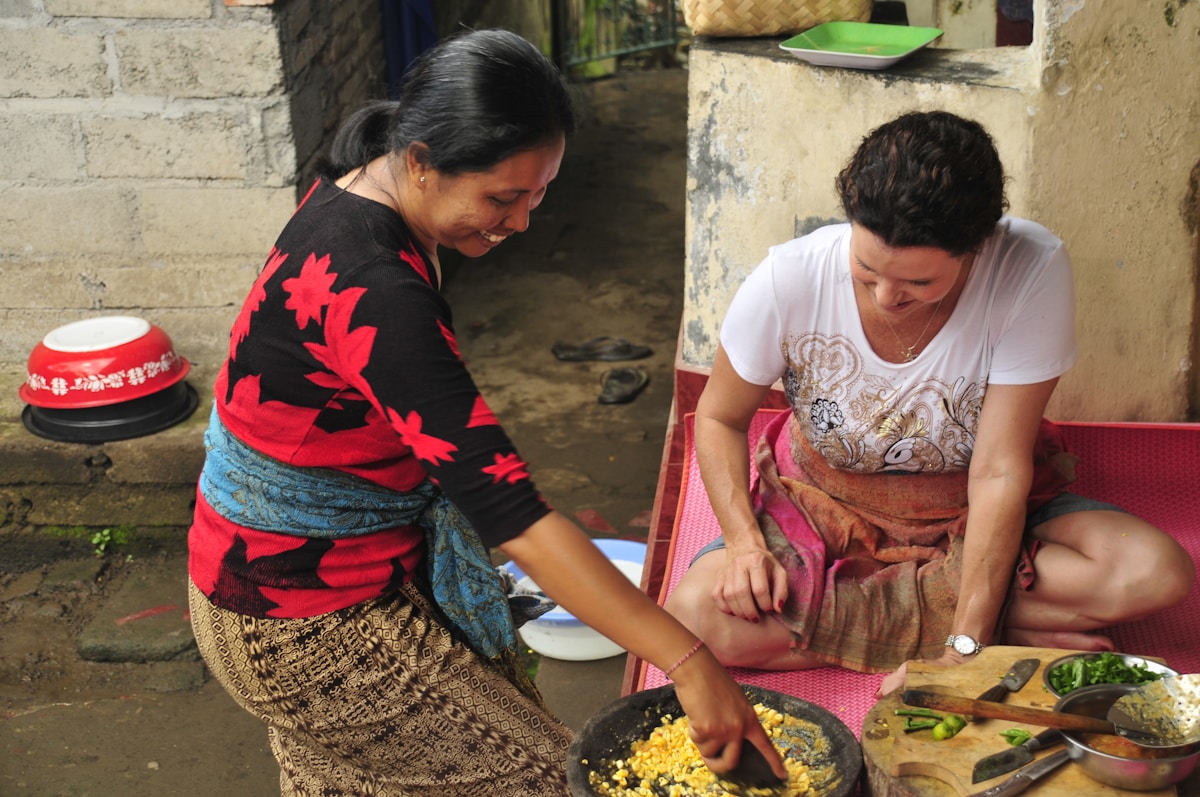
Learning to make the spice pastes from scratch is worth a half day. Most Ubud classes start with a market visit (Pasar Ubud in the morning), then move to a home kitchen to make base genep, sate lilit, and lawar. Duration is typically three to four hours. Prices range from approximately IDR 200,000–350,000 per person as of 2026; classes with the market visit included are at the higher end.
Paon Bali Cooking Class and Lobong Culinary Experience (both in Ubud) are frequently recommended by past participants. Book at least one day in advance during the high season (July–August, December).
Practical Notes
- Much Balinese food contains pork. If you do not eat pork, confirm before ordering - the Balinese term is “tanpa babi” (without pork).
- Sambal matah (raw shallot and chilli) is served fresh and is mild by Indonesian standards. Sambal bongkot (torch ginger bud sambal) is sharper.
- Ceremonial food is prepared for temple offerings and is not sold - do not attempt to purchase it from ceremony sites.
- Water: stick to bottled or filtered water throughout Bali. No tap water.
Book a Balinese Cooking Class or Food Tour
Understanding Balinese food is easiest in a kitchen - base genep (the Balinese master spice paste) underpins babi guling, bebek betutu, and lawar, and making it once from scratch explains why every recipe starts the same way. Ubud cooking classes typically begin with a Pasar Ubud market walk at 8am (when the best produce arrives), then move to a home kitchen for three to four hours. For visitors who prefer eating over cooking, guided food tours of Ubud’s warung circuit cover much of the same ground with context that independent eating rarely provides.
Browse Balinese cooking classes and food tours
Plan Your Visit
Ubud is the best base for serious Balinese food - morning market walks, cooking class operators, and the warung circuit that covers most of the dishes in this guide are all accessible on foot or by a short ojek ride. Seminyak and Canggu work well if you’re combining food with beach time. Browse hotels in Bali to find accommodation close to the areas you want to eat.
See Also
- Bali street food guide - where to find Balinese food on the street: warungs, night markets, and stalls
- Best restaurants in Ubud - Ubud’s take on Balinese cuisine: from Locavore to Warung Babi Guling
- Warung guide Indonesia - the warung culture that underlies most Balinese food experiences
- Vegan and vegetarian Bali - which Balinese dishes are naturally plant-based and where to find them