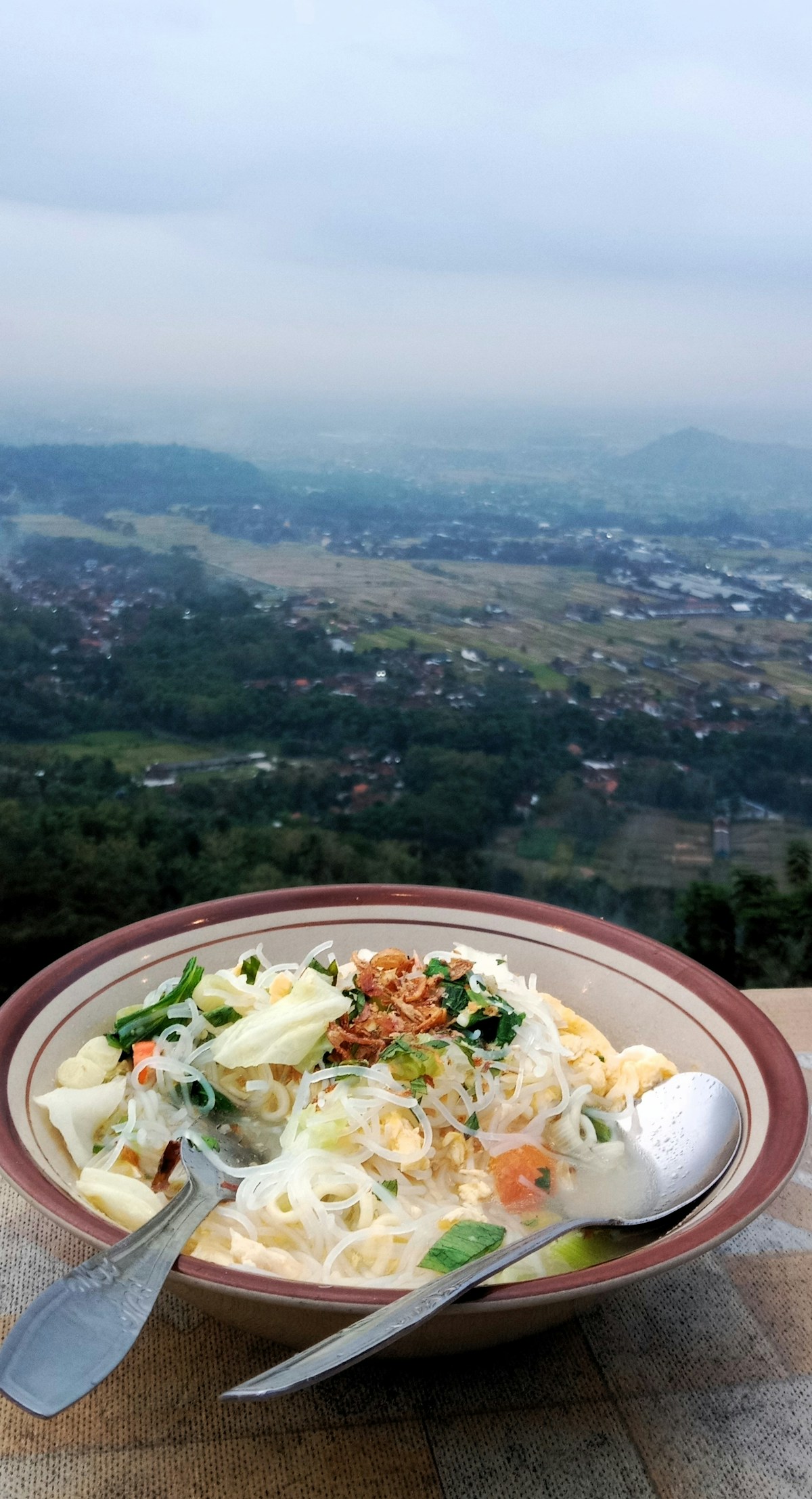
Yogyakarta has one of the most distinctive regional food identities in Indonesia. While the national cuisine is already diverse, Javanese cooking from the Yogyakarta–Solo corridor introduces a sweetness - from palm sugar and coconut milk - that differentiates it sharply from the fiery Padang food of Sumatra or the subtle aromatics of Balinese cooking. Eating here is a meaningful part of understanding the city.
Gudeg: Yogyakarta’s Defining Dish
Gudeg is the dish that defines Yogyakarta in the national imagination. Unripe green jackfruit is cooked for hours - sometimes overnight - in coconut milk, palm sugar, teak leaves (which give it a brownish tint), and aromatics. The result is sweet, dense, slightly stringy, and deeply savoury. It is served on rice with accompaniments that balance the sweetness: ayam opor (chicken in coconut milk), telur pindang (spiced brown egg), tahu and tempe, and krecek - a crispy preparation of dried buffalo skin in a chilli-tinged sauce that provides the essential counterpoint.
Gudeg is traditionally a breakfast and morning dish, though tourist-oriented warungs serve it until early afternoon.
Where to Eat Gudeg
Gudeg Wijilan is Yogyakarta’s most famous gudeg street - a compact lane of gudeg warungs running off the Kraton’s east side. The best-known is Gudeg Yu Djum, which has operated since 1950 and has been written about by every food journalist who has passed through Yogyakarta since. From approximately IDR 35,000–60,000 for a full plate as of 2026. Open approximately 5am–1pm.
Bu Tjitro 1925 on Jl Laksda Adisucipto is another institution - slightly east of the centre, convenient if you’re heading toward Prambanan. From approximately IDR 40,000–70,000.
Satay Klathak: A Uniquely Yogyakartan Preparation
Satay Klathak is a preparation of goat satay found only in the Yogyakarta and Solo area - and even then, mainly in the Bantul district south of the city. The distinctive element is the skewer: instead of bamboo, the meat is threaded onto bicycle wheel spokes, which conduct heat directly through the meat from the interior as it sits over coconut shell charcoal. The result is more evenly cooked than conventional satay, with a charred, smoky exterior and a genuinely juicy centre.
The spicing is simpler than many satay preparations - just salt, and the meat speaks for itself. Served with a dipping sauce of kecap manis (sweet soy) and fresh chilli.
Warung Pak Pong in the Bantul area (approximately 15 kilometres south of central Yogyakarta) is the most frequently cited source. Approximately IDR 30,000–50,000 per portion (10–12 skewers) as of 2026. The warung operates in the evenings from approximately 5pm; arrive early as it sells out.
The distance means you need transport - hire a scooter or arrange a driver for the afternoon, combining with a Parangtritis beach visit.
Bakpia Pathok: The Pastry to Bring Home
Bakpia are small round pastries originally adapted from Chinese moon cakes by the Hokkien Chinese community of Yogyakarta in the early 20th century. The classic filling is mung bean paste (kacang hijau) - sweet, smooth, and faintly nutty - though modern versions add chocolate, cheese, durian, and sweet potato.
The Pathok neighbourhood (Jl Pathuk, northwest of the Kraton) is the centre of bakpia production. Several factories line the street and are open for observation and purchase. Boxes from approximately IDR 30,000 for 20 pieces as of 2026.
Bakpia are the standard Yogyakarta souvenir for Indonesian travellers bringing gifts home. Buy them fresh from Pathok rather than the airport versions, which have usually been sitting longer.
Angkringan: The Social Food Culture of Yogyakarta
Angkringan are the street food stations most closely associated with Yogyakarta - low wooden carts (sometimes converted bicycles) with a charcoal brazier, selling an array of small preparations that you select individually and eat on a bench beside the cart or at a folding table on the footpath.
The vocabulary of angkringan food: nasi kucing (cat rice - tiny parcels of rice with a single topping, wrapped in banana leaf, IDR 2,000–3,000 each), sate usus (chicken intestine skewers, IDR 1,500–2,500 each), tempe bacem (sweet-braised tempe, IDR 2,000–3,000), gorengan (fritters - tofu, banana, cassava, IDR 1,500–2,500 each), and hot drinks: teh panas (hot tea), kopi joss (black coffee poured directly over a burning charcoal piece - reduces acidity according to local belief).
The point of angkringan is not any single item - it is the accumulation of small portions eaten slowly over conversation. A full angkringan session runs approximately IDR 20,000–40,000 total.
Best angkringan locations: Along Jl Wijilan near the Kraton, and the stretch near Tugu train station on Jl Mangkubumi, where dozens of carts set up from around 5pm. The Tugu station angkringan scene is the most atmospheric in the city.
Quick Breakfast: Warung Ss
Warung Ss (Warung Soto Sulung) on Jl Bhayangkara is one of Yogyakarta’s most popular local breakfast spots - a simple warung serving soto (clear meat broth with rice, boiled egg, and vegetables), nasi rames (rice with mixed accompaniments), and fried snacks from around 6am.
Prices are firmly local: IDR 20,000–40,000 for a full breakfast. The queue is fast-moving and the food is reliably good.
Practical Notes
When to eat: Yogyakarta food culture is early. Gudeg is a breakfast dish; many warungs close by noon. Angkringan peaks between 6–10pm. Time your food itinerary accordingly.
Handling sweetness: Javanese food from Yogyakarta is noticeably sweeter than most Indonesian regional cuisines. If you find gudeg or opor too sweet, the addition of extra krecek (chilli-spiced buffalo skin) provides balance. Solo-style gudeg is generally slightly less sweet than the Yogyakarta version.
Hygiene and ice: At established warungs and sit-down restaurants, food safety is generally reliable. Street carts serve freshly prepared hot food, which is lower risk than cold preparations. Bottled or filtered water only; avoid tap water.
Take a Guided Food Tour of Yogyakarta
Yogyakarta’s food is tied to specific hours - gudeg warungs open at dawn and close by noon, angkringan carts are a nocturnal institution, and satay klathak is eaten in Bantul rather than the tourist centre. A guided food tour navigates these rhythms, typically combining an early-morning gudeg circuit near Wijilan with a visit to Pasar Beringharjo for spice and snack context, then an evening angkringan session on Jalan Malioboro. Some tours extend to a full Javanese cooking class covering sweet-soy base techniques and the court-derived dishes that distinguish Yogyakarta’s food from other Javanese cities.
Browse food tours and cooking experiences in Yogyakarta
More Yogyakarta Guides
-
Yogyakarta travel guide - the full Yogyakarta overview: orientation, key attractions, hotels, and getting there
-
Things to do in Yogyakarta - the best activities and experiences in and around Yogyakarta
-
Where to stay in Yogyakarta - the best hotels and guesthouses by neighbourhood and budget