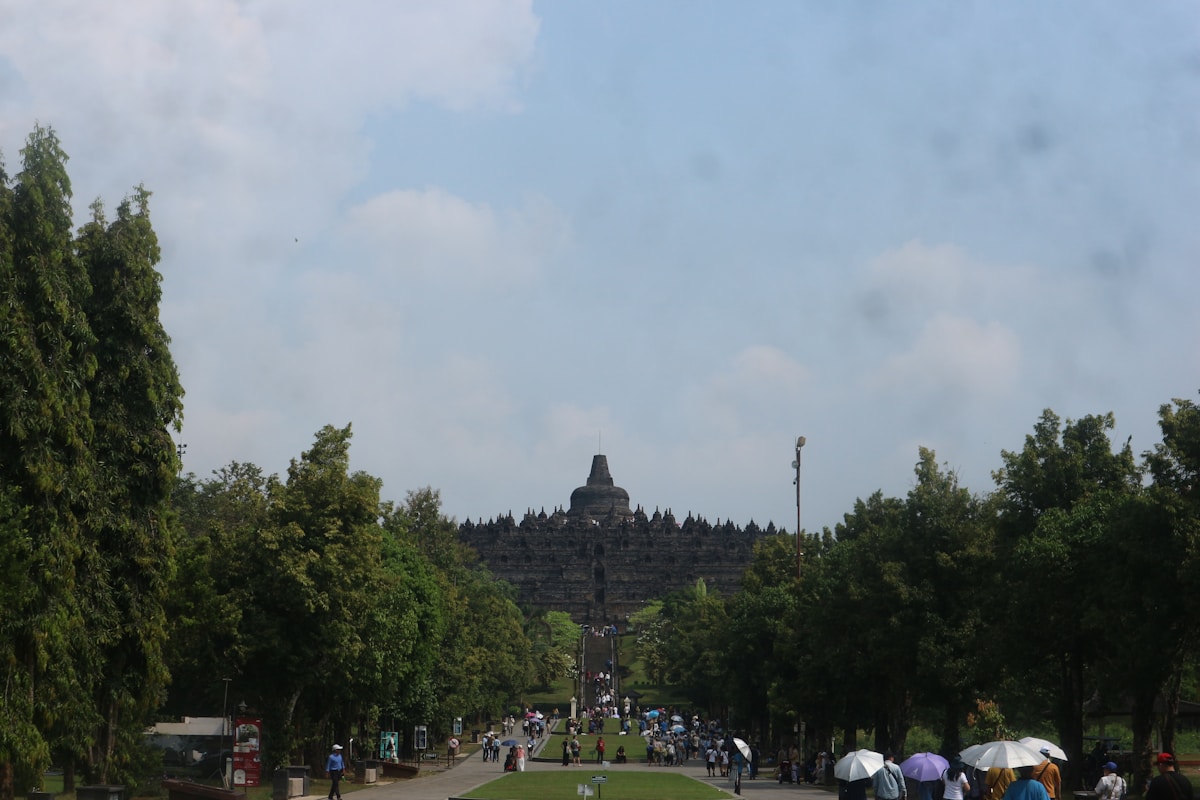
Yogyakarta Travel Guide: Borobudur, Prambanan, Kraton
Yogyakarta holds Borobudur, Prambanan, and the Sultan's Kraton within a day's reach - Java's cultural heart with batik, wayang shadow plays, and gudeg.
Guides for Yogyakarta
Search hotels in Yogyakarta on Booking.com
Yogyakarta - known across Indonesia simply as Jogja - sits on the southern plains of Java at around 110 metres above sea level, with the active volcano Gunung Merapi visible to the north on clear mornings and the Indian Ocean coastline roughly 30 km to the south. Of all the major cities in Java, Yogyakarta makes the strongest claim to being Indonesia’s cultural capital. It is the seat of a still-functioning royal sultanate, the home of the country’s most important Hindu-Buddhist temple complexes, and a city where traditional arts - batik, wayang kulit shadow puppetry, gamelan music, and classical Javanese dance - are genuinely maintained rather than staged for tourists.
The city itself is compact and walkable in its central zones, though the surrounding region has a density of archaeological and natural sites that rewards at least three or four days.
Neighbourhoods and Orientation
The centre of gravity in Yogyakarta is Jalan Malioboro, a pedestrianised shopping street running north from the railway station toward the Kraton (Sultan’s Palace). This is where the batik shops, silver workshops, and street-food vendors concentrate, alongside the souvenir market and the daily bustle of becak (cycle rickshaw) drivers. North of the railway station, Jalan Mangkubumi leads to the grand square (Alun-Alun Utara) flanked by the Kraton and the Grand Mosque.
The Prawirotaman neighbourhood, roughly 2 km south of Malioboro, has developed into the city’s backpacker and mid-range traveller hub, with a concentration of guesthouses, cafés, restaurants, and galleries in converted Dutch-era townhouses.
Key Attractions
For a full breakdown of temples, palaces, and day trips around Yogyakarta, see our Yogyakarta things to do guide.
Borobudur Temple - The world’s largest Buddhist monument, built in the 9th century during the Sailendra dynasty on a hilltop 40 km northwest of Yogyakarta. The structure consists of nine stacked platforms crowned by a central stupa, decorated with 2,672 relief panels and 504 Buddha statues. Entry for foreign visitors approximately IDR 750,000 as of 2026 (includes entry to the main monument and surrounding archaeological park), open 6am–5pm. A dedicated sunrise visit - beginning before the gates open to general tourists - costs approximately IDR 925,000 including entry; numbers are capped, so book ahead. The site closes to climbing above the first terrace during Vesak Day and major Buddhist observances.
Prambanan Temple - A 9th-century Hindu temple compound built by the Sanjaya dynasty, with the three central shrines dedicated to Brahma, Vishnu, and Shiva rising to 47 metres. The Shiva Mahadeva temple is the largest and best-preserved. Entry for foreign visitors approximately IDR 525,000 as of 2026, open 6am–5pm. The surrounding compound includes smaller outlying temples and a museum. An outdoor Ramayana ballet is performed at the open-air theatre adjacent to the site on Tuesday and Thursday evenings during the dry season (May–October); tickets from approximately IDR 150,000.
Kraton Yogyakarta (Sultan’s Palace) - The working palace of the Sultan of Yogyakarta, Hamengkubuwono X, with a public museum section open Monday–Saturday, 8:30am–2pm. Entry approximately IDR 15,000 plus IDR 5,000 for a camera permit. The complex includes ornate pavilions (pendopo), royal regalia, and displays of traditional weapons and carriages. Gamelan rehearsals are held on certain mornings - check the schedule at the entrance.
Taman Sari Water Castle - A 18th-century royal garden complex southwest of the Kraton, built as a retreat and bathing complex for the sultan and his household. Entry approximately IDR 15,000; open 9am–3pm. The main bathing pools are the most photogenic part; the underground mosque and the partially restored pavilions reward exploration. The surrounding kampung has become a thriving batik-painting neighbourhood.
Parangtritis Beach - A long black volcanic sand beach on the Indian Ocean coast, roughly 27 km south of the city (approximately IDR 10,000 entry, 1 hour by road from the centre). The beach itself is dramatic and the surf is dangerous - swimming is not recommended. The site carries significant spiritual importance in Javanese cosmology as the realm of the sea goddess Nyi Roro Kidul. Sunset views are worth the trip.
Hotels
For a neighbourhood-by-neighbourhood breakdown of Yogyakarta’s accommodation options, see our Yogyakarta where to stay guide.
Royal Ambarrukmo (luxury) - A full-service five-star hotel on Jalan Laksda Adisucipto, built around a heritage 19th-century royal pavilion used by the Dutch as a rest house. From approximately USD 100 per night as of 2026. The pool and heritage wing are the strongest assets.
Tentrem Hotel (upscale) - A sleek modern hotel on Jalan AM Sangaji with Javanese design motifs, a rooftop pool, and a good central location. From approximately USD 80 per night as of 2026.
Grand Aston Yogyakarta (mid-range) - On Jalan Urip Sumoharjo, with standard five-star amenities at a significantly lower price point than the luxury tier. From approximately USD 50 per night as of 2026. Reliable choice for business or leisure travel.
Melia Purosani (mid-range) - Well-positioned just off Malioboro, which makes it the most convenient mid-range option for sightseeing on foot. From approximately USD 60 per night as of 2026.
Bladok Hotel (budget) - A long-standing backpacker favourite in the Sosrowijayan area behind Malioboro, with simple rooms and a roof terrace. From approximately USD 20 per night as of 2026. Functional base, extremely convenient location.
Restaurants
For a more thorough look at Javanese and Yogyakarta cuisine - including gudeg spots, Prawirotaman cafés, and street-food streets - see our Yogyakarta food guide.
Via Via Travellers Café - A Belgian-founded café off Jalan Prawirotaman that has operated in Yogyakarta for over two decades. The menu covers Indonesian dishes alongside international staples, with reliable quality and good vegetarian options. Approximately IDR 80,000–150,000 per person. Also runs cooking classes and bicycle tours.
Bale Raos - The most prestigious option for traditional Javanese royal cuisine, housed within the Kraton complex and serving recipes historically associated with the sultan’s household. Dishes include gudeg (jackfruit stew), opor ayam (chicken in coconut cream), and various ceremonial preparations rarely found elsewhere. Approximately IDR 200,000–400,000 per person. Reservations recommended.
Warung Bu Ageng - A neighbourhood warung on Jalan Tirtodipuran in Prawirotaman, serving home-style Javanese cooking to a mixed local and traveller crowd. The ikan goreng (fried fish), tempe bacem (sweet braised tempeh), and sayur lodeh (vegetable coconut stew) are consistently good. Approximately IDR 30,000–60,000.
Gudeg Wijilan - A street on the east side of the Kraton lined with gudeg restaurants; the preparation of young green jackfruit slow-cooked in palm sugar and coconut milk is the most distinctively Yogyakartan dish. Wijilan’s concentration of stalls makes it the standard recommendation for first-time visitors. A full portion with rice, chicken, egg, and krecek (spiced crispy skin) costs approximately IDR 30,000–50,000.
Getting There and Getting Around
Yogyakarta has two airports. Adi Sutjipto Airport (JOG), historically the city’s main airport, lies 8 km east of the centre. The new Yogyakarta International Airport (YIA) at Kulon Progo opened in 2020 and lies approximately 40 km west - a taxi costs approximately IDR 150,000–250,000, or take the train connection from Kulon Progo station to Yogyakarta station.
From the main Yogyakarta Railway Station (Tugu), which is walkable from Malioboro, trains connect to Jakarta (approximately 7–9 hours, executive class approximately IDR 400,000–700,000), Surabaya (approximately 4–5 hours), and Solo (1 hour, approximately IDR 15,000–25,000).
Within the city, Trans Jogja buses cover main arteries for approximately IDR 3,500 per journey. Becak (cycle rickshaws) are available for short distances and are worth using in the Kraton area where motorised traffic is restricted. Andong (horse-drawn cart) operate along Malioboro and are popular with local visitors. Grab and Gojek operate throughout the city; motorbike rental costs approximately IDR 60,000–80,000 per day and is the most efficient way to visit multiple temple sites in a day.
Best Time to Visit
Yogyakarta’s dry season runs May–October, with July and August the most popular. The wet season (November–April) brings afternoon downpours but rarely disrupts temple visits entirely. The Borobudur sunrise experience is available year-round, though haze from agricultural burning in September–October can reduce visibility. Vesak Day (May full moon) draws large Buddhist ceremonies at Borobudur - spectacular if planned for, potentially disruptive if not.
Practical Tips
The Borobudur sunrise ticket allocation is limited and sells out weeks in advance during July–August. Book through the official ticket portal or a licensed tour operator. For batik shopping, the workshops in Taman Sari’s surrounding kampung allow you to watch the wax-resist process; prices are lower and provenance more transparent than the Malioboro tourist stalls. Yogyakarta’s altitude keeps temperatures slightly lower than coastal Java, but midday heat is still significant - plan outdoor site visits for early morning or late afternoon.
Browse tours and day trips in Yogyakarta - a half-day with a local guide is one of the most efficient ways to get oriented on arrival. Day trips from Yogyakarta on GetYourGuide - Borobudur, Prambanan, and Merapi with transport and guide included, all in one booking. For airport transfers into Yogyakarta, Kiwitaxi offers fixed-price pickups from the main airports - no surge pricing and the driver meets you at arrivals.
Yogyakarta Deep Dives
- Things to do in Yogyakarta - full breakdown of temples, palaces, batik workshops, and day trips
- Where to stay in Yogyakarta - Malioboro hotels, Prawirotaman guesthouses, and options by budget
- Yogyakarta food guide - gudeg, Ramayana cuisine, and the best restaurants and warungs by neighbourhood
- Borobudur guide - the largest Buddhist temple in the world: visiting, sunrise tickets, and history
- Prambanan temple guide - Shiva’s great compound: entry, timing, and what the carvings mean
- Batik Java guide - understanding Java’s defining textile, where to buy, and how it’s made
- Yogyakarta 3-day itinerary - the most efficient route through Borobudur, Prambanan, and the city
- Vegan food guide to Yogyakarta - the best plant-based restaurants and vegetarian-friendly warungs
- Indonesia colonial history - the Dutch East India Company, independence, and Yogyakarta’s role in it all
Book an experience
Top experiences in Yogyakarta
Explore the best tours and activities in Yogyakarta , with instant confirmation and free cancellation on most bookings.