Search hotels in Yogyakarta on Booking.com
Yogyakarta - Jogja to everyone who spends more than an hour there - is Indonesia’s cultural and artistic capital in a way that no other city comes close to claiming. It is where classical Javanese traditions (wayang puppet theatre, batik weaving, gamelan) remain genuinely practised, and it is the base for two of the world’s most significant Buddhist and Hindu monuments. Three days gives you enough time to cover the essentials without rushing, provided you are willing to be on the road at 4am on day two.
Getting There
Yogyakarta is served by Adisutjipto International Airport (JOG) and the newer Yogyakarta International Airport (YIA), approximately 45 kilometres west of the city. Domestic flights from Jakarta take 1 hour (from approximately IDR 300,000–700,000); from Bali, 1 hour (IDR 400,000–800,000). The train from Jakarta’s Gambir station takes approximately 8–9 hours on the overnight sleeper - a practical option if you are combining this with a broader Java trip.
From Adisutjipto Airport, a taxi to the centre costs approximately IDR 50,000–80,000. From YIA, a train into the city runs approximately every 30 minutes (IDR 20,000) and takes 40 minutes.
Day 1: Kraton, Malioboro, and Prambanan
Start in the centre of the city before the day heats up.
Malioboro Street (Jalan Malioboro) is Yogyakarta’s main commercial artery - a kilometre-long pedestrian-friendly stretch of batik shops, silver traders, street food stalls, and becak (cycle-rickshaw) drivers. It is genuinely atmospheric in the morning before 9am and becomes considerably more crowded and commercial by midday. Walking it takes 45 minutes at a browse pace. Entry is free.
Kraton (Sultan’s Palace): Yogyakarta is one of two remaining sultanates in Indonesia, and the kraton is the active royal court as well as a museum. The outer complex is open to visitors daily; the inner sections open for guided tours in the morning (approximately 8:30am–2pm). Entry is approximately IDR 15,000 for the main palace complex; a guide (recommended for context) costs an additional approximately IDR 50,000–100,000.
Taman Sari Water Castle is a short walk or becak ride southwest of the kraton. Built in the 18th century as a royal bathing complex, it is now a partially ruined but evocative set of pools, tunnels, and terraces. Entry is approximately IDR 15,000. Allow 45 minutes. The surrounding kampung (neighbourhood) has a number of batik artists’ workshops that allow free entry and genuine interaction - not all are hard sells.
Prambanan Temple Complex: If you arrived in Yogyakarta this morning, you have time for Prambanan in the late afternoon (best light is 4pm–6pm). The ninth-century Hindu temple complex - a UNESCO World Heritage Site - is 17 kilometres east of the city centre. Tickets cost approximately IDR 525,000 for foreign visitors (as of 2026). A taxi from central Yogyakarta costs approximately IDR 60,000–100,000 one-way; TransJogja city buses also serve the site for IDR 3,500 from the Malioboro stop.
The three main towers - dedicated to Brahma, Vishnu, and Shiva - rise 47 metres. Allow at least 1.5 hours. The Trimurti dance performance runs at the open-air theatre most evenings at 5:30pm; tickets approximately IDR 100,000–300,000 depending on seating tier.
Evening: Jalan Prawirotaman (south of the centre) has the best concentration of mid-range restaurants in Yogyakarta - Indonesian, Indian, and international options along a relatively quiet street. Budget dinner approximately IDR 50,000–80,000 per person at a warung; mid-range restaurants approximately IDR 100,000–200,000 per person.
Day 2: Borobudur Sunrise
This is the day that requires the early alarm.
Departure: 3:30–4am from your hotel in Yogyakarta. Borobudur is 40 kilometres northwest of the city and the drive takes approximately 1–1.5 hours. A hired car with driver for the full day (including Borobudur, Mendut, and Pawon temples, plus return) costs approximately IDR 400,000–600,000. Many hotels and guesthouses can organise this the evening before.
Borobudur sunrise ticket: The standard temple entry ticket costs approximately IDR 525,000 for foreign visitors. The dedicated sunrise ticket, which allows pre-dawn access to the upper terraces before general opening, costs approximately IDR 925,000 and must be booked in advance - either through the official Borobudur management website or via your hotel. The sunrise crowds have grown in recent years; arriving for the 5am opening still gives better conditions than waiting for the 6am general opening.
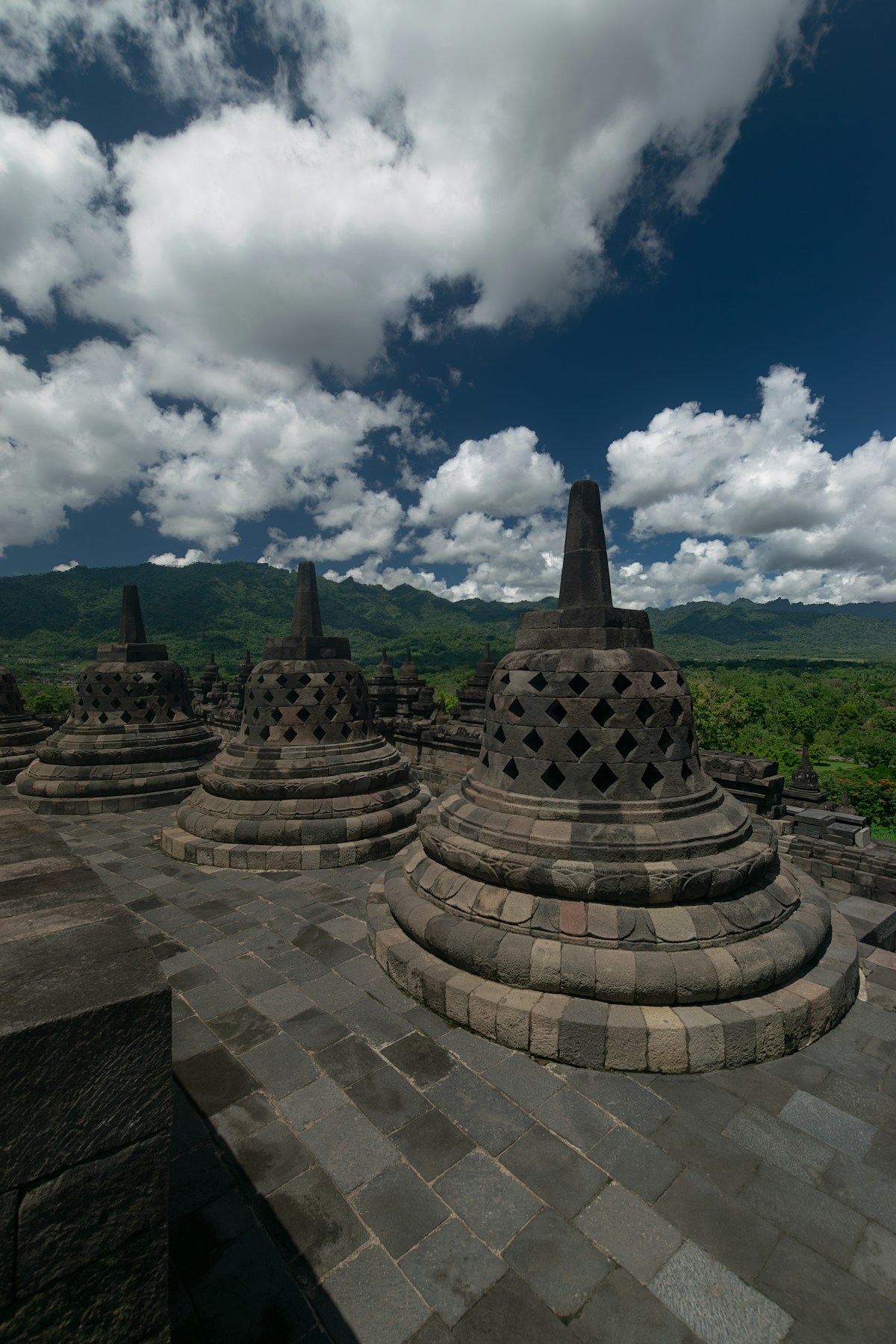
Borobudur is the largest Buddhist monument on earth - a ninth-century mandala pyramid of 504 Buddha statues, 72 stupas, and 2,672 decorative relief panels. It takes a minimum of 2 hours to walk the full nine terraces properly. Allow 3 hours for a considered visit.
Mendut Temple and Pawon Temple sit in a straight line between Borobudur and Magelang. Both are included in a combined ticket (ask at the Borobudur ticket gate). Mendut holds three extraordinary 9th-century stone Buddhas inside a single sanctuary - well worth the 10-minute detour. Pawon is small but architecturally refined.
Afternoon: Return to Yogyakarta by midday. The afternoon can be used for a batik workshop (Kampung Batik Laweyan or Taman Batik Yogyakarta, approximately IDR 100,000–200,000 for a 2-hour guided session) or a Javanese cooking class (several options from approximately IDR 150,000–350,000 per person, including market visit and 3–4 dishes). Both are widely available and easily booked on the day.
Day 3: Merapi Volcano and Kotagede
Merapi Jeep Tour: Mount Merapi (2,930m) is one of the most active volcanoes on earth and sits 30 kilometres north of Yogyakarta. The 2010 eruption - the deadliest in Merapi’s recent history - devastated the southern slopes and left a lava field that has since become a destination in itself. Local operators run sunrise jeep tours into the 2010 eruption zone, visiting the remains of Kaliadem village, a bunker that was buried in pyroclastic flow, and viewpoints across the active summit.
Depart at 4:30–5am for sunrise timing. Jeep tours cost approximately IDR 300,000–500,000 per jeep (typically carrying 4 people); 2 hours on the lava field, returning to Yogyakarta by 9am. Book the evening before through your hotel, or directly with operators in Kaliurang (the highland village at Merapi’s base).
Kaliurang: After the jeep tour, the small hill town of Kaliurang sits at the base of Merapi at about 900 metres elevation. The Plunyon hot springs (Pemandian Kaliurang) are a short walk from town - a small park with natural warm pools fed by volcanic springs, entry approximately IDR 15,000. The cooler temperatures and quiet setting make it a pleasant contrast to the city.
Kotagede (the old silver-working district of Yogyakarta, 5km southeast of centre) is the afternoon option. This is where Yogyakarta’s silver jewellery trade is concentrated - dozens of family workshops producing filigree work and traditional Javanese designs. Prices are substantially lower than the tourist-oriented silver shops on Malioboro. Hamzah Batik (one of the larger fabric showrooms in the city) is also in this general area and worth a stop for quality batik at factory prices.
Budget Reference
| Item | Budget | Mid-range | Comfortable |
|---|---|---|---|
| Accommodation per night | IDR 150,000–300,000 | IDR 400,000–800,000 | IDR 800,000–2,000,000 |
| Borobudur ticket | IDR 925,000 (sunrise) | IDR 925,000 | IDR 925,000 |
| Hired car per day | IDR 300,000 | IDR 450,000 | IDR 600,000+ |
| Merapi jeep (per jeep) | IDR 300,000 | IDR 350,000–400,000 | IDR 500,000 |
| Dinner per person | IDR 30,000–60,000 | IDR 80,000–150,000 | IDR 200,000–400,000 |
All prices as of 2026. Borobudur tickets should be confirmed on the official website before travel as pricing has increased several times in recent years.
Practical Notes
- Yogyakarta is generally safe for solo travellers; the main annoyance is persistent becak and batik-shop touts around Malioboro and the kraton - polite but firm refusals work
- English is widely spoken in tourist areas and at hotels
- The best guesthouse concentration is around Jalan Prawirotaman (south) and Jalan Sosrowijayan (near Malioboro) - both within walking distance of the central sights
- A TransJogja city bus card (IDR 3,500 per journey, minimum IDR 10,000 to load) covers most city routes; Gojek and Grab apps cover everything else
Booking a guided day tour on arrival lets you get oriented quickly before exploring independently - most operators include hotel pickup. Bookaway covers inter-island ferries, buses, and trains - search your route, compare departure times, and get tickets confirmed instantly. Before you travel, sort travel insurance for Indonesia - medical evacuation cover is important given the archipelago’s geography and remoteness of some destinations.
See Also
- Yogyakarta travel guide - the full city guide: museums, food, hotels, and Malioboro
- Borobudur guide - the world’s largest Buddhist temple in full detail
- Prambanan temple guide - Shiva’s great compound east of Yogyakarta
- Batik Java guide - understanding batik and where to buy it in Yogyakarta
- Vegan food guide to Yogyakarta - the best plant-based restaurants and vegetarian warungs
Book Your Trip
- Flights - Find the best fares to Indonesia · flights guide
- Travel Insurance - Get covered before you go · insurance guide
- eSIM - Stay connected from landing · eSIM guide
- Airport Transfers - Pre-book your transfer from Bali or Jakarta
- Car Rental - Compare prices across providers · car hire guide
- Tours & Activities - Browse Indonesia tours on GetYourGuide