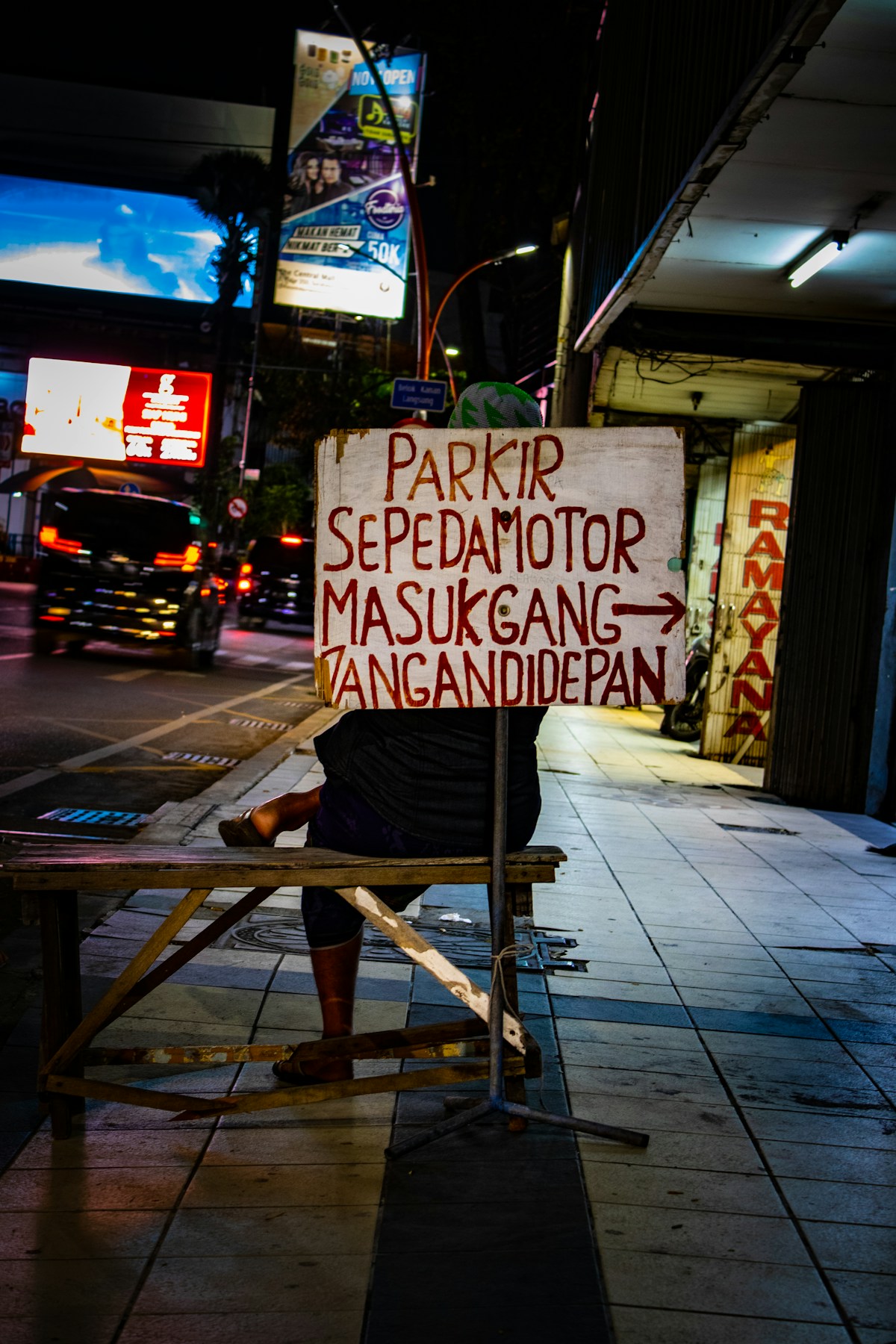
Bahasa Indonesia is one of the most accessible languages in Asia for English speakers. It uses the Latin alphabet, has no tones, and follows consistent phonetic spelling - words are pronounced almost exactly as they are written. Indonesia has over 700 local languages across its 17,000 islands. In Bali you will hear Balinese; in Java, Javanese; in Lombok, Sasak. But every Indonesian learns Bahasa Indonesia in school and uses it as the national lingua franca. Whatever island you are on, these phrases will work.
The Language: Background
Bahasa Indonesia (literally “Indonesian language”) is the official national language, established when Indonesia declared independence in 1945. It was chosen partly because it was already used as a trading language across the archipelago - a version of Malay that merchants used for centuries in regional ports. This means it carries no regional baggage; no ethnic group speaks it as a mother tongue, which made it politically neutral and practically unifying.
There is no separate script to learn. Indonesian is written entirely in the Latin alphabet, which was standardised during the colonial period and retained at independence. You will see the same alphabet on every road sign, menu, and government notice across the country.
Pronunciation Guide
Indonesian pronunciation is refreshingly consistent. Learn these rules once and they apply everywhere.
| Sound | Rule | Example |
|---|---|---|
| a | Always “ah” - never the English “ay” | Bali = BAH-lee, not BAY-lee |
| e | Unstressed: “uh” (schwa). Stressed: “eh” | Terima = teh-REE-mah; selamat = seh-LAH-maht |
| i | Always “ee” | Ini = EE-nee |
| o | Always “oh” | Tolong = TOH-long |
| u | Always “oo” | Satu = SAH-too |
| c | Always “ch” (never hard “k”) | Candi = CHAN-dee; becak = BEH-chak |
| g | Always hard (as in “good”) | Goreng = GOH-reng; never soft like “George” |
| j | Always “j” as in “jam” | Jalan = JAH-lahn |
| r | Lightly rolled, like a soft Spanish “r” | Rupiah = roo-PEE-ah |
| ng | Nasal, as in “singing” - even at the start of a word | Ngantuk (sleepy) = NGAHN-took |
| ny | Like the “ny” in “canyon” | Nyaman (comfortable) = NYAH-mahn |
| ai | ”Eye” sound | Pantai (beach) = pahn-TIE |
| au | ”Ow” sound | Pulau (island) = poo-LOW |
| Stress | Falls on the second-to-last syllable in most words | selamat = seh-LAH-maht |
The most common mistake English speakers make is pronouncing “e” at the end of words as a full vowel. In Indonesian it is a schwa - the short “uh” sound you make in the middle of “about”. Selamat pagi is seh-LAH-maht PAH-gee, not “seh-lah-mat pah-gee” with equal stress on every syllable.
Greetings and Basics
| English | Indonesian | Pronunciation |
|---|---|---|
| Good morning (before noon) | Selamat pagi | seh-LAH-maht PAH-gee |
| Good afternoon (noon–3pm) | Selamat siang | seh-LAH-maht see-AHNG |
| Good afternoon (3–6pm) | Selamat sore | seh-LAH-maht SOH-reh |
| Good evening | Selamat malam | seh-LAH-maht MAH-lahm |
| How are you? | Apa kabar? | AH-pah KAH-bar |
| Fine, thank you | Baik, terima kasih | bah-EEK, teh-REE-mah KAH-see |
| Please (requesting help) | Tolong | TOH-long |
| Thank you | Terima kasih | teh-REE-mah KAH-see |
| You’re welcome | Sama-sama | SAH-mah SAH-mah |
| Excuse me | Permisi | pehr-MEE-see |
| Sorry | Maaf | mah-AHF |
| Yes / No | Ya / Tidak | yah / TEE-dahk |
| I don’t understand | Saya tidak mengerti | SAH-yah TEE-dahk meng-EHR-tee |
| Do you speak English? | Bisa bahasa Inggris? | BEE-sah bah-HAH-sah ING-gris |
| My name is… | Nama saya… | NAH-mah SAH-yah |
| Where are you from? | Dari mana? | DAH-ree MAH-nah |
Cultural note: Indonesians use respectful titles constantly. Add Pak (Bapak, for men) or Bu (Ibu, for women) when addressing someone older or in a service role. “Terima kasih, Pak” instead of just “Terima kasih” adds a layer of warmth locals always notice.
Getting Around
| English | Indonesian | Pronunciation |
|---|---|---|
| Where is…? | Di mana…? | dee MAH-nah |
| How much to go to…? | Berapa ke…? | beh-RAH-pah keh |
| Left / Right / Straight ahead | Kiri / Kanan / Lurus | KEE-ree / KAH-nahn / LOO-roos |
| Far / Close | Jauh / Dekat | jah-OOH / deh-KAHT |
| Stop here | Berhenti di sini | behr-HEN-tee dee SEE-nee |
| Airport | Bandara | bahn-DAH-rah |
| Train station | Stasiun kereta | stah-see-OON keh-REH-tah |
| Bus station | Terminal bis | tehr-mee-NAHL bis |
| I want to go to… | Saya mau ke… | SAH-yah mow keh |
| How far is it? | Berapa jauh? | beh-RAH-pah jah-OOH |
| North / South / East / West | Utara / Selatan / Timur / Barat | oo-TAH-rah / seh-LAH-tahn / tee-MOOR / BAH-raht |
| Is this the right way to…? | Ini jalan ke…? | EE-nee JAH-lahn keh |
Ojek (motorcycle taxis) and becak (cycle rickshaws) drivers will often quote high prices to tourists. Knowing “Berapa?” and the numbers below arms you to negotiate confidently.
Accommodation
| English | Indonesian | Pronunciation |
|---|---|---|
| Hotel | Hotel | hoh-TEHL |
| Room | Kamar | KAH-mar |
| Do you have a room available? | Ada kamar kosong? | AH-dah KAH-mar KOH-song |
| How much per night? | Berapa per malam? | beh-RAH-pah pehr MAH-lahm |
| I have a reservation | Saya punya reservasi | SAH-yah POON-yah reh-sehr-VAH-see |
| The room is too hot | Kamarnya terlalu panas | kah-MAR-nyah tehr-LAH-loo PAH-nahs |
| Air conditioning | AC (Ah-say) | ah-SAY |
| Hot water | Air panas | AH-eer PAH-nahs |
| Towel | Handuk | HAN-dook |
| Check out | Check out | (same as English) |
| Can I leave my luggage? | Boleh titip koper? | BOH-leh TEE-tip KOH-pehr |
| WiFi password | Password WiFi | (same as English) |
Practical tip: When asking about hot water in budget guesthouses, specify “air panas” clearly - many cheap rooms only have cold water (air dingin, ah-eer DING-in), and it is better to know before you check in.
Food and Dining
| English | Indonesian | Pronunciation |
|---|---|---|
| The menu, please | Minta menu | MEEN-tah MEH-noo |
| The bill, please | Minta bon | MEEN-tah bohn |
| Water | Air putih | AH-eer POO-teeh |
| Coffee | Kopi | KOH-pee |
| Tea | Teh | teh |
| Delicious | Enak | EH-nahk |
| I don’t eat pork | Saya tidak makan babi | SAH-yah TEE-dahk MAH-kahn BAH-bee |
| I am vegetarian | Saya vegetarian | SAH-yah veh-geh-TAH-ree-ahn |
| Spicy | Pedas | peh-DAHS |
| Not spicy, please | Tidak pedas, ya | TEE-dahk peh-DAHS yah |
| Fried rice | Nasi goreng | NAH-see GOH-reng |
| No MSG | Tidak pakai MSG | TEE-dahk PAH-kai EHM-ess-JEH |
| Warung (small local eatery) | Warung | WAH-roong |
At a warung, pointing and saying “Yang ini” (YAHNG EE-nee, “this one”) combined with the number of portions will get you fed anywhere. Most warung menus have no English translation.
Numbers and Money
| Number | Indonesian | Pronunciation |
|---|---|---|
| 1 | Satu | SAH-too |
| 2 | Dua | DOO-ah |
| 3 | Tiga | TEE-gah |
| 4 | Empat | EHM-paht |
| 5 | Lima | LEE-mah |
| 6 | Enam | EH-nahm |
| 7 | Tujuh | TOO-jooh |
| 8 | Delapan | deh-LAH-pahn |
| 9 | Sembilan | sem-BEE-lahn |
| 10 | Sepuluh | seh-POO-looh |
| 20 | Dua puluh | DOO-ah POO-looh |
| 50 | Lima puluh | LEE-mah POO-looh |
| 100 | Seratus | seh-RAH-toos |
| 1,000 | Seribu | seh-REE-boo |
| 10,000 | Sepuluh ribu | seh-POO-looh REE-boo |
| 50,000 | Lima puluh ribu | LEE-mah POO-looh REE-boo |
| 100,000 | Seratus ribu | seh-RAH-toos REE-boo |
| How much? | Berapa? | beh-RAH-pah |
| Too expensive | Terlalu mahal | tehr-LAH-loo mah-HAHL |
| Cheaper? | Lebih murah? | leh-BEE MOO-rah |
Indonesian currency (the rupiah) operates in large numbers - a meal at a warung is approximately 15,000–30,000 IDR, a mid-range restaurant main is 50,000–100,000 IDR, and a cheap guesthouse room starts around 150,000 IDR. Memorising “ribu” (thousand) is essential for reading prices correctly. When a vendor says “lima puluh”, they almost always mean fifty thousand (50,000 IDR), not fifty.
Emergency Phrases
| English | Indonesian | Pronunciation |
|---|---|---|
| Help! | Tolong! | TOH-long |
| I need a doctor | Saya perlu dokter | SAH-yah PEHR-loo DOHK-tehr |
| Call the police | Panggil polisi | PAHNG-geel poh-LEE-see |
| Hospital | Rumah sakit | ROO-mah SAH-kit |
| I’m lost | Saya tersesat | SAH-yah tehr-seh-SAHT |
| It’s an emergency | Ini darurat | EE-nee dah-ROO-raht |
| Pharmacy | Apotek | ah-POH-tehk |
| I’ve been robbed | Saya dirampok | SAH-yah dee-RAHM-pok |
| I need an ambulance | Saya perlu ambulans | SAH-yah PEHR-loo ahm-boo-LAHNS |
| Police station | Kantor polisi | KAHN-tor poh-LEE-see |
| My passport is lost | Paspor saya hilang | PAHS-por SAH-yah HEE-lahng |
| I am allergic to… | Saya alergi terhadap… | SAH-yah ah-LEHR-gee tehr-HAH-dap |
The Indonesian emergency number is 112 for police, 118 for ambulance, and 113 for fire. In Bali and major tourist areas, tourist police (Polisi Pariwisata) have English-speaking officers specifically to help foreign visitors.
Language Etiquette
Use the right title. Indonesian is a high-context language where titles signal respect. In formal or semi-formal situations, address people as Pak (male) or Bu (female) before their name or role. A driver is Pak; a female shopkeeper is Bu. Getting this right takes two seconds and signals genuine respect.
Smile before speaking. Indonesia has one of the highest “smile cultures” in Southeast Asia. Opening any transaction - asking for directions, ordering food, haggling - with a smile and “Permisi” disarms most tension and puts locals in a helpful frame of mind before you have said anything of substance.
Avoid pointing with one finger. Pointing with the index finger is considered rude. Indonesians point with the whole hand or with the thumb. When directing someone’s attention, use an open-palm gesture rather than a jabbing finger.
“Tidak apa-apa” is your conflict diffuser. Pronounced tee-DAHK AH-pah AH-pah, it means “it’s okay” or “no problem”. Indonesians use it constantly - when something goes wrong, when someone apologises, when you need to reassure someone who thinks they’ve offended you. It keeps interactions light and saves awkward silences.
Keep your voice calm. Raising your voice in frustration is deeply counterproductive in Indonesian culture. If something goes wrong, speak quietly and slowly. Loud or aggressive complaints cause the person you are dealing with to disengage - the concept of malu (shame) means that publicly shaming someone, even inadvertently, makes them shut down rather than help.
Sedikit” counts for a lot. If you can follow up any attempt at Indonesian with a self-deprecating “saya bisa bahasa Indonesia sedikit” (SAH-yah BEE-sah bah-HAH-sah in-doh-NEH-see-ah seh-DEE-kit - “I can speak a little Indonesian”), locals will instantly warm to you. Even attempting the language signals respect that guidebook English cannot replicate.
English in Indonesia: What to Expect
English is widely spoken in the main tourist corridors - Bali, central Yogyakarta, the Gili Islands, and the labuan Bajo gateway to Komodo. In hotels in these areas, front-desk staff almost always speak functional English. At tourist-facing restaurants, someone on the floor can usually help with the menu.
Outside these zones, English drops off quickly. In Solo, Surabaya, Semarang, Manado, or any rural area, you may find no English at all. Market vendors in East Java, warung owners in rural Lombok, and guesthouse staff in highland Sulawesi will appreciate every Indonesian phrase you can offer.
In Bali specifically, be aware that Balinese Hinduism shapes daily life significantly. Temple etiquette (covering knees and shoulders, respecting ceremonies) matters more than language fluency to locals - but combining basic Indonesian with cultural respect is what earns genuine local hospitality rather than transactional tourism.
Even on Java, where tourism is more Indonesian-focused, you will notice that staff in budget and mid-range accommodation in cities like Malang or Bandung will manage more English than a generation ago - smartphone penetration and YouTube have accelerated passive English learning dramatically among people under 30.
The bottom line: In Bali you can get by entirely in English. On any other island, having even fifty words of Indonesian transforms your experience from tourist to traveller.
Book guided tours in Indonesia - a local guide bridges language gaps instantly and opens areas of cities, markets, and temples that self-guided English-only travellers rarely reach.
See Also
- First time in Indonesia - the complete guide for first-time visitors
- Indonesia currency and money - handling rupiah, ATMs, and tipping culture
- Indonesian food guide - understanding the dishes you will be ordering
- Warung guide to Indonesia - how to eat at local warungs and what to expect
- Indonesia safety guide - how to stay safe and communicate in an emergency
Plan Your Trip
✈️ Book your flights to Indonesia 🛡️ Get travel insurance 📱 Stay connected with an eSIM 🚗 Rent a car