Bali and Thailand are the two default answers when someone wants a tropical beach holiday in Southeast Asia, and they are often priced within a few hundred dollars of each other. They deliver different trips. Bali is one compact island with Hindu temples, rice terraces, surf breaks and villa culture. Thailand is a country with a long island chain, a famous food scene and a mature tourism network. This guide compares them on cost, weather, beaches, visas and getting around, with a separate Bali vs Phuket section for the most common island-to-island version of the question. For the wider country comparison, including diving and backpacker routes, see our Indonesia vs Thailand guide.
Quick Verdict
| Factor | Bali | Thailand |
|---|---|---|
| Best months | April to October | November to April (Andaman coast) |
| Wet season | November to March | May to October (Andaman coast) |
| Budget per day | About IDR 400,000-700,000 | About THB 1,000-1,800 |
| Beaches | Surf, cliff coves, dark and white sand | Calm bays, long white sand, limestone islands |
| Culture | Balinese Hindu temples and ceremonies | Buddhist temples, markets, street food |
| Villas and spas | Best value in Southeast Asia | Strong, but pricier for private pools |
| Island hopping | Nusa Penida, Lembongan, Gilis by boat | Phi Phi, Phang Nga Bay, Koh Samui, Koh Tao |
| Best for | Honeymoons, wellness, surf, culture | Food, easy logistics, December to February sun |
Weather: The Season Overlap That Decides the Trip
This is the factor most comparison articles skip, and it should often settle the question. The two destinations are almost mirror images.
Bali has a dry season from April to October, peaking in July and August, and a wet season from November to March when humidity is high and afternoon downpours are common. Our best time to visit Bali and Indonesia rainy season guides break this down by month.
Thailand’s Andaman coast (Phuket, Krabi, Koh Phi Phi, Koh Lanta) is the opposite. It is driest and sunniest from November to April and is hit by the southwest monsoon from May to October, with rough seas and reduced boat services. The Gulf coast (Koh Samui, Koh Pha Ngan, Koh Tao) has a different pattern, with its heaviest rain around October to December and calmer weather from roughly January to August.
In practice:
- December to February: Phuket and Krabi are at their best, while Bali is in its wet season. Choose Thailand.
- July and August: Bali is at its best, while Phuket is in monsoon. Choose Bali, or Koh Samui if you prefer Thailand.
- April to May and October to November: shoulder months in both. Prices are lower and crowds thinner, and either destination can work.
If your dates are fixed, let the weather choose for you before you compare anything else.
Cost: Where Your Money Goes Further
Both destinations are affordable, but the savings sit in different places.
Bali is excellent value for accommodation that would be expensive elsewhere. A private pool villa in Ubud or Canggu costs a fraction of a comparable beach resort in the Maldives, and a one-hour massage is often under IDR 150,000 at local spas. Warung meals (nasi campur, mie goreng) cost around IDR 25,000-50,000. Scooters rent for about IDR 70,000-100,000 a day, as of 2026. Costs climb sharply in Seminyak, Canggu and Uluwatu, where beach clubs and cafes charge Western prices.
Thailand tends to be cheaper for standard hotels, taxis and restaurant meals, especially outside Phuket’s Patong and Kata strips. Street food at THB 50-100 a dish is among the cheapest good eating in the world, and domestic flights and ferries are frequent and inexpensive. Tourist-area prices in Phuket and Koh Samui are noticeably higher than in Bangkok or Chiang Mai.
Rule of thumb: for two weeks of hotels, food and transport at mid-range level, Thailand usually comes out slightly cheaper; for a luxury villa or wellness retreat, Bali wins clearly. For fuller numbers see Indonesia travel costs. To check current Bali rates, browse Bali stays or compare with Thailand hotels.
Beaches
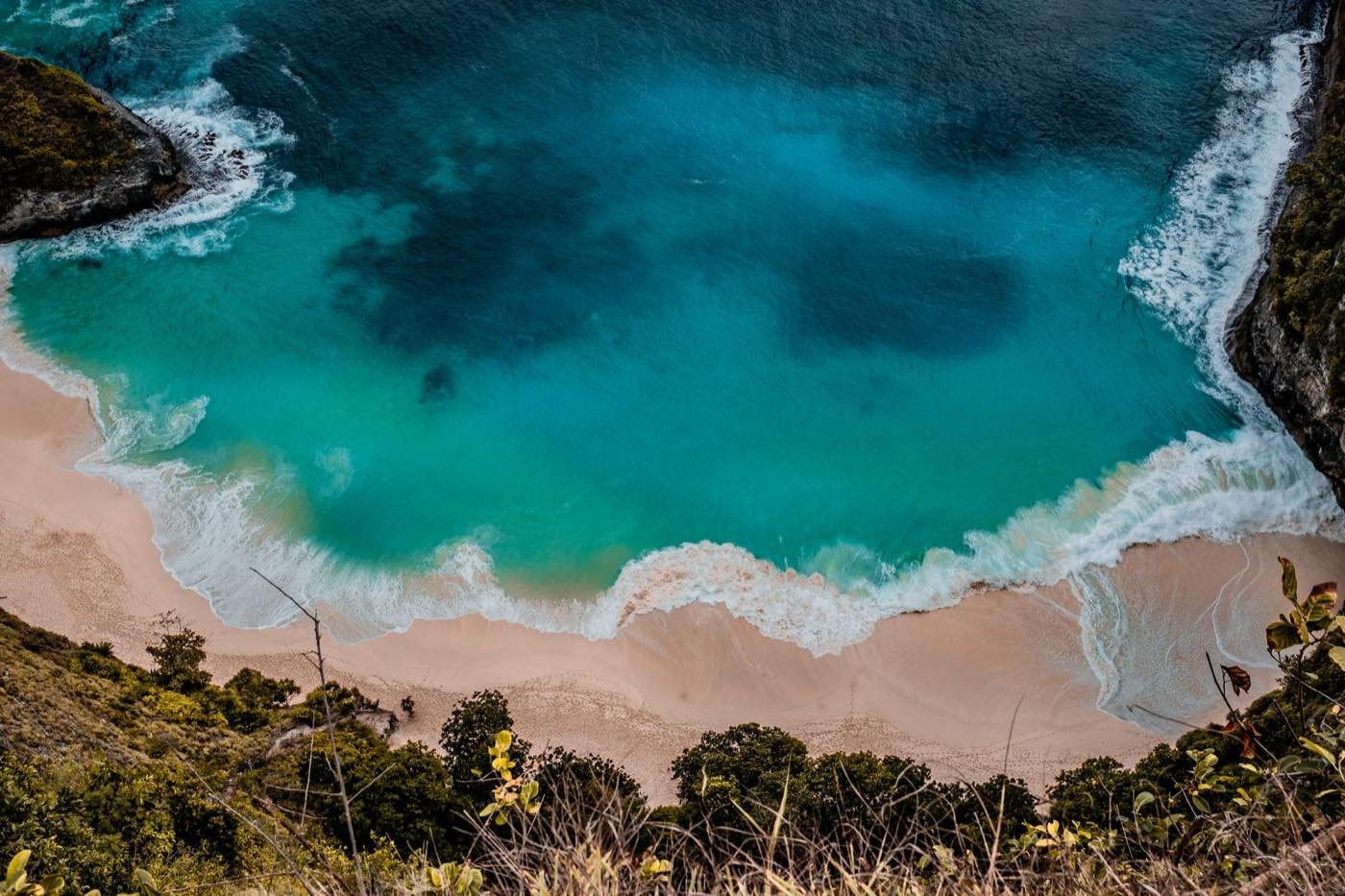
Bali’s beaches are a mixed bag, and that surprises first-timers. The south and west coast (Kuta, Seminyak, Canggu) have dark-to-golden sand and strong surf, better for watching sunsets and learning to surf than for calm swimming. The Bukit Peninsula adds cliff-backed coves at Padang Padang, Bingin and Melasti, and the east coast near Amed offers black-sand snorkelling. For white sand and clear water you take a boat to Nusa Penida or Nusa Lembongan. Our Bali island guide maps the options.
Thailand’s beaches are generally better for plain swimming. The Andaman coast has long, soft white-sand bays such as Kata, Karon, Nai Harn and Kamala on Phuket, Railay near Krabi and the calm water around Koh Lanta, with dramatic limestone karsts offshore. Island day trips to Phi Phi and Phang Nga Bay are easy to arrange from any resort.
If your priority is calm, clear, swimmable water from your hotel door, Thailand wins. If you want a mix of cliffs, surf, temples and rice fields within an hour’s drive, Bali wins.
Culture and Food
Bali is a Hindu island in a Muslim-majority country, and temple ceremonies, offerings and dance are part of everyday life. Day trips cover Tanah Lot, Uluwatu Temple and Tirta Empul, and you can book a Bali day tour to link several in one day. Thailand’s Buddhist temples, night markets and street food are its own draw, and Bangkok, Chiang Mai and Phuket Old Town add city culture that Bali does not match.
On food, Thailand is stronger and more consistent. Bali’s best eating is in Ubud, Canggu and Seminyak, where Indonesian and international restaurants are very good but pricier than Thai street stalls.
Visas and Entry Rules
Bali: Most Western passport holders use the Visa on Arrival (about IDR 500,000 for 30 days, extendable once for another 30) or apply for an e-VoA at the official Indonesian immigration portal. All foreign visitors also pay the IDR 150,000 Bali tourist levy. Full details are in our Indonesia visa guide.
Thailand: Entry rules changed in 2026. The 60-day visa exemption was replaced from 15 September 2026 by a framework with 30-day and 15-day exemption categories, with Visa on Arrival access sharply reduced. Many nationalities, including the UK and US, now receive 30 days. You must also complete the Thailand Digital Arrival Card before travel. Check your own passport on the official Thai e-visa site before you book, because the lists have been changing.
Both countries now cap a standard beach holiday at about 30 days, so neither has a long-stay advantage without extra paperwork.
Bali vs Phuket
Many people searching “Bali vs Phuket” are really choosing a single base for one or two weeks, so compare the two islands directly.
- Setting: Bali is a large island (about 5,780 sq km) with several distinct areas, so you choose between Ubud, Canggu, Seminyak, Uluwatu and others. Phuket is smaller and more resort-focused, with a clear split between busy Patong, family-friendly Kata and Karon, and quieter Kamala, Nai Harn and the north.
- Swimming: Phuket’s west-coast beaches are more swimmable from November to April. Bali’s main beaches are surf-heavy year round.
- Activities: Bali offers rice terraces, volcano sunrise treks, waterfalls, temples and surf lessons. Phuket offers boat trips to Phi Phi, James Bond Island and the Similan Islands (in season), plus easy diving.
- Nightlife: Both are lively. Bali’s scene is beach clubs in Seminyak and Canggu and bars in Uluwatu; Phuket’s is Patong’s Bangla Road, louder and more concentrated.
- Hotels: Bali offers more villas and boutique stays; Phuket has more large beach resorts. See our Bali where to stay guide for areas.
- Getting there: Phuket’s airport is a short taxi ride from most beaches. Bali’s airport sits in the south, and Ubud is about 1.5 to 2 hours away depending on traffic.
Choose Phuket for swimmable beaches and easy island trips in the Northern Hemisphere winter. Choose Bali for variety, culture and villa stays, mainly from April to October.
Who Should Choose Which
Choose Bali if:
- You travel between April and October
- You want a private pool villa, spas and yoga on a mid-range budget
- You want temples, rice terraces and surf within one compact area
- It is a honeymoon or wellness trip
Choose Thailand if:
- You travel between November and April and want reliable sun on the Andaman coast
- You want calm swimming beaches and easy island hopping
- Street food and night markets are a priority
- You plan to add Bangkok or Chiang Mai to the trip
Do both if you have three weeks or more. Fly into Phuket or Krabi in winter, then continue to Bali via Kuala Lumpur or Singapore when the Bali dry season begins in April.
More Comparisons
- Indonesia vs Thailand - the country-level comparison, including diving and backpacker routes
- Indonesia vs Vietnam - another popular Southeast Asia alternative
- Bali vs Lombok - a quieter beach island two hours away
- Bali vs Java - Bali’s compact highlights against Java’s volcanoes and temples
- Bali or Indonesia - the full destination overview for first-timers