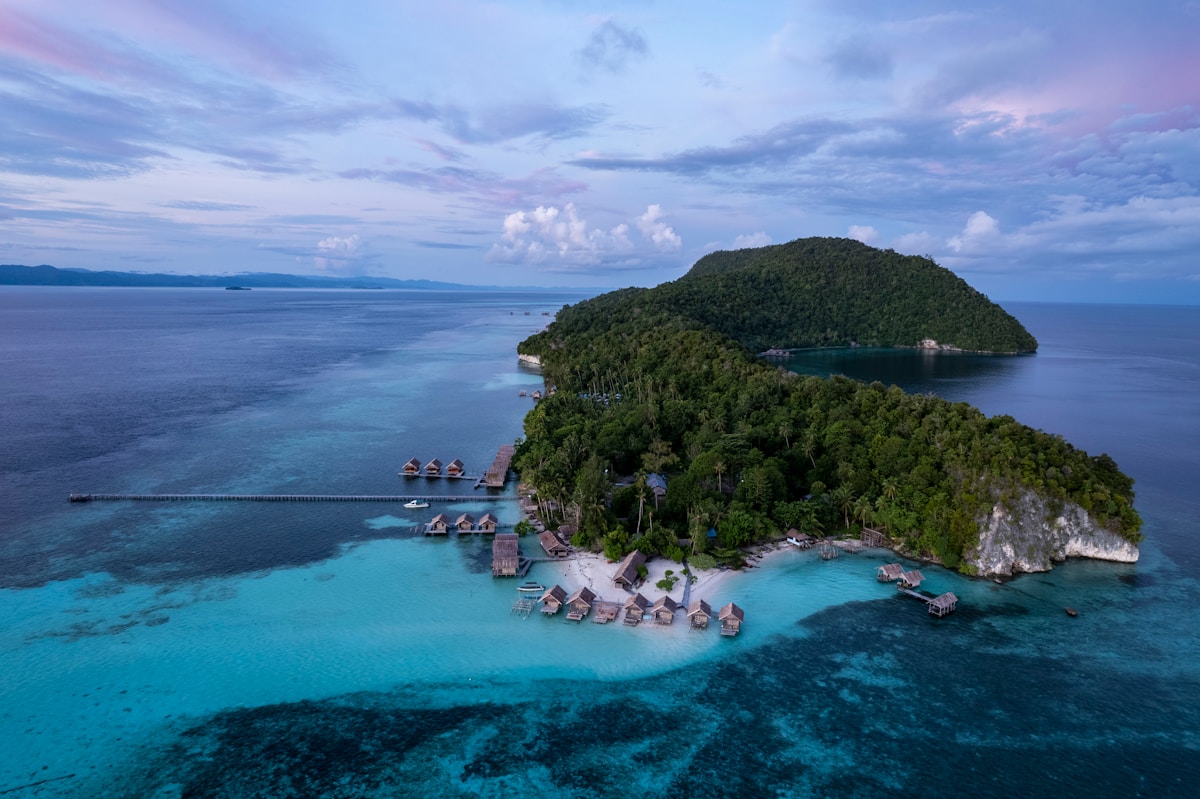
Nusa Penida is the largest of the three Nusa Islands southeast of Bali, and the one that has changed most rapidly over the past decade. From a largely overlooked island with rough roads and minimal services, it has become one of the most photographed destinations in Indonesia - primarily for the extraordinary clifftop formations of its southwest coast and for the quality of its diving, which sits among the best in the region for large pelagic encounters.
The island is hilly, rugged, and substantially less developed than Bali despite the visitor numbers. The road network has improved significantly but remains challenging in places - steep, narrow, and subject to subsidence during heavy rain. Nusa Penida is well-suited to a 2–3 day visit either independently or as a day trip from Bali.
Getting There
Fast boat from Sanur (Bali) - The standard crossing. Multiple operators run from the Sanur beach jetty approximately every hour from 7am–5pm; journey time approximately 45 minutes. One-way prices approximately IDR 150,000–250,000 per person as of 2026. The crossing can be rough during the wet season (November–March); fast boats are generally safe but motion sickness is possible on choppy days. Book a day ahead during July–August.
From Kusamba or Padang Bai (Bali) - Slower local wooden boats (jukung) cross to Nusa Penida from Kusamba and Padang Bai at lower cost but longer journey time; not recommended for passengers without prior knowledge of current conditions.
Boats arrive at Toyapakeh (northwest) or Banjar Nyuh (the main village jetty near Ped). Most accommodation is near Ped in the northwest.
Key Sites
West Coast
Kelingking Beach (T-Rex Cliff) - The iconic photograph of Nusa Penida: a limestone promontory shaped roughly like a T-rex’s head, with a small white-sand beach accessible at its foot. The viewpoint at the cliff edge is free to access and spectacular. A steep, loose-rock trail descends approximately 400 metres to the beach below - allow 30–45 minutes down, longer up. The trail is manageable for fit hikers but exposed and slippery in places; sandals are inadequate. The beach at the bottom is beautiful and rarely reached by day-trippers, which means quieter and better water. No facilities at the bottom. The viewpoint itself is crowded by mid-morning; arrive before 8am or after 4pm for manageable numbers.
Angel’s Billabong - A natural tidal rock pool at the cliff edge of the southwest peninsula, with clear water that fills with incoming tide and drains to reveal the pool when the tide recedes. Free to access. The pool is visually striking against the cliff backdrop and the surrounding rock formations. Important safety note: during moderate to high swell, waves wash over the surrounding rocks with little warning. Several visitors have been swept in; the site has a documented fatality record. Check swell conditions before visiting and do not swim here when conditions are rough. During calm conditions in the dry season, the pool is safe and genuinely beautiful.
Broken Beach (Pasih Uug) - A natural rock arch formation above the ocean adjacent to Angel’s Billabong, where a circular bay is enclosed by clifftop except for an opening to the sea. Free to access. The blue water visible through the arch and the scale of the limestone formation make this one of the most photogenic sites on the island. No beach access; this is a viewpoint only.
Crystal Bay - A sheltered bay on the northwest coast with calm, clear water and accessible reef for snorkelling from the beach. Free beach access. This is one of the main bases for dive operators targeting the Mola Mola season; during July–October the bay sees significant dive boat traffic. A day-trip snorkel circuit taking in Kelingking, Angel’s Billabong, and Crystal Bay is the standard itinerary sold by Bali operators.
East Coast
Atuh Beach - A remote beach on the east coast, accessed down a steep road with a viewpoint over several small offshore rock stacks. Free to access. Less visited than the west coast sites; the east coast in general is quieter, with more authentic village life and fewer day-trippers.
Thousand Islands Viewpoint (Seganing Waterfall direction) - The northeast coastline has several clifftop viewpoints over small offshore islands. Less organised for tourism and therefore more rewarding for those willing to explore beyond the standard circuit.
Diving
Nusa Penida’s diving reputation rests on two things: Mola Mola (ocean sunfish) sightings and manta ray encounters.
Mola Mola - The ocean sunfish, one of the world’s largest bony fish, visits Nusa Penida’s cleaning stations in the thermocline-affected waters around Crystal Bay and Blue Corner from approximately July–October. Dives for Mola Mola involve descending into colder water layers (often 20–24°C at depth versus 28°C at the surface) where the fish rise to be cleaned by smaller fish. Sightings are not guaranteed but rates are high during peak season. Dive trips from Crystal Bay operators approximately IDR 500,000 per dive as of 2026; two-dive packages more commonly offered.
Manta Point (Manta Bay) - Manta rays congregate at a cleaning station in Manta Bay on the southwest coast year-round, with peak numbers during the dry season. Snorkelling is possible here alongside diving; boat trips from Toyapakeh operators approximately IDR 350,000–500,000 per person for a snorkel tour. The mantas are large reef mantas (not oceanic); multiple animals are typical at the cleaning station on a good day.
Other dive sites - SD Point, Gamat Bay, and Blue Corner are good general reef dives with strong current and schooling fish. Nusa Penida currents are strong and conditions change quickly - diving here is for certified divers comfortable in current. Not recommended for beginners.
Motorbike Rental
The only practical way to reach the main sites independently. Rental approximately IDR 80,000–100,000 per day in Ped village, available from most guesthouses. The roads to Kelingking, Angel’s Billabong, and the east coast require a semi-automatic or manual motorbike to manage the hills. Important: the road to Kelingking and beyond has sections with 30–40% gradients on loose concrete. Motorbike accidents among tourists are common on this road. If you are not an experienced Southeast Asian motorbike rider, hire a local driver with a motorbike taxi (ojek) or arrange a tour. Scooters with automatic transmission can stall on the steep gradients.
Where to Stay in Nusa Penida
Most accommodation is in the Ped and Toyapakeh area on the northwest coast, nearest the main fast-boat jetty and within manageable distance of the key west coast sites. There is very limited accommodation near Kelingking Beach or the southwest cliffs - this is part of why those sites are overwhelmed by day-trippers from Bali. Staying on the island and accessing the west coast early morning is the most effective way to avoid the crowds. There are no ATMs on Nusa Penida; bring all cash from Bali.
Budget (from approximately USD 12–35/night as of 2026)
Budget homestays in Ped and Toyapakeh are family-run operations with rooms ranging from basic fan rooms to air-conditioned rooms with attached bathrooms. These are the most common choice for divers and snorkellers who spend their days on or under the water and need only a clean, functional base. From approximately USD 12–15/night as of 2026.
Penida Colada offers clean rooms with air conditioning in the Toyapakeh area at competitive prices, with a helpful team who can arrange motorbike hire and Mola Mola dive trips. A practical base for first-time visitors to the island. From approximately USD 35/night as of 2026.
Guesthouses near the ferry dock are convenient for late arrivals or early departures, with basic rooms and easy access to the market and the main warungs serving local food in the northwest area. From approximately IDR 180,000–250,000 per night as of 2026.
Mid-Range (from approximately USD 80–120/night as of 2026)
Penida Bambu Green offers eco-conscious bamboo bungalows on a hillside near the northwest coast, with good views and a natural building aesthetic that stands out from the standard concrete guesthouse stock. Clean rooms, a pool, and a short transfer to the main dive operator base in Toyapakeh. From approximately USD 100/night as of 2026.
Adiwana Warnakali Resort provides the most complete mid-range experience on the island, with a pool, restaurant, and well-appointed rooms that suit couples or travellers wanting more than a functional guesthouse without paying luxury rates. The setting has good views across the northwest coast. From approximately USD 120/night as of 2026.
Simple Nusa Penida Guesthouse is a consistently well-reviewed mid-range option with clean rooms and attentive service in the Ped area, convenient for both the ferry dock and the road south toward the west coast viewpoints. From approximately USD 40/night as of 2026.
Luxury (from approximately USD 180/night as of 2026)
Sewana Bay Resort is positioned on the northwest coast with a pool, restaurant, and rooms that meet international standards while remaining connected to the island’s natural setting. From approximately USD 180/night as of 2026.
Manta Bay Hotel offers the island’s most polished accommodation at the higher end of Nusa Penida’s capacity, with a pool, sea views, and well-appointed rooms suited to travellers who want consistent luxury standards alongside the dramatic island scenery. From approximately USD 200/night as of 2026. Note that Nusa Penida does not have five-star resort infrastructure; the luxury tier here is a significant step up from the guesthouse category but is not comparable to Seminyak or Ubud villa standards.
Search hotels in Nusa Penida on Booking.com
Eating on Nusa Penida
Restaurant options are limited compared to Bali. Warung clusters near Toyapakeh and Ped serve nasi goreng, grilled fish, and local dishes at approximately IDR 25,000–60,000 per person. A few more polished cafés have opened near the west coast viewpoints - expect approximately IDR 50,000–100,000. Carry water and snacks for the day, particularly if heading to east coast sites where nothing is available.
Day Trip vs Staying Overnight
Day trip from Bali is the standard choice: a full-day tour from Sanur covers the main west coast circuit (Kelingking viewpoint, Angel’s Billabong, Broken Beach, Crystal Bay). Tour prices from Bali operators start from approximately IDR 400,000–600,000 per person including boat transfer, guide, and transport. This is efficient but crowded - you arrive at the viewpoints simultaneously with dozens of other groups.
Staying 2–3 nights gives you early morning access to Kelingking before the boats arrive, a full day for diving and snorkelling, and access to the east coast and less-visited sites. For anyone seriously interested in the diving, a minimum of 2 nights is required.
Best Time to Visit
Dry season (May–October) for the most reliable weather, calmest boat crossings, and access to Angel’s Billabong. July–October for Mola Mola diving. Manta rays are year-round with better concentrations May–October. November–March (wet season) brings rougher boat crossings and limited access to Angel’s Billabong due to swell.
Practical Tips
There are no ATMs on Nusa Penida as of 2026 - bring all cash from Bali. Carry more than you think you need (boat tickets, dive trips, meals, motorbike rental, and tips are all cash only). Mobile data works reasonably well in Ped and Toyapakeh; the east coast has patchy coverage. Sunscreen and sun protection are essential - the clifftop viewpoints are fully exposed. The Kelingking descent trail is not suitable for anyone without good fitness and appropriate footwear; the beach at the bottom is worth it but the trail is not trivial.
More Nusa Penida Guides
- Kelingking Beach and the best viewpoints - what to expect, when to go, and whether the descent is worth it
- Where to stay in Nusa Penida - guesthouses near Toyapakeh, cliffside villas, and budget options
- Nusa Penida day trip from Bali - whether to day-trip or stay overnight, and how to plan it
- Sanur travel guide - Bali’s east coast town: the fast boat departure point for Nusa Penida
- Bali diving guide - Nusa Penida’s dive sites in context with Amed, Tulamben, and the broader Bali dive scene
- Nusa Lembongan island guide - the quieter neighbouring island: mangroves, surfing, and combined day trips
- Snorkelling in Indonesia - Crystal Bay and Nusa Penida’s waters among Indonesia’s best snorkel sites