Indonesia and Thailand are two of Southeast Asia’s most visited destinations - regularly compared by travellers deciding where to head first, or what to add when they’ve done one and want to see the other. Here’s a direct, honest comparison.
Quick Verdict
| Factor | Indonesia | Thailand |
|---|---|---|
| Cost (budget daily) | USD 25–45 (IDR 400,000–720,000) | USD 30–55 |
| Visa | 30-day visa-free (most passports) | 30-day visa-exempt, extendable |
| Beaches | Outstanding, diverse, many uncrowded | Excellent, well-developed, popular |
| Temples & culture | Hindu-Buddhist (Bali, Java) + Islamic | Theravada Buddhist throughout |
| Food | Excellent regional variety | Excellent, globally famous |
| Diving | World’s best (Raja Ampat, Komodo) | Good (Ko Tao, Similan Islands) |
| Backpacker circuit | Less defined, requires more planning | Highly established |
| English signage | Moderate | Very good |
| Size | Vast (5,100 km wide) | Manageable |
| Best for | Variety, diving, culture, off-grid | Ease, temples, islands, street food |
Cost of Travel
Both Indonesia and Thailand are affordable by Western standards, but Indonesia edges ahead for value, particularly outside Bali’s tourist zones.
Indonesia daily budgets (2026):
- Budget: IDR 250,000–400,000 (guesthouse dorm + street food + local transport)
- Mid-range: IDR 600,000–1,200,000 (private room, restaurants, tours)
- Comfortable: IDR 1,500,000–3,000,000 (boutique hotel, AC, occasional private transport)
Thailand daily budgets (approximate):
- Budget: THB 800–1,500
- Mid-range: THB 2,000–4,000
- Comfortable: THB 5,000–10,000
The biggest cost differences are accommodation and street food. Indonesian warungs serve full meals for IDR 15,000–35,000. Thai street food is similarly cheap (THB 40–80) but Thailand’s tourist areas have more expensive restaurant norms.
See our Indonesia travel costs guide and Indonesia on a budget for detailed breakdowns.
Visa Requirements
Both countries have relaxed entry for most Western passport holders, though the specifics differ.
Indonesia offers 30-day visa-free entry for 169 eligible nationalities. Extensions are available (IDR 500,000 for an additional 30 days at immigration offices). Longer-stay options include the B211A visa (60 days, extendable) or the new Digital Nomad Visa for remote workers. See our full Indonesia visa guide.
Thailand allows 30-day visa-exempt entry with passport stamps - technically you can extend by leaving and re-entering (border runs), though this is monitored. Tourist visas allow 60 days. The new Long-Term Resident visa caters to digital nomads and retirees.
For most short to medium trips, both countries are effectively visa-free.
Food Scene
Thai food is one of the world’s great cuisines - internationally recognised, obsessively refined and consistent in quality from street cart to restaurant. Som tum, pad thai, khao man gai, massaman curry and mango sticky rice have global name recognition. Bangkok and Chiang Mai specifically have extraordinary food scenes at every price point.
Indonesian food is less globally famous but equally diverse. The archipelago’s 17,000 islands have produced distinct regional cuisines: Padang (rich, spiced, served buffet-style), Javanese (sweet, refined), Balinese (shrimp paste, aromatic herbs), Manadonese (fiery, pork-centric), Sundanese (light, fresh vegetables). Nasi goreng and satay are the internationally known dishes, but they barely scratch the surface.
If you’re a food-first traveller, both countries deliver. Thailand’s food is more immediately accessible; Indonesia’s regional diversity rewards exploration.
Beaches and Islands
Thailand’s islands are polished and well-connected. Ko Samui is commercial and comfortable; Ko Pha Ngan has the Full Moon Party; Ko Tao is the budget diving hub; Ko Lipe has some of Southeast Asia’s clearest water; the Similan Islands are among Thailand’s best dive sites. The Gulf of Thailand and Andaman coasts offer different conditions (the Andaman is better, generally).
Indonesia’s islands are more varied and many are significantly less developed. The Gili Islands near Lombok offer Thailand-calibre white sand without motorised vehicles. Raja Ampat is incomparable. The Banda Islands (Maluku) have virtually no tourist infrastructure but pristine coral and extraordinary history. Labuan Bajo’s sunset harbour is one of Indonesia’s best moments. Lombok’s south coast beaches (Mawun, Selong Belanak) rival the world’s best for sheer beauty.
For uncrowded beaches with pristine natural environments, Indonesia wins clearly. For beach holidays with reliable infrastructure and easy access, Thailand is ahead.
Culture and Temples
Thailand is overwhelmingly Theravada Buddhist. Temples (wats) define the townscapes - Wat Phra Kaew and Wat Pho in Bangkok, Doi Suthep above Chiang Mai, the ancient ruins at Sukhothai and Ayutthaya. The religious culture is accessible, gracious and expressed through everyday gestures (monk alms-giving at dawn, offerings at spirit houses).
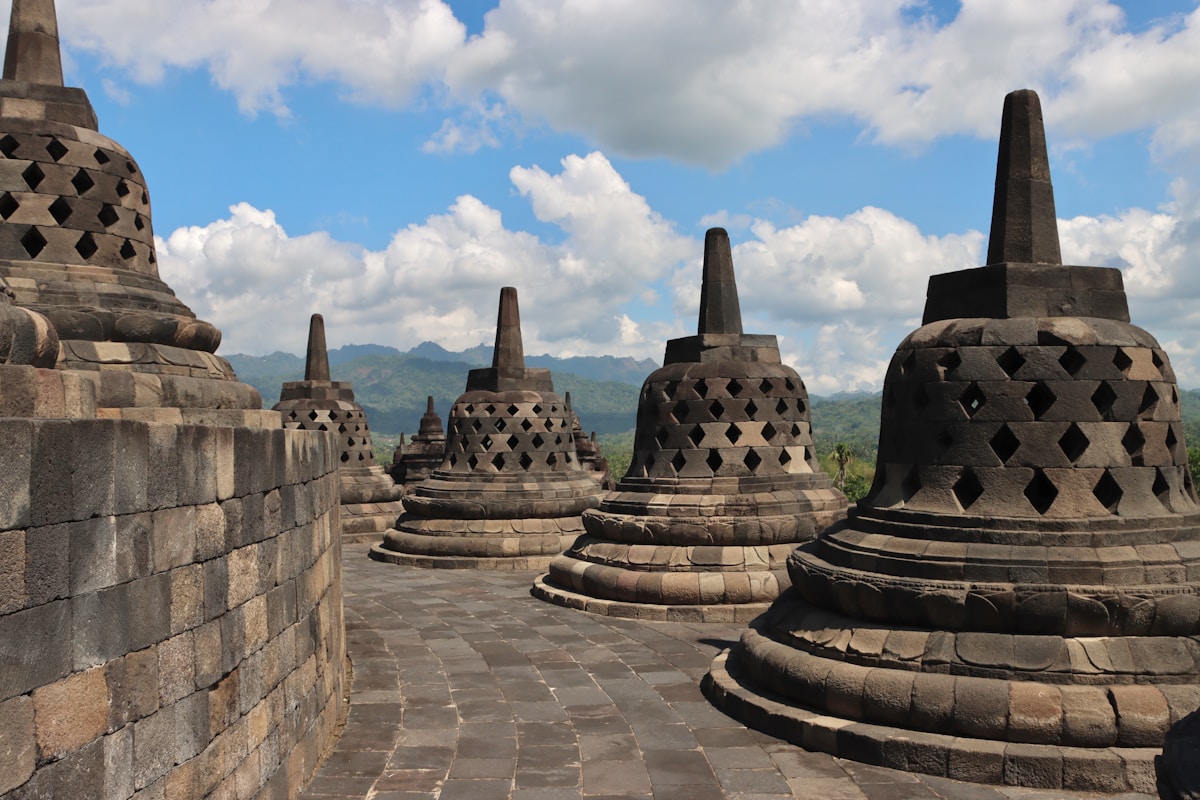
Indonesia is more culturally complex. It’s the world’s largest Muslim-majority country, but Bali is Hindu and Java has Hindu-Buddhist temple complexes (Borobudur, Prambanan) alongside Islamic traditions. Toraja in Sulawesi has its own animist-influenced funeral culture. The Dayak people of Borneo have longhouse traditions. No single religion or culture defines Indonesia - the variety is enormous.
Diving and Snorkelling
This is not a close comparison: Indonesia is the world’s best diving destination, containing the Coral Triangle and an estimated 76% of the world’s coral species. Raja Ampat, Komodo, Bunaken, Wakatobi and Lembeh Strait are all globally ranked sites.
Thailand has good diving - Ko Tao is the world’s most popular place to get certified, and the Similan Islands are impressive - but the marine biodiversity and coral health don’t compete with Indonesia’s best.
If diving or snorkelling is a priority, Indonesia wins by a wide margin.
Backpacker Circuit
Thailand has one of the world’s most efficient backpacker circuits: Bangkok → Chiang Mai → (Pai/Chiang Rai) → full moon islands (Ko Pha Ngan) → Ko Samui or Ko Tao → Krabi/Railay. This loop is bookable with local buses and boats, full of guesthouses and hostels, and can be done in 3 weeks comfortably.
Indonesia’s circuit is less defined and requires more decision-making. The classic Bali base with day trips to Nusa Penida and the Gilis works well for a week. Going beyond Bali to Lombok, Flores or Sulawesi requires flights, more planning and higher tolerance for variable infrastructure. This is not a criticism - Indonesia rewards the extra effort - but it is a meaningful difference.
Infrastructure and Transport
Thailand is compact, has a domestic train network that functions, reliable intercity buses, a BTS Skytrain in Bangkok and well-maintained roads throughout.
Indonesia is vast. Getting from Bali to Sulawesi involves a domestic flight. Getting around Flores means navigating mountain roads by chartered vehicle. Getting to Raja Ampat involves two flights and a ferry. The journey is often part of the experience - but it requires time, flexibility and budget.
Who Should Visit Where
Visit Indonesia first if:
- Diving, snorkelling or marine wildlife is a priority
- You want Bali’s unique Hindu culture
- You’ve done Southeast Asia’s standard circuit and want something more
- You have 3+ weeks and enjoy planning your own route
Visit Thailand first if:
- This is your first Southeast Asia trip
- You want maximum ease and infrastructure
- Temple culture and renowned street food are priorities
- You have 2–3 weeks and want a clear, bookable circuit
Many travellers do both - starting in Bangkok, working through Thailand, then flying to Bali. That’s a natural circuit and gives you the best of both.
Bali day tours are the easiest way to compare the island’s main areas before committing to a neighbourhood - most operators run flexible pick-and-drop routes. Lombok tours and experiences range from Rinjani crater hikes to Gili island-hopping - a contrast to Bali’s temple-focused itineraries.
Plan Your Indonesia Trip
- First time in Indonesia - what to know before you land: visa, SIM cards, money, and customs
- Indonesia visa guide - Visa on Arrival, e-VOA, and visa-free entry for Indonesia
- 1 week in Bali itinerary - the most efficient first-timer’s route through Indonesia’s most popular island
- Best time to visit Indonesia - seasonal weather patterns across Bali, Lombok, and the rest of the archipelago
- Bali island guide - the island most travellers visit first: beaches, temples, and cultural life in full
- Indonesia travel costs - a realistic budget guide comparing costs with Southeast Asian neighbours
More Comparisons
- Indonesia vs Vietnam - the other major Southeast Asia comparison
- Bali vs Java - choosing within Indonesia once you’ve decided
- Flores vs Sulawesi - two of Indonesia’s off-the-beaten-path islands
- Bali or Indonesia - full destination overview for Indonesia
Ready to Plan Your Trip?
See our itineraries for inspiration:
- One Week in Indonesia - Bali, Nusa Penida, Gili Islands and Lombok
- 2 Weeks in Indonesia - the island-hopping route from Bali east
- 10 Days in Indonesia - Bali, Java and Komodo combined
🏨 Search hotels in Indonesia - Search hotels in Thailand
More Comparisons
- Indonesia vs Vietnam - another popular Southeast Asia alternative compared
- Bali vs Java - if Indonesia wins, this is the first call to make
- Bali vs Lombok - narrowing down Indonesia’s western islands
- Bali or Indonesia - the full destination planner for first-timers
Plan Your Trip
✈️ Book your flights to Indonesia 🛡️ Get travel insurance 📱 Stay connected with an eSIM 🚗 Rent a car