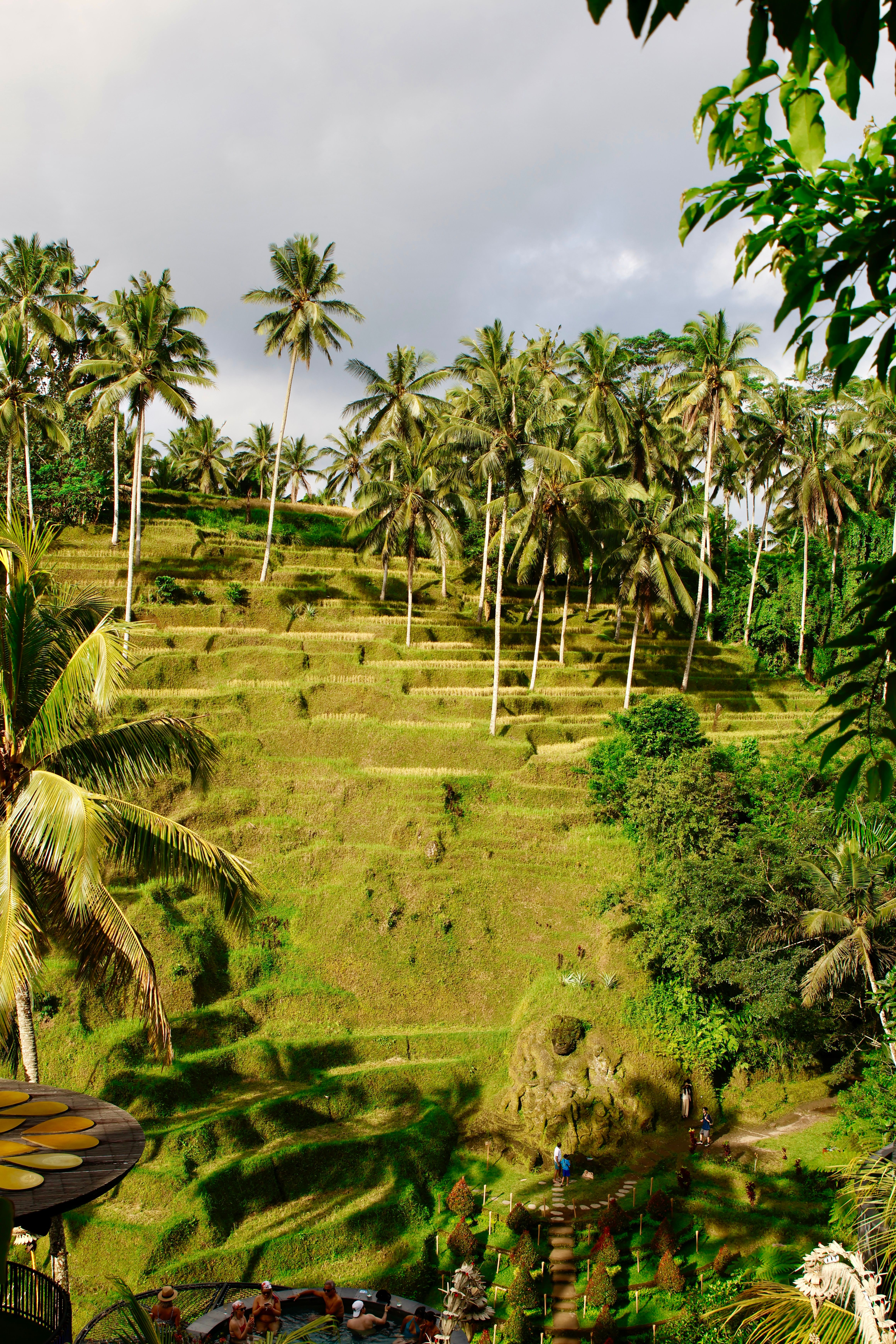
Bali and Java are Indonesia’s two most-visited destinations, and they could scarcely be more different. Bali is a compact island built for tourism - temples, surf breaks and beach clubs packed into 5,780 square kilometres. Java is one of the most densely populated landmasses on earth, home to 150 million people, a capital of 10 million, and the largest concentration of ancient monuments in Southeast Asia. Choosing between them depends entirely on what you want from Indonesia.
Quick Verdict
| Factor | Bali | Java |
|---|---|---|
| Beaches | Excellent - varied and well-developed | Limited - not the draw |
| Culture and temples | Living Hindu culture, daily ceremonies | Ancient Buddhist and Hindu monuments (Borobudur, Prambanan) |
| Cost (daily budget) | IDR 400,000–800,000 | IDR 250,000–500,000 |
| Nightlife | World-class (Seminyak, Canggu) | Quiet outside Jakarta |
| Ease of travel | Very easy - compact, ride-hailing everywhere | Moderate - large island, trains between cities |
| Natural scenery | Rice terraces, volcanoes, coast | Active volcanoes, crater lakes, tea plantations |
| Best for | First-timers wanting beach, culture and convenience | Culture seekers, budget travellers, volcano trekkers |
Vibe and Scale
Bali is manageable. The island runs roughly 140 km end to end, with distinct zones catering to different travel styles: Seminyak and Canggu for beach clubs and cafes, Ubud for rice fields and art, Amed and Tulamben for diving, Uluwatu for surf. Grab and Gojek cover almost every corner. A first-time visitor can orient within a day.
Java is enormous - about 1,000 km from west to east. It contains the sprawling capital Jakarta, the royal courts and temple complexes of Yogyakarta, the lunar caldera of Bromo, the acid-lake hike at Ijen and the highland tea plantations around Bandung. It is not a sun-and-beach destination. It rewards travellers who want depth over convenience.
The tourist infrastructure on Java is thinner outside Yogyakarta. English is less widely spoken, and independent navigation requires more confidence. None of this is a reason to avoid it - it is simply a different kind of trip.
Beaches
Bali wins outright. The Bukit Peninsula in the south delivers world-class surf breaks at Uluwatu, Padang Padang and Balangan, set against dramatic limestone cliffs. The calm-water beaches at Sanur and Nusa Dua suit swimming and snorkelling. Seminyak’s black-sand shore hosts some of Southeast Asia’s best beach clubs - Potato Head, Finns and Atlas Beach Fest among them. Further east, Amed and Candidasa offer a quieter pace with good reef diving.
Java has beaches, but they are not the draw. Pangandaran on the south coast is pleasant - a quiet fishing town with a bay for swimming. The Thousand Islands north of Jakarta offer day trips but do not rival Bali’s standard. If beaches are the primary reason for your trip, Bali is the right answer.
Winner: Bali
Culture and History
Java holds some of the most significant ancient monuments in Asia. Borobudur, a 9th-century Mahayana Buddhist temple in Central Java, is the largest Buddhist monument on earth - a nine-tiered stone pyramid with 2,672 relief panels and 504 Buddha statues, constructed around 800 CE. Sunrise visits (entry approximately USD 25 for foreign visitors, guided treks from IDR 200,000) rank among the most affecting experiences in Southeast Asia.
Thirty-seven kilometres east of Yogyakarta, Prambanan is a 9th-century Hindu temple compound dedicated to the Trimurti. The main Shiva temple rises 47 metres. Entry costs approximately USD 25 for foreign visitors.
Yogyakarta itself is a cultural city in its own right. The Kraton royal palace, the batik workshops of Jalan Malioboro, wayang kulit shadow-puppet performances and the active gamelan-making workshops in Kotagede give a full week of cultural depth beyond the temples. See our Yogyakarta city guide.
Bali’s culture is more immediate - visible in daily life rather than in ruins. Offerings appear on doorsteps every morning. Temple ceremonies close entire roads with processions of white-and-gold-clad worshippers. The nightly Kecak fire dance at Uluwatu is electric. Ubud’s Royal Palace stages traditional dances most evenings. It is living culture, continuously practised - but it is not archaeological depth.
Winner: Java for ancient history. Bali for living culture. Draw overall.
Cost
Java is cheaper across every category outside Jakarta. In Yogyakarta, a budget guesthouse near Malioboro or the backpacker enclave of Prawirotaman runs IDR 100,000–200,000 per night. A full warung meal - nasi gudeg, the local jackfruit curry with rice - costs IDR 20,000–35,000. Motorbike hire runs IDR 60,000–80,000 per day. A full-day tour to Borobudur and Prambanan in a private car with driver costs IDR 400,000–600,000 per person.
Bali runs meaningfully higher. A guesthouse in Canggu or Seminyak costs IDR 250,000–450,000 per night at budget end. Restaurant meals in tourist areas start at IDR 40,000–70,000. The overall daily spend for a budget traveller on Bali tends to run IDR 400,000–800,000; the equivalent on Java outside Jakarta is IDR 250,000–500,000.
Both islands have luxury resorts that scale into IDR 5,000,000+ per night. The gap is most pronounced at the budget end.
See our Indonesia travel costs guide for full daily budget breakdowns by island.
Winner: Java
Nightlife
Bali owns this category. Seminyak and Canggu have hundreds of bars and beach clubs running late - La Favela’s art-deco interiors, Atlas Beach Fest’s 3,000-person capacity beachfront, Motel Mexicola’s vibrant terrace. The older Kuta strip caters to a younger, louder crowd. Ubud runs earlier and quieter, with craft-beer bars and live acoustic sets.
On Java, Jakarta has a genuine nightlife scene in SCBD (Sudirman Central Business District) and around Kemang - rooftop lounges and cocktail bars rather than open-air beach clubs. Yogyakarta goes quiet after 10pm. Outside these two cities, evening options are minimal.
Winner: Bali - overwhelmingly
Getting Around
Bali’s compact geography and ride-hailing coverage make logistics easy. Grab and Gojek work throughout the island. Airport transfers from Ngurah Rai International are straightforward. Scooter hire (IDR 75,000–100,000 per day) is the fastest way to move between beaches on the Bukit Peninsula.
Java requires more planning but has a strong intercity rail network. The KAI (Kereta Api Indonesia) service links Jakarta, Yogyakarta, Solo, Surabaya and Malang with reliable executive-class trains. The Jakarta–Yogyakarta express takes around 8 hours and costs IDR 300,000–500,000 one-way - book at least 3–4 days ahead at kai.id.
Within Yogyakarta, ride-hailing works well. Reaching Borobudur requires a local bus from Jombor terminal (IDR 20,000 one-way) or a chartered car. For Mount Bromo, the standard approach is a shared sunrise jeep from the rim village of Cemoro Lawang (IDR 500,000–800,000 per person).
See our getting around Indonesia guide for full transport options between islands and cities.
Winner: Bali for ease. Java for travellers who enjoy rail journeys.
Natural Highlights Beyond the Obvious
Both islands have active volcanoes, but the experiences are very different.
Bali: Mount Batur (1,717m) offers a popular sunrise trek with a guide (IDR 350,000–500,000 total). It is a gentle 2-hour hike and can be done in a morning without disrupting the rest of the day. Mount Agung (3,031m) is a more demanding all-day climb for experienced hikers.
Java: Mount Bromo (2,329m) sits inside a vast caldera - the Tengger Massif - and is reached by jeep across a sea of grey volcanic sand at 4am for sunrise. Ijen crater (2,386m) offers a different spectacle: a turquoise acid lake, sulphur-encrusted miners hauling loads from the crater floor, and blue fire visible only in darkness before dawn. Both are among the most extraordinary natural landscapes in Asia. Neither is gentle.
How Long Do You Need
Bali: A minimum of 5–7 days covers the essentials - Ubud, the Bukit Peninsula and one day trip such as Nusa Penida, Tanah Lot or Tirta Empul. Two weeks allows a more relaxed circuit including Amed, Sidemen and the north coast around Lovina.
Java: Yogyakarta alone warrants 4–5 days (Borobudur, Prambanan, the Kraton, batik workshops). Add 2 days for a Bromo sunrise from Malang or Probolinggo, and 2 more for the Ijen crater hike from Banyuwangi. A Java circuit from Jakarta east to the Banyuwangi ferry crossing takes 10–14 days comfortably.
See our itineraries: 1 week in Java and 2 weeks in Bali and Java.
When to Choose Bali
- You are visiting Indonesia for the first time and want maximum return on a shorter trip
- Beaches, surf and beach clubs are priorities
- You want easy transport, widespread English and familiar infrastructure
- Nightlife matters - Bali’s scene is among the best in Southeast Asia
- You have 5–10 days and want a compact island that rewards spontaneous movement
See our Bali island guide and 1-week Bali itinerary.
Browse Bali tours and day trips - temple visits, rice terrace walks and full-day excursions all depart from the main tourist areas.
When to Choose Java
- Borobudur is on your list - it is among the most significant ancient monuments on earth
- You are a culture or history traveller who wants archaeology alongside living tradition
- Budget is a constraint - Java runs 30–40% cheaper than Bali at the mid-range
- Volcano trekking (Bromo, Ijen) is a centrepiece of the trip
- You have been to Bali before and want something more demanding and less tourist-facing
See our Java island guide and 2-week Bali and Java itinerary.
Book tours in Yogyakarta - Borobudur sunrise visits, batik workshops and Merapi volcano day trips depart daily.
Verdict
Bali wins for the first-time visitor who wants the clearest possible return on a limited trip: beaches, living Hindu culture, nightlife and easy logistics in a compact package. The infrastructure is mature, English is widely spoken, and a memorable week requires very little planning.
Java wins for the traveller with more time, deeper interest in history and culture, or a tighter budget. Borobudur alone justifies the trip - it is one of the great monumental achievements of the ancient world. Add the lunar landscape of Bromo and the blue fire of Ijen at dawn, and Java delivers an experience found nowhere else in Southeast Asia.
The ideal Indonesia trip combines both. Two weeks allows 5–6 days on Java and 7–8 on Bali, connected by the overnight train from Yogyakarta to Banyuwangi and a short ferry crossing into east Bali. See our 2-week Bali and Java itinerary for a day-by-day plan.
More Comparisons
- Bali vs Lombok - both island options for the western archipelago
- Ubud vs Seminyak - choosing between Bali’s two most popular bases
- Jakarta vs Yogyakarta - Java’s megacity versus its cultural capital
- Bali or Indonesia - the full destination planner for the whole country
🏨 Search hotels in Bali - Search hotels in Java
Plan Your Trip
✈️ Book your flights to Indonesia 🛡️ Get travel insurance 📱 Stay connected with an eSIM 🚗 Rent a car