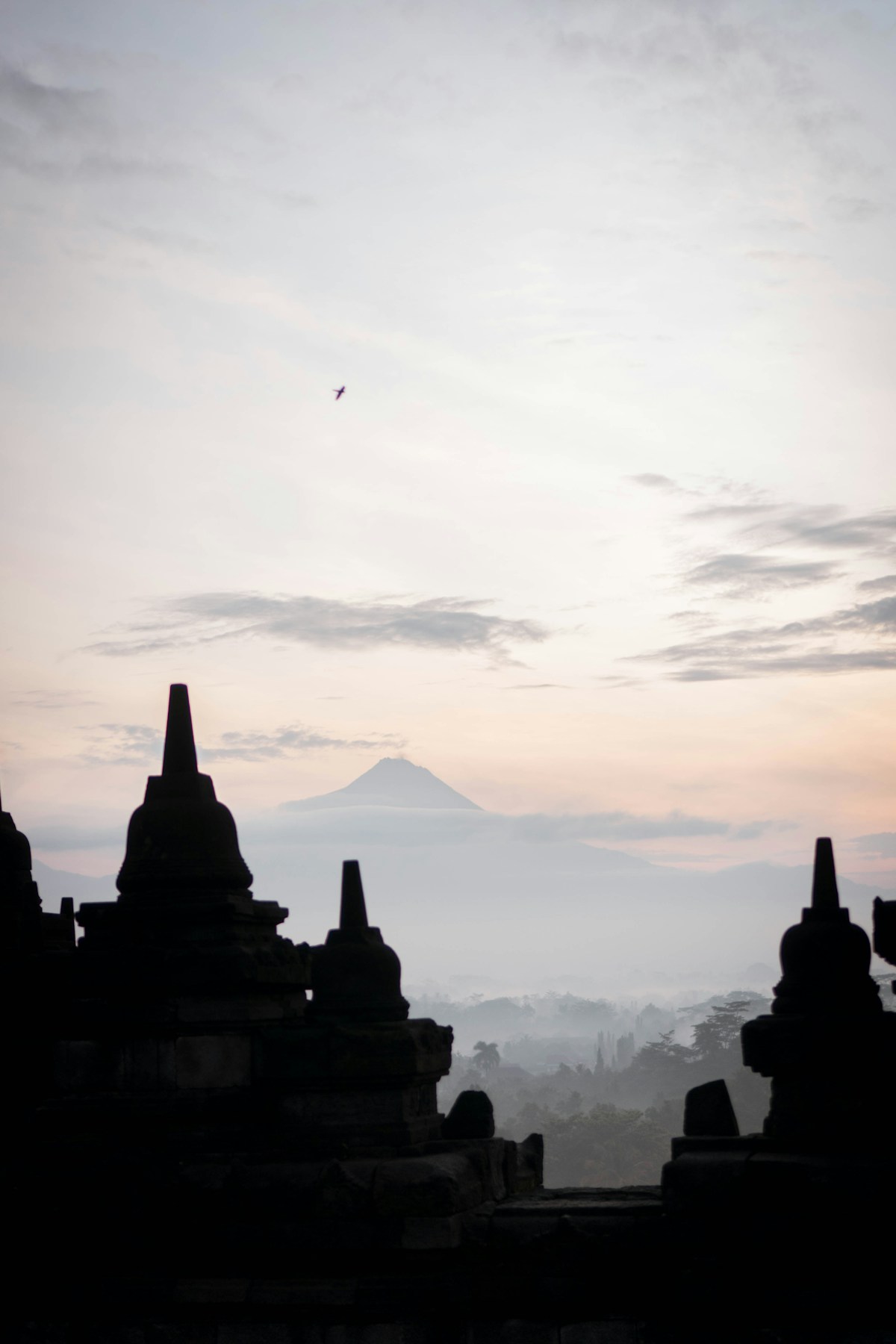
Java’s two most-visited cities couldn’t be more different. Jakarta is Indonesia’s capital - a sprawling mega-city of over 10 million people defined by traffic, skyscrapers, shopping malls and relentless energy. Yogyakarta (universally called “Jogja”) is a compact Javanese cultural capital where becak drivers cycle past batik workshops and centuries-old palaces. Most travellers visit one or both as part of a Java overland trip.
Quick Verdict
| Factor | Jakarta | Yogyakarta |
|---|---|---|
| Cultural sights | Moderate (Kota Tua, museums) | Exceptional (Borobudur, Prambanan, Kraton) |
| Food scene | Excellent (diverse, every region) | Excellent (focused Javanese cuisine) |
| Nightlife | Very good | Moderate |
| Day trips | Moderate (Thousand Islands, Puncak) | Outstanding (Borobudur, Prambanan, Merapi) |
| Budget (daily) | IDR 400,000–1,000,000 | IDR 250,000–600,000 |
| Tourist infrastructure | Good but spread out | Excellent, compact |
| Authenticity | High (less tourist-facing) | High (strong local culture) |
| Ease of getting around | Challenging (traffic) | Easy (compact, walkable centre) |
| Best for | Urban explorers, foodies, transit | History, temples, Javanese culture |
City Vibe
Jakarta is relentlessly urban and often exhausting in the best way. The city has no single centre - it’s a series of neighbourhoods with distinct characters. Kota Tua (Old Town) has the Dutch colonial grid and the Fatahillah Square museums. Menteng is the leafy embassy district with good coffee shops. Kemang is expat central with rooftop bars and international restaurants. SCBD (Sudirman Central Business District) has the corporate skyscraper cluster. If you want to understand how a modern Indonesian city breathes, Jakarta is irreplaceable. If you want serenity and historic atmosphere, you won’t find it here.
Yogyakarta centres on the Kraton - the still-inhabited 18th-century royal palace of the Sultan of Yogyakarta. The surrounding neighbourhood is laid out according to Javanese cosmological principles: the Sultan’s palace at the centre, the Merapi volcano as spiritual anchor to the north, and the Indian Ocean to the south. This isn’t heritage for tourists - the sultanate remains politically active, and the Sultan serves simultaneously as the city’s hereditary governor. Jalan Malioboro, the main commercial street, is lined with batik vendors, silver jewellery workshops and street food carts.
History and Culture
Jakarta’s historical sights cluster in Kota Tua: the Jakarta History Museum (former Dutch VOC headquarters, IDR 20,000 entry), Wayang Museum (shadow puppet collection, IDR 20,000), and Café Batavia for colonial-era atmosphere. The National Museum on Medan Merdeka has one of Southeast Asia’s best archaeological collections, including Hindu-Buddhist artefacts from across the archipelago (IDR 25,000).
Yogyakarta’s cultural attractions are world-class. Borobudur (42 km west) is the world’s largest Buddhist monument - a 9th-century mandala in stone with 504 Buddha statues and 2,672 relief panels. Entry for foreign visitors costs approximately IDR 520,000 as of 2026. Prambanan (17 km east) is a 9th-century Hindu temple compound, the largest in Southeast Asia, dedicated to the Trimurti. Evening Ramayana Ballet performances are held here from May–October (IDR 150,000–350,000).
The Kraton (IDR 25,000 entry) and adjacent Taman Sari water palace (IDR 20,000) are worth half a day. Active gamelan rehearsals happen in the Kraton courtyard most mornings. Puppet-making and batik workshops are available at dozens of studios in the surrounding lanes.
See our Yogyakarta city guide and 3-day Yogyakarta itinerary for full logistics.
Food Scene
Jakarta is where all of Indonesia’s regional cuisines converge. Padang restaurants (West Sumatran) are ubiquitous - choose from 20 dishes laid out in front of you, pay for what you eat (IDR 30,000–70,000 for a full spread). The Chinatown district around Glodok has the best Chinese-Indonesian food in the country. Seafood at Muara Karang or Pluit is exceptional. For more upscale dining, the restaurant scene in Senopati and SCBD rivals Singapore and Bangkok.
Yogyakarta’s food is more locally specific. Gudeg - jackfruit slow-cooked in coconut milk until caramelised, served with rice, chicken and sambal krecek - is the city’s signature dish. Warung Bu Tjitro is the most famous gudeg spot (IDR 25,000–40,000 per serving). Bakmi Jawa (Javanese noodles cooked over charcoal) and sate klatak (lamb satay, skewered on iron rods) are other must-tries. Angkringan carts along Jalan Malioboro serve cheap snacks and sweet tea until 2 am.
Day Trips
Jakarta’s best day trips are limited. The Thousand Islands (Kepulauan Seribu) off the north coast offer snorkelling and beach escapes (IDR 200,000–400,000 by fast boat from Ancol), though the water quality near the main islands isn’t pristine. Puncak in the Bogor highlands offers cooler temperatures and tea plantations - but traffic on weekends makes the 2-hour journey take 4+. Bogor Botanical Gardens are manageable in a day.
Yogyakarta has the best day-trip options on Java. Borobudur and Prambanan are the headlines. Mount Merapi (2,930m), the most active volcano in Indonesia, offers jeep tours up the lower slopes and good views of the 2010 eruption damage (IDR 350,000–500,000 for a jeep tour). The Dieng Plateau at 2,000m has ancient Hindu temples in a volcanic highland landscape - a full day trip or 2-night stay from Yogyakarta or Semarang.
Nightlife
Jakarta has the best nightlife in Indonesia after Bali - upscale rooftop bars in the skyscraper districts, live music venues in Kemang, and dedicated club nights at venues like Dragonfly, Mirror and Blowfish. This is a sophisticated urban nightlife scene oriented toward Jakarta’s professional class and international crowd.
Yogyakarta’s nightlife is quieter and more student-oriented (Yogyakarta has a large university population). Jalan Sosrowijayan behind Malioboro has backpacker bars. Craft beer has arrived at venues like Liquid Bar and No. 4 Cafe. Wayang shows run until midnight at some venues. It’s a 10 pm city rather than a 3 am one.
Cost
Yogyakarta is significantly cheaper for tourists. A clean guesthouse on or near Malioboro runs IDR 120,000–280,000 per night. Street food starts at IDR 8,000 for sate, IDR 15,000–30,000 for a full warung meal. Becak (cycle rickshaw) rides around the centre cost IDR 20,000–40,000.
Jakarta’s tourist-area hotels run IDR 350,000–700,000 for mid-range. Restaurants in upscale areas are comparable to Southeast Asian capitals. Transport is complicated by the size of the city - add IDR 80,000–200,000 per day for Grab/MRT fares.
Getting Between Them
The Pramex/Prambanan Express commuter train runs Yogyakarta to Solo in 1 hour (IDR 8,000). The Java overnight trains between Jakarta and Yogyakarta are an attraction in themselves - Executive class (IDR 300,000–700,000) has wide reclining seats and air conditioning. Budget flights run around 1 hour and sometimes cost less than the train.
See our Java train travel guide for booking tips and recommendations.
Bali day tours are the easiest way to compare the island’s main areas before committing to a neighbourhood - most operators run flexible pick-and-drop routes. Lombok tours and experiences range from Rinjani crater hikes to Gili island-hopping - a contrast to Bali’s temple-focused itineraries.
When to Choose Each
Choose Jakarta if: you want to understand modern Indonesia at scale, you’re a food obsessive, or you’re transiting through and want to see more than the airport. 2–3 days is enough to hit the best of it without exhaustion.
Choose Yogyakarta if: temples, Javanese culture, batik and volcanic landscapes are your priority. It’s the better base for Java’s greatest historical sites and the most pleasant Javanese city to spend time in. See our Yogyakarta guide.
The best approach: fly into Jakarta, spend 2 nights, take the overnight train to Yogyakarta, spend 3–4 nights, then continue to Bali by flight. This captures both the capital and the cultural heart of Java in a logical circuit.
More Comparisons
- Bali vs Java - Java versus the most popular Indonesian island
- Flores vs Sulawesi - two more off-track Indonesian destinations
- Ubud vs Seminyak - Bali’s two main bases after finishing Java
- Bali or Indonesia - the big-picture trip planner
Ready to Plan Your Trip?
See our itineraries for inspiration:
- 1 Week in Java - Borobudur, Bromo and Yogyakarta cultural circuit
- 3 Days in Yogyakarta - Borobudur, Prambanan and the Kraton
- Java and Bali 2-Week Itinerary - from Jakarta to Uluwatu
🏨 Search hotels in Jakarta - Search hotels in Yogyakarta
More Comparisons
- Bali vs Java - the bigger decision before narrowing down Java’s cities
- Ubud vs Seminyak - Bali’s cultural-heartland vs beach-strip debate mirrors this one
- Bali vs Lombok - if you’re weighing Java against a beach alternative
- Bali or Indonesia - the full destination planner covering all of Indonesia
Plan Your Trip
✈️ Book your flights to Indonesia 🛡️ Get travel insurance 📱 Stay connected with an eSIM 🚗 Rent a car