Java is the world’s most densely populated island and the political, economic and cultural core of Indonesia. Roughly the size of England but home to 150 million people, it holds two UNESCO World Heritage Sites, an active volcano accessible by pre-dawn trek, and a capital city of 11 million in the process of being replaced. For travellers, Java functions as a country within a country - you could spend three weeks and still have entire corners untouched.
The Main Cities
Jakarta
Jakarta is Indonesia’s current capital and primary international gateway - a sprawling city on the north coast of West Java. The restored Dutch colonial quarter of Kota Tua is the most visitor-friendly area. Construction of the replacement capital Nusantara in East Kalimantan is ongoing as of 2026, but Jakarta remains the functioning hub and main transport interchange for Java.
Where to stay in Jakarta: Most travellers base themselves in Central Jakarta (near Grand Indonesia mall and the MRT corridor) rather than Kota Tua. Grand Hyatt Jakarta (approximately IDR 2,800,000–4,500,000 / around USD 175–280 per night) occupies a central position at Plaza Indonesia with easy MRT access. Aryaduta Jakarta (approximately IDR 1,200,000–2,000,000 / around USD 75–125) offers consistent mid-range quality in the Thamrin district. Budget and midrange options are well-represented along the Jalan Jaksa backpacker strip and in South Jakarta’s Kemang neighbourhood - guesthouses and business hotels from approximately IDR 300,000–700,000 (around USD 19–44) per night. Most international arrivals come through Soekarno-Hatta International Airport (CGK) on the city’s western fringe; the Commuter Line rail connection from Manggarai takes around 40 minutes to the city centre and costs approximately IDR 5,000.
Yogyakarta
Yogyakarta (Jogja) is the cultural capital of Java and the principal base for visiting Borobudur and Prambanan. The city has a walkable old quarter around the Kraton royal palace, a craft and batik scene along Malioboro Street, and Mount Merapi - the most active volcano on Java - rising 28 km to the north.
Where to stay in Yogyakarta: The Prawirotaman neighbourhood (South Yogyakarta) and the streets around Malioboro Street are the most practical areas for first-time visitors - walkable to the Kraton, close to batik workshops, and well-served by tour operators running Borobudur and Prambanan day trips. Hyatt Regency Yogyakarta (approximately IDR 1,800,000–2,800,000 / around USD 113–175 per night) stands north of the city, closer to the airport road and a convenient base for early Borobudur sunrise departures. The Phoenix Hotel Yogyakarta (MGallery; approximately IDR 1,200,000–2,000,000 / around USD 75–125) occupies a restored 1918 colonial building just off Malioboro, making it the best-positioned upscale option for walking the old city. Mid-range guesthouses in Prawirotaman run approximately IDR 300,000–700,000 (around USD 19–44) per night and include most tour-booking services. The budget Sosrowijayan Gang I and II lanes, steps from Malioboro, have dormitory beds and basic rooms from approximately IDR 100,000–200,000 (around USD 6–13) per night.
Surabaya
Surabaya is Indonesia’s second city - a commercial port primarily used as a transit hub. Most travellers fly in and continue east toward Probolinggo (gateway to Mount Bromo) or Banyuwangi (gateway to Kawah Ijen).
Bandung
Bandung sits at 768 m in West Java’s volcanic basin - noticeably cooler than the coast and a popular weekend escape from Jakarta. The city’s Dutch colonial architecture and the Tangkuban Perahu volcano crater 28 km north are its main draws.
Malang
Malang is a cooler hill city in East Java, increasingly used as a quieter base than Yogyakarta. It provides access to Bromo Tengger Semeru National Park and is surrounded by colonial-era highlands with waterfalls and apple orchards.
Key Attractions
Borobudur
The largest Buddhist monument in the world sits in a valley between two volcanoes 42 km northwest of Yogyakarta. Built in the 9th century, the stupa rises across nine stacked platforms with 2,672 relief panels and 504 Buddha statues. Entry for foreign visitors is approximately IDR 420,000 as of 2026 - confirm current prices at borobudurpark.com.
The monument is best visited at sunrise (a separate ticket tier for the top platform, approximately IDR 850,000 as of 2026, must be booked in advance) or in the late afternoon when the light softens. The middle of the day is hot and crowded. Sarong hire is included in the entry ticket.
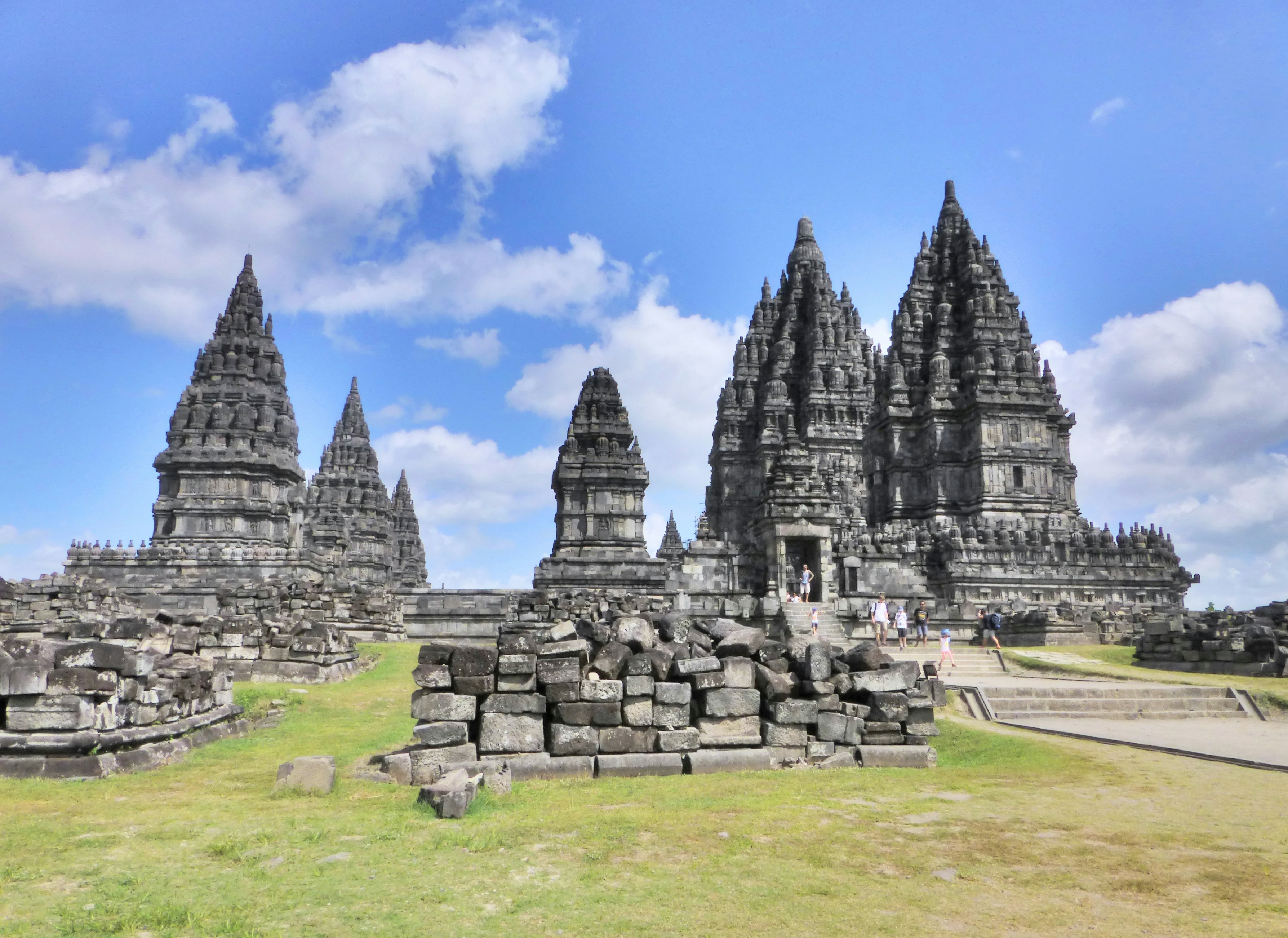
Combine with a visit to Prambanan, the 9th-century Hindu temple complex 17 km east of Yogyakarta (entry approximately IDR 350,000 as of 2026, confirm at the gate), in a single day using the combo ticket.
Mount Bromo
An active caldera in East Java’s Tengger Massif, Bromo is one of Indonesia’s most photographed landscapes. The classic view is from Penanjakan viewpoint before dawn - a sea of mist with the smoking crater rising above it, Semeru volcano visible on the horizon. The viewpoint is typically reached by jeep from the village of Cemoro Lawang.
A shared jeep for sunrise plus the crater rim walk costs approximately IDR 250,000–350,000 per person from Cemoro Lawang as of 2026. Private jeeps run IDR 400,000–600,000 for the vehicle. The walk from the jeep park to the crater rim is around 1.5 km including the famous sand sea crossing and 253 steps to the crater lip.
Kawah Ijen
The turquoise acid lake and blue-fire phenomenon (visible only before 5am) at Ijen crater in East Java require a 3 km uphill trek from the Paltuding trailhead. The sulphur miners who work the crater carry loads of up to 90 kg down the mountain - this is not a PR operation, it is an active workplace.
Entry fee approximately IDR 200,000 for foreign visitors as of 2026. Start the hike by 2am to reach the crater before dawn if you want to see the blue fire. Gas masks are available for rent at the trailhead (approximately IDR 30,000) and are worth using - the sulphur fumes are severe.
Transport on Java
KAI Trains
Kereta Api Indonesia (KAI) operates an extensive rail network connecting Java’s major cities. It is the most comfortable and reliable way to travel between them, and online booking has improved significantly.
Book via kai.id or the KAI Access app. Tickets open 30 days in advance and popular routes (especially Jakarta–Yogyakarta on Friday evenings) sell out. Classes:
- Eksekutif - air-conditioned, reclining seats, equivalent to business class, IDR 200,000–400,000 depending on route and timing
- Bisnis - air-conditioned, upright seats, IDR 100,000–200,000
- Ekonomi - basic, sometimes crowded, IDR 60,000–150,000
Key routes and approximate journey times (Eksekutif fares as of 2026):
| Route | Time | Eksekutif approx. |
|---|---|---|
| Jakarta (Gambir) → Yogyakarta | 8–9 hrs | IDR 250,000–380,000 |
| Jakarta (Gambir) → Surabaya (Pasar Turi) | 9–11 hrs | IDR 280,000–420,000 |
| Yogyakarta → Surabaya (Gubeng) | 5–6 hrs | IDR 180,000–280,000 |
| Yogyakarta → Malang | 5–7 hrs | IDR 160,000–240,000 |
| Bandung → Jakarta | 3–4 hrs | IDR 110,000–200,000 |
Budget Airlines
Lion Air, Batik Air, and Citilink connect Java’s main airports at low fares. Jakarta (CGK/HLP) to Surabaya (SUB) typically runs IDR 200,000–400,000 one way with advance purchase. Yogyakarta’s airport is Adisutjipto (JOG) for domestic and the newer Yogyakarta International Airport (YIA) at Kulonprogo for international/Citilink routes - check which airport applies when booking.
Buses and Travel Agents
Long-distance buses connect cities not served well by rail (e.g., Yogyakarta to Malang). Travel agents in Yogyakarta’s tourist areas sell door-to-door minibus shuttles for approximately IDR 100,000–200,000 per person. Journey times are comparable to trains but less comfortable on longer routes.
Best Time to Visit Java
The dry season runs from May to September - this is the best time for trekking (Bromo, Ijen, Merapi), temple visits, and avoiding muddy highland roads. July and August are peak domestic holiday months and popular sites book out quickly.
The wet season (October to April) brings afternoon downpours and occasional extended rain. Bromo and Ijen remain accessible but cloud cover can obscure views at sunrise. Yogyakarta’s temples are less crowded and the rice terraces west of the city are vivid green.
The Yogyakarta Gamelan Festival runs in June. Waisak Day, the Buddhist celebration at Borobudur marking the Buddha’s birth, enlightenment and death, draws large crowds in May - book months in advance if you want to attend.
How Many Days Do You Need?
A focused Java trip can be done in 7–10 days covering Yogyakarta (3 nights), Bromo (1–2 nights in Cemoro Lawang), and either Jakarta or Ijen. Three weeks allows for Bandung, Malang, a slower pace in Yogyakarta, and the east Java volcanic circuit. Java rewards time - rushing through on a one-week whip leaves most of its depth untouched.
Java Destination Guides
- Dieng Plateau travel guide - Java’s dramatic volcanic plateau: Hindu temples, coloured crater lakes, and cloud forest
- Pangandaran travel guide - West Java’s beach escape: waves, Green Canyon, and easy access from Bandung or Yogyakarta
Book tours and day trips in Java - most include transport from your guesthouse and a local guide familiar with the island’s best spots. Bookaway covers the main ferry routes between the islands - book in advance during peak season when boats fill quickly.
Where to Stay on Java
Java has several distinct accommodation hubs. Most independent travellers focus on Yogyakarta as their primary base for temple and volcano access. Jakarta is the main international arrival point but functions primarily as a transit city. Bromo and Ijen require separate bases near the volcanoes - Cemoro Lawang for Bromo, Banyuwangi for Ijen. Plan accommodation by area rather than trying to cover the whole island from a single hotel.
Budget (from approximately USD 8–25/night)
Puri Garden Hotel and Hostel in Yogyakarta is one of the most popular budget bases on the backpacker circuit, with dormitory beds from approximately USD 8/night in Prawirotaman - within walking distance of the Kraton and a short ride to Malioboro Street. The in-house tour desk books Borobudur and Prambanan day trips. Private rooms in Yogyakarta’s Sosrowijayan lanes, close to Malioboro Street, run from approximately USD 15 to 20/night at small family-run guesthouses. For Bromo, Hotel Dafam Rio Bromo is a practical base near Probolinggo from approximately USD 25/night - most travellers join an early jeep from here to reach Cemoro Lawang for the sunrise drive. Basic homestay accommodation in Cemoro Lawang itself starts from approximately USD 15/night.
Mid-range (from approximately USD 50–90/night)
Duta Guest House is a reliable mid-range address in Yogyakarta’s Prawirotaman neighbourhood from approximately USD 50/night - a longer-stay favourite with a pool, tour-booking service, and consistent cleanliness. Novotel Yogyakarta offers international standards in the city centre from approximately USD 90/night with a pool, a central location, and reliable air conditioning - the most straightforward option for travellers who want a branded mid-range property. For Bromo, Lava View Lodge sits directly on the crater rim above Cemoro Lawang from approximately USD 80/night - the rooms are basic but the position at elevation means you can see the smoking crater and Semeru from the terrace without driving anywhere. Book ahead; it fills months in advance during peak season.
Luxury (from approximately USD 150/night and above)
Royal Ambarrukmo in Yogyakarta is an established landmark hotel from approximately USD 150/night, set in landscaped gardens on the eastern edge of the city - the design incorporates Javanese royal court architecture and it is the most polished full-service property in Yogyakarta. Hotel Indonesia Kempinski in Jakarta from approximately USD 250/night occupies a heritage tower in the centre of the capital, opposite the iconic Welcome Statue roundabout, with a pool deck and the most consistent service in the city. For the Borobudur area, Amanjiwo is one of Indonesia’s most celebrated properties from approximately USD 1,100/night - a circular domed design by Ed Tuttle with views directly toward the Borobudur monument across a valley. It is not a practical choice for budget-conscious travellers, but it is worth knowing as a benchmark for what the area offers at the top end.
Search hotels in Java on Booking.com
Java Itineraries and Food
- 1-week Java cultural itinerary - temples, royal courts, and volcanoes in seven days
- Java-Bali 2-week itinerary - the classic route combining Java’s highlights with Bali
- Javanese food guide - gudeg, rawon, soto, and the regional dishes of Java’s main cities
- Java train travel guide - how to use the KAI rail network between Jakarta, Yogyakarta, and Surabaya
- Batik Java guide - the history and craft of Java’s most celebrated textile tradition