Dieng Plateau Travel Guide: Crater Lakes, Ancient Temples
Dieng Plateau sits at 2,100m with crater lakes, Hindu temples, and sulphur vents. Telaga Warna, Candi Arjuna, Kawah Sikidang, and accommodation options.
Guides for Dieng Plateau
Search hotels in Dieng on Booking.com
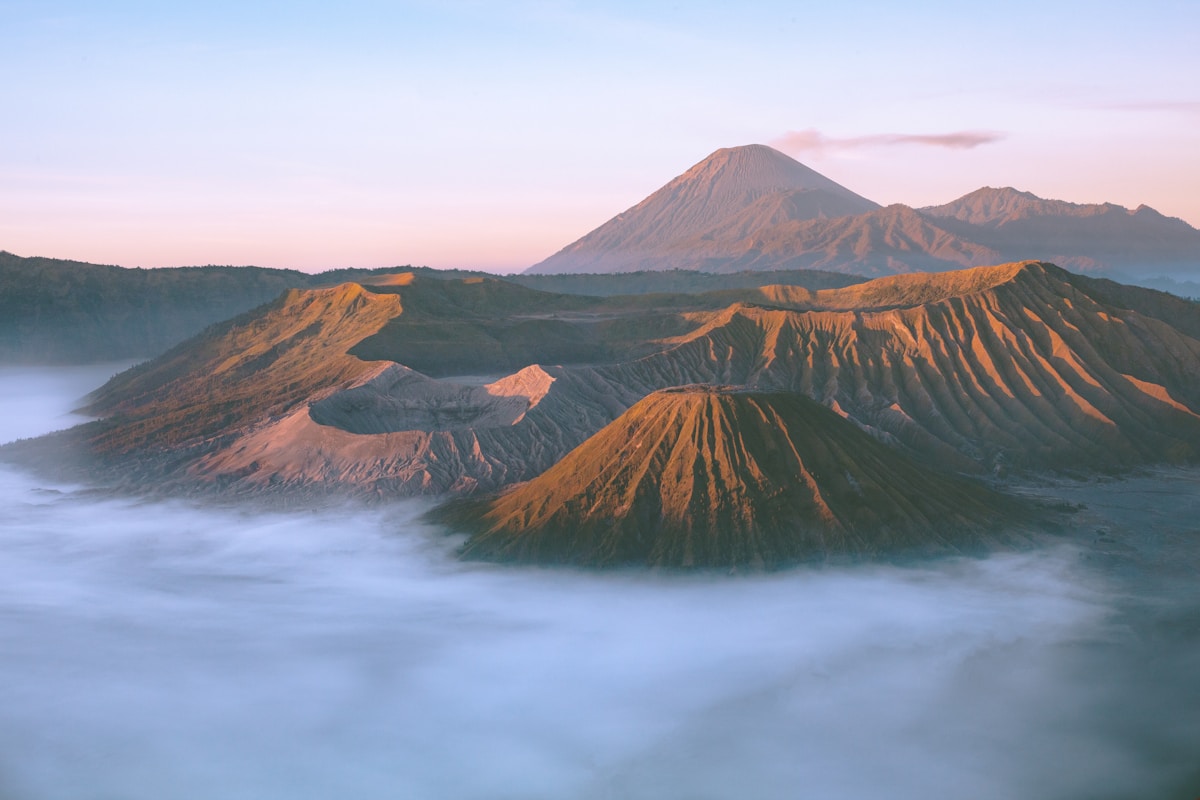
Dieng Plateau sits at approximately 2,000 metres above sea level in the Dieng Mountains of Central Java, roughly midway between Wonosobo to the south and the coast to the north. The name comes from the Javanese for “abode of the gods” (Di Hyang), reflecting the plateau’s significance in ancient Javanese Hindu civilisation - it contains some of the oldest surviving Hindu temples in Java, dating to the 7th–9th centuries CE. The landscape is unlike anywhere else on the island: a high, cool volcanic plateau with coloured sulphurous lakes, active craters emitting steam, terraced potato fields, and temperatures that drop to 5–10°C on clear nights. It is a day-trip destination from Yogyakarta or Wonosobo for most visitors, though staying overnight here gives access to early morning mist rising from the crater lakes, which is the most photogenic version of the plateau.
Orientation
The plateau’s main attractions are spread over several kilometres, so arriving by vehicle (hired car, motorcycle, or minibus) is strongly recommended. The small town of Dieng itself is at the plateau’s centre, surrounded by temples, craters, and lakes within 2–5 km in most directions. Most accommodation is in or immediately around this village. The landscape is primarily agricultural - potato and carica papaya cultivation at altitude - which gives it a working-landscape quality rather than a resort feel.
Key Attractions
Telaga Warna and Telaga Pengilon - Two adjacent crater lakes, each coloured by different concentrations of sulphur compounds. Telaga Warna (Coloured Lake) shifts between turquoise, green, and yellow depending on the angle of light and the season; Telaga Pengilon (Mirror Lake) sits adjacent and reflects the surrounding forest more clearly. A combined entry ticket covers both lakes: approximately IDR 20,000 as of 2026. A 1.5 km walking trail circles both lakes and passes several small caves with Hindu meditation chambers. Open approximately 7am–5pm. The lakes are at their most striking in early morning when mist sits over the water before burning off.
Candi Arjuna Complex - A group of five small Hindu temples from the 7th–9th centuries CE, the oldest surviving temples in Java and among the oldest in all of Indonesia. The temples are named after Pandava heroes from the Mahabharata: Arjuna, Semar, Puntadewa, Srikandi, and Sembadra. They are small by Indian or Cambodian standards but historically significant as early examples of Central Javanese stone architecture before the style fully matured at Prambanan and Borobudur. Entry approximately IDR 20,000 as of 2026, open 6am–6pm. The complex is surrounded by open plateau grassland, giving it a stark, elemental quality at sunrise.
Kawah Sikidang - An active mud volcano where you can walk close to bubbling grey-white mud pools and steam vents. The crater field is wide and constantly shifting - new bubbling points open and old ones cool. Entry approximately IDR 15,000 as of 2026, open 7am–5pm. The sulphur smell is significant; those with respiratory sensitivities should be cautious. The experience is more raw and less polished than the main volcanic craters at Tangkuban Perahu near Bandung. A local guide (available at the entrance for approximately IDR 50,000) is useful for navigating safely around active areas.
Sumur Jalatunda - An ancient ritual well approximately 4 km from the main cluster, believed to date from the same Hindu period as the Arjuna temples. It is a deep circular stone-lined shaft with water visible far below, surrounded by carved stonework. Less visited than the main sites; entry approximately IDR 10,000 as of 2026.
Sunrise from Bukit Sikunir - The most popular early morning activity at Dieng: climbing the small hill of Sikunir (2,263 m) before dawn to watch the sunrise over the plateau and surrounding volcanoes. The trailhead at Sembungan Village (the highest village in Java) is approximately 10 km from central Dieng. The walk takes 30–45 minutes to the summit. No entry fee for the hill itself; ojek transport from the village to the trailhead approximately IDR 20,000 as of 2026. The view on a clear morning - with Mount Sindoro, Sumbing, and occasionally Merapi visible - is the most striking highland panorama in Central Java outside of active volcano treks.
Hotels
Dieng Plateau Resort (mid-range) - The most comfortable accommodation option on the plateau, with heated rooms and highland views. Service is basic but the beds are warm and that matters considerably at this altitude on cold nights. From approximately USD 30 per night as of 2026.
Homestay Bu Jono (budget) - One of several family-run homestays in the village of Dieng that provide simple rooms, blankets, and breakfast. These homestays represent the most common accommodation choice for visitors staying overnight, offering authenticity and a chance to eat home-cooked highland food. From approximately IDR 150,000 per night as of 2026. Advance booking is advisable during Indonesian school holidays.
Restaurants
Local warungs - The plateau’s food scene is almost entirely composed of small family warungs in and around Dieng village. The local specialty is mie ongklok, a Wonosobo-region noodle dish of thick wheat noodles in a starch-thickened onion broth with tofu, cabbage, and sometimes dried shrimp - warming and filling at altitude. Approximately IDR 15,000–25,000 per bowl as of 2026. Warungs are open from morning through early evening; most close by 7pm, earlier in cold or wet weather.
Carica fruit products - Carica papaya (mountain papaya) is one of the plateau’s most important agricultural products and only grows successfully at altitude. It is sold in local shops preserved in syrup (approximately IDR 15,000–30,000 per jar) and as fresh juice at warung stalls. It has a distinct tart-sweet flavour quite different from lowland papaya. Worth trying and easy to carry home as a purchase.
For hotel recommendations across all budgets, see our where to stay in Dieng Plateau guide.
Getting There and Getting Around
From Wonosobo - The most direct access. Shared minibuses (angkot) run from Wonosobo’s main bus terminal to Dieng throughout the day, taking approximately 2 hours and costing approximately IDR 15,000–25,000 as of 2026. Wonosobo itself is served by buses from Yogyakarta, Semarang, and Purwokerto.
From Yogyakarta - The most common approach for international visitors. Direct travel takes approximately 3.5 hours by a combination of bus or train to Wonosobo and then minibus to Dieng. Alternatively, hired car or tour packages from Yogyakarta cover the journey directly in approximately 3.5–4 hours, from approximately IDR 500,000–700,000 for a return day trip with driver as of 2026. The road up from Wonosobo is winding and steep in places; if you are prone to motion sickness, sit at the front of the minibus.
On the plateau - Motorcycle rental is available in Dieng village at approximately IDR 80,000–100,000 per day as of 2026 and is the most flexible way to reach the dispersed attractions. Ojek rides to individual sites cost IDR 15,000–30,000 each way. Walking between sites is possible but tiring given the distances.
Best Time to Visit
The plateau is accessible year-round but notably cold from June through August, when night temperatures can drop to around 5°C. The dry season (April–October) offers clearer skies and better visibility from Sikunir. The wet season mist can be dramatic but often obscures the views from sunrise viewpoints. Clear nights on the plateau are genuinely cold - bring layers even if visiting in the Javanese summer.
Practical Tips
Altitude acclimatisation is not required at 2,000 metres, but the cold does come as a genuine shock to visitors arriving from coastal Java. A fleece or warm jacket is essential for early morning activities and nights, even in October. The crater areas around Kawah Sikidang emit sulphur fumes at low concentrations; people with asthma should approach with caution and be ready to step back if the wind changes direction toward you. Potato chips made from local Dieng potatoes are sold everywhere on the plateau and worth buying as a snack.
Browse tours and day trips in Dieng Plateau - a half-day with a local guide is one of the most efficient ways to get oriented on arrival. For airport transfers into Dieng Plateau, Kiwitaxi offers fixed-price pickups from the main airports - no surge pricing and the driver meets you at arrivals.
More Central Java Guides
- Yogyakarta travel guide - the nearest city to Dieng: Borobudur, Prambanan, and Java’s cultural capital
- Yogyakarta 3-day itinerary - how to combine Borobudur, Prambanan, and a Dieng day trip
- Borobudur guide - the world’s largest Buddhist monument, 3 hours south of Dieng
- Kawah Ijen guide - Java’s other famous crater trek, in East Java near Banyuwangi
- 1-week Java cultural itinerary - the full Java route including Dieng, Yogyakarta, and Solo
Book an experience
Top experiences in Dieng Plateau
Explore the best tours and activities in Dieng Plateau , with instant confirmation and free cancellation on most bookings.