Vietnam and Indonesia sit at opposite ends of Southeast Asia’s most popular travel destinations - one a long, thin country running the eastern edge of the Indochina Peninsula, the other an enormous archipelago straddling the equator. Choosing between them depends on what you want from a trip.
Quick Verdict
| Factor | Indonesia | Vietnam |
|---|---|---|
| Cost (budget daily) | IDR 250,000–400,000 / ~USD 16–25 | VND 300,000–600,000 / ~USD 12–24 |
| Visa | 30-day visa-free (most passports) | 45-day visa-free (many passports) |
| Street food | Exceptional (diverse regional) | World-class (internationally famous) |
| Beaches | Outstanding, diverse, many remote | Good, popular, seasonality issue |
| Culture | Hindu + Islamic + animist mix | Buddhist + Confucian + French colonial |
| Diving | World-class | Good (Phu Quoc, Con Dao) |
| Historical sites | Borobudur, Prambanan, Toraja | Hoi An, Hue, My Son, Cu Chi Tunnels |
| Backpacker circuit | Less defined | Highly established |
| Size | Vast (17,000+ islands) | Long and linear |
| Best for | Beaches, diving, Bali, adventure | Food, history, backpacker circuit |
Cost of Travel
Both countries are affordable for Western travellers, with slightly different budget structures.
Indonesia costs vary enormously by location. Bali’s tourist zones (Seminyak, Ubud) run IDR 350,000–600,000 per day at the budget end. Remote eastern Indonesia (Raja Ampat, Flores) can cost IDR 800,000–1,500,000 per day due to transport and accommodation constraints. Off the beaten path in Java (Yogyakarta, Solo), IDR 200,000–350,000 per day is very doable.
Vietnam’s main tourist trail is similarly priced. Hanoi and Ho Chi Minh City offer dormitory beds from VND 120,000 per night and street food meals from VND 30,000. Hoi An is slightly pricier. The tourist bus network (open-bus tickets) makes budget travel efficient.
For a 3-week trip, the total cost is broadly comparable. Vietnam’s slightly lower accommodation prices in cities are offset by Indonesia’s lower costs for food in non-tourist areas.
See our Indonesia travel costs guide for full breakdowns.
Visa Requirements
Indonesia offers 30-day visa-free entry for 169 eligible nationalities. Extensions are possible (IDR 500,000 for 30 more days at immigration). The full Indonesia visa guide covers all options including longer-stay visas.
Vietnam allows 45-day visa-free entry for many Western nationalities (UK, EU, US, Canada, Australia - as of 2025). The e-visa system handles longer stays easily. Vietnam’s generous visa rules and the 45-day window make it very backpacker-friendly.
Vietnam has a slight visa edge for longer trips - the 45-day window versus Indonesia’s 30 days makes a difference if you’re spending a month in one country.
Food Culture
Vietnamese food is arguably the most internationally celebrated cuisine in Southeast Asia. Pho (beef noodle soup), banh mi (Vietnamese baguette sandwich), bun cha (grilled pork with noodles), cao lau (Hoi An specialty), banh xeo (sizzling crepes) and com tam (broken rice) are all extraordinary. Each region has distinct specialties - northern cooking is lighter and less sweet than southern. The coffee culture (ca phe trung - egg coffee, ca phe sua da - iced coffee with condensed milk) is a travel highlight in itself.
Indonesian food is equally rich but more regionally fragmented. Rendang from West Sumatra (slow-cooked beef in spiced coconut milk), nasi goreng (fried rice, found everywhere but best from a street cart at midnight), satay with peanut sauce, gado-gado (vegetable salad with peanut dressing), soto (aromatic soup with multiple regional variants) and tempeh dishes are all world-class. Bali’s food - babi guling (suckling pig), bebek betutu (slow-cooked duck), lawar (spiced meat salad) - is distinct from Javanese, Padang or Manadonese cuisine.
Neither country loses this category - the right answer depends on which flavour profiles appeal.
Beaches and Islands
Vietnam’s coastline runs roughly 3,400 km and has several excellent beach destinations: Phu Quoc in the Gulf of Thailand (soft white sand, good snorkelling, rapidly developing); Con Dao (remote, pristine, excellent sea turtles); Ninh Van Bay (luxury only); An Bang near Hoi An (laid-back, local atmosphere). The major constraint is seasonality - the central coast is dry from March–September but wet from October–February, while the south is better from November–April.
Indonesia’s 17,000 islands include some of the world’s best beaches - and many see very few visitors. The Gili Islands near Lombok are postcard-perfect. Lombok’s south coast (Mawun, Selong Belanak, Tanjung Aan) is exceptional. The Banda Islands in Maluku, the Derawan Islands in Borneo, and the pink sand beaches of Komodo are all stunning and far less visited than comparable Thai or Vietnamese sites.
Indonesia wins on beach quantity, variety and the availability of genuinely uncrowded options.
History and Cultural Sites
Vietnam’s historical depth comes partly from its complex relationship with colonial and military history. Hoi An’s Ancient Town (UNESCO-listed, largely intact 15th–19th century merchant town) is Southeast Asia’s best-preserved historic urban area. Hue’s Imperial Citadel and royal tombs offer imperial Vietnamese history. The Cu Chi Tunnels and War Remnants Museum in Ho Chi Minh City are sobering and essential. My Son Hindu temple complex (Cham civilisation) adds another layer.
Indonesia’s most significant historical sites are Java’s temple complexes. Borobudur - the world’s largest Buddhist monument, built in the 9th century - is unambiguously one of Asia’s great wonders. Prambanan is the largest Hindu temple compound in Southeast Asia. Bali’s Hindu temples (Besakih, Tanah Lot, Uluwatu) are dramatic and active. For living cultural complexity, Tana Toraja in Sulawesi has no equivalent anywhere in Southeast Asia.
Both countries have extraordinary historical depth; the nature of that history differs significantly.
Diving and Snorkelling
Indonesia wins this comparison clearly. It sits within the Coral Triangle - the global centre of marine biodiversity - and contains the world’s best dive sites at Raja Ampat, Komodo, Bunaken and Lembeh Strait.
Vietnam’s diving is good but more limited. Phu Quoc has decent snorkelling. Con Dao has clean water and sea turtle nesting sites. Nha Trang has dive schools and accessible reefs. None of these compete with Indonesia’s top sites.
If diving is even a small part of your itinerary, Indonesia is the right choice.
Backpacker Circuit
Vietnam has Southeast Asia’s most efficient linear backpacker route: Hanoi → Halong Bay cruise → Ninh Binh → Hue → Da Nang → Hoi An → Nha Trang → Ho Chi Minh City → Mekong Delta. This can be done in 3 weeks, is bookable with open bus tickets, and has hostels and cafés at every stop catering to the international backpacker crowd.
Indonesia is more complex because it’s an archipelago - each island requires a decision. The easiest circuit: fly into Bali, spend 5–7 days (Ubud + Seminyak or Canggu), take a fast boat to the Gili Islands (2–3 nights), cross to Lombok (2 nights), fly back to Bali and home. This is manageable in 2 weeks. Going further east (Flores, Sulawesi, Papua) requires more time, planning and budget - and is enormously rewarding.
Who Should Visit Where
Visit Indonesia if:
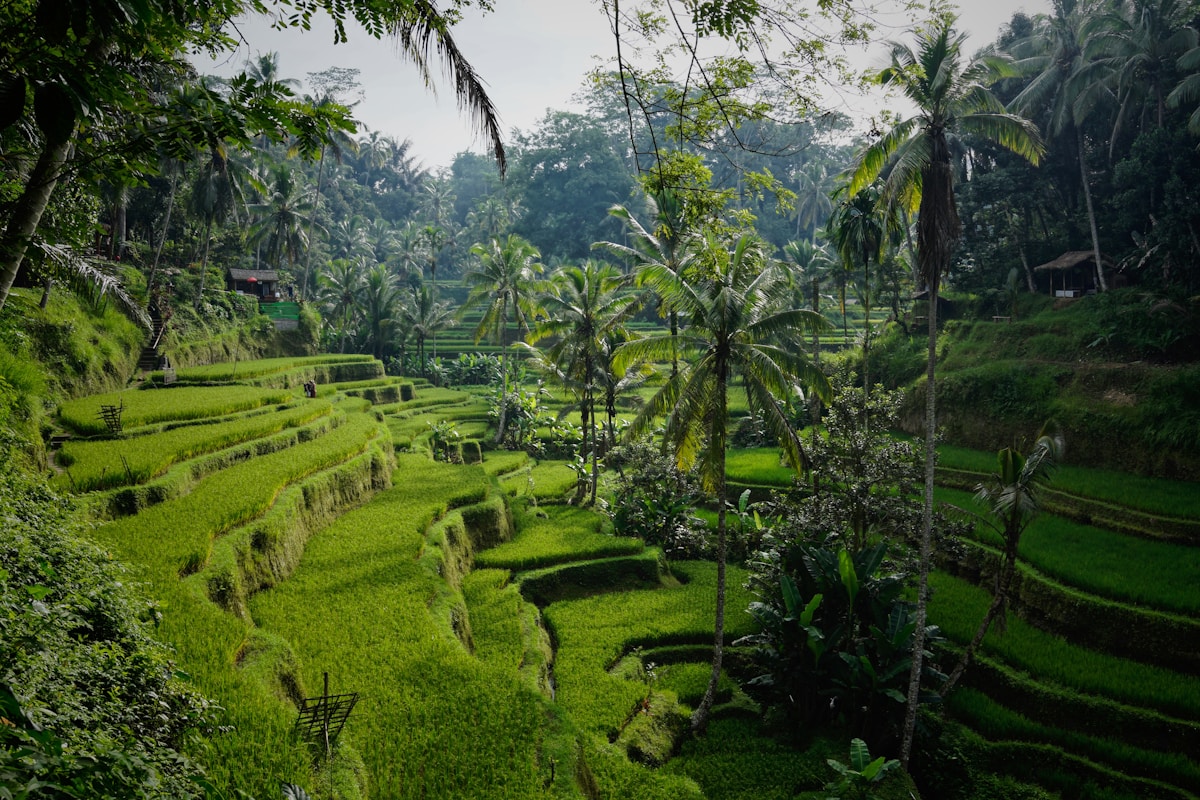
- Bali’s Hindu culture and rice-field landscapes are a specific draw
- Diving or snorkelling is a priority
- You want uncrowded beaches and remote destinations
- You’ve done Vietnam (or Thailand) and want something more expansive
Visit Vietnam if:
- This is your first Southeast Asia trip - the linear circuit is the easiest introduction
- Food is a major motivation (Vietnamese cuisine is more immediately accessible)
- You want a mix of beach, history and city in one manageable route
- You have 3 weeks and want to cover significant ground efficiently
Both countries reward repeat visits. Vietnam’s north-to-south run is one of the best travel experiences in Southeast Asia; Indonesia’s scale means you can always find a corner you haven’t explored.
Bali day tours are the easiest way to compare the island’s main areas before committing to a neighbourhood - most operators run flexible pick-and-drop routes. Lombok tours and experiences range from Rinjani crater hikes to Gili island-hopping - a contrast to Bali’s temple-focused itineraries.
Plan Your Indonesia Trip
- First time in Indonesia - what to know before you land: visa, SIM cards, money, and cultural customs
- 2 weeks in Indonesia - the classic two-week route covering Bali, Lombok, and the Gili Islands
- Indonesia travel costs - a budget guide comparing Indonesia and Vietnam on accommodation, food, and transport
- Bali island guide - Indonesia’s most visited island: where to stay, what to do, and how to plan your time
- Diving in Indonesia - why Indonesia’s underwater world makes it the standout in Southeast Asia
- Best time to visit Indonesia - when to visit Bali, Komodo, and Raja Ampat based on weather and seasons
More Comparisons
- Indonesia vs Thailand - the other big Southeast Asia comparison
- Bali vs Java - choosing between Indonesia’s two main destinations
- Ubud vs Seminyak - picking your Bali base once you’ve chosen Indonesia
- Bali or Indonesia - how much of Indonesia to cover on one trip
Ready to Plan Your Trip?
See our itineraries for inspiration:
- One Week in Indonesia - Bali, Nusa Penida, Gili Islands and Lombok
- 2 Weeks in Indonesia - the island-hopping route from Bali east
- 10 Days in Indonesia - Bali, Java and Komodo combined
🏨 Search hotels in Indonesia - Search hotels in Vietnam
More Comparisons
- Indonesia vs Thailand - another popular Southeast Asia alternative compared
- Bali vs Java - if Indonesia wins, this is the first call to make
- Bali vs Lombok - narrowing down Indonesia’s western islands
- Bali or Indonesia - the full destination planner for first-timers
Plan Your Trip
✈️ Book your flights to Indonesia 🛡️ Get travel insurance 📱 Stay connected with an eSIM 🚗 Rent a car