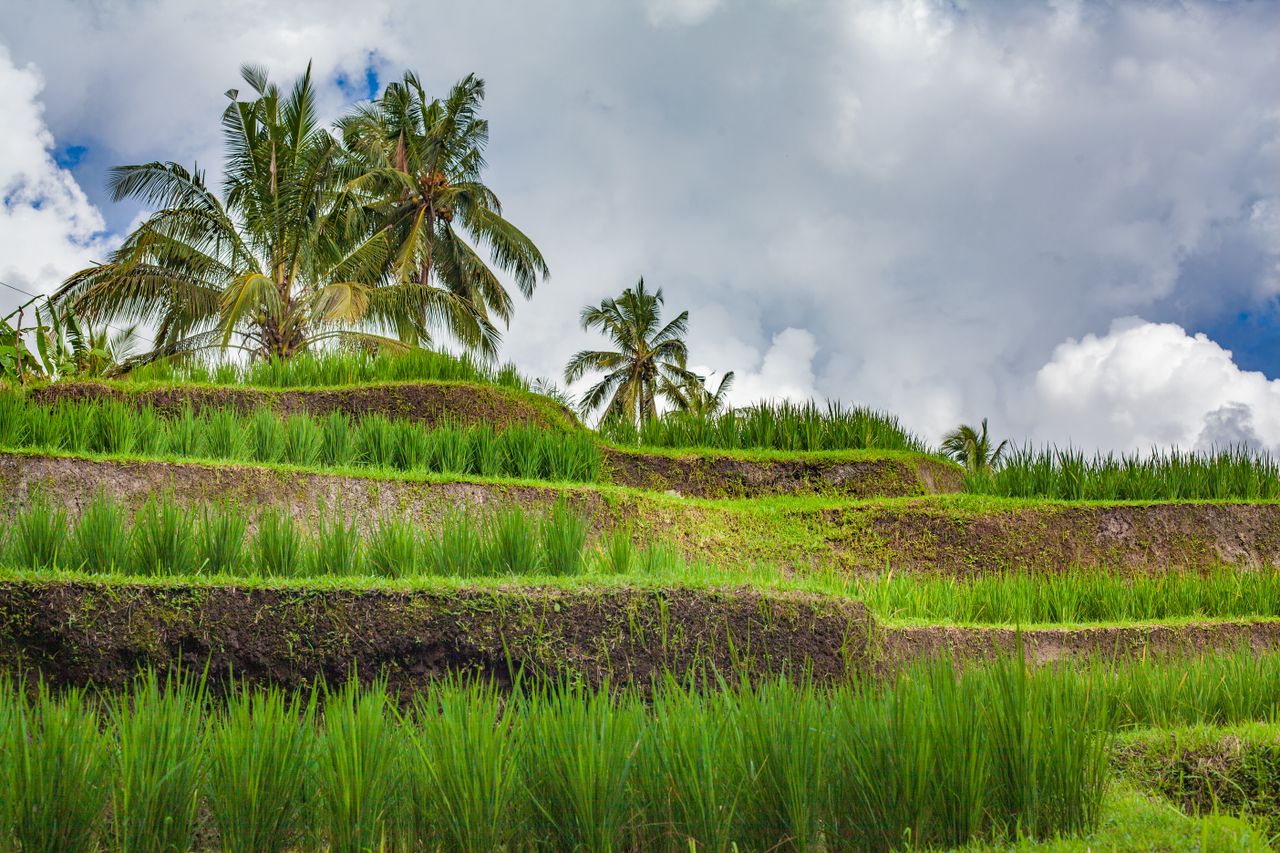
January is the wettest month on the Bali calendar in most years, and it is also one of the best-value months to be here. The island is at its greenest, waterfalls are running at full force, and once the New Year crowds leave in the first week, rooms and villas get noticeably cheaper. If you can live with rain, it is a rewarding month. If you cannot, read the sections below on where it rains least.
For the all-Indonesia picture this month, see our visiting Indonesia in January guide. This page stays on Bali: the island’s own crowd pattern, festivals, surf and microclimates. The full year is in our best time to visit Bali month-by-month guide.
Weather: Coast, Ubud and Kintamani Are Three Different Months
Rainfall in the south (Kuta, Seminyak, Canggu) runs at roughly 300-350mm in January, with temperatures of 27-31C and humidity around 85%. Ubud and the central hills receive more, and showers there tend to start earlier and last longer. The north and northeast coast (Lovina, Amed, Tulamben) is markedly drier, often under half the southern total.
Kintamani and the Batur caldera, at around 1,500m, sit in cloud for much of the month. Daytime highs are 20-24C and nights drop to around 15C, so a light fleece is useful. Sunrise treks on Mount Batur still run, but views from the summit are a coin toss; if the clear sunrise is the point of the trip, April to October is a safer bet. Official forecasts are published by BMKG, Indonesia’s meteorological agency.
The pattern is easier to plan around than it sounds. Mornings are often bright, so schedule walks, temples and terraces before noon and keep afternoons for cooking classes, spas and cafes. Poor drainage means some roads in Seminyak, Legian and Canggu flood briefly after heavy downpours, which slows scooters and taxis more than it ruins a day.
January 2027 Update
Galungan on 13 January and Kuningan on 23 January 2027 are confirmed, and the national holiday of Isra Mikraj falls on Tuesday 5 January 2027, which can push domestic visitors toward the island in the first week. The foreign tourist levy is still IDR 150,000 as of late 2026, so budget for it on arrival. Book Galungan-week villas in Ubud and Canggu early, since local families travel too.
Galungan and Kuningan in January 2027
Because the Pawukon calendar repeats every 210 days, Galungan moves around the Gregorian year. In 2027 it falls on 13 January, with Kuningan ten days later on 23 January. If you are on the island then, every village road is lined with tall bamboo penjor poles, families go to temple in their best traditional clothes, and the whole island feels like a holiday. Some shops and warung close for a day or two, and traffic around family temples is heavy. Full detail is on our Bali festivals page. In 2026 there is no Galungan in January.
Crowds, Prices and School Holidays
The Christmas-New Year peak ends around 5 January, and rates drop quickly. Australian school holidays finish in late January, so the first half of the month still sees families from Perth, Melbourne and Sydney, particularly in Sanur, Nusa Dua and Seminyak. After that the island is quiet. In our experience this is the cheapest month for a mid-range villa in Canggu or Ubud, often 30-40% below July and August rates as of 2026. The best place to compare is our where to stay in Ubud and where to stay in Canggu guides.
Surf, Diving and the Sea
The Bukit Peninsula (Uluwatu, Bingin, Padang Padang) is out of its best season, with onshore winds and smaller, messier swell; Kuta and Legian beach breaks stay workable for beginners. See our surfing in Bali guide for breaks that hold up in the wet months. Fast boat crossings to Nusa Penida can be rough or cancelled when swell is up, so leave a buffer day if you have a flight to catch.
Diving is best on the northeast coast. Tulamben and Amed keep decent visibility through the wet season, while the south coast is clouded by runoff. See our Bali diving guide.
What to Do on Wet Days
Waterfalls are at their best now. Tegenungan and the north Bali falls pour at full volume, and our Bali waterfalls guide covers which are safest after rain. Rice terraces at Tegallalang and Jatiluwih are bright green. For indoor days, book a cooking class in Ubud or browse Bali tours with free cancellation.
Packing and Booking Tips for January
Pack a light waterproof jacket, quick-dry clothing and sandals with grip, since temple steps and waterfall paths turn slick. A dry bag is worth having for scooter rides. Avoid renting a scooter in the heaviest weeks if you are not experienced; wet roads cause most visitor accidents, and our Bali scooter rental guide covers licence and insurance rules. Book flexible-cancellation rooms, since a bad-weather week can change plans, and keep one buffer day before any flight home.
Is January Right for You?
Come in January for low prices, empty temples, green landscapes and (in 2027) Galungan. Skip it if you need reliable beach weather or a clear Batur sunrise. Choose Amed or Lovina as a base if you want to see less rain.