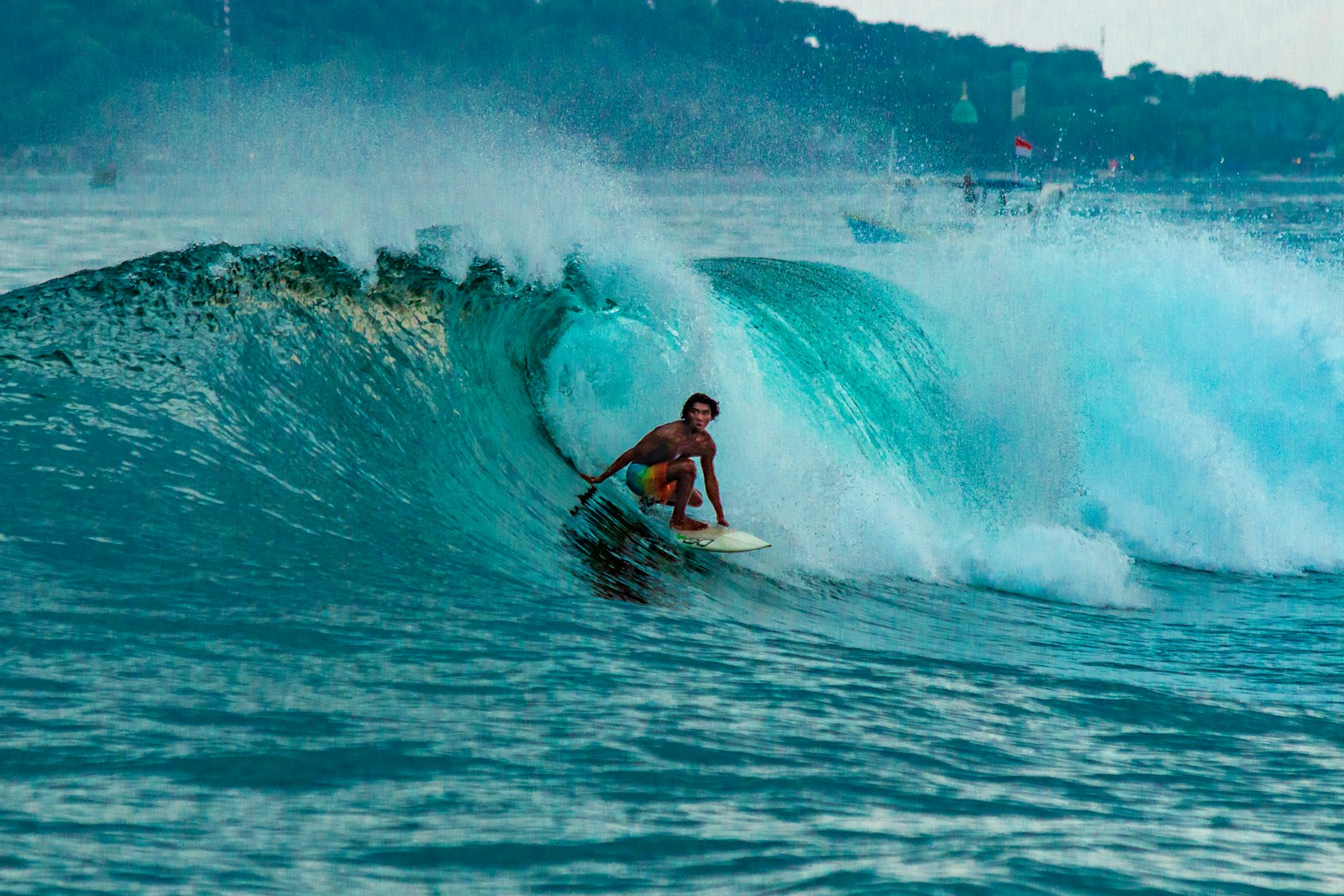
Bali is one of the most reliable surfing destinations in Southeast Asia - warm water, year-round waves, dozens of quality breaks within reach of the main tourist areas, and a surf school on almost every corner. Whether you have never stood on a board or you are chasing Uluwatu barrels, the island has something for every skill level.
This guide covers the four main surf zones - Kuta, Seminyak, Canggu and Uluwatu - with lesson prices, seasonal conditions, and the practical details that matter when booking.
Kuta Beach - Best for Beginners
Why Kuta Works for Learning
Kuta is where most people in Bali learn to surf, and with good reason. The beach is wide and sandy, the waves are gentle shore breaks with a gradual paddle-out, and the high concentration of surf schools keeps prices competitive. The water is warm (27–30°C year-round) and a broken surfboard or wipeout lands you in sand rather than coral.
The trade-off is crowds. On weekend mornings the lineup gets busy with both learners and local surfers. Arrive early (07:00–08:00) or go mid-week for more space.
Surf Schools at Kuta
Schools are clustered along the beach between the Beachwalk Shopping Center and Legian Street. Look for ATSI (Association of Tourism Surf Indonesia) accreditation on the board or certificate - this is the recognised standard for Indonesian surf instructors.
| School Type | Typical Price | Session Length |
|---|---|---|
| Group lesson (2–5 students) | IDR 250,000–350,000 | 2 hours |
| Private 1-on-1 lesson | IDR 400,000–550,000 | 1.5–2 hours |
| Board hire only | IDR 50,000–75,000 | Per hour |
| 3-day beginner course | IDR 700,000–1,000,000 | 3 x 2 hours |
All prices include board and rash vest. Prices as of 2026.
Recommended operators: Pro Surf School Bali (near Inna Kuta Heritage hotel), Rip Curl School of Surf at Kuta, and Odysseys Surf School at Legian are all well-established with English-speaking instructors.
Wave Conditions
Kuta faces southwest and catches south swells throughout the year. Waves are typically 0.5–1.5 metres, clean and slow - ideal for learning. During strong south swells (June–August) the waves can exceed 2 metres and become less suitable for absolute beginners.
Best tide: Mid to incoming tide produces the cleanest shape. Avoid surfing at full low tide when sandbanks shift.
Seminyak Beach - Beginners to Improvers
The Step Up from Kuta
Seminyak Beach, immediately north of Kuta, offers similar wave types but with slightly more power and speed. If you have had a few lessons at Kuta and want more challenge without committing to reef, Seminyak is the next logical step.
The beach here is more upmarket - beach clubs including Ku De Ta and Potato Head sit behind the break - but the surf schools are still accessible and prices are comparable to Kuta.
Surf Schools at Seminyak
Several respected schools operate from the beach access points on Jalan Pantai Seminyak and the beach clubs. Orion Surf School and Wategos Surf School both run quality beginner and intermediate programs.
Group lessons cost approximately IDR 300,000–400,000 for a 2-hour session. Private sessions run IDR 450,000–600,000.
Wave Conditions
Waves at Seminyak are beach breaks, typically 1–2 metres during the dry season swell. The paddle-out is longer than at Kuta and the waves break more steeply, so you need a couple of lessons under your belt before coming here.
Canggu - For Improvers and Intermediate Surfers
The Canggu Scene
Canggu has shifted from a quiet rice-field village to Bali’s surf-and-lifestyle hub over the past decade, and the waves are the main reason serious learners gravitate here. The two main breaks - Echo Beach and Batu Bolong - offer reef and beach break options for surfers who want more challenge than Kuta provides.
The town itself is built around surf culture. You are never far from a surf shop, a board-shaping shed, or a café full of travellers comparing boards.
Echo Beach
Echo Beach (also called Batu Mejan) is Canggu’s longest-established surf spot - a consistent beach break with waves typically 1–1.5 metres in normal conditions and 2+ metres on solid south swells. The left-hander here can be particularly good during June–August swells. Reef sections on the north end are for experienced surfers only.
Batu Bolong
Batu Bolong is the more sheltered of the two and works better in offshore conditions (mornings). Waves are generally smaller and less powerful, making it popular with intermediate surfers progressing from beach break beginners to more shaped waves.
Surf Schools at Canggu
| School | Location | Group Lesson Price |
|---|---|---|
| Dojo Bali Surf School | Batu Bolong | IDR 350,000–450,000 |
| Canggu Surf School | Echo Beach | IDR 300,000–400,000 |
| Rapture Surf Camp | Batu Bolong | IDR 400,000+ (includes accommodation options) |
Multi-day packages are available at most Canggu schools from around IDR 1,500,000–2,000,000 for a 5-session course.
Board Hire in Canggu
Independent board hire shops on the main beach roads charge IDR 75,000–150,000 per day for a longboard or mini-mal. Most shops also do helmet and rash vest hire. Day rental versus school lesson is a false economy for those still developing - a session with an instructor in the water is worth more than four hours alone on a longboard.
Uluwatu - Expert Reef Break
Who Uluwatu is For
Uluwatu is the surf spot that put Bali on the global surf map. Located on the southwestern tip of the Bukit Peninsula, this is a powerful left-hand reef break over shallow coral that consistently produces barrelling waves from 1–4 metres. It is not suitable for beginners or improvers. If you have fewer than two years of ocean surfing experience, this is not your break.
For experienced surfers, Uluwatu offers some of the best waves in Indonesia from June to October when south swells are consistent and offshore trade winds hold the faces open.
Wave Characteristics
- Break type: Left-hand reef break
- Wave height: Typically 1.5–3 metres May–September; smaller and less consistent November–March
- Best conditions: Morning, south swell, offshore southeast wind
- Hazards: Shallow reef, strong rip currents, long paddle-out through the cave passage
The cave entry at Uluwatu is famous - a steep staircase cut through the cliff leads to a small black sand beach, and the paddle-out is through a cave arch at high tide. Lose your board here and you are looking at a long swim.
Nearby Expert Breaks
Uluwatu is surrounded by several other quality reef breaks worth knowing:
Padang Padang - A short left-hand barrel over shallow reef. One of Bali’s most photogenic waves (Eat Pray Love was filmed here). Very shallow at low tide, crowded when working.
Bingin - A more forgiving short left, suitable for advanced intermediate surfers, and home to some of Bali’s most affordable cliffside accommodation.
Impossibles - Three connecting lefts south of Padang Padang. Longer ride, more open face, better for advanced surfers who can place themselves well in the lineup.
Getting to Uluwatu
From Kuta: 30–40 minutes by scooter or car (18 km). Grab and Gojek are available but return rides from the car park can take time to arrive. Scooter hire for the day costs IDR 70,000–100,000 from Kuta.
Surf Season Summary
| Season | Months | Best Spots | Conditions |
|---|---|---|---|
| Dry season peak | May–October | Uluwatu, Padang Padang, Bingin | Consistent south swells, offshore winds on Bukit |
| Shoulder | November, April | Kuta, Canggu, Seminyak | Variable, good value, less crowded |
| Wet season | December–March | Kuta, Canggu | Onshore winds affect shape; smaller cleaner days possible |
The dry season (particularly June–September) is when the Bukit Peninsula comes alive with serious surf. The same period sees the worst crowds and highest prices for accommodation. For learners, any month works at Kuta - the beginner-friendly conditions are more consistent than the swell.
Book a Surfing Lesson via GetYourGuide
Prices are starting rates confirmed from GetYourGuide Bali listings as of August 2026 - check current availability before booking.
| Tour | Duration | From |
|---|---|---|
| Canggu Surf School Bali | 2 hours | $21 |
| Surf Lesson at Batu Bolong, Canggu | 2 hours | $26 |
| Bali: Beginner & Intermediate Surfing Lesson in Canggu | 2 hours | $28 |
| Private Beginner Surf Lesson in Canggu | 2 hours | $29 |
Browse all surf lessons in Bali →
Practical Notes
Board bags and travel: Bali’s main surf shops (Quiksilver, Rip Curl, Billabong, local shaping bays in Canggu) stock a wide range. Board hire is widely available, so there is no need to travel with your own board unless you are very particular about your quiver.
Water safety: Always check current surf reports (Surfline, Magic Seaweed, or local surf shops post daily conditions). Never surf alone at reef breaks. At Uluwatu and Padang Padang, a local guide or surf buddy is worth hiring if you are unfamiliar with the break - approximately IDR 300,000–400,000 for a guided surf session with someone who knows the rips.
Respect the lineup: Bali’s surf breaks, particularly Uluwatu and Padang Padang, have established local surfing communities. Follow right-of-way rules (nearest to the peak has priority), do not drop in, and learn basic surf etiquette before paddling out at any reef break.
Sun protection: Equatorial sun in the water is intense. A rash vest or lycra suit is essential; reef-safe SPF50+ sunscreen is available at every surf shop on the island.