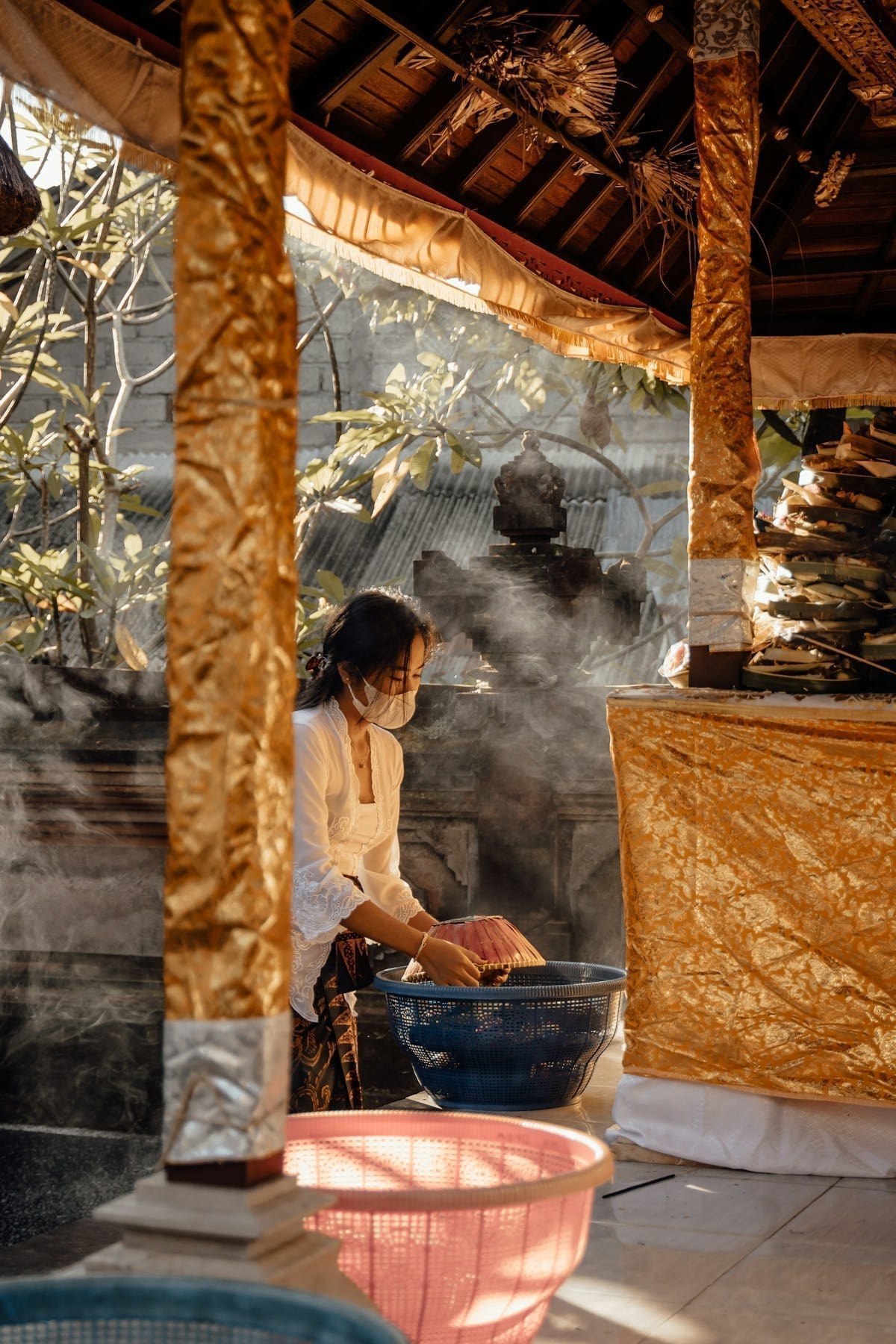
A Bali cooking class is one of the most rewarding half-days you can spend on the island. You visit a local market at dawn, learn to grind fresh spice pastes by hand, and sit down to eat a five-dish lunch you cooked yourself - all within a few hours. The experience is widely available across the island, but the quality varies sharply between schools, areas, and price brackets. Here’s what you need to know to book wisely.
Ubud vs Seminyak: Which Area is Worth It?
Ubud is the undisputed centre of Balinese cooking classes and the area we recommend as a first choice. The surrounding hills supply organic herbs, turmeric, galangal, and lemongrass that never reach supermarket shelves. Most Ubud schools include a morning visit to Pasar Ubud or a smaller village market, where you shop alongside locals and learn to identify ingredients before you cook them. The kitchens are typically open-sided pavilions overlooking rice paddies or jungle, which adds an atmosphere that south Bali can’t replicate.
Seminyak, Canggu, and Kuta are the practical choice if you’re based in the south and don’t want to spend three hours driving. The cooking is genuine, but market visits are often skipped in favour of pre-prepped ingredients, and the setting tends to be a hotel kitchen or rooftop terrace. For first-time visitors who want the full cultural experience, the two-hour drive to Ubud is worth it.
Top Cooking Schools in Ubud
Casa Luna Cooking School
Casa Luna is the oldest and most respected cooking school in Ubud, founded by Janet DeNeefe in 1992 and closely tied to the Ubud Food Festival. Classes run Tuesday through Saturday mornings and focus on traditional Balinese cuisine: satay lilit, lawar, bebek betutu, black rice pudding, and fresh jamu drinks.
Price: Approximately IDR 575,000 (around USD 35) per person for the standard half-day class
Duration: 5 hours including market visit
What’s included: Market tour, all ingredients, written recipes, and a sit-down lunch with the dishes you cooked
Group size: Maximum 15 participants
Booking: Reserve at least 48 hours ahead; classes sell out quickly in high season (July–August, December)
Paon Bali Cooking Class
Paon (“kitchen” in Balinese) is run by Puspa and her husband from their family home in the Ubud hills. It’s smaller and more personal than Casa Luna - typically 2–8 participants - and covers a wider range of traditional recipes including base genep (the foundational Balinese spice paste), lawar, and traditional desserts made with palm sugar.
Price: Approximately IDR 500,000 (around USD 30) per person
Duration: 5–6 hours including market visit at Pasar Ubud
What’s included: Market tour, recipes, and a communal lunch
Best for: Travellers who want genuine home-kitchen instruction rather than a commercial setup
Lobong Culinary Experience
Lobong is widely praised for its attention to technique and its focus on the cultural story behind each dish. Chef Wayan and his team guide participants through how the same base spice paste (base gede) transforms into six entirely different dishes depending on preparation method.
Price: Approximately IDR 650,000 (around USD 40) per person
Duration: 5 hours
What’s included: Market tour, spice garden walk, cooking session, lunch
Best for: Food-curious travellers who want explanations, not just technique
Cooking Classes in South Bali (Seminyak, Canggu, Kerobokan)
The Spice of Life, Seminyak
Conveniently located for south Bali visitors, The Spice of Life runs classes from a well-equipped private kitchen. The curriculum covers six to eight Balinese and Indonesian dishes; no market visit is included, but the instructors are professional and the pace suits complete beginners.
Price: Approximately IDR 750,000 (around USD 45) per person
Duration: 4 hours
What’s included: All ingredients, recipes, and lunch
Bali Asli, Candidasa
Slightly off the usual tourist trail in east Bali, Bali Asli offers an outdoor cooking experience over wood fires using heirloom Balinese ingredients. This is the most traditional format available and suits travellers interested in the historical context of Balinese cooking.
Price: Approximately IDR 1,000,000 (around USD 60) per person
Duration: Full day (6–8 hours)
What’s included: Market visit, spice garden walk, fire-cooking session, full lunch
Half-Day vs Full-Day Classes
Half-day classes (4–5 hours) are the most popular format. You arrive around 8 AM, visit a morning market, cook 5–7 dishes, and eat lunch by 1 PM. This suits most visitors with packed itineraries and is the right choice for a first cooking class experience.
Full-day classes (6–8 hours) are available at a handful of schools (Bali Asli, some Casa Luna premium dates) and typically cover 10–12 dishes including more complex preparations like bebek betutu or traditional ceremonial food. These suit dedicated food enthusiasts and travellers spending several days in Bali.
Evening classes focused on two or three street-food dishes run at a few schools in Seminyak and Ubud. Duration is typically 2.5–3 hours and prices start around IDR 350,000 (USD 21). Good option if your day is already full.
What to Expect at a Balinese Cooking Class
Most half-day classes follow a similar structure:
-
Market visit (7–8 AM): You meet at the school and transfer to a local market. The instructor identifies ingredients, explains their role in Balinese cooking, and you shop together. Budget around 30–45 minutes.
-
Kitchen prep (8:30–9 AM): Back at the kitchen, you learn to peel, chop, and grind fresh spices using a traditional stone mortar (cobek). This is the physically most demanding part - base genep paste requires sustained grinding.
-
Cooking session (9 AM–noon): Dishes are made in sequence, usually starting with simpler preparations (tempeh, tofu, sambal) and building to more complex ones (satay lilit moulded onto lemongrass sticks, rendang cooked down slowly).
-
Lunch (noon–1 PM): You eat everything you cooked. Most schools serve this family-style with rice and additional sides provided by the kitchen.
What’s Typically Included
At most reputable schools, the stated price covers:
- Market visit transport (shared vehicle or short walk)
- All ingredients
- Written recipes in English to take home
- Sit-down lunch with everything you cooked
- Tea, water, and coffee throughout
What is usually not included: hotel pick-up/drop-off (some schools offer this as an add-on for IDR 50,000–100,000 / USD 3–6), alcoholic drinks, and premium dish upgrades (lobster, duck) charged at market rate.
Difficulty Level
Balinese cooking classes are designed to be accessible regardless of your kitchen experience. The most physically demanding element is grinding spice paste by hand - expect 10–15 minutes of sustained work. All knife skills are guided. If you have a physical limitation that makes standing or hand-grinding difficult, inform the school when booking and they will accommodate you.
Best Time to Book
High season runs July–August and mid-December through January. During these months, all popular Ubud schools fill their classes 3–5 days in advance. Book early or consider smaller operators with less online visibility.
Low season (February–March, October–November) offers greater availability and occasionally discounted prices, though the core curriculum and quality remain the same.
Getting to Ubud for a Cooking Class
From south Bali (Seminyak, Kuta, Canggu), Ubud is approximately 1.5–2 hours by hired driver depending on traffic. A return private car transfer typically costs IDR 300,000–400,000 (USD 18–25) and is worth booking through your school or hotel rather than flagging down a random driver, especially for early morning market trips.
Book via GetYourGuide
Prices are approximate starting rates from GetYourGuide Bali cooking class listings as of August 2026 - confirm current rates before booking.
| Tour | Duration | From |
|---|---|---|
| From Ubud: Authentic Cooking Class in a Local Village | ~4 hours | ~$29 |
| Ubud: Jambangan Bali Cooking Class with Morning Market Tour | ~4 hours | ~$29 |
| Ubud: Balinese Cooking Class at an Organic Farm | ~4 hours | ~$35 |
| Bali: Private Balinese Cooking Class in a Family Home | ~4 hours | ~$39 |
| Seminyak: Balinese Cooking Class & Market Tour | ~4.5 hours | ~$45 |
[Browse all Bali cooking classes on GetYourGuide →](/go/cooking-class-ubud/)