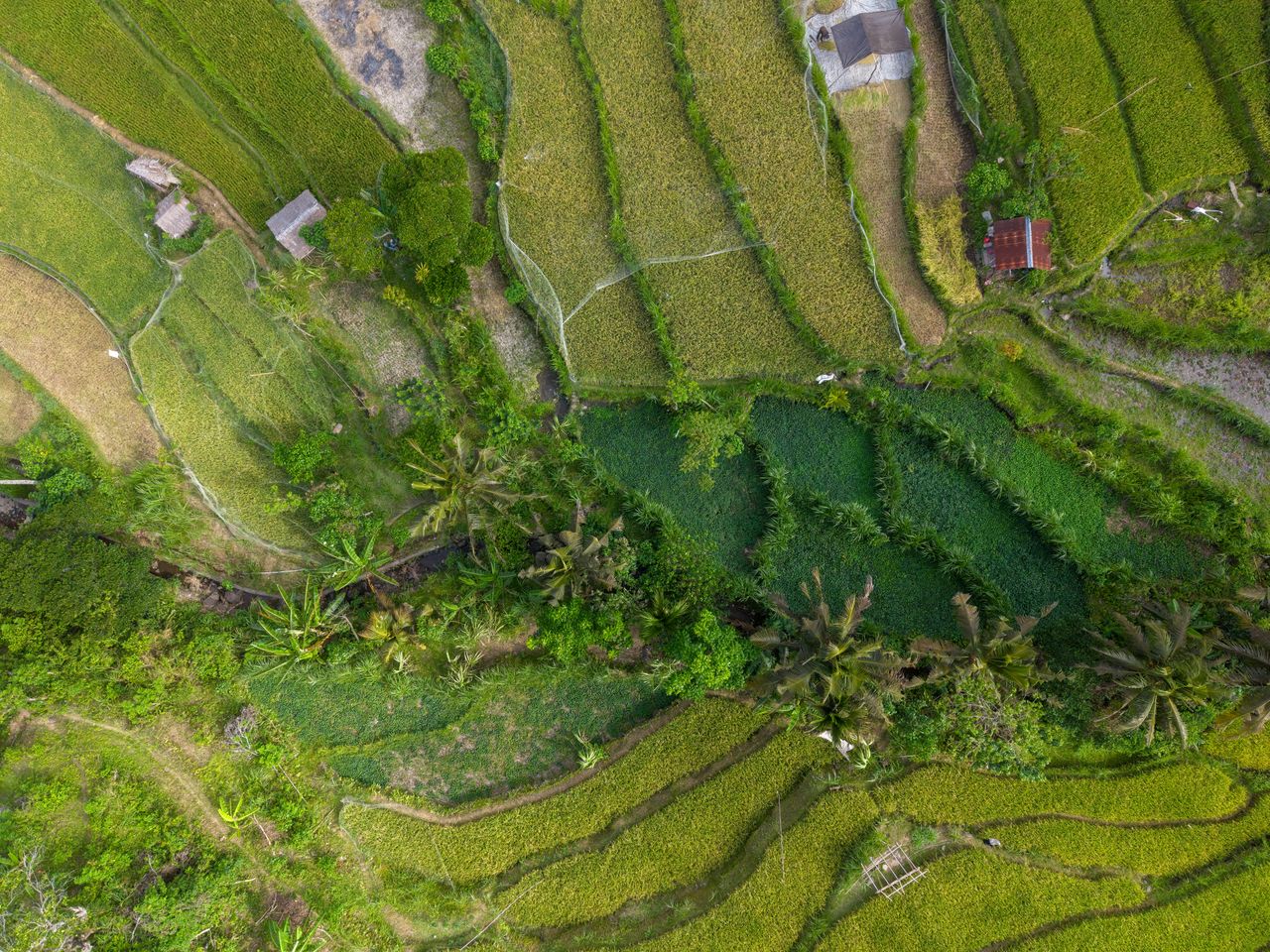
February is Bali’s second wettest month, but it is short, quiet and cheap, and it is when the island’s rice country looks its best. This is a good month for travellers who value space and price over beach days, and it has one short travel spike: Chinese New Year.
For the country-wide view, see our visiting Indonesia in February guide. Here we stick to Bali’s own patterns, with the full year in our best time to visit Bali table.
Weather Across the Island
Southern Bali typically gets 250-300mm of rain in February, with highs of 29-31C and heavy humidity. Showers arrive as short, hard bursts, often late afternoon, and a few days each month are properly grey from morning. Ubud is wetter than the coast; Lovina, Amed and the northeast are the driest corners.
Up in Kintamani, daytime temperatures are 19-23C with frequent cloud and mist. Lake Batur and the volcano are often hidden, so treat any sunrise trek as optional. Ulun Danu Beratan and the lakes near Bedugul sit at similar altitude and are cool, misty and atmospheric rather than clear. BMKG publishes daily and weekly forecasts if you want to pick a window.
Chinese New Year: A Short Price Spike
Chinese New Year falls on 6 February 2027 (17 February in 2026). Bali is a short flight from Singapore, Kuala Lumpur and several Chinese cities, so the days around the holiday bring noticeably more visitors, with fuller beach clubs, busier Nusa Dua and Sanur hotels, and higher rates for a few nights. Outside that window the island is quiet. If your dates are flexible, arrive after the holiday week.
Ramadan and Bali
In 2027 Ramadan begins around 8-9 February and runs to Eid on roughly 10 March. Bali is predominantly Hindu, so daily life continues as normal in tourist areas, but some Muslim-owned warung in Denpasar and Jembrana keep reduced daytime hours. Our Ramadan in Indonesia guide covers what changes. It is a quiet period for domestic travel until the Eid holidays.
Nyepi Preparations Start
If Nyepi falls in early March (8 March 2027), February is when village banjar build the giant ogoh-ogoh effigies, usually in open-sided workshops beside the road. They are free to see, and a good reason to wander quieter villages around Ubud and Denpasar. See our Nyepi guide for dates and rules.
Rice Terraces, Waterfalls and Wet-Day Plans
The paddies around Tegallalang, Jatiluwih and Sidemen are flooded or freshly planted, which gives glassy terraces that reflect the sky when it clears. Walks along the irrigation channels near Ubud are best before 10am, and our rice terrace walks guide lists routes. Waterfalls are at full force, though trails can be slippery.
Indoors, Bali has depth: cooking classes, coffee plantation visits, spa afternoons and yoga sessions all work in a downpour. For something longer, browse Ubud tours.
Prices and Where to Stay
February is among the cheapest months, with villa rates often 30-40% below dry-season peaks as of 2026 once Chinese New Year passes. Canggu and Ubud have the most choice. Our where to stay in Ubud and where to stay in Seminyak guides help narrow it down.
Packing and Booking Tips for February
Bring a light rain jacket, a small umbrella and shoes that dry quickly. Book accommodation with covered outdoor space or a good indoor lounge, since rainy afternoons are long. Cash is still useful for village warung and temple donations. If you plan on scooters, our Bali scooter rental page explains licence requirements. Short trips to the drier north coast, such as Lovina dolphin boats at dawn, make good weather gambles.
Verdict
Choose February for value, greenery and quiet, particularly if you plan a cultural or wellness trip. Avoid it for a pure beach holiday.