Search hotels in Ubud on Booking.com
Tirta Empul is the one temple near Ubud where visitors can take part in the ritual rather than just look at it. Balinese families queue at the spouts to cleanse body and mind before ceremonies, and respectful travellers are welcome to join. This page covers how the melukat works, what you pay, what to wear and how to fit it into a day from Ubud. For the wider picture of the island’s temples, see our Bali temple tours guide.
What Tirta Empul is
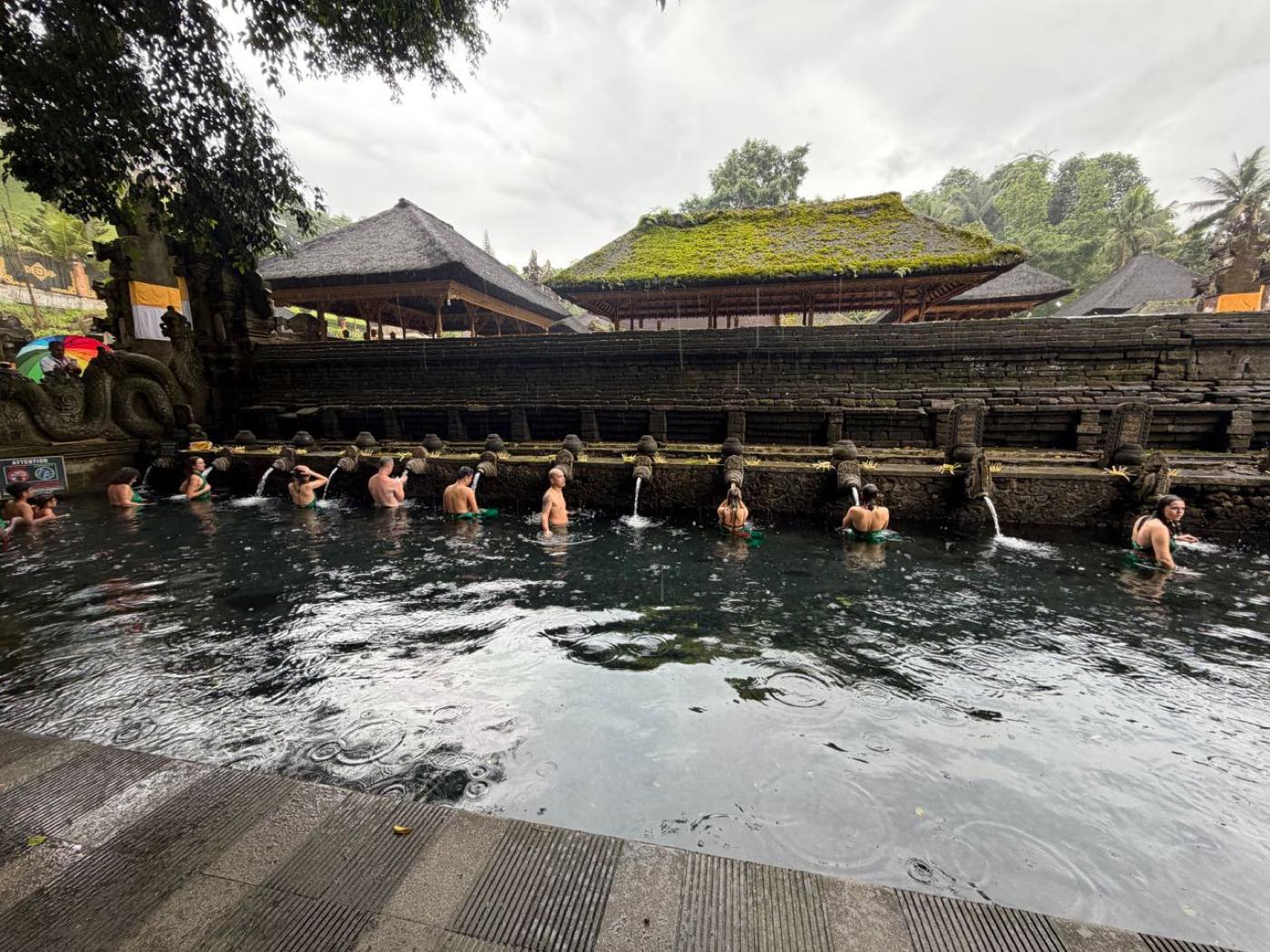
The temple sits in the village of Tampaksiring in Gianyar regency, built around a spring that Balinese tradition links to the god Indra. Temple inscriptions date the founding to 962 CE, which makes it one of the oldest water temples still in daily use. The complex is divided into three courtyards: an outer entrance area, a central courtyard with the two purification pools, and an inner courtyard where the spring itself rises into a clear pool. The inner courtyard is for worshippers only.
The temple belongs to the Pakerisan watershed, part of the UNESCO-listed Cultural Landscape of Bali, which recognises the subak irrigation system and the water temples that regulate it. Water here is not decoration. It is the reason the temple exists.
Entry fee and opening hours (as of 2026)
| Details | |
|---|---|
| Adult entry | IDR 50,000-75,000, sources differ |
| Sarong | Included or about IDR 10,000-20,000 to rent |
| Hours | Roughly 8am-6pm; some listings say 7am-5pm |
| Parking | A few thousand rupiah for scooters, more for cars |
| Locker | Small fee at the changing rooms |
No official 2026 price list is published online, and the figures above come from several recent visitor guides that disagree. Take cash in small notes and confirm at the booth. Temple hours also shift on ceremony days, when the central pools can be closed to visitors for part of the morning.
How the melukat purification works
Melukat is a cleansing ritual. You bathe under a row of carved stone spouts, each with its own purpose, praying at each one. A typical visitor sequence runs like this:
- Change and lock up. Put on your sarong and sash over swimwear, and store your belongings in a locker.
- Make an offering. Buy a small canang sari offering basket at the entrance (a few thousand rupiah) and place it with a prayer at the shrine beside the pool before you enter.
- Enter the pool and queue. Wait your turn at the first spout, then lower your head under the water, rinse your face and sip a little if you choose.
- Work along the row. Guides usually take visitors through about 13 spouts in order. Two spouts at the end carry water for funeral rites, so skip them.
- Finish with a prayer. Leave the pool, dry off and, if you wish, receive a blessing from a priest at the inner temple for a small donation.
You can go alone or with a local guide. A guide typically asks IDR 100,000-250,000 and will walk you through the order, which is useful on a first visit. Fix the price before you start, and do not photograph other bathers at close range. Keep your phone in the locker during the ritual.
Dress code and etiquette
- Wear a sarong and sash at all times in the temple. Both are available at the gate.
- Remove jewellery and keep hair tied back.
- Visitors who are menstruating or have open wounds are asked not to enter the pools.
- Stay quiet and keep to the queue. This is a place of active worship, not a swimming pool.
Our Indonesia etiquette guide has the general temple rules that apply across Bali.
Getting there from Ubud
Tirta Empul is about 15 kilometres north-east of Ubud on the road to Tampaksiring. A car with driver costs roughly IDR 500,000-700,000 for a half-day, and it is usually bundled with other stops (see our private driver guide). Scooter riders should expect 40-50 minutes on a busy road. Ride-hailing apps rarely return from the temple, so book a driver both ways.
The classic east-Ubud route links Tirta Empul with Goa Gajah on the return, and you can add the rice terraces on the way to the Tegalalang Rice Terraces. Guided options that handle transport and the ritual are on our Ubud tours page, or you can browse Ubud tours and compare departure times.
Best time to visit
Arrive at opening, between about 8am and 9am. Tour groups reach the pools from late morning and the queue at the spouts grows. The dry season from May to September is busiest; in the wet season, mornings are still the best window before afternoon rain. Check the Bali festival calendar for days when local families fill the temple.