Two rice terrace destinations dominate visitors’ Bali itineraries: Tegalalang, the steep gorge terrace 10 km north of Ubud, and Jatiluwih, the wider UNESCO-listed plateau in Tabanan Regency. Both are genuinely beautiful but they offer very different experiences. This guide covers both - entry fees, the swing situation, photography timing, and the easiest way to reach each from Ubud.
Tegalalang Rice Terraces
The Setting
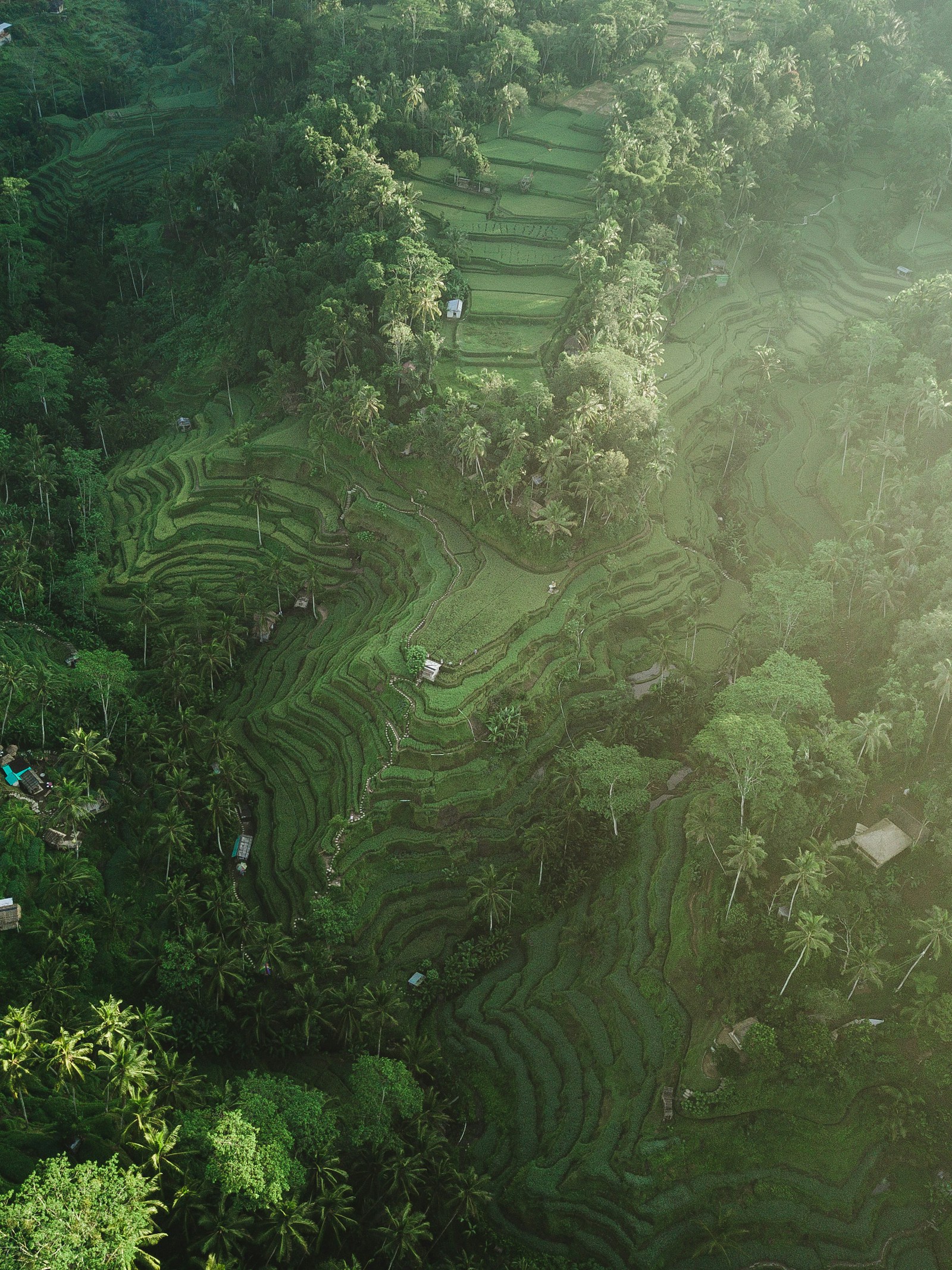
The Tegalalang terraces cascade down a narrow valley carved by the Campuhan River, just north of Ubud town. The fields follow the ancient subak irrigation system - a cooperative water management tradition that UNESCO inscribed in 2012. The classic viewpoint is from the ridge road (Jalan Raya Tegalalang), looking down into the gorge and across to the opposite hillside.
What makes Tegalalang visually distinctive is the drama of the elevation change - the terraces drop sharply rather than spreading flat, creating stacked green layers that catch light beautifully in the morning. In the rainy season (November–March) the fields are intensely green; in the dry season sections go golden before harvest.
Entry and Access
There is no single ticketed entry gate to Tegalalang. Instead, various farms and family-owned viewpoints charge their own access fees, typically IDR 10,000–30,000 per person. Most of these include permission to walk down into the terraces. Some café owners along the ridge road offer terrace access in exchange for a minimum drink purchase (usually IDR 50,000–75,000) - often the better deal since you get a shaded seat and a cold Bintang.
Walk south along the ridge road from the main viewpoint to find less-crowded access points - the northern section sees the bulk of tourist traffic.
The Swing Question
Tegalalang has become as famous for its Instagram swings as for the rice itself. Platform swings are installed above the terrace drop-offs and offer the sensation of flying above the fields. Prices vary by operator:
| Swing Type | Approximate Price |
|---|---|
| Basic wooden swing | IDR 100,000–150,000 per session |
| Large frame swing (higher elevation) | IDR 200,000–300,000 |
| ”Bird’s nest” platform | IDR 150,000–200,000 |
| Giant swing with harness | IDR 300,000–350,000 |
Prices are per person and include a brief photo session. Arrive before 09:00 to avoid queues. If you are not interested in swings, ignore the hawkers - you are not obliged to purchase.
Photography Tips
Best light: 07:00–09:30, from the ridge road looking northeast. The low morning sun picks out each individual terrace bund.
Best viewpoints:
- The ridge road north of the main tourist strip has several gaps in the hedge line that give clean unobstructed shots
- Walking down into the terrace base and shooting up toward the palms gives a different perspective to the classic from-above shot
- Café terraces on the opposite (western) ridge give a face-on view across the gorge - ask if non-customers can enter for a small fee
Avoid: Midday when the sun is directly overhead and shadows vanish. Also avoid weekends (particularly Saturday 09:00–14:00) when domestic tour groups are most concentrated.
Getting There from Ubud
Scooter: 20–25 minutes, 9 km north on Jalan Raya Tegalalang. Easiest option. Parking IDR 5,000.
Grab/Gojek: Around IDR 25,000–35,000 one way. Bear in mind you may wait 15–20 minutes for a return ride since drivers are less concentrated here than in central Ubud.
Private driver: Book through your accommodation for IDR 200,000–300,000 for a half-day that also includes Tirta Empul and Gunung Kawi nearby.
Bicycle: Doable but mostly uphill from Ubud - 45–60 minutes up, 20 minutes back. Popular with cycling tour operators.
Jatiluwih Rice Terraces (UNESCO)
The Setting
Jatiluwih sits at 700 metres elevation in Tabanan Regency, about 45 km west of Ubud and 50 km north of Seminyak. The name means “truly marvellous” in Balinese - and the scale backs it up. The terraces here span roughly 600 hectares of working rice paddies across a series of gentle volcanic ridges, with Mount Batukaru rising to the north. This is a functioning agricultural landscape, not a tourist attraction per se.
Where Tegalalang is intimate and intense, Jatiluwih is expansive and tranquil. Visitor numbers are much lower because the drive is longer and there are no swings or warungs every 50 metres.
Entry Fee
| Entry fee | IDR 40,000 per adult (UNESCO site levy, as of 2026) |
| Vehicle fee | IDR 5,000 (motorbike), IDR 15,000 (car) |
| Opening hours | 08:00–18:00 daily |
The fee is collected at a booth on the main approach road and goes toward maintaining the subak irrigation system.
Walking Trails
Two marked trails run through the working fields:
- Short trail (2 km, 45 minutes): Loops through the lower terraces. Flat and easy.
- Long trail (5 km, 2–3 hours): Climbs into the upper terraces with views toward the coast on clear days. Moderately steep in sections.
Both trails start from the main car park and are signposted. Wear decent footwear - the earth paths between paddies are narrow and can be muddy after rain. Do not cut across planted fields.
Getting There
From Ubud: 60–75 minutes by car (46 km via Pura Taman Ayun route). There is no practical public transport. A driver for the day combining Jatiluwih with Tanah Lot and Ulun Danu Bratan (the temple circuit) makes excellent use of the travel time since all are in western Bali.
From Seminyak/Kuta: 60–75 minutes (46–52 km north). Worth building into a day trip that includes either Tanah Lot (30 minutes southeast) or a drive up to Bedugul.
Scooter from Ubud: Possible but 90 minutes each way on highland roads. Not recommended for first-time Bali riders.
Tegalalang vs. Jatiluwih: Which Should You Visit?
| Tegalalang | Jatiluwih | |
|---|---|---|
| Distance from Ubud | 9 km (20 min) | 46 km (70 min) |
| Crowd level | High (peak 09:00–12:00) | Low–moderate |
| Entry cost | IDR 10,000–30,000 + swings | IDR 40,000 per person |
| Walking terrain | Steep, limited paths | Gentle to moderate, marked trails |
| UNESCO status | Yes (subak system) | Yes (subak system) |
| Best for | Quick visit + photography | Half-day walk + landscape |
Most visitors do Tegalalang on a morning trip from Ubud since it is quick and accessible. Jatiluwih suits travellers who want to walk through a working landscape and are already exploring western Bali.
Practical Notes
Rain and mud: Both terraces involve walking on earth paths. After overnight rain, bund paths at Tegalalang become slippery - flip-flops are not suitable. Light trainers or sandals with grip are fine for dry conditions.
Subak ceremonies: Active irrigation ceremonies (Subak Aci Tirta Empul etc.) take place throughout the year at both sites. You may see processions of farmers carrying offerings to the water shrines. Observe respectfully and do not cross active ceremony areas.
Season: Both sites are most photogenic when the fields are planted (roughly April–August and October–January, though this varies as farmers stagger their planting). In the dry season some sections may be fallow or recently harvested - ask your driver about current conditions before you go.
Book via GetYourGuide
Prices are approximate starting rates based on GYG listings as of August 2026 - confirm current rates before booking.
| Tour | Duration | From |
|---|---|---|
| Ubud: Tegalalang Rice Terrace Instagram Tour & Jungle Swing | 2–3 hours | ~$20 |
| Waterfalls and Tegalalang Rice Terrace Private Tour (from Ubud) | ~4 hours | ~$35 |
| Bali: Full-Day Private Ubud Cultural Tour (includes Tegalalang) | ~8 hours | ~$45 |
| Bali: Barong Dance, Tegalalang Rice Terraces & Waterfall | full day | ~$40 |