Ubud Travel Guide: Arts, Rice Terraces & Wellness in Bali
Ubud, Bali: temples, rice terraces, Monkey Forest, cooking classes, and highland wellness retreats. Plan your trip with our full guide.
Guides for Ubud
Ubud sits at roughly 300 metres above sea level in the Gianyar regency of central Bali, surrounded by rice paddies, jungle ravines, and a dense network of Hindu temples. It functions as Bali’s cultural capital - home to painter colonies, traditional dance performances, woodcarving workshops, and a wellness industry that has grown considerably over the past two decades. The town itself is compact and walkable, though the surrounding countryside rewards anyone willing to hire a scooter or arrange a driver.
Neighbourhoods and Orientation
Central Ubud clusters around Jalan Raya Ubud and the adjacent Ubud Palace, with the main market, restaurants, and galleries concentrated within easy walking distance. To the north, the Campuhan ridge and the village of Penestanan attract painters and expats. East of the centre, Peliatan is known for traditional dance troupes. South towards Mas and Celuk, roadside workshops produce woodcarvings and silver jewellery respectively. The popular Monkey Forest Road runs south from the palace to the Sacred Monkey Forest Sanctuary - the main pedestrian artery lined with cafés, boutiques, and warungs.
Key Attractions
For a full breakdown of temples, rice terraces, and cultural sites around Ubud, see our Ubud things to do guide.
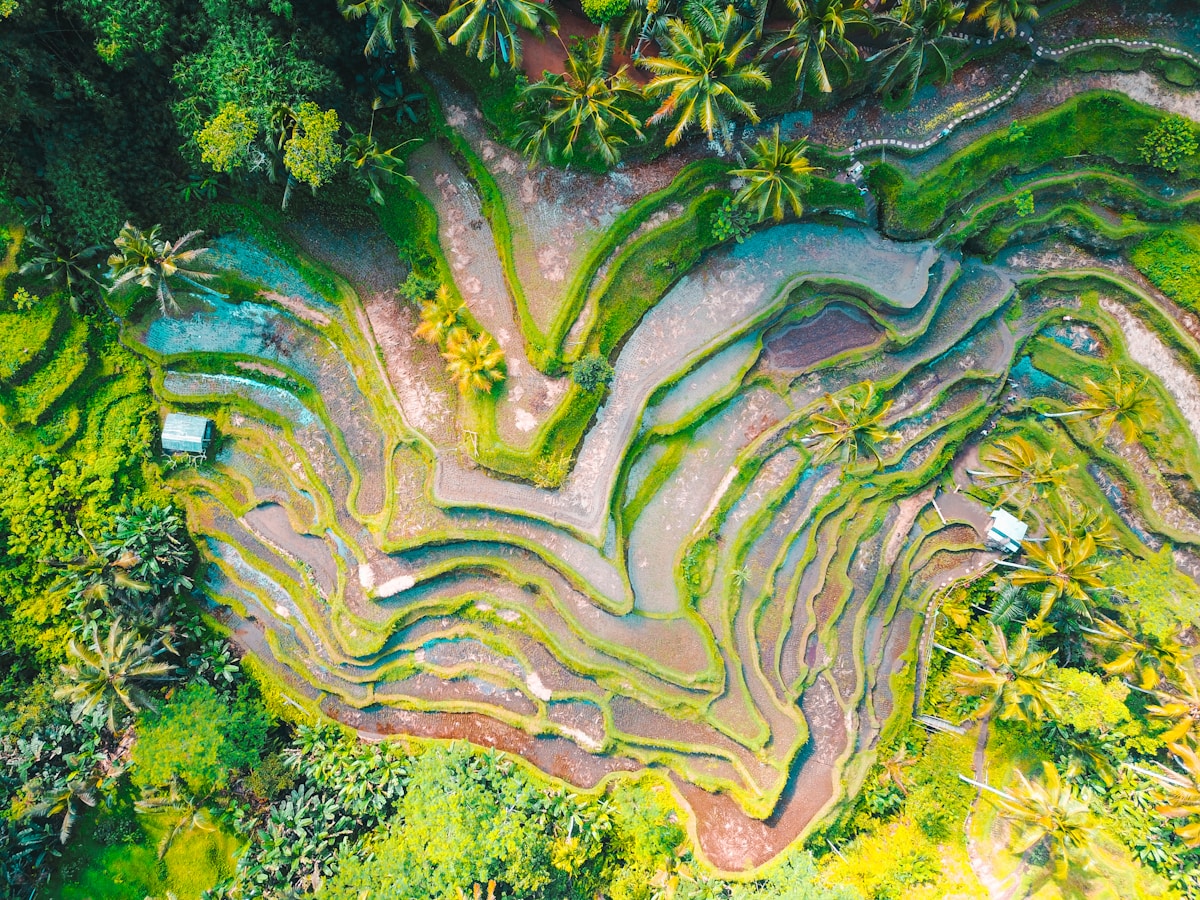
Tegallalang Rice Terraces - The most photographed landscape in central Bali, roughly 9 km north of Ubud along Jalan Raya Tegallalang. Entry to the main viewpoint area is free, though small voluntary donations (approximately IDR 10,000–20,000) are requested at access points along the ridge. Arrive before 7:30am to photograph without crowds and to catch the early-morning light on the subak irrigation channels. Swing experiences operated by local landowners start at approximately IDR 150,000–350,000.
Sacred Monkey Forest Sanctuary (Mandala Suci Wenara Wana) - A forested Hindu sanctuary housing more than 700 long-tailed macaques and three moss-covered temples. Entry approximately IDR 80,000 for adults, IDR 60,000 for children. Open daily 8:30am–6pm. Keep bags zipped and do not carry food visibly - the monkeys are well-practised at theft. The forest paths are genuinely atmospheric and the temples are active worship sites, not tourist reconstructions.
Ubud Palace (Puri Saren Agung) - The former residence of the Ubud royal family sits at the junction of Jalan Raya Ubud and Jalan Suweta. Entry to the courtyard is free during daylight hours. Traditional Kecak, Legong, and Barong dance performances are held in the main courtyard most evenings from around 7:30pm; tickets approximately IDR 100,000–150,000 and worth booking a day ahead during high season.
Campuhan Ridge Walk - A free 2–3 km trail beginning just west of central Ubud, running along the ridge between two river gorges. The path passes through secondary forest and small farming plots. Early morning (before 8am) is cooler and quieter. The trail connects Campuhan with the village of Bangkiang Sidem; from there local roads loop back via Penestanan.
Goa Gajah (Elephant Cave) - A rock-hewn cave temple dating to at least the 9th century, 4 km east of central Ubud near the village of Bedulu. Entry approximately IDR 50,000, including sarong rental. Open daily 8am–5pm. The site includes bathing pools, terraced garden areas, and a small Buddhist stupa discovered during excavations. Crowds thin noticeably after 3pm.
Ubud Market (Pasar Ubud) - The main produce and craft market fronts Ubud Palace. The ground floor sells fresh produce to local buyers from around 5am; the upper floors shift to tourist goods - textiles, masks, carved items - from mid-morning. Best visited between 6am and 8am when produce vendors dominate and the atmosphere is local. Free to enter; bargaining expected on fixed tourist-tier prices.
Hotels
For a full breakdown of Ubud’s neighbourhoods and where to stay by budget and travel style, see our Ubud accommodation area guide.
Komaneka at Bisma (luxury) - Set above the Wos River gorge on the western edge of town, with infinity pools overlooking rice terraces and jungle. Rates from approximately USD 300 per night as of 2026. The cluster of villas and suites shares a spa, two restaurants, and direct gorge-trail access.
Bisma Eight (upscale) - A 38-suite boutique property on Jalan Bisma, with a strong reputation for its jungle-terrace pool and multi-course Balinese tasting menu. From approximately USD 120 per night as of 2026. Well-positioned for both the central market area and the Campuhan walk.
Puri Saren (Royal Palace Accommodation) (mid-range) - Rooms within the traditional bale pavilions of the royal palace compound, operated by the palace family. From approximately USD 60 per night as of 2026. Simple but atmospheric - you sleep inside a working heritage site. Book direct.
Pondok Pundi Village Inn (budget) - A family-run guesthouse on the quiet northern edges of town. Clean, basic rooms with garden setting. From approximately USD 20 per night as of 2026. Good base for those spending most of the day away from the room.
Search all hotels in Ubud on Booking.com
Restaurants
For a more thorough guide to Ubud’s restaurants, warungs, and cafés by area and price, see our Ubud best restaurants guide.
Locavore - Ubud’s best-known fine-dining restaurant, with a menu built around Indonesian ingredients interpreted through a modern European kitchen. The tasting menu runs approximately IDR 500,000–800,000 per person without drinks. Reservations essential - typically booked two to three weeks ahead during July–August.
Warung Babi Guling Ibu Oka - The most well-documented suckling pig (babi guling) warung in Bali, operating from a converted space a short walk from Ubud Palace. Portions of crispy pork skin, meat, lawar (spiced minced meat salad), and rice cost approximately IDR 50,000–80,000. Opens around 11am; typically sells out by early afternoon. Arrive early.
Seniman Coffee Studio - A two-floor café on Jalan Sriwedari with serious single-origin coffee sourced from Indonesian growing regions, alongside a brunch menu drawing from local produce. Approximately IDR 80,000–150,000 per person. Good wifi and a working-friendly atmosphere without being a coworking space.
Café Lotus - On Jalan Raya Ubud directly opposite the Pura Taman Saraswati lotus pond temple, with terrace seating overlooking the water. Balinese and Indonesian dishes in the IDR 150,000–250,000 per person range. The lotus pond setting in late afternoon is particularly good.
Getting There and Getting Around
Ngurah Rai International Airport (DPS) in Denpasar is approximately 35 km south of Ubud - roughly 1.5 hours by road depending on traffic, which is notoriously variable on the airport-to-Ubud corridor. A metered taxi or Grab ride costs approximately IDR 250,000–350,000. Tourist shuttle services (Perama, Kura-Kura, and various operators on Jalan Legian) connect Kuta and Seminyak with Ubud for approximately IDR 50,000 per person.
Within Ubud, the central streets are walkable. For the surrounding countryside - rice terraces, outlying temples, and river gorge tracks - hire a scooter (approximately IDR 70,000–100,000 per day) or arrange a driver for a full day (approximately IDR 500,000–700,000 for 8–10 hours including fuel). Grab operates with limited availability; expect waits.
Best Time to Visit
The dry season runs May to September, with July and August bringing the largest crowds and highest prices. April–May and September–October offer a reasonable balance of good weather and manageable visitor numbers. Avoid the peak of wet season (January–February) if you plan to spend significant time outdoors, though Ubud’s cultural attractions remain open year-round.
Practical Tips
Ubud operates on Balinese Hindu time - major temple ceremonies can close roads and redirect schedules with little advance notice. Check the Balinese calendar before planning tight itineraries. Most temples require a sarong; if you don’t own one, sarong rentals are offered at entrance gates for approximately IDR 10,000–20,000, or free at some sites. Water from taps is not safe to drink; bottled water is available everywhere, or carry a filtration bottle to reduce plastic waste. ATMs cluster on Jalan Raya Ubud and Monkey Forest Road - use bank-operated machines rather than standalone units to avoid skimming risk.
For remote workers and digital nomads, our Ubud digital nomad guide covers the best coworking spaces, café wifi speeds, and cost of living in detail. For plant-based eating across the island, see our vegan and vegetarian Bali guide.
Browse tours and day trips in Ubud - a half-day with a local guide is one of the most efficient ways to get oriented on arrival. For airport transfers into Ubud, Kiwitaxi offers fixed-price pickups from the main airports - no surge pricing and the driver meets you at arrivals.
More Ubud Guides
- Things to do in Ubud - full breakdown of temples, rice terraces, and cultural experiences
- Best restaurants in Ubud - Locavore, Warung Babi Guling, and Ubud’s dining scene by price
- Where to stay in Ubud - jungle resorts, guesthouses, and the best neighbourhoods for your budget
- Ubud digital nomad guide - coworking spaces, café wifi speeds, and long-stay costs
- Bali yoga retreats - Ubud retreat centres, wellness studios, and the best multi-day programmes
- Vegan and vegetarian Bali - the best plant-based restaurants and warungs in and around Ubud
Upcoming Events in Ubud
- Ubud Writers & Readers Festival 2026
ubud
Ubud Writers & Readers Festival 2026, 28 Oct to 1 Nov. Five days of author talks, workshops, panels, and cultural events across Ubud venues.
Book an experience
Top experiences in Ubud
Explore the best tours and activities in Ubud , with instant confirmation and free cancellation on most bookings.