Indonesia spans 17,000 islands, more than 700 local languages, and three of the world’s major religions. What is polite behaviour in one place can read as rude or oblivious in another. Understanding the basics before you arrive makes the difference between surface-level tourism and genuine connection with the people you meet. This guide covers what you need to know about dress codes, tipping, social customs, dining, and visiting homes across the country.
Dress Codes: Temples, Mosques, Beaches, and Restaurants
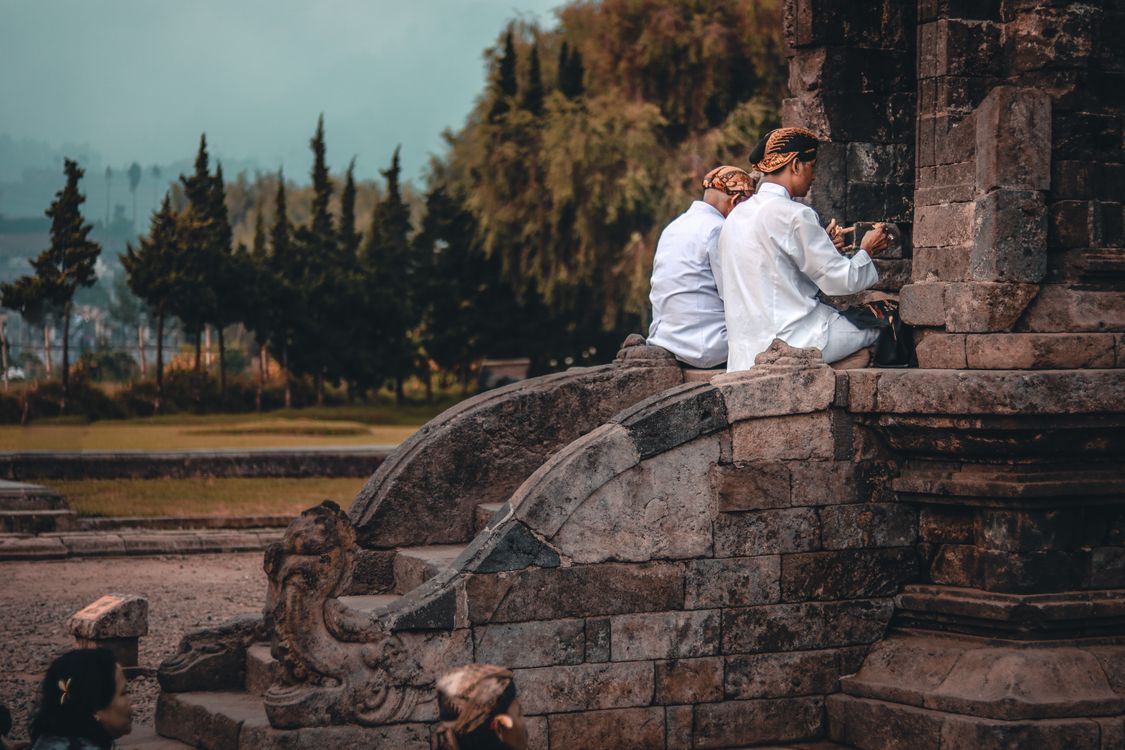
Hindu temples in Bali
At Balinese Hindu temples, covered legs and shoulders are mandatory. You cannot enter the inner courtyard in shorts or a sleeveless top. Most temples — including Tanah Lot, Uluwatu, Pura Tirta Empul in Ubud, and Besakih on the slopes of Gunung Agung — loan or rent a sarong and sash at the entrance gate for IDR 5,000-20,000. The sarong is tied around the waist; wearing it draped over the shoulder does not count.
At Pura Besakih, the largest temple complex on Bali, unofficial “guides” frequently approach tourists and claim extra dress requirements that require paid entry to inner areas. The sarong and sash at the main gate is all that is needed. You are not required to hire a guide, though having one is worthwhile given the site’s scale.
Mosques
At mosques, full modesty dress applies: long trousers or skirts, covered shoulders, and a headscarf for women. Remove your shoes before entering. Many mosques provide prayer robes for visitors. The Istiqlal Mosque in Jakarta, the largest in Southeast Asia, welcomes visitors outside prayer times and provides coverings at the entrance. Photography inside prayer halls should be avoided unless staff explicitly say it is permitted.
At the Sultan’s Mosque (Masjid Agung) in Yogyakarta and the Al-Aqsha Mosque in Bandung’s Lembang district, the same rules apply. Visitors arriving during prayer times are asked to wait outside.
Beaches
Bikinis and board shorts are entirely standard at Kuta Beach, Seminyak, Nusa Dua, and Jimbaran in Bali, and at Gili Trawangan and Gili Meno off Lombok. The moment you leave the beach area and walk into the street, a cover-up is appropriate. A sarong thrown over your swimsuit is sufficient.
At more conservative coastal destinations — Senggigi on Lombok’s west coast, Makassar in South Sulawesi, and any beach near a mosque in Java — swimwear is worn only in the water. Arriving at a local warung in board shorts and nothing else reads as disrespectful.
Restaurants
Dress codes at restaurants are relaxed by most standards. In Bali, casual beach attire is fine at Warung Mak Beng in Sanur or any local warung. Rooftop venues and hotel restaurants in Jakarta — such as those at the Mandarin Oriental or the Four Seasons — expect smart casual: clean trousers and collared shirt for men, a dress or smart top for women. Trainers are fine; flip-flops and swimwear are not.
Tipping Culture
Tipping in Indonesia is not culturally embedded the way it is in the United States, but it has become a normal and appreciated practice in tourist areas.
Restaurants: Upscale and mid-range restaurants add a government tax of 11% plus a service charge of 5-10%. Check the bill before tipping — if a service charge is present, extra tipping is discretionary. At warungs and local stalls, rounding up the bill or leaving IDR 5,000-10,000 is generous and appreciated.
Hotels: IDR 20,000-50,000 per day for housekeeping is appropriate at mid-range and luxury properties. Leave it on the pillow or in a small envelope with “Terima Kasih” (thank you) written on it.
Drivers and guides: For private drivers hired through a tour operator or hotel, IDR 50,000-100,000 per day is a reasonable tip on top of the agreed fare. For licensed guides on half or full-day tours — at Borobudur, Prambanan, or Mount Bromo — IDR 50,000-150,000 depending on the quality of the service.
Spas: Bali’s massage and spa culture is significant — from family-run operations in Ubud to Mandara Spa at The Legian. A tip of IDR 20,000-50,000 per therapist after a traditional Balinese massage is standard practice.
When not to tip: Government-run facilities, public transport, and supermarket staff do not expect tips. Tipping a becak (cycle rickshaw) driver beyond the agreed fare is a matter of goodwill rather than obligation.
Social Customs: Greetings, Bargaining, and Photography
Greetings
A handshake accompanied by a slight nod of the head is the standard greeting. The handshake is lighter than a Western firm grip — pressure rather than a pump. After shaking hands, it is common to briefly touch your own chest with your right hand, signalling sincerity.
Use titles where you know them: Bapak (Pak) for men, Ibu (Bu) for women. Greeting someone with “Selamat pagi” (good morning), “Selamat siang” (midday), or “Selamat sore” (late afternoon) followed by their title earns immediate respect.
Physical affection between acquaintances is common among friends of the same gender — men hold hands while walking, women walk arm-in-arm. Public affection between couples is much less common outside of Bali’s tourist zones.
Bargaining
Bargaining is expected at street markets, craft stalls, and informal vendors. At Pasar Seni Ubud (Ubud Art Market), Malioboro Street in Yogyakarta, and Tanah Abang Market in Jakarta, vendors typically open at two to three times their target price. Starting at 40-50% of the first asking price and working toward a midpoint is standard. The exchange should stay light — bargaining is a social interaction, not a confrontation.
Do not bargain at supermarkets, malls, fixed-price restaurants, or any venue with printed price tags. Attempting to negotiate at a 7-Eleven or at a restaurant like Nasi Padang Sederhana, which operates on a fixed “pay for what you eat” system, causes confusion and embarrassment.
Photography
Ask before photographing people, particularly in rural areas, at religious ceremonies, and at markets. A simple “Boleh foto?” (May I take a photo?) goes a long way. At Hindu temple ceremonies in Bali, photography of the inner proceedings is often discouraged — watch what local attendees are doing.
At Borobudur, flash photography inside the enclosed stupas is prohibited. At Tanah Lot, standing on the rocks around the base of the temple is restricted — stay on the viewing platforms. Drone flights over temple complexes and national parks require a permit.
Religious and Cultural Sensitivities
Indonesia is the world’s most populous Muslim-majority country, with roughly 87% of the population identifying as Muslim. Bali is an exception — 84% of Balinese are Hindu. Parts of North Sulawesi, Flores, and Papua are predominantly Christian.
The head is considered sacred in Javanese and Balinese culture. Do not touch a person’s head — including children’s — without an invitation. Pointing with the index finger is considered rude; use an open hand or your right thumb to indicate direction.
Passing or receiving anything with your left hand is considered impolite across Muslim and Hindu communities. Always use the right hand, or both hands together for objects of significance.
During Friday prayers (approximately 12:00-13:00), many businesses and stalls near mosques close briefly. On national Islamic holidays such as Eid al-Fitr (Lebaran), intercity transport books out weeks in advance and prices spike sharply — plan accordingly.
Dining Etiquette
Rice is the foundation of most Indonesian meals. Nasi goreng (fried rice), nasi uduk, and nasi padang are ordered as a base, with side dishes — sambal, tempeh, grilled fish, rendang — placed in the centre for sharing.
At Padang-style restaurants (Rumah Makan Padang), dishes arrive at the table without ordering — you pay only for what you eat. Indicate you are finished by pushing dishes slightly to the centre.
Eating with your right hand is common at local warungs and traditional households. A spoon and fork (not chopsticks, except at Chinese-Indonesian restaurants) are the standard utensils elsewhere.
Waiting for the host or most senior person to begin eating is polite, especially at family meals. Leaving a small amount of food on the plate signals satisfaction; finishing everything can prompt a refill.
Behaviour in Homes
Remove your shoes at the door — nearly every Indonesian household, regardless of religion or island, follows this rule. A rack or pile of shoes at the entrance is your cue.
If invited for a meal, bring a small gift: packaged cakes from a bakery, fruit, or sweets. Gifts are typically not opened immediately in front of the giver — this avoids any awkwardness around the gift’s value.
When offered food or drink, accept at minimum a sip or a bite even if you are not hungry. Outright refusal can read as a slight. Saying “sedikit saja” (just a little) is a graceful way to take a small portion.
Sitting with feet pointed toward another person, particularly an elder, is considered disrespectful. When sitting on the floor at traditional gatherings, tuck your feet to the side rather than stretching them out in front.
These are not rules designed to catch tourists out — they are expressions of a genuinely hospitable culture that places high value on respect and communal warmth. Follow the lead of those around you, ask when uncertain, and the welcome you receive in return will be real.