Search hotels in Ubud on Booking.com
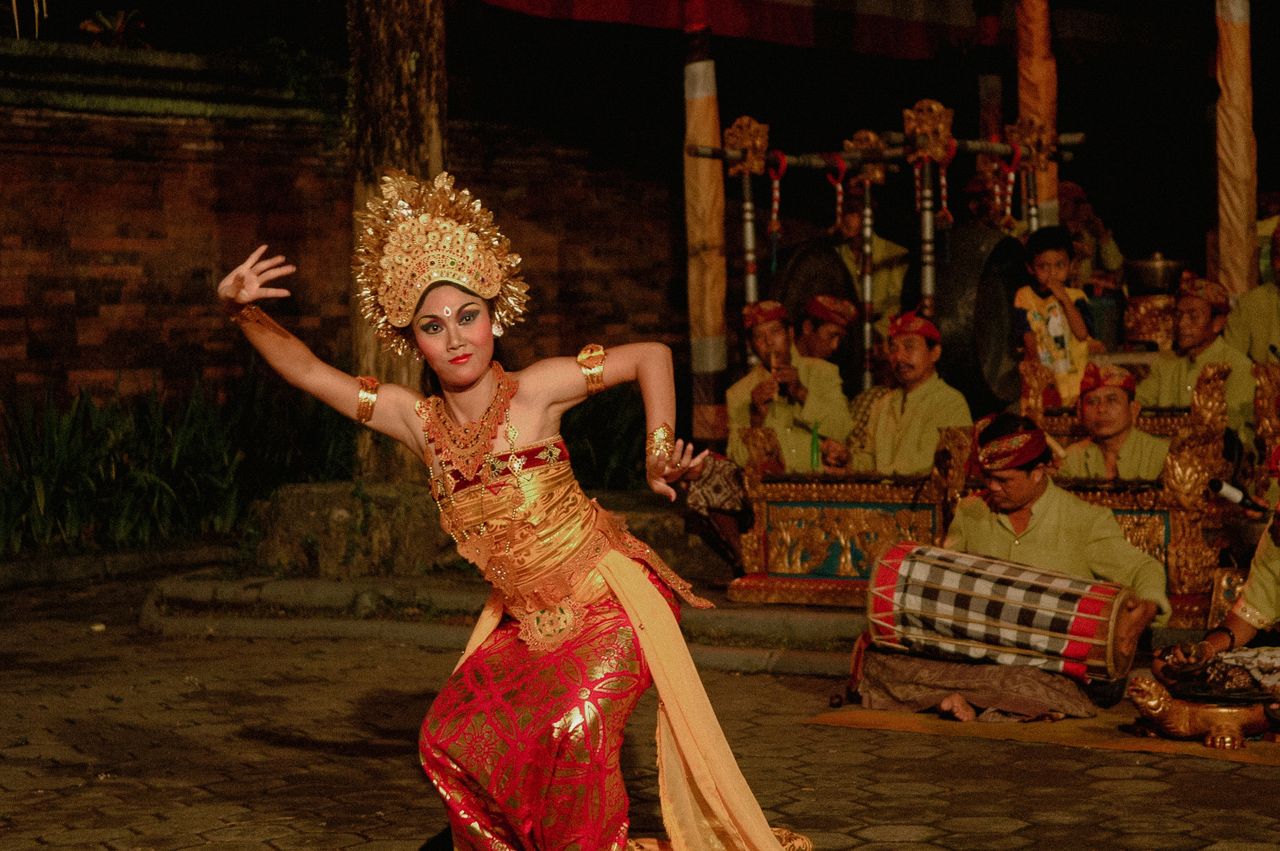
The evening dance show at the old royal palace is the easiest cultural outing in Ubud: central, short and cheap. Gamelan orchestras play in the open courtyard while dancers perform Legong, Barong and other genres. This page explains tickets, timing, which style to pick and how to avoid the common disappointments. It expands item six of our Ubud things to do guide.
The venue: Puri Saren Agung
Puri Saren Agung is the palace of Ubud’s royal family, in the centre of town on Jalan Raya Ubud. Its courtyard with carved gates and tiered stone seating hosts performances by local troupes, usually on a rotating weekly timetable posted at the gate. Several other venues stage similar evenings within walking distance, including the lotus-pond temple of Pura Taman Saraswati right beside the palace and smaller banjar halls around town, so if one is sold out you can try another.
Tickets and times (as of 2026)
| Details | |
|---|---|
| Start time | Around 7:30pm, run time about 90 minutes |
| Walk-up ticket | Roughly IDR 100,000-150,000 |
| Online ticket | About USD 7-12 through resellers |
| Ticket booth | Palace entrance, often open from late afternoon |
| Seating | Unreserved |
No official tariff is published online, and resellers show a wide range, so compare before booking. Reseller vouchers must be exchanged at the correct venue, and a few recent reviewers report confusion on arrival, so check which stage your voucher is for. Walk-up tickets avoid that problem but can sell out in high season.
Which dance should you see
- Legong. The most refined. Young dancers in gold headdresses move in tight sync to a full gamelan, often telling the story of a king and a captured princess. This is the best first show.
- Barong and Kris. A theatre piece where the lion-like Barong, protector, fights the witch Rangda. More dramatic and easier to follow without a guide.
- Ramayana. A dance-drama version of the Hindu epic, with costumes and masks.
- Kecak. A male chorus of 50 or more, chanting “cak” in rhythm. It is usually staged at sunset at Uluwatu, so see our Uluwatu Kecak guide for that version.
UNESCO added three genres of traditional Balinese dance to its Intangible Heritage list in 2015. The sacred wali dances belong to temple rituals, so the shows you buy tickets for are the entertainment (balih-balihan) tradition, performed for visitors and locals together.
The gamelan itself
Gamelan is a percussion orchestra of tuned metal keys and gongs, played from memory by a group of musicians who seem to move as one. Listen for the fast interlocking patterns of the metallophones and the deep gong that marks each cycle. Many visitors say the music is the part they remember. If you want to try it, some Ubud studios offer short gamelan classes.
How to choose your seat
Arrive 30-45 minutes before the start. Seats nearest the dancers give the best detail, but the centre of the second or third row gives a better view of the whole formation. Sit away from the aisles, since performers enter and exit through them. Phones are fine but flash is not; many troupes ask guests to stop filming during the final bows.
Planning the evening
Dinner before or after works well because the palace is central. Our best restaurants in Ubud page lists options within a short walk, and if you want transport, a guide and a show together, browse Ubud tours or check the best tours in Ubud page. Check the Bali festival calendar too, since temple ceremonies can offer more authentic performances for free.