Search hotels in Ubud on Booking.com
Goa Gajah, the Elephant Cave, is one of the quickest and most rewarding stops near Ubud. The carved cave mouth is dramatic, the setting is wooded, and the site mixes Hindu and Buddhist remains that show how both traditions shaped early Bali. This page covers fees, what you will see, the path to Yeh Pulu and when to go. For a broader temple route, see our Bali temple tours guide.
What Goa Gajah is
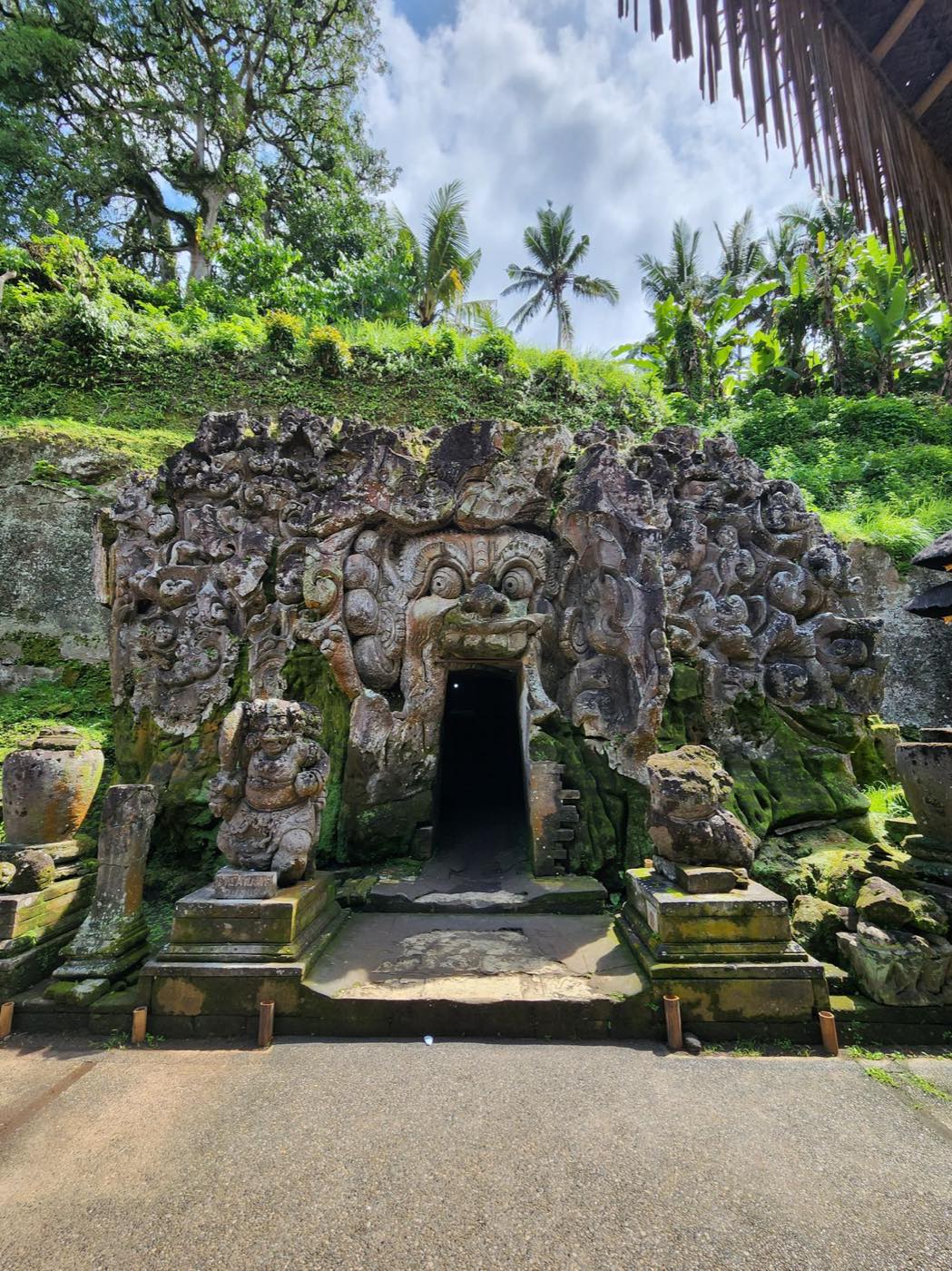
Goa Gajah sits at Bedulu, around 6 kilometres south-east of central Ubud. The cave entrance is carved into a rock face as a looming stone face with wide eyes and a mouth that forms the doorway. Scholars place the sanctuary around the 11th century, though dates in the literature vary. Dutch officials recorded the cave in the 1920s, and the bathing pools in front were uncovered during excavation in 1954. The pools have six carved figures spouting water, a classic Balinese water-temple layout.
Inside, a T-shaped passage is narrow and low. You will find small niches that once held meditating priests, a Ganesha statue and a group of three lingga. Hindu and Buddhist elements sit side by side, including a nearby rock-cut stupa carving at the river. See the Goa Gajah article on Wikipedia for the academic background.
Entry fee and opening hours (as of 2026)
| Details | |
|---|---|
| Adult entry | IDR 50,000 |
| Child entry | IDR 25,000 |
| Sarong | Included in the ticket |
| Hours | About 8am-5pm daily |
| Parking | Small fee, about IDR 2,000-5,000 |
Prices come from several recent guides that broadly agree. As with most Bali sites, confirm the amount at the gate. Carry small notes for parking and a donation.
What to see
- The cave mouth. The carved face is the photograph everyone takes. Go early or late for fewer people in the frame.
- The cave interior. The passage is only a few metres long and dark, so a phone light helps. Flash can disturb worshippers.
- The bathing pools. Six water spouts feed a rectangular pool, partly sunken below ground level.
- The gardens and the stairs. A stepped path leads down through trees to a stream and small shrines. The climb back is steep, so wear shoes rather than flip-flops.
The site is smaller than the photographs suggest. Most visitors finish the main area in under an hour.
Walking to Yeh Pulu
Yeh Pulu is a rock wall carved with reliefs of hunting scenes, a figure with an elephant head and other daily-life panels, possibly from the 14th century. It lies about 1 kilometre away through rice fields, a walk of roughly 15 minutes each way. Entry is usually a small separate ticket or donation, and the site is quiet because few tour buses stop. Take water, since the path has little shade at midday.
Getting there from Ubud
A taxi or Grab from Ubud centre usually costs IDR 70,000-100,000 each way; a scooter takes 20 minutes. The cave is also on most half-day routes. A common plan runs Tirta Empul in the morning, then Goa Gajah on the way back. Our Tirta Empul guide explains the ritual side, and the private driver guide has price benchmarks. If you want transport and a guide together, check Ubud tours on GetYourGuide or our best tours in Ubud.
Best time to visit
Mornings are cooler and quieter. Tour groups peak between 10am and 1pm, and late afternoon light is lovely on the stone but you must leave before closing. The paths can be slippery after rain, which is common between November and March. Dress modestly, since this is an active place of worship, and review our etiquette guide for temple rules.