Komodo and Raja Ampat both carry serious reputations - one for its prehistoric land predators and dramatic volcanic seascape, the other for what’s widely considered the richest marine biodiversity on the planet. If you’re planning an expedition to Indonesia’s remote east, here’s how to decide between them.
Quick Verdict
| Factor | Komodo | Raja Ampat |
|---|---|---|
| Marine biodiversity | Excellent | World-class (the best on earth) |
| Trekking & wildlife | Komodo dragons (unique to the world) | Limited land wildlife |
| Scenery | Volcanic, dramatic, arid | Lush karst islands, turquoise bays |
| Cost (per day) | IDR 600,000–1,200,000 | IDR 800,000–1,800,000 |
| Ease of access | Moderate (fly to Labuan Bajo) | Harder (fly Bali → Sorong) |
| Accommodation | Growing, Labuan Bajo hub | Remote, mainly homestays/resorts |
| Best for | Mixed adventurers, first-timers in east Indonesia | Serious divers, photographers, off-grid seekers |
| Liveaboard culture | Popular | Very popular, often essential |
The Marine Life
Raja Ampat contains over 75% of the world’s known coral species and more than 1,500 fish species. Figures like these are staggering but abstract - the experience of diving Cape Kri or Sardine Reef, with schooling fish so dense they block the sunlight, makes the statistics tangible. Wobbegong sharks rest on the reef floor. Walking sharks (epaulette sharks) patrol the shallows. Pygmy seahorses the size of a thumbnail grip sea fans. Healthy manta ray populations cruise cleaning stations year-round.
Komodo’s diving is exceptional but more focused. The combination of warm and cold water currents creates upwellings that feed large pelagic species - schooling hammerheads at Batu Bolong, mantas at Manta Alley, and giant trevally patrolling the Blue Hole. The macro life is rich (nudibranchs, pipefish, ghost pipefish) and the reef quality around the park boundary is largely pristine.
Both are world-class dive destinations. Raja Ampat edges ahead for sheer biodiversity and the almost supernatural density of marine life. Komodo delivers more consistent large-pelagic encounters.
See our full guides: Raja Ampat diving and Komodo diving.
Trekking and Wildlife
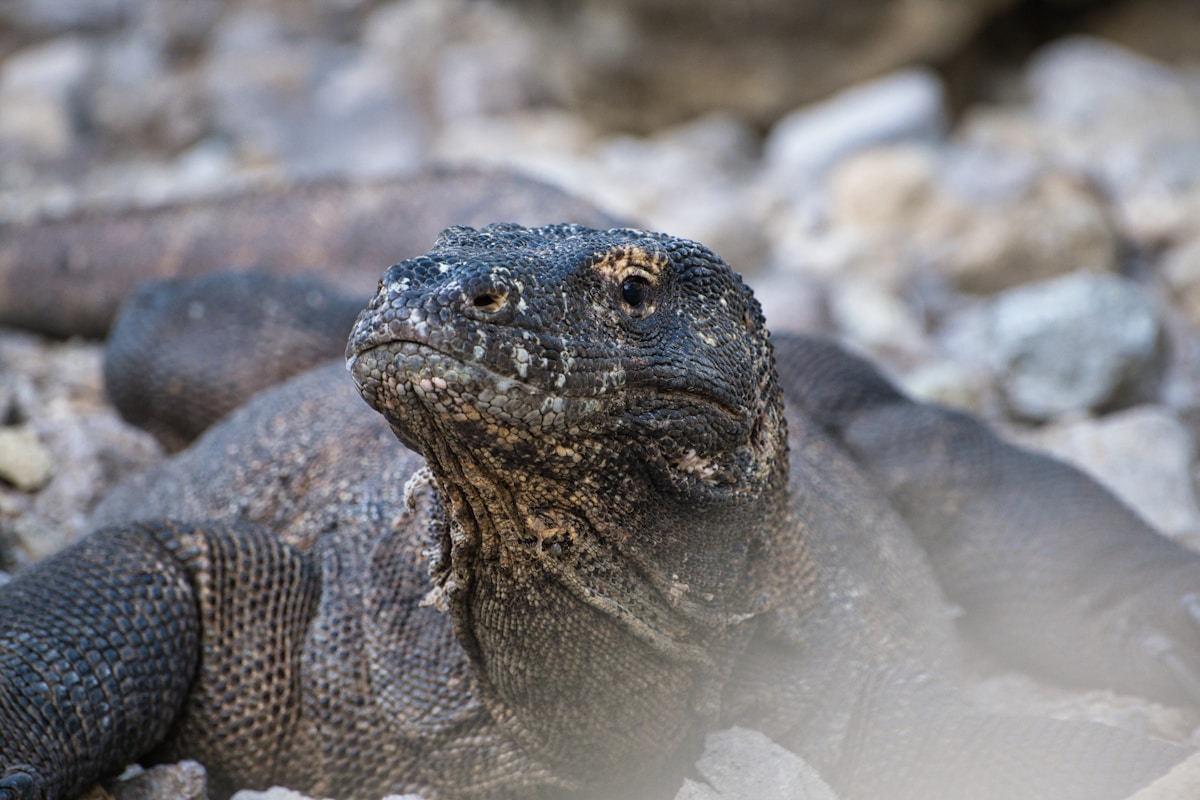
This is Komodo’s trump card. The Komodo dragon - the world’s largest lizard, reaching 3 metres and 90 kg - exists naturally only on Komodo, Rinca, Gili Motang and Flores. Guided ranger walks on Komodo Island (entry approximately IDR 200,000 for foreign visitors) offer genuinely wild encounters. The dragons are not in enclosures - they move freely and are encountered at close range. Rinca Island has a higher dragon density and is closer to Labuan Bajo, making it the better choice for day trips.
Beyond the dragons, Komodo National Park landscapes are compelling on their own - the arid savannahs, pink sand beaches (Pantai Merah) and volcanic peaks are unlike anywhere else in Indonesia.
Raja Ampat’s landscapes are equally distinctive but entirely different: jungle-covered limestone karsts rising vertically from flat water, creating a fractured archipelago of thousands of islands. Cenderawasih Bay (accessible from the north coast) is the only place in the world to reliably snorkel with whale sharks - gentle filter-feeders attracted to fishing boats. Arboreal wildlife includes endemic birds of paradise, though seeing them requires guides and early morning walks.
Getting There
Komodo is accessed via Labuan Bajo, a fishing-town-turned-tourist-hub on the western tip of Flores. Flights from Bali (1.5 hours, approximately IDR 700,000–1,400,000 return) connect via Lion Air and Garuda. Labuan Bajo has ATMs, good restaurants and accommodation to suit all budgets.
Raja Ampat is accessed via Sorong in West Papua. Flights from Bali take 3–4 hours (one-stop via Makassar or Ambon), costing approximately IDR 1,200,000–2,500,000 return depending on timing and airline. From Sorong, a speedboat to Waisai (the main town on Raja Ampat’s main island Waigeo) takes 2 hours and costs IDR 120,000 on the public ferry. Getting to specific dive resorts or homestays can add another 1–3 hours by boat.
The journey to Raja Ampat is significantly longer and more complex. Budget an extra travel day in each direction.
See our Labuan Bajo city guide for accommodation and logistics.
Accommodation and Cost
Labuan Bajo (Komodo base) has the widest range. Budget guesthouses run IDR 200,000–400,000 per night. A solid mid-range hotel with harbour views costs IDR 500,000–900,000. Luxury options (Ayana Komodo Resort) run IDR 3,500,000+ per night.
From Labuan Bajo, boat trips to Komodo National Park islands cost approximately IDR 1,000,000–2,000,000 per person for a shared day trip including snorkelling, beach stops and Komodo/Rinca trekking.
Raja Ampat accommodation divides into two main types: local homestays (IDR 300,000–600,000 per night including meals, extremely basic but authentic) and dedicated dive resorts (IDR 1,500,000–4,000,000 per night including full board and dives). There is almost nothing in between.
Many serious divers choose liveaboards for both destinations - costs run approximately USD 150–280 (IDR 2,400,000–4,400,000) per day including accommodation, food and all dives.
Conservation and Tourism Impact
Both destinations levy conservation fees. The Raja Ampat entrance fee (Rp 1,500,000 for foreign visitors, approximately USD 90, valid for one year as of 2026) funds the Misool Marine Reserve and anti-poaching programmes. Komodo National Park has introduced a booking system and visitor limits on certain islands following overcrowding concerns - check current requirements via the official park authority before booking.
Bali day tours are the easiest way to compare the island’s main areas before committing to a neighbourhood - most operators run flexible pick-and-drop routes. Lombok tours and experiences range from Rinjani crater hikes to Gili island-hopping - a contrast to Bali’s temple-focused itineraries.
Who Should Go Where
Choose Komodo if:
- You’re not a diver or combine diving with other interests
- You want to see Komodo dragons - one of the most unique wildlife encounters on earth
- You have a shorter eastern Indonesia trip (5–7 days works well)
- Budget is a stronger constraint
Choose Raja Ampat if:
- Diving is the primary purpose of the trip
- You want the most biodiverse marine environment on the planet
- You can allocate 10–14 days (getting there and back takes two days alone)
- You’re willing to embrace a more off-grid, expedition-style experience
See our full destination guide to Raja Ampat and Komodo Island. For a combined itinerary that visits both, see our eastern Indonesia adventure itinerary.
More Comparisons
- Flores vs Sulawesi - eastern Indonesia’s land-based alternatives
- Bali vs Java - the western starting point for most Indonesia trips
- Jakarta vs Yogyakarta - the Java stop before heading east
- Bali or Indonesia - full trip planning guide for the archipelago
Ready to Plan Your Trip?
See our itineraries for inspiration:
- 10 Days in Komodo & Flores - dragons, diving and the coloured lakes
- Eastern Indonesia Itinerary - 14 days from Komodo to Raja Ampat
- Bali to Komodo - 10-day eastern Indonesia adventure by boat and flight
🏨 Search hotels in Komodo - Search hotels in Raja Ampat
More Comparisons
- Flores vs Sulawesi - the two islands that bracket Komodo and its nearest eastern rivals
- Bali vs Java - where most trips start before heading east
- Jakarta vs Yogyakarta - the Java gateway options if you’re combining islands
- Bali or Indonesia - the full destination planner for the whole archipelago
Plan Your Trip
✈️ Book your flights to Indonesia 🛡️ Get travel insurance 📱 Stay connected with an eSIM 🚗 Rent a car