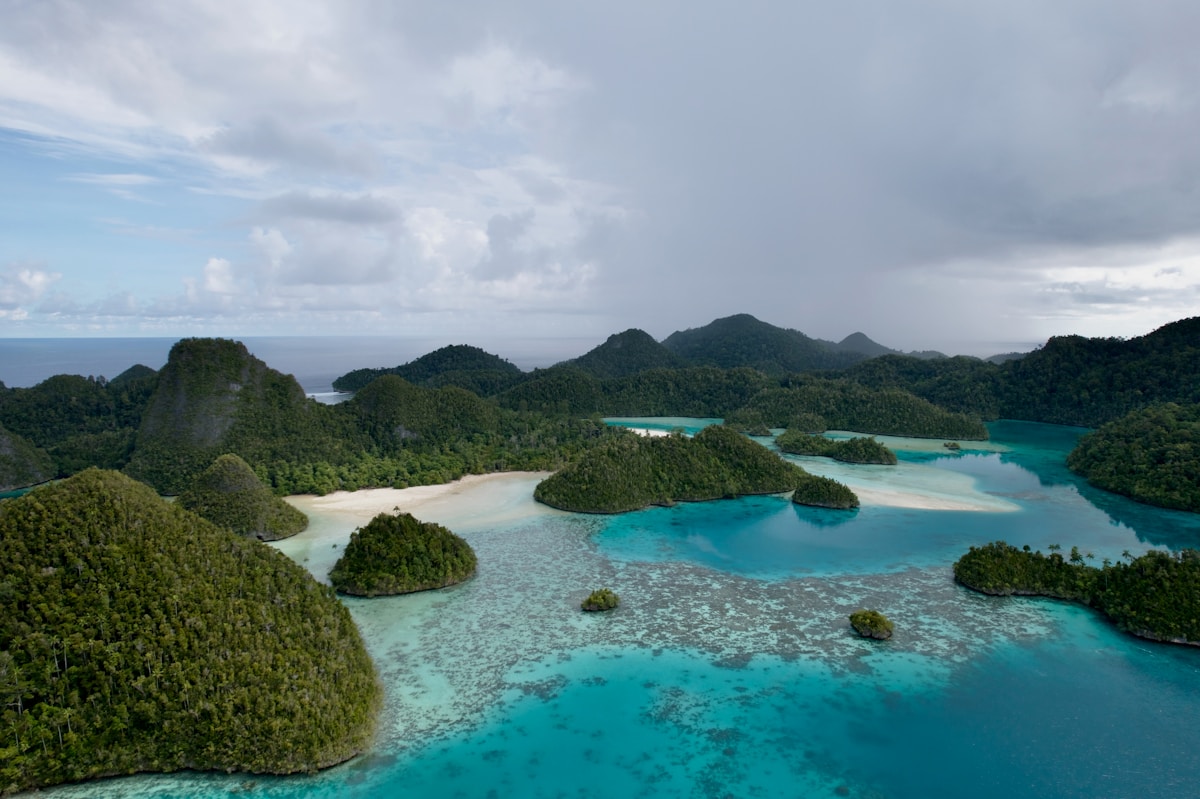
Eastern Indonesia - Flores, Maluku, and West Papua - is among the least-visited parts of the archipelago and among the most rewarding. The distances are long, the infrastructure is basic outside of a few main towns, and the logistics require more planning than a Bali holiday. What you get in return is a route through landscapes and cultures that most visitors to Indonesia never reach: spider web rice paddies carved into volcanic hillsides, tricoloured crater lakes, centuries-old Portuguese and Dutch forts, and the marine biodiversity of Raja Ampat - the most species-rich waters on the planet.
This 14-day route runs east from Labuan Bajo through Flores to Ambon, then north to Sorong and the Raja Ampat archipelago. It requires five short domestic flights and accepts that some of those flights will be small propeller aircraft. Indonesia’s domestic aviation network makes this logistically manageable; the airline to check for eastern routes is Garuda, TransNusa, and Wings Air.
Day 1–2: Labuan Bajo and Komodo National Park
Fly into Labuan Bajo in western Flores - it is served from Bali (1 hour, from approximately IDR 400,000 as of 2026), Jakarta (1.5 hours), and Makassar. The town sits on a sheltered bay and has grown rapidly as the gateway to Komodo National Park, with a reasonable selection of dive shops, guesthouses, and restaurants along the waterfront.
Day 1: After arrival, book a shared boat tour for the following morning. Full-day tours to Komodo and Rinca islands cost approximately IDR 500,000–800,000/person as of 2026 for a shared speedboat including guide fees and park transfers.
Search hotels in Indonesia on Booking.com
Day 2: The standard boat route covers:
- Rinca Island: half-day Komodo dragon tour, park entry approximately IDR 250,000 as of 2026. Komodo dragons are wild animals that genuinely move fast - follow your guide’s instructions.
- Padar Island: the hike to the three-bay viewpoint takes 45–60 minutes return and delivers one of the most dramatic panoramas in Indonesia. Start early to avoid the midday heat.
- Pink Beach: snorkelling above healthy coral with strong fish diversity. The beach’s pink-tinged sand comes from fragments of red coral.
Private boat charters for the full day run IDR 2,500,000–4,000,000 for the vessel.
Accommodation Labuan Bajo: Budget: Gardena Hotel from IDR 250,000/night. Mid-range: Ayana Komodo Resort from IDR 2,500,000/night. Upscale: Plataran Komodo from IDR 4,000,000/night. Search hotels in Labuan Bajo on Booking.com
Day 3–4: Flores Overland - Ruteng
Take a 4-hour drive east from Labuan Bajo along the Trans-Flores Highway to Ruteng, a cool highland town at 1,200m. The drive itself is scenic - volcanic hills, coffee plantations, and small villages visible from the road. Hire a car with driver in Labuan Bajo for the overland section; IDR 500,000–700,000 for the Labuan Bajo–Ruteng leg.
The key Ruteng sight is the Lingko spider web rice fields at Cancar village, 6km west of town - terraced circular paddies divided by paths that radiate from a central point like spider webs. Visit in the morning when the light is best and before tour groups arrive. Entry approximately IDR 20,000 as of 2026.
Ruteng has basic but adequate accommodation (Rima Hotel or Hotel Dahlia from IDR 200,000–350,000/night). The town is cool enough to need a jacket in the evenings. Search hotels in Ruteng on Booking.com
Day 5: Ende and Kelimutu
Continue east from Ruteng to Ende, a 4-hour drive. Ende is a functional port town with historical significance - Soekarno was exiled here by the Dutch from 1934–1938, and his house is preserved as a small museum (entry free, donations welcome).
The reason to be in Ende is the 4am pre-dawn drive to Kelimutu, a volcanic summit 50km from town. The road is a 2.5-hour drive and the trail from the car park to the crater rim is 20 minutes. At sunrise, the three crater lakes are revealed in extraordinary colours - turquoise, deep black, and maroon-red as of recent years, though the colours shift over months and years due to volcanic chemistry. Kelimutu National Park entry approximately IDR 150,000 as of 2026 (foreigners). Bring warm clothing - the summit at 1,690m is cold before dawn.
Accommodation Ende: basic guesthouses from IDR 200,000–300,000/night.
Day 6: Maumere and Flight to Ambon
Drive from Ende to Maumere (3 hours east), Flores’s second city and the location of the island’s main airport for eastern connections. Before the airport, stop at the Sikka Catholic church at the coastal village of the same name - one of Flores’s most atmospheric Portuguese-colonial religious buildings, built in 1899 on the foundation of an earlier 16th-century mission structure. Entry free.
Fly Maumere to Ambon (approximately 1.5 hours, Garuda or Wings Air, from IDR 500,000–900,000 as of 2026). Arrive and check into accommodation in Ambon city.
Accommodation Ambon: Budget: Swiss-Belhotel Ambon from IDR 600,000/night. Mid-range options are limited; the Swiss-Belhotel is the most reliable mid-range property. Search hotels in Ambon on Booking.com
Day 7–8: Ambon and Banda Islands Day Trip
Ambon is the capital of Maluku province and the main hub for the Spice Islands - the archipelago whose nutmeg, cloves, and mace drove the Portuguese and Dutch colonial expansion of the 16th–17th centuries. The city has a mixed Christian-Muslim population with a relaxed, small-city feel.
Day seven: explore Ambon city. The Siwalima Museum holds a good collection of Maluku artefacts including traditional boat-building tools and traditional costumes. The Batu Capeu Dutch fort overlooking the bay dates to 1617. A World War II dive in Ambon Bay is possible - the sheltered bay has several WWII wrecks from the 1942 Japanese air raids in 20–30m of water.
Day eight: Banda Islands day trip by fast boat - the Bandas are 4–5 hours by overnight ferry or 1.5 hours by chartered speedboat (from IDR 2,500,000 for the boat). Banda Neira island has Fort Belgica (a pentagonal Dutch VOC fort completed in 1611), Rumah Budaya (a colonial house museum), nutmeg plantations you can walk through, and outstanding snorkelling on the surrounding reefs. The Banda Sea visibility is often 30m+.
The overnight ferry option (from IDR 200,000) is slower but atmospheric and lets you spend a full day in the Bandas if you can spare the time.
Day 9: Fly Ambon to Sorong
Garuda and Lion Air fly Ambon to Sorong in 1.5–2 hours (from IDR 600,000–1,200,000 as of 2026). Sorong is a small port city in West Papua - the gateway to Raja Ampat - and is mostly useful as a transit point. The ferry to Waisai (the administrative capital of Raja Ampat district) departs Sorong twice daily and takes approximately 2 hours (IDR 130,000 as of 2026). Sort accommodation in Raja Ampat before arriving. Search hotels in Sorong on Booking.com
Day 10–14: Raja Ampat
Raja Ampat (“Four Kings”) is an archipelago of over 1,500 islands north of Sorong, containing more marine species than anywhere else documented on earth. The snorkelling and diving are in a category of their own: 75% of the world’s known coral species, 1,700+ fish species, and manta rays, whale sharks, and wobbegong sharks resident in the same system.
Marine park entry fee: IDR 1,000,000 per person for a single entry pass (valid for one year), paid at the Waisai permit office. This is mandatory and non-negotiable as of 2026.
Key Raja Ampat experiences in five days:
Wayag viewpoint (day 10): a 2-hour boat journey northwest of Waisai. The climb to the viewpoint takes 30–40 minutes over sharp karst rock and delivers an aerial view of hundreds of mushroom-topped islets rising from turquoise water - the image used in most Raja Ampat photography. Boat charter from Waisai or a guesthouse approximately IDR 2,000,000–3,000,000 for the day.
Arborek and Manta Sandy (day 11): Arborek village is a small island community with a traditional weaving industry and direct access to excellent snorkelling. Manta Sandy is a shallow cleaning station in a channel near the island where manta rays circle predictably from approximately July to October. Out of manta season, the channel is still worth snorkelling for the coral quality.
Cape Kri (day 12): holds the world record for fish species counted in a single dive (374 species in a 2001 survey). The site is a strong current channel with schooling fish, reef sharks, and regular barracuda and trevally. Snorkellers in calm conditions can access the shallower sections from above.
Misool (days 13–14): For divers who can reach Misool in the south of the archipelago, the diving is considered even more pristine than the northern islands. A live-aboard dive trip through Misool is the most logical way to access this area (from USD 200/person/night as of 2026 on shared vessels). For those staying shore-based, Four Kings Dive Resort on Misool operates from approximately USD 150/night including three dives/day.
Accommodation Raja Ampat mainland/Waisai area: Budget: Waiwo Dive and Resort from USD 35/night. Mid-range: Papua Paradise Eco Resort from USD 120/night with meals. Upscale: Raja Ampat Biodiversity from USD 200/night all-inclusive. Search hotels in Raja Ampat on Booking.com
Budget Summary
| Category | Budget (USD/day) | Mid-range (USD/day) | Upscale (USD/day) |
|---|---|---|---|
| Accommodation | 20–35 | 60–120 | 200–400 |
| Food | 8–15 | 20–40 | 50–100 |
| Transport (boats + flights) | 30–60 | 60–120 | 100–200 |
| Activities / Dives | 20–50 | 60–120 | 150–300 |
| Daily total (approx) | 78–160 | 200–400 | 500–1,000 |
Prices as of 2026. Excludes the Raja Ampat marine park fee (IDR 1,000,000 one-off) and international flights.
Practical Notes
- Domestic connections: Book all domestic flights as soon as your itinerary is fixed. Eastern Indonesian routes have limited capacity and prices spike significantly close to departure.
- Light aircraft: Wings Air ATR-72s and smaller aircraft serve several legs on this route. Luggage allowances are often 10–15kg; soft bags are recommended over hard suitcases.
- Fuel surcharges: Indonesian airlines charge fuel surcharges that can add IDR 100,000–300,000 to the quoted fare - factor this in.
- Mobile data: Telkomsel has the widest coverage in Maluku and West Papua, but connectivity in Raja Ampat is limited and largely restricted to town centres. Download offline maps before arriving.
- Health: Malaria prophylaxis is recommended for rural Maluku and West Papua; consult a travel health clinic before departure.
Booking a guided day tour on arrival lets you get oriented quickly before exploring independently - most operators include hotel pickup. Bookaway covers inter-island ferries, buses, and trains - search your route, compare departure times, and get tickets confirmed instantly. Before you travel, sort travel insurance for Indonesia - medical evacuation cover is important given the archipelago’s geography and remoteness of some destinations.
Other Eastern Indonesia Destinations
- Sumba island guide - ancient megalithic culture, dramatic cliff landscapes, and the Pasola horse battle festival
- Karimunjawa guide - Central Java’s small coral island group, accessible from Semarang for snorkelling and quiet beaches
- Labuan Bajo travel guide - the Flores harbour town that serves as the western gateway for this itinerary
- Raja Ampat travel guide - birdwing butterflies, manta rays, and the world’s highest recorded marine biodiversity
- Sorong travel guide - the transit hub for Raja Ampat: where to stay, eat, and arrange permits
- Ambon travel guide - the Maluku capital: a base for exploring the Banda Islands
- Raja Ampat diving guide - dive sites, operators, and what to expect underwater in the Coral Triangle’s heart
- 10 days in Komodo and Flores - if you want a deeper Flores route rather than heading straight to Maluku
Book Your Trip
- Flights - Find the best fares to Indonesia · flights guide
- Travel Insurance - Get covered before you go · insurance guide
- eSIM - Stay connected from landing · eSIM guide
- Airport Transfers - Pre-book your transfer from Bali or Jakarta
- Car Rental - Compare prices across providers · car hire guide
- Tours & Activities - Browse Indonesia tours on GetYourGuide