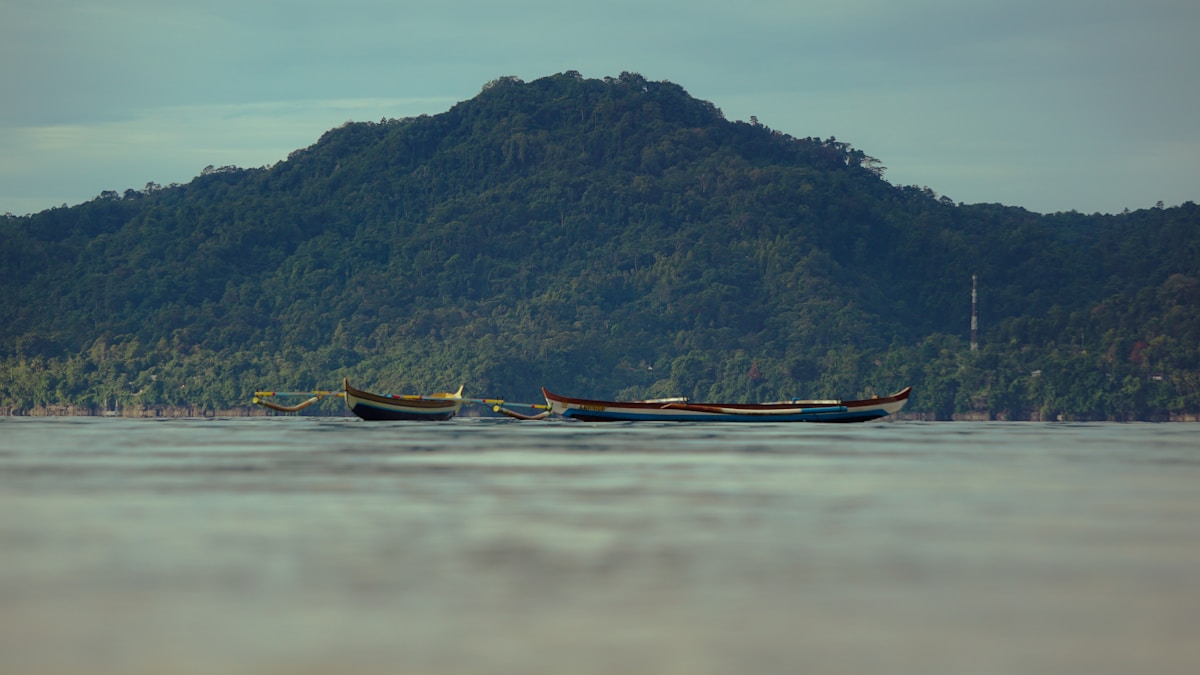
Ambon: Spice Islands History & Banda Sea Diving
Dutch colonial forts, Banda Sea diving, and macro photography heaven - Ambon is the original Spice Islands' blend of living history and coral paradise.
Guides for Ambon
Ambon is the capital of Maluku - the province that was, for three centuries, the most strategically valuable territory on Earth. This small city sits at the heart of the original Spice Islands: the cloves that grew only here and on the Banda Islands, and the nutmeg found nowhere else in the world, drove the entire architecture of European colonial expansion from the 15th century onwards. The Dutch East India Company (VOC) - the world’s first publicly traded company and, adjusted for inflation, arguably the most profitable company in history - was built on maintaining a monopoly over Ambon’s spice trade. The English, Portuguese, and Spanish all fought to break that monopoly. Thousands of indigenous Malukan people died to maintain it.
That history is palpable in Ambon. The Dutch forts survive. The colonial grid of the old town is still readable. And the clove and nutmeg trees still grow on the surrounding hillsides.
Below the water, Ambon Bay and the Banda Sea contain some of the most remarkable diving in the Indian Ocean.
The History in the City
Fort Victoria is the oldest Dutch fortification in Indonesia, constructed in 1575 by the Portuguese (as Fort Nossa Senhora da Anunciada) and taken by the Dutch in 1605. The exterior walls and some bastions survive; the interior is partially accessible. Entry to the exterior is free; interior access is limited and variable. The fort sits in the centre of the modern city and is the clearest physical remnant of the colonial period.
Siwalima Museum covers the natural and cultural history of Maluku in detail - traditional weapons, musical instruments, spice trade artefacts, and the colonial history of the VOC’s operations in the archipelago. Entry costs approximately IDR 10,000; hours are Tuesday to Sunday 8am–4pm.
Ambon War Cemetery is a Commonwealth War Graves Commission cemetery maintained to the commission’s meticulous standard, containing the graves of 2,052 Allied servicemen who died in Maluku during the Second World War. A Japanese cemetery on the opposite hill overlooks the same valley. Both are free to visit. The WWII context in Ambon includes the infamous Ambon POW camp, where 77,000 Australian and Dutch prisoners were held under brutal conditions; survivor accounts are referenced at the cemetery.
Pintu Kota (City Gate) is a natural rock arch on the Leitimor peninsula, approximately 20 kilometres from the city centre. The arch frames a view of the Banda Sea and is a local landmark accessible by ojek (approximately IDR 30,000–50,000 return) or hired motorbike.
Natsepa Beach is the most popular local beach, approximately 18 kilometres east of the city - a white sand strip with several warung selling rujak (fruit salad with spicy peanut sauce, a Maluku tradition). Entry costs approximately IDR 5,000; the beach is busiest at weekends with domestic visitors.
Spice History Beyond Ambon: Banda Islands
The Banda Islands, 150 kilometres southeast of Ambon, were the sole source of nutmeg in the world until the Dutch monopoly was broken in the 19th century. The VOC’s 1621 massacre of the Banda islanders - killing an estimated 90% of the 15,000 indigenous population to maintain the nutmeg monopoly - is one of the most documented atrocities of the colonial spice trade. The Bandas remain extraordinarily beautiful, with Dutch colonial ruins, nutmeg plantations, and spectacular diving over walls that drop into the Banda Sea abyss. Getting there requires a flight from Ambon to Banda Neira (approximately 1 hour) or a 10-hour overnight ferry; the Bandas are a major extension worth planning into any Maluku itinerary.
Diving in Ambon and the Banda Sea
Ambon Bay is a world-renowned site for macro photography - the muck diving here is considered among the best in Asia, with species including the Ambon scorpionfish (effectively invisible against sand), mimic octopus, various species of frogfish, rhinopias, and rare nudibranch species. The visibility in the bay is lower than open ocean (5–10 metres is common) but the density and rarity of small marine life compensates entirely.
Banda Sea pelagic diving is a different proposition entirely - open ocean diving in waters with strong currents, excellent visibility (often 30+ metres), and regular encounters with hammerhead sharks, whale sharks, mola mola (ocean sunfish), and large schools of pelagic fish. Dive operators in Ambon run liveaboard itineraries into the Banda Sea from approximately USD 200–350 per person per night; the season for mola mola is typically August–October.
Local dive operators in Ambon charge approximately USD 60–100 per dive including equipment; multi-dive packages reduce this to approximately USD 50–70 per dive.
Where to Eat in Ambon
Maluku cuisine features fresh seafood and the papeda-kuah kuning combination - sago porridge served with yellow fish soup made from tuna or mackerel with turmeric, lemongrass, and lime. It is simple and distinctive.
The best seafood warung operate along the Ambon waterfront in the evenings - grilled fish, clams, and crab at approximately IDR 60,000–120,000 per person. Ask your hotel for current recommendations as the best spots shift seasonally.
Where to Stay in Ambon
Aston Ambon is the most comfortable property in the city, with reliable air conditioning, a pool, and a central location. Rates from approximately USD 50 per night as of 2026.
Swiss-Belhotel Ambon offers comparable standards at similar pricing. Rates from approximately USD 45 per night.
Manise Hotel is a well-regarded mid-range option with a loyal local following and good breakfast. Rates from approximately USD 35 per night.
Search hotels in Ambon on Booking.com
For hotel recommendations across all budgets, see our where to stay in Ambon guide.
Getting to Ambon
Pattimura Airport (AMQ) serves direct flights from Makassar (approximately 2 hours) and connections from Jakarta via Makassar. Garuda Indonesia, Lion Air, and Batik Air operate this route. The airport is approximately 35 kilometres from the city centre; taxis cost approximately IDR 100,000–150,000.
Pelni ferry services connect Ambon with Sorong and other eastern Indonesian islands - a realistic option for travellers making extended journeys through the archipelago.
Practical Notes
Ambon is the most accessible base in Maluku and the departure point for onward travel to the Banda Islands, Seram, and the Lease Islands (Saparua, Nusalaut, Haruku). Plan at least 3–4 days here - one for the city history, one for bay diving, and ideally two for a Banda Islands extension.
The city is predominantly Christian in its urban core; note that the surrounding villages vary between Muslim and Christian communities and the cultural mix is one of the more complex in Indonesia. Relations have been peaceful since the 1999–2002 communal conflict that killed thousands; current conditions are stable and visiting is safe.
Browse tours and day trips in Ambon - a half-day with a local guide is one of the most efficient ways to get oriented on arrival. For airport transfers into Ambon, Kiwitaxi offers fixed-price pickups from the main airports - no surge pricing and the driver meets you at arrivals.
More Ambon and Maluku Guides
- Indonesia diving guide - the full picture of Indonesia’s dive destinations, including the Banda Sea and Maluku
- Indonesia liveaboard diving - how to reach the Banda Sea, Raja Ampat, and Komodo on a liveaboard
- Eastern Indonesia adventure itinerary - combining Ambon, Banda Islands, and the far east of the archipelago
- Getting around Indonesia - domestic flights, ferries, and Pelni routes for island-hopping in Maluku
- Sorong travel guide - the Papua gateway city used for Raja Ampat access on the eastern leg of this route
- Raja Ampat diving guide - the world-class dive destination north of Sorong, reachable via Ambon on the eastern route
- Indonesia colonial history - the Dutch East India Company’s role in the Banda Islands and the original spice trade
Book an experience
Top experiences in Ambon
Explore the best tours and activities in Ambon , with instant confirmation and free cancellation on most bookings.