Tirta Gangga is a royal water garden in Karangasem regency, east Bali, about 7 km north of Amlapura and in view of Mount Agung on clear mornings. Its tiered fountains, koi ponds and a long line of stepping stones make it one of the most photographed gardens on the island, and the setting among rice terraces is far calmer than anything on the southern tourist circuit. This guide covers the 2026 entrance fee, hours, the swimming pool, the best time to go and how to fit it into an east Bali day.
What Tirta Gangga is
The name means “water of the Ganges”. The complex was begun in 1946 by the last raja of Karangasem as a royal retreat and ritual bathing place, drawing on spring water that is regarded as holy. It combines Balinese, Chinese and European design: stone fountains in the shape of tiered pagodas, carved demon and deity statues rising from the ponds, and a central pool crossed by a path of round stepping stones.
The Mount Agung eruption of 1963 damaged parts of the palace, and the grounds have been restored in stages since. Today it works as a public garden and as a small temple precinct, so you will see offerings next to the fountains and local families using the spring pools.
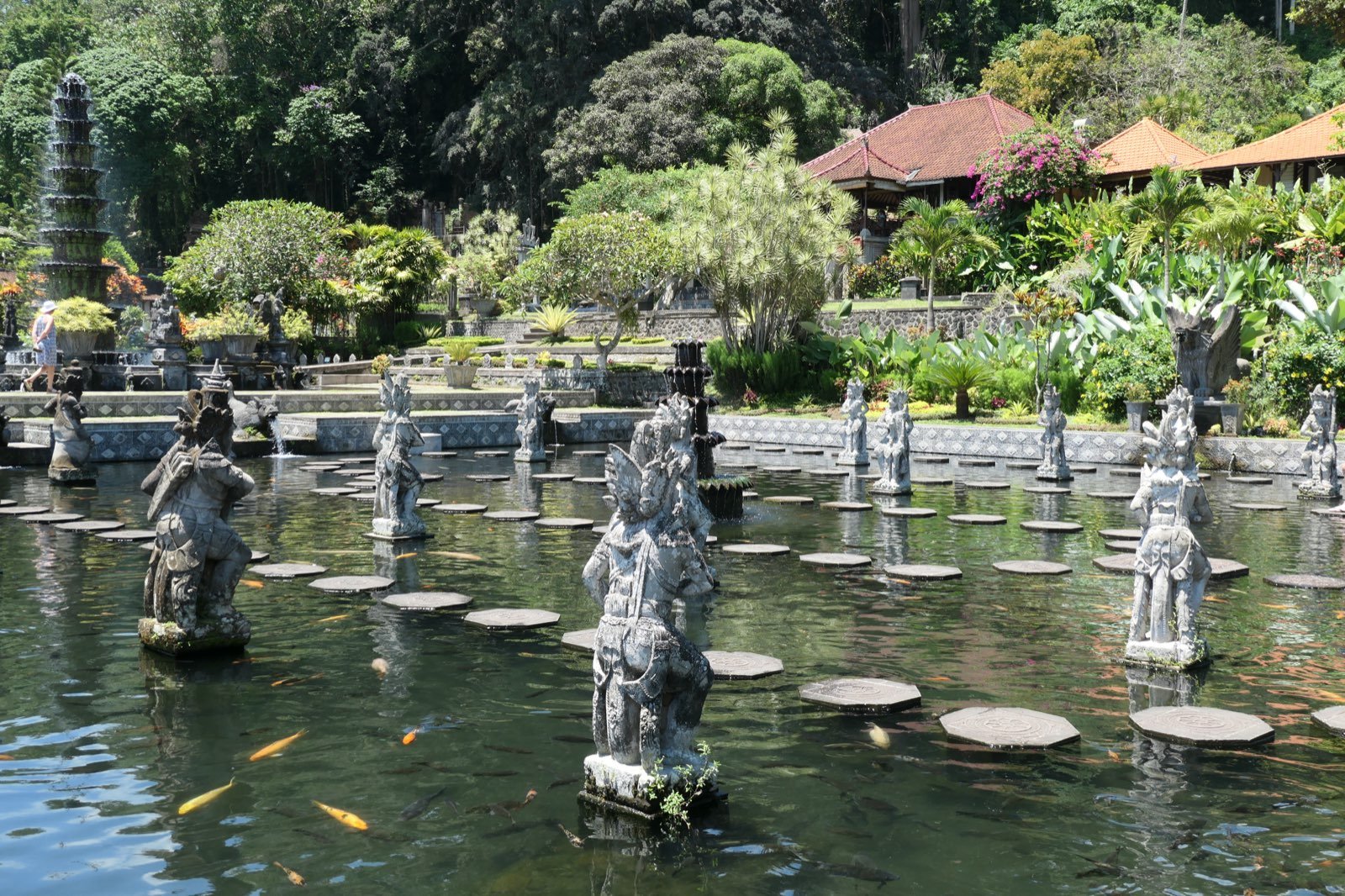 Statues and stepping stones in the main pond. Photo: Anandajoti Bhikkhu / Wikimedia Commons, CC BY-SA 4.0.
Entrance fee, hours and costs (2026)
- Entry: IDR 90,000 for foreign adults and about IDR 45,000 for foreign children aged 5 to 12 as of 2026. Cash is the safe option. Many older guides still quote IDR 40,000 to 50,000 and are out of date.
- Hours: most guides list about 6am to 7pm daily with last entry near 6pm, while a few say 7am to 6pm. Confirm at the gate.
- Swimming pool: an extra fee, roughly IDR 10,000 to 20,000 depending on the source and season.
- Parking: about IDR 5,000 for a scooter and IDR 10,000 for a car.
- Extras: fish food, a small boat on the pond and sarong hire cost a few thousand rupiah each, and you do not need any of them to see the main sights.
Prices change, so treat these as approximate figures as of 2026 and check against the ticket board at the booth.
Best time to visit
Go in the first hour after opening. By 10am tour vans from the south arrive and the stepping stones become a queue for photographs. Early light also gives the best views of the terraces and, in the dry season from May to October, a chance of seeing Mount Agung behind the garden. Late afternoon after 4pm is the second quietest window.
The wet season, November to March, brings cloud and afternoon rain but also greener terraces and fewer visitors. Weekends and Balinese holidays are busier because local families picnic here.
What to do inside
- Central fountain and ponds. Walk the lower garden first, where the multi-tiered fountain and the stone figures sit in the main ponds.
- Stepping stones. The route across the large pond is the signature photo. Wet stones are slippery, so wear sandals with grip and let people pass.
- Swimming pools. Two spring-fed pools sit on the upper levels. The water is cold, clear and often quiet in the morning.
- Upper terraces and temple. Climb the stairs for views over the ponds and a look at the small Patirthan temple area. Cover your shoulders and knees near shrines.
- Feed the koi. Fish food is sold by the pond, which is a hit with children.
Dress code: modest clothing near the temple areas. A sarong can be borrowed or rented at the gate.
Getting there
Tirta Gangga has no public bus that suits visitors, so most people come by driver or scooter.
- From Candidasa: about 30 minutes and 15 km by scooter or driver. Our Candidasa guide covers scooter hire and the east Bali circuit.
- From Amed: about 40 minutes by road. See the Amed guide for the coast route.
- From Ubud: about 2 hours, approximately IDR 700,000 to 900,000 for a day driver as of 2026, often combined with Lempuyang.
- From Seminyak, Canggu or Uluwatu: 2.5 to 3 hours each way, which is why it is best folded into a full-day east Bali trip rather than visited alone.
Parking is a short walk from the ticket office. Grab and Gojek pickups are patchy in this area, so arrange a return with your driver.
Pair it with these east Bali stops
- Lempuyang temple (Gates of Heaven): about 25 minutes away and best done first thing, before the queues form. See our Lempuyang queue and fee guide.
- Besakih Mother Temple: roughly 1 to 1.5 hours away. Our Besakih temple guide covers the entry fee and the guide rules.
- Tenganan village: a walled Bali Aga village known for double-ikat weaving, on the way to Candidasa.
- Karangasem rice terraces and Sidemen valley: quiet scenic drives with warung lunches. Read about Sidemen.
- Amed: black-sand beaches and snorkelling at the end of the day, see Amed things to do.
A typical full-day order is Lempuyang at opening, Tirta Gangga mid-morning, lunch near Sidemen, then Besakih or a return to your base.
Should you book a tour?
If you are based in the south or Ubud, a guided east Bali day removes the long driving and often includes Lempuyang, the water palace and a rice terrace stop. Browse east Bali tours from Amed or tours from Candidasa. Shared tours start from approximately $45 to $50 per person as of 2026, and private cars cost more but let you choose the timing. Compare options in our Bali temple tours guide.
Where to stay nearby
Tirta Gangga has a handful of homestays and small hotels overlooking the ponds and terraces, which are the best way to see the garden with no crowds. For more choice, base yourself in Candidasa or Amed and drive in, or compare listings on our where to stay in Candidasa page. Tirta Gangga is also close to the Sidemen valley for a quiet rural stay.
Quick checklist
- Arrive within an hour of opening.
- Bring cash for entry, parking and the pool.
- Wear sandals with grip and quick-dry clothes if you plan to swim.
- Cover shoulders and knees near temple areas.
- Combine with Lempuyang or Besakih to justify the drive.
Official visitor information for Bali and Indonesia is on the official Indonesia tourism site.