Pura Besakih is the largest and most sacred temple complex in Bali, set on the southwestern slope of Mount Agung at around 1,000 metres. It is the “Mother Temple” for all Balinese Hindus, a hillside of terraced courtyards and black stone gateways with Agung rising behind. It is also the Bali temple where the visitor experience matters most, because the entry process is more confusing than anywhere else. This guide gives the 2026 fee, the rules on guides and how to avoid paying for things you do not need.
What Besakih is
Besakih is a complex of shrines and temples, not one building. Wikipedia and local sources count 23 related temples, with Pura Penataran Agung as the main one. The three highest temples are dedicated to the Hindu trinity: Brahma, Vishnu and Shiva. Every regency in Bali maintains its own shrine here, and ceremonies run almost daily, with major festivals drawing thousands of worshippers.
Mount Agung is Bali’s highest and holiest mountain, and the complex has been a centre of worship for centuries. Besakih sits on the volcano’s slopes, and the 1963 eruption, which famously stopped just short of the main temples, remains part of local belief.
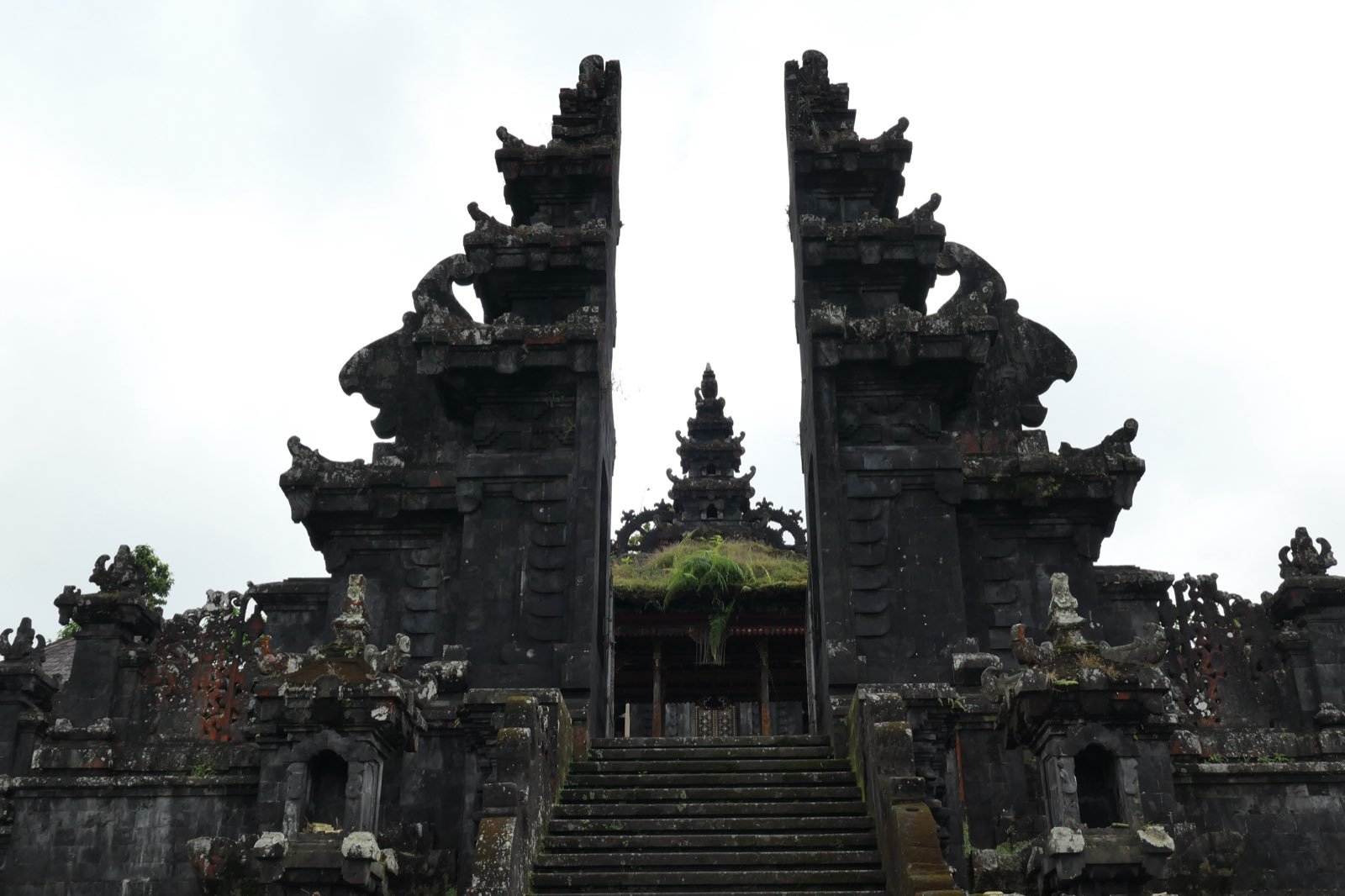 The inner gateway at Besakih. Photo: Anandajoti Bhikkhu / Wikimedia Commons, CC BY-SA 4.0.
Entrance fee and opening hours (2026)
- Entry: IDR 150,000 for foreign adults and about IDR 80,000 for foreign children as of 2026, per most current guides. One outlier lists IDR 90,000 for adults, and older guides quote much lower prices, so confirm at the booth.
- What is included: the official ticket normally includes a sarong, a wristband and an optional local guide. Some sources describe the guide as mandatory, others as optional.
- Hours: open during daylight hours. Most guides give roughly 7am to 6pm, but ceremonies can close inner areas, so check with your driver.
- Parking: about IDR 5,000 for scooters and IDR 10,000 for cars, usually cash only.
- Shuttle: a return shuttle up the hill costs about IDR 20,000 on some routes.
- Payment: cash is safest, although cards are accepted at the official office according to some sources.
Fees on older pages and blogs differ widely, so go by the posted board at the ticket office.
Guide rules and scam warnings
Besakih has a long history of unofficial “guides”, touts and youth groups who ask for extra payments from foreign visitors. Wikipedia notes that groups from nearby villages have charged illegal levies, sometimes quoted at around $50, and advises tourists to refuse. Current guides say the situation has improved but not disappeared.
How to avoid trouble:
- Buy tickets only at the official ticket office at the main entrance, and keep the wristband.
- Ignore anyone in the car park or on the road up who says you must hire them first or pay a “donation” to proceed.
- Agree a guide fee in advance if you want a guide. A guide explains the shrines and ceremonies, which are hard to understand otherwise, and is worth it for a first visit.
- Do not buy a sarong from vendors outside. One comes with your ticket.
- Take a photo of the posted prices at the booth in case anyone disputes them.
- Use a driver you know. A trusted driver can park in the right place and walk you to the ticket office.
If you feel pressured, a tour with a licensed guide removes the whole issue. See the Bali temple tours guide for options.
Dress code
Cover your shoulders and legs to the knee. A sarong and sash come with the official ticket. Menstruating women are asked to stay out of inner shrine areas, and only worshippers enter the innermost courtyards. Avoid shorts and sleeveless tops, and carry a light layer because Besakih is cooler than the coast.
Best time to visit
Arrive between 7am and 9am. Mount Agung is clearest in the early morning and tour groups arrive later. By midday the mountain is often wrapped in cloud and the terraces are crowded. Dry-season mornings from May to October are best. Expect closures or crowds on full-moon, new-moon and major festival days.
Getting there
- From Ubud: 1 to 1.5 hours, approximately IDR 600,000 to 900,000 by day driver as of 2026.
- From Seminyak, Canggu and Kuta: 2 to 2.5 hours each way.
- From Candidasa: about 1 hour. See the Candidasa guide.
- From Sidemen: about 30 to 40 minutes, so a Sidemen stay makes the early start easy.
- Public transport: not practical. Hire a driver, join a tour or ride a scooter on the mountain road.
Pair it with these nearby stops
- Sidemen valley: rice terraces and a quiet lunch. See the Sidemen guide.
- Goa Lawah bat cave temple and Klungkung: on the road between Besakih and the coast.
- Tirta Gangga: the water palace is covered in our Tirta Gangga guide.
- Lempuyang temple: Gates of Heaven fees and queues.
- Tirta Empul: on the way back to Ubud, see the Tirta Empul guide.
A typical day is Besakih at 8am, Sidemen for lunch, Tirta Gangga and Lempuyang in the afternoon, or the reverse starting from Candidasa.
Should you book a tour?
Because of the entry confusion and the long drives, Besakih is one temple where a guided day is worth the money. Look for tours that include the official ticket and a licensed guide. Browse Besakih and Sidemen tours or compare combined east Bali circuits in our Bali temple tours guide. Group day tours covering Besakih, Tirta Gangga and Lempuyang start from approximately $50 per person as of 2026.
Where to stay nearby
The quietest base is Sidemen, 30 to 40 minutes from the temple, with rice-terrace views and a village feel. Candidasa is another option for the coast. See our where to stay in Sidemen page for areas.
Quick checklist
- Arrive by 8am.
- Buy tickets only at the official ticket office.
- Wear covered shoulders and knees.
- Decide in advance whether you want a guide and agree the price.
- Bring cash for parking.
For the cultural background to Besakih and Bali’s other major temples, read our Bali temples guide. Official visitor information is on the official Indonesia tourism site.