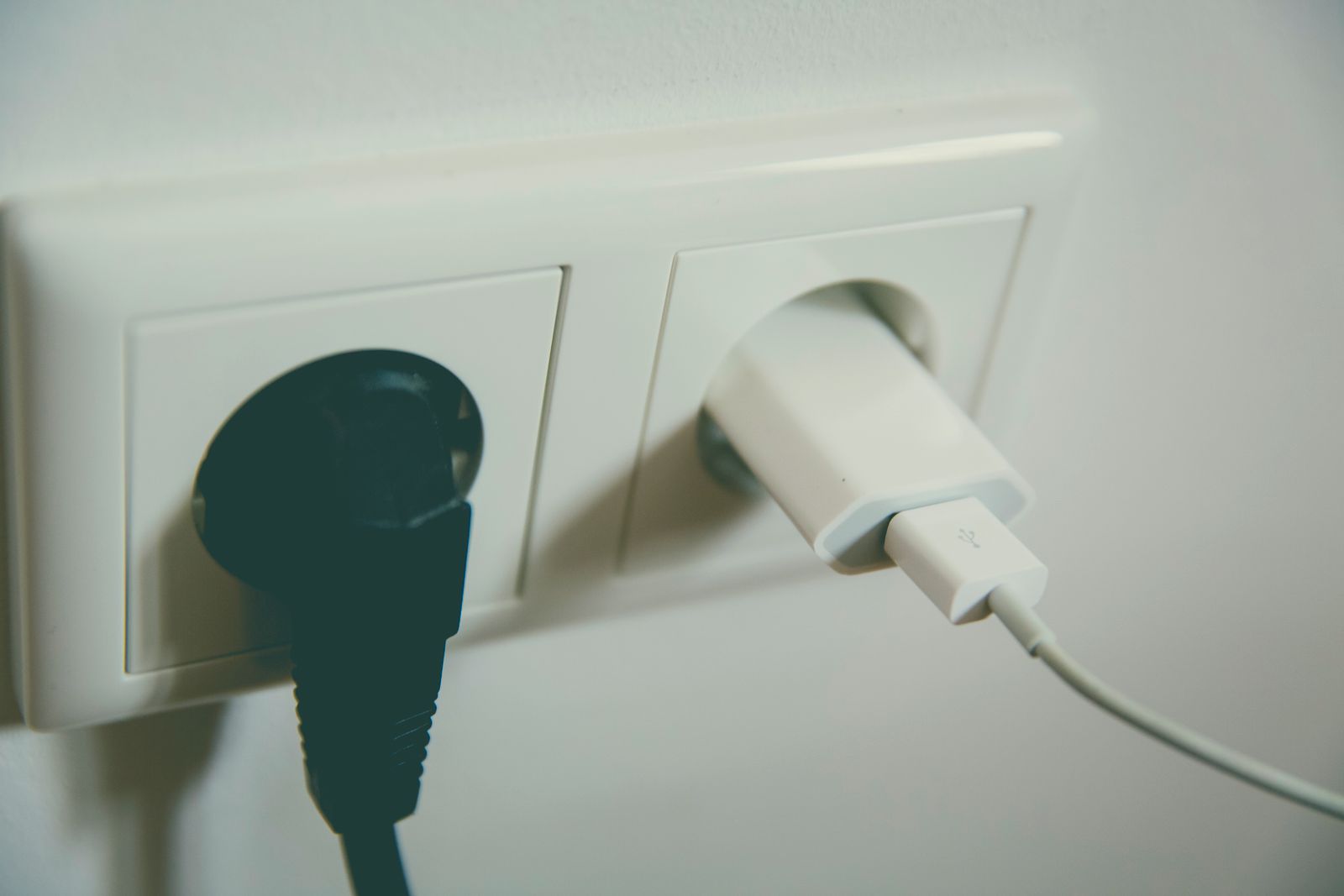
Indonesia runs on 230 volts at 50 hertz, with Type C and Type F sockets. If you are arriving from continental Europe, your plugs will mostly work as they are. If you are coming from the UK, North America, Australia or India, you need a plug adapter, and North Americans also need to check their devices for dual voltage. This page covers exactly what to bring and what to expect once you are on the ground. For the wider kit list, see our Indonesia packing list.
Plug types in Indonesia
Two socket types are standard across the archipelago:
- Type C: two round pins, 4.0 to 4.8 mm thick, no earth. This is the thin “Europlug” found on most phone chargers and small devices.
- Type F (Schuko): two round pins plus earth clips on the sides. Most newer buildings, villas and hotels have these.
In practice, one socket often accepts both. Indonesia’s recessed wall sockets suit the common European two-pin plug well, which is why a single Type C/F adapter solves the problem everywhere. Travellers with Type G (UK), Type A/B (US, Canada, Japan), Type I (Australia, New Zealand, China) or Type D (India) plugs will need an adapter.
Older homestays in places such as Ubud, Sidemen and rural Java sometimes have worn or loose sockets that grip plugs poorly. A plug that slips out halfway can overheat or simply charge intermittently. If a socket feels loose, ask for another or use a multi-way extension board.
Voltage and frequency
The grid is 230V at 50Hz. Here is how that affects what you bring:
- Phone, laptop, tablet, camera, e-reader and power bank chargers: nearly all are dual voltage (100-240V). Plug adapter only.
- Hair dryers, straighteners, curling tongs, electric razors and travel kettles: often single voltage. A 110V device on 230V can fail within seconds. Check the label.
- CPAP machines and medical devices: check the manufacturer’s rating and carry the original power supply.
Voltage converters and transformers are heavy and rarely necessary. If an appliance is not dual voltage, leave it at home and borrow or buy locally.
Which adapter to bring
We suggest one compact universal adapter with at least two USB ports, rated for 230V and ideally with a built-in fuse. Look for a model that is Type C/F compatible on the output side. In Indonesia you can buy basic adapters at electronics counters in malls such as those in Seminyak, Kuta and Jakarta, and through online marketplaces, for approximately IDR 30,000 to 100,000 (as of 2026). Buying before you fly is more reliable, because airport shops charge a premium.
Practical advice:
- Bring two adapters if you travel as a couple, since villa rooms often have a single usable socket near the bed.
- A short multi-way extension lead (with surge protection) lets you charge phone, camera, drone batteries and a laptop from one socket.
- Keep adapters in your hand luggage. Lithium power banks must also travel in the cabin.
Power cuts and remote islands
Bali, Java and the major tourist centres have reliable electricity. Short blackouts during tropical storms are normal, especially in the wet season (see our rainy season guide), but they rarely last long.
Outside the main circuit, plan for less:
- Komodo, Flores and Sumba: some eco-lodges and homestays run solar or generator power for only a few evening hours.
- Raja Ampat: most homestays have limited power and often no air-conditioning charging after midnight.
- Rinjani, Bromo and other volcano treks: there is no mains power, so bring a charged power bank (10,000 mAh minimum) and a headlamp with spare batteries.
- Liveaboards and boat transfers: sockets are usually Type C/F on board, but supply is shared, so charge gadgets at the lodge before departing.
A 20,000 mAh power bank covers around four full phone charges and is the single most useful electrical item for island hopping.
Staying connected
Most villas and cafes have wifi, but for dependable data while moving around, an Indonesia eSIM activates on arrival and avoids hunting for a SIM kiosk. Our Indonesia internet and SIM guide compares the options. If you work remotely, see how power and connection reliability differ by area in our Canggu digital nomad guide.
Safety tips for electricity
- Do not use electrical devices in wet bathrooms or beside plunge pools. Earth connections in older buildings may be missing.
- Avoid charging devices on the bed or under pillows when a socket is warm or loose.
- Unplug before heavy storms; voltage spikes can damage laptops.
- Pack a universal adapter with surge protection rather than relying on the cheapest roadside model.
Ready to sort the rest of your trip? Our first-time Indonesia guide covers visas, money and routes, and you can compare Indonesia travel insurance to cover lost or damaged electronics. Once your kit is sorted, browse Bali tours to plan your days.