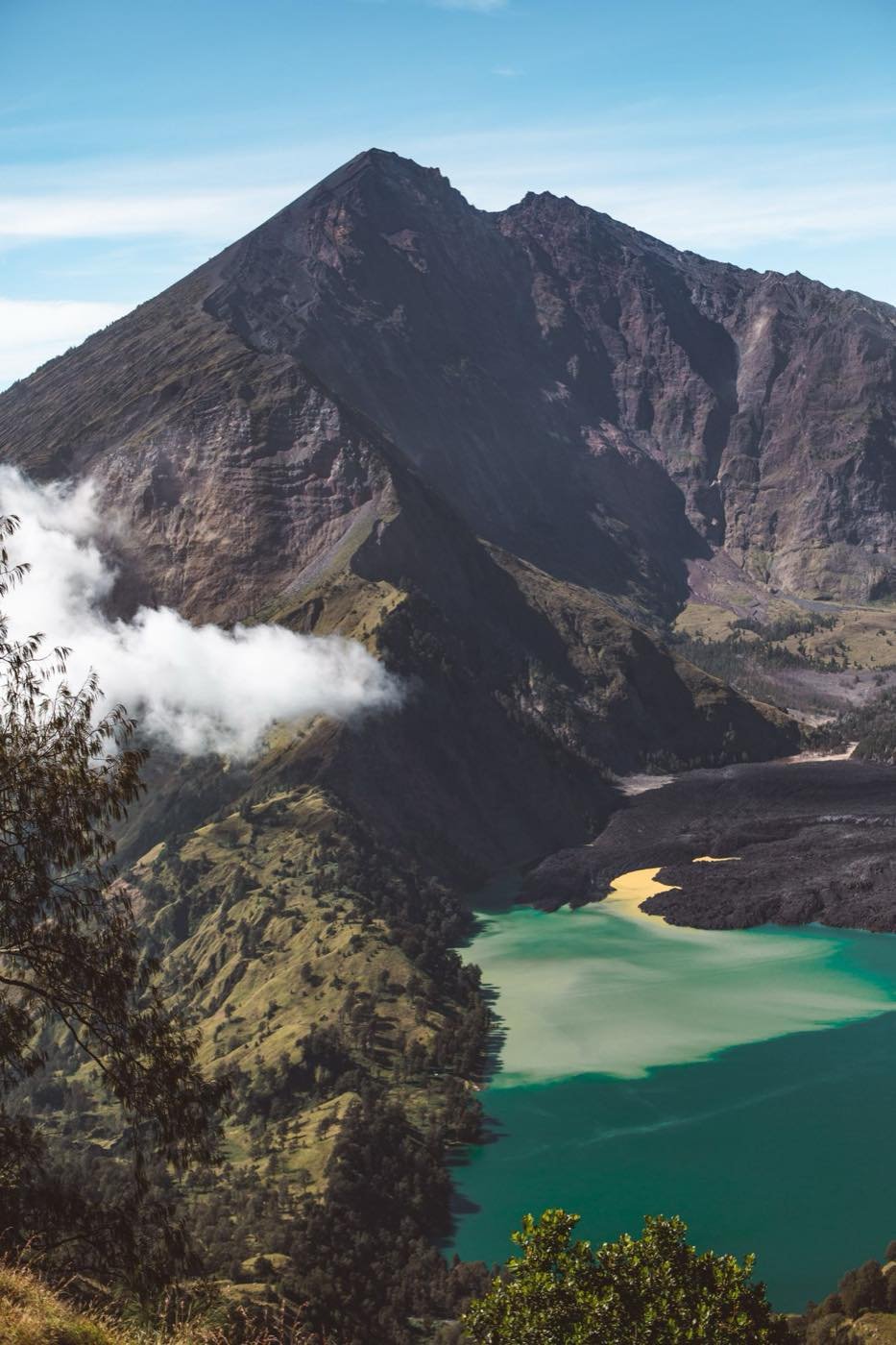
The five best volcano treks in Indonesia are Mount Batur (Bali), Mount Bromo and Kawah Ijen (East Java), Mount Rinjani (Lombok) and Mount Semeru (East Java). Batur and Bromo suit beginners, Ijen is a moderate pre-dawn hike, and Rinjani and Semeru need fitness and multiple days. Costs below are approximate, as of 2026.
We rank them from easiest to hardest, so you can match a trek to your fitness and the days you have. Every one of these volcanoes is active, so trail closures happen; confirm status with the relevant park office before you commit. The Wonderful Indonesia tourism site is a good starting point for current information.
1. Mount Batur, Bali (Easiest)
Batur is the classic first volcano. The main ascent starts at Toya Bungkah on the shore of Lake Batur and takes about 2 hours at a steady pace, through secondary forest and then loose volcanic rock. At the rim you can walk sections for views over the caldera, Mount Agung and, on clear mornings, the sea.
Cost: guide fees run approximately IDR 300,000-500,000 per guide for a group of 1-4 people; hotel-arranged packages from Ubud are approximately IDR 500,000-700,000 per person including transport.
Getting there: about 1-1.5 hours from Ubud by road, 2 hours from Kuta. Read our full Mount Batur sunrise trek guide, or compare Ubud tours.
Local tip: guides on the summit often sell hard-boiled eggs cooked in volcanic steam for around IDR 10,000 each. Bring your own food as backup.
2. Mount Bromo, East Java
Bromo sits inside the Tengger Caldera at 2,329m, rising from a flat sea of volcanic sand called the Lautan Pasir. The famous view is from Penanjakan I (2,770m), where the Tengger massif and Semeru’s plume catch first light. From the parking area, 253 concrete steps lead to the crater rim, about 20 minutes on foot.
Cost: a jeep for the sunrise and crater circuit from Cemoro Lawang starts from approximately IDR 450,000-700,000 per jeep, not per person. Horses to the base of the steps are approximately IDR 100,000-150,000 return.
Local tip: arrive at Penanjakan by 4:30am for a front-row spot, because the platform is crowded on weekends and in peak season. Details are in our Mount Bromo guide and Bromo sunrise tour page; you can also browse Bromo tours.
3. Kawah Ijen, East Java
Ijen holds the world’s largest acidic crater lake, roughly 1km across and 200m deep, with an improbable turquoise colour. Sulphur miners carry loads out of the crater daily. The trail runs 3km from the Paltuding parking lot (1,850m) to the rim (2,386m), about 1.5 hours up, then a steep 30-40 minute descent to the lake edge. Allow 5-6 hours in total.
Cost: gas masks can be rented at Paltuding for approximately IDR 30,000.
Local tip: the rented masks are basic dust-style respirators, but they significantly reduce inhalation at the crater floor. Read the Kawah Ijen guide or see Banyuwangi tours for the base town.
4. Mount Rinjani, Lombok
Rinjani reaches 3,726m and is Indonesia’s second-highest volcano. The Senaru route takes 3 days and 2 nights: day one climbs through forest to the crater rim at about 2,640m (5-7 hours), with camp overlooking the Segara Anak lake. The optional summit push leaves at 2am and takes 3-4 hours up loose scree. Sembalun (east) is more exposed and arguably more dramatic, and Torean (west) is the least crowded.
Local tip: permits and trail status come from the park authority, so check the Mount Rinjani National Park site before booking. Our Rinjani trek guide covers the routes in full, and you can compare operators through Rinjani tours. Plan Lombok stays with where to stay in Lombok.
5. Mount Semeru, East Java (Hardest)
Semeru is the highest peak on Java and a demanding 2-day trek from Ranu Pani (2,100m). Day one is 13km to Ranu Kumbolo (2,400m), a crater lake about 1.5km across and the emotional centrepiece of the trip. Summit attempts start from camp at midnight to 1am: roughly 6-7 hours up and 4-5 down, to beat the heat and the volcanic gas.
Cost and logistics: Malang is the gateway, with trains from Surabaya taking about 90 minutes from IDR 30,000. Guesthouses at Gubugklakah near the trailhead start from IDR 150,000. Nights at Ranu Kumbolo drop to 5-10°C, so pack a sleeping bag rated to at least 0°C.
Read the Mount Semeru trekking guide before going.
Which Volcano Should You Choose?
Pick Batur if you have one morning and want an easy sunrise. Pick Bromo and Ijen together if you are crossing East Java, since both are near each other and can share a base. Choose Rinjani if you have 3-4 days and are fit, and Semeru if you want a harder, quieter camping trek. If you prefer to skip the hiking, the Merapi jeep tour near Yogyakarta covers lava fields and viewpoints from a vehicle.
Whatever you choose, start before dawn, carry a headlamp and a warm layer, and book a licensed guide.
Planning Notes
Summit mornings are cold: Ranu Kumbolo drops to 5-10°C at night and sometimes below freezing, and crater rims are windy at sunrise. Pack layers, sturdy shoes with grip for loose scree, a headlamp with spare batteries, and plenty of water. Volcanic status can change quickly, so ask your operator how recent their trail information is, and keep a day of slack in your schedule in case a closure shifts your plans. If you are combining several volcanoes, our Java itinerary and Indonesia itineraries show how the regions connect.