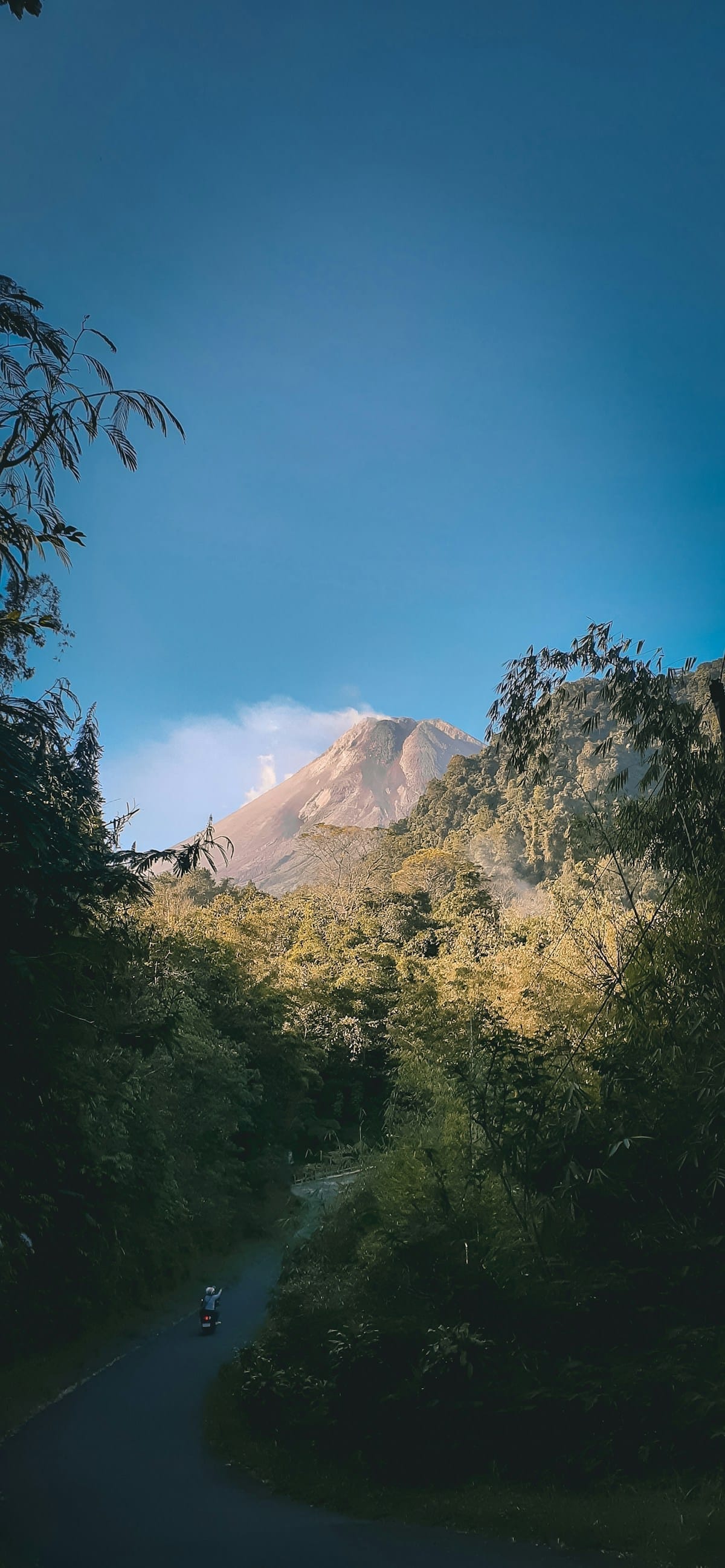
Mount Merapi is the most active volcano in Indonesia and one of the most visited geological sites in Southeast Asia. A jeep tour up its lower slopes gives you access to lava fields, buried villages, and viewpoints that would take hours to reach on foot - in roughly 2.5 hours by open-top 4WD. The sunrise departure is the definitive version: cool air, golden light cresting the caldera, and almost no other tourists in the first hour.
How Merapi Jeep Tours Work
All jeep tours operate from the Kaliurang area on Merapi’s southern slope, about 25 km north of Yogyakarta. You board an open-top modified Land Rover (locally called a “willys jeep” - mostly 1970s–80s variants kept running by skilled local mechanics) and follow dirt tracks across old lava flows to a series of viewpoints and sites connected to the 2010 eruption, the most destructive in Merapi’s recent history.
Tours run as guided stops rather than continuous driving. At each point, the driver-guide explains the geology, the eruption timeline, or the human story of a village that was abandoned and then covered by pyroclastic flows. The jeep can accommodate 4 passengers in the rear seats plus the driver.
Sunrise vs Midday vs Sunset Departures
Sunrise tours depart Kaliurang at approximately 4:30–5:00 AM (exact time varies seasonally to arrive at the main viewpoint 30–45 minutes before sunrise). This is the most popular option for good reason: the light is exceptional, temperatures are comfortable, and the lava fields look their most dramatic in low-angle morning light. By 7:30–8:00 AM you’re back at the base, freeing the rest of your day.
Midday tours run 9 AM–12 PM or 10 AM–1 PM. Heat and dust are more intense and the light is harsher, but you see Merapi more clearly in full sun than at dawn, and the absence of crowds at some stops can make the experience feel less rushed.
Sunset tours depart around 3:30–4:00 PM. The light is golden again, but the volcano’s peak is frequently obscured by afternoon cloud build-up. Sunrise remains the recommended choice for first-time visitors.
Named Operators and Current Prices
Lava Tour Merapi (Kaliurang)
One of the longest-established operators, Lava Tour Merapi runs a fleet of 12–15 jeeps from their base near the Kaliurang recreation area. They hold all required local government permits and follow BPPTKG exclusion zone guidelines.
Price: Approximately IDR 350,000–450,000 (USD 21–27) per jeep (not per person) for the standard 2.5-hour sunrise tour. A jeep seats 4, so the per-person cost splits to IDR 87,500–112,500 (USD 5–7) with a full vehicle.
Contact: Bookable through most Yogyakarta hotels and guesthouses, or directly at the Kaliurang base. WhatsApp booking is common.
Tour duration: 2.5–3 hours for the standard route
Merapi Jeep Adventure
Smaller operator based at the Kinahrejo area (further up the slope from Kaliurang), Merapi Jeep Adventure offers access to a slightly different set of stops including the memorial site of Mbah Maridjan (Merapi’s former spiritual guardian, who died in the 2010 eruption) and the Kaliadem bunker.
Price: Approximately IDR 400,000–500,000 (USD 24–30) per jeep for a standard 2.5-hour tour. Extended 4-hour tours covering additional stops run approximately IDR 600,000–700,000 (USD 36–42) per jeep.
Best for: Travellers who want the human-interest stories of the 2010 eruption alongside the geology
Yogyakarta jeep tour packages via GetYourGuide
Multiple operators list Merapi jeep sunrise tours on GetYourGuide with hotel pick-up from central Yogyakarta included. These typically run IDR 500,000–650,000 (USD 30–39) per person but include a private vehicle from your hotel to Kaliurang (saving you the pre-dawn logistics of finding transport at 3:30 AM). Recommended if you’re travelling solo or as a couple and don’t want to deal with the base independently.
What You’ll See: Stop by Stop
1. Kinahrejo Village Ruins
The first major stop for most routes, Kinahrejo is what remains of a village partially buried by the 2010 pyroclastic flows. Walls and foundations emerge from ash-covered ground. Guides explain the evacuation timeline - the village had 90 minutes’ warning. The memorial to Mbah Maridjan is here; he was the designated “guardian” of the volcano who refused to evacuate and was killed when the flow reached his home.
Time at stop: 10–15 minutes
2. Kaliadem Bunker
An underground shelter built in 2005 to protect villagers during eruptions. During the 2006 eruption, two men sheltering inside were killed when pyroclastic surges exceeded the bunker’s design temperature. It now serves as a sobering monument to the limits of volcanic engineering. You can enter the bunker and see the interior.
Time at stop: 10 minutes
3. Lava Field Viewpoint (Main Summit View)
The highest accessible point on the standard tour route, this viewpoint offers the clearest view of Merapi’s active crater. At sunrise, the cloud cover is typically lowest and the summit visible. Guides identify the 2010 lava flow direction and compare it to historic eruption patterns.
Time at stop: 15–20 minutes (sunrise wait included)
4. Alien Rock (Batu Alien)
A striking rock formation created when a large boulder was deposited by pyroclastic material during the 2010 eruption. The shape vaguely resembles a face in profile, hence the name. A popular photo stop.
Time at stop: 5–10 minutes
5. Sand Mining Operations (optional add-on)
Some extended tours add a stop at active volcanic sand mining operations on the lower Merapi slopes. The scale of the operation - dozens of trucks and workers extracting ash-sand from lava channels - is visually striking. This stop is not included in the standard short route.
Safety Information
Mount Merapi is monitored in real-time by BPPTKG (Balai Penyelidikan dan Pengembangan Teknologi Kebencanaan Geologi). The volcano has four alert levels:
- Level 1 (Normal): No unusual activity. All tourist areas fully accessible.
- Level 2 (Waspada/Advisory): Elevated activity. Standard jeep tour routes remain accessible but require monitoring. This is Merapi’s most common status.
- Level 3 (Siaga/Watch): Increased eruption risk. Exclusion zone expands. Many jeep tour stops restricted.
- Level 4 (Awas/Warning): Imminent eruption danger. All tourism suspended.
Check current status at magma.esdm.go.id or ask your operator the morning of your tour. Legitimate operators will proactively inform you if conditions change.
What to Bring
- Warm layer (jacket or fleece): temperatures at the viewpoints before sunrise average 15–18°C
- Closed-toe shoes: lava gravel is sharp and loose
- Dust scarf or buff: the tracks generate significant dust, particularly in dry season (May–October)
- Camera: sunrise light on the caldera is excellent but conditions are brief (15–20 minutes)
- Water: bring 1 litre minimum; vendors operate near the base but not at higher stops
Booking Lead Time
Standard sunrise tours can usually be booked the day before through most Yogyakarta hotels, guesthouses, and travel agencies. For July, August, and the Christmas–New Year period, book 3–5 days ahead to secure preferred departure times and operator choice. Solo travellers who book through tour aggregators may be paired with other travellers to fill a jeep.
Getting to Kaliurang
If you’re booking through a tour aggregator with hotel pick-up, transport is included. For self-organised visits, Kaliurang is accessible by:
- Hired driver from Yogyakarta: Approximately IDR 100,000–150,000 (USD 6–9) one way, arranged through your hotel. Pre-arrange the return journey or ask the driver to wait (usual rate: IDR 30,000–50,000/hour extra)
- Trans Jogja bus + local transport: Takes 60–90 minutes and requires a connection at Pakem - practical for midday visits but impractical for 4 AM sunrise departures