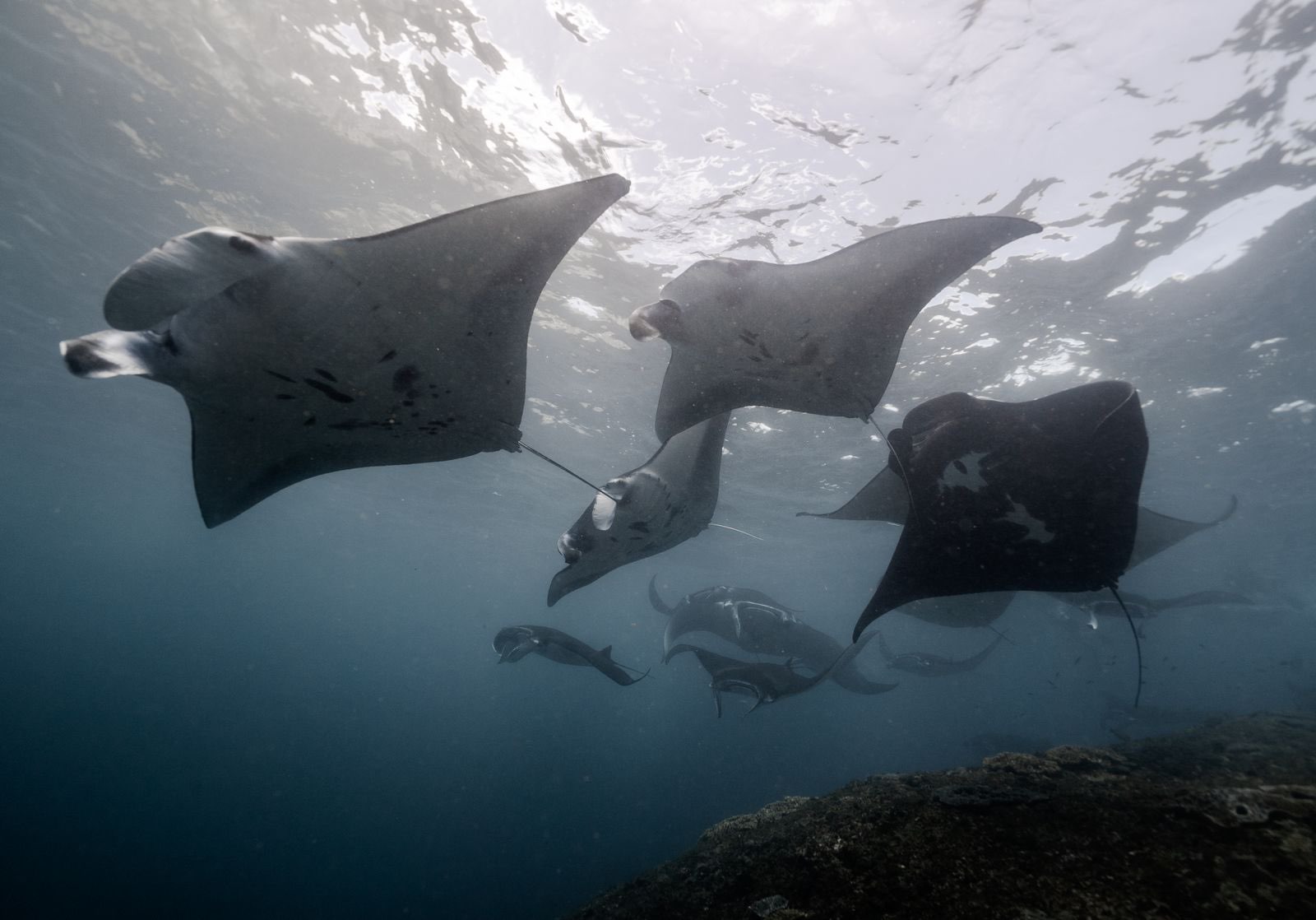
Nusa Penida has some of the easiest big-animal snorkelling in Bali. Manta rays come to a cleaning station on the southwest coast, Crystal Bay has clear water on a sheltered beach, and a few calmer reef stops make a full-day circuit. The hard part is choosing a tour. This guide explains the spots, who they suit, what trips cost in 2026 and how to avoid paying twice for the same boat.
The main snorkel spots
Manta Bay and Manta Point
This is the headline stop. Manta rays visit a cleaning station along the southwest cliffs, where small fish pick parasites off them. Reef mantas here are big, with wingspans of several metres, and they are harmless to people. Snorkellers float on the surface and watch them glide below and sometimes right underneath.
You will see two names. Local boats from Toyapakeh usually say “Manta Bay” and many Bali-based operators say “Manta Point”. For a snorkel tour they are effectively the same stop. Dive centres sometimes treat them as separate sites with different depth and current, so ask the operator which one they mean and how long you get in the water.
The southwest coast takes ocean swell. Expect surge near the cliffs and a boat that rolls. If you are not a confident swimmer, say so and wear a life jacket. Never chase or touch the rays, and keep your distance if one changes direction toward you.
Crystal Bay
Crystal Bay is the calm one. It is a sheltered bay on the northwest coast, with a beach, a small temple above it and clear water close to shore. Snorkelling here is easy for most people, with reef fish and coral near the rocks. Entry to the bay is approximately IDR 15,000 as of 2026, and gear rental on the beach is roughly IDR 30,000-50,000, according to our Nusa Penida day trip guide.
Mola mola (ocean sunfish) turn up around Crystal Bay from about July to October, but mostly at depth and mainly for divers. Do not book a snorkel trip expecting one.
Gamat Bay
Gamat Bay is a shallower, calmer reef stop, usually grouped with SD Point on tour itineraries. It works well as the warm-up or the beginner stop when Manta Point is rough. Expect fish and coral rather than headline animals.
Mangrove Point
Mangrove Point sits on the Nusa Lembongan side of the strait, not on Penida itself. Many boats combine it with Penida stops. The reef is gentle with good fish variety, and some operators add mangrove kayaking. If you are choosing between islands, see our Nusa Penida vs Nusa Lembongan comparison.
Sighting odds and seasonality
Mantas are resident at the cleaning station through the year, so sightings are common on most days. Several rays at once is a realistic outcome, but no operator can promise it. Tide, swell and boat traffic all change the picture. A lucky day can bring eight to ten rays; a poor day may bring one or two.
- May to October (dry season): calmest crossings, best visibility, busiest boats.
- July to October: mola mola season around Crystal Bay, mostly for divers.
- November to March (wet season): rougher seas, more cancellations, fewer people. Morning trips are far calmer than afternoon ones.
Go early. Boats leaving Toyapakeh in the morning reach Manta Point before the tour-group boats from Bali arrive, so you share the water with fewer snorkellers.
Toyapakeh vs Sanur: where to depart
From Toyapakeh (on Penida). Local operators sell shared boat trips from small offices and booking desks on the Toyapakeh seafront. A Manta Point snorkel trip runs approximately IDR 250,000-350,000 per person as of 2026. That is the cheapest way to do it, but you must already be on the island, which means an overnight stay or a very early boat from Bali. Look at where to stay in Nusa Penida if you want to base yourself near the departure point.
From Sanur (Bali). Fast boats leave Sanur for Penida in roughly 30-45 minutes. One-way tickets run approximately IDR 170,000-230,000 as of 2026, and you then need a separate snorkel boat on the island. Pre-booked packages bundle the crossing, the snorkel boat, lunch and sometimes a hotel pickup. Prices vary widely by operator and group size; from approximately IDR 800,000 up to well over IDR 1,500,000 per person is typical for shared trips, and private boats cost more. You can browse Sanur boat and snorkel tours or Nusa Penida tours to compare itineraries and inclusions.
Which is better? If you are staying on Bali for a few days, a package is simpler and the pickup removes the transport headache. If you are staying on Penida, book locally and save up to half. A Sanur-based package is the safe default for first-timers; going local suits people who can be flexible about boat times.
What the price usually includes (and what it does not)
Check these before paying:
- Return boat from Bali. Often included in packages, never in local Toyapakeh trips.
- Snorkel gear. Masks, snorkels and fins are normally included. Wetsuits usually are not, and the water can feel cool at Manta Point.
- Lunch. Common in packages, rare on short local trips.
- Penida levy. A Rp25,000 charge per tourist per attraction began on 12 August 2026; see our news report on the levy. Packages often list it as extra.
- Bali tourist levy. Separate and paid before you travel; see our Bali tourist levy guide or the official Love Bali portal.
- Last boat back. Check the last return time to Bali, which was brought forward to 3:00 pm in August 2026. A late snorkel stop can leave you cutting it close.
Practical tips
- Wear a rash vest or reef-safe sunscreen. Never use sprays on your face before getting in the water.
- Take seasickness tablets about 30 minutes before boarding, particularly outside the dry season.
- Bring cash. There are no ATMs on the island, and small operators rarely take cards.
- Use a waterproof phone pouch or action camera on a wrist strap, not a loose phone.
- Tell the guide if you cannot swim well. Most will put you on a line or with a float.
Combine with the rest of Nusa Penida
Most snorkel boats cover Manta Point, Crystal Bay and one or two reef stops in about three hours. If you pair it with the cliffs, a long day gets very tight. Our Nusa Penida island guide covers Kelingking, Broken Beach and Angel’s Billabong, and a night or two on the island makes it easier to do both. For a comparison with other regions, read snorkelling in Indonesia.
If you are staying in Sanur and want a calmer first snorkel before the boat, our Sanur snorkelling guide covers the local reef and gear hire.
Which trip should you book?
- Confident swimmer, staying on Bali: a morning package from Sanur that includes Manta Point and Crystal Bay.
- Staying on Penida: a shared local boat from Toyapakeh, about IDR 250,000-350,000.
- Nervous swimmer or family: Gamat Bay and Mangrove Point, or a Lembongan-based trip, with a life jacket and a guide in the water.
- Photographers: a private boat, which gives you control over timing and reduces crowding at the cleaning station.